VS

Toyota RAV4 vs Honda CR-V comparison

Compare performance (306 HP vs 184 HP), boot space and price (35,100 £ vs 42,800 £ ) at a glance. Find out which car is the better choice for you – Toyota RAV4 or Honda CR-V?

Toyota RAV4 vs Honda CR-V: Key differences

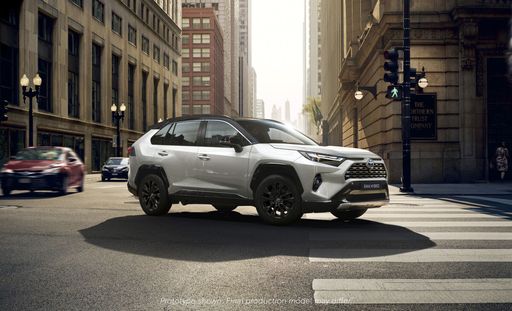
Toyota RAV4

4.8 (6 Reviews)
rate
  • clearly cheaper
  • markedly more power
  • significantly more efficient
  • substantially quicker 0–100 km/h
  • marginally lighter

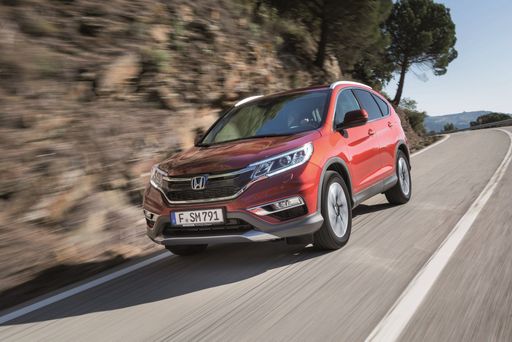
Honda CR-V

4.8 (2 Reviews)
rate
  • barely more electric range
  • marginally more trunk space

All details on performance, efficiency, range and trunk space can be found in the technical comparison below – including user reviews for both models.

RAV4

Head-to-Head: Honda CR-V vs. Toyota RAV4

The compact SUV segment is arguably one of the most competitive markets in the automotive industry, with the Honda CR-V and Toyota RAV4 standing out as two of the most popular options. Both vehicles offer a blend of efficiency, practicality, and modern tech enhancements, making them appealing choices for families and adventure seekers alike. In this comparison, we’ll dive into the technical specifications and innovations behind these iconic models to help you make an informed choice.
CR-V

Engine Options and Performance

The 2024 Honda CR-V is available in both full hybrid and plug-in hybrid variants, boasting a four-cylinder engine with a displacement of 1993 cm³. The CR-V produces up to 184 horsepower and 335 Nm of torque, and it features a continuously variable transmission (CVT) for a smooth driving experience. This SUV offers remarkable fuel efficiency, with a consumption rate of approximately 6.7 L/100km in hybrid mode, making it an excellent option for eco-conscious drivers. Additionally, its electric range of 79 km caters to those looking for hybrid functionality.

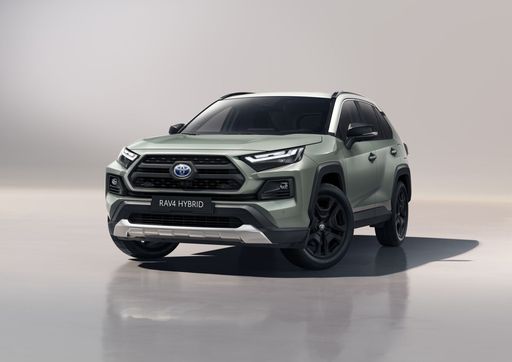
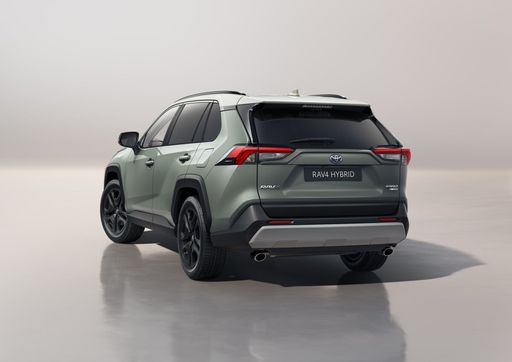
On the other hand, the 2024 Toyota RAV4 showcases a more robust lineup, with power options ranging up to 306 horsepower in the hybrid models. The RAV4 also employs a four-cylinder engine, but its capacity is larger at 2487 cm³, allowing it to deliver impressive acceleration times – as low as 6 seconds from 0-100 km/h in the high-output variants. Fuel efficiency is commendable as well, particularly in the hybrid variants, achieving around 5.6 L/100km. Although the electric range is slightly lower than the CR-V at 75 km, the powertrain performance significantly elevates RAV4's appeal.

RAV4

Dimensions and Practicality

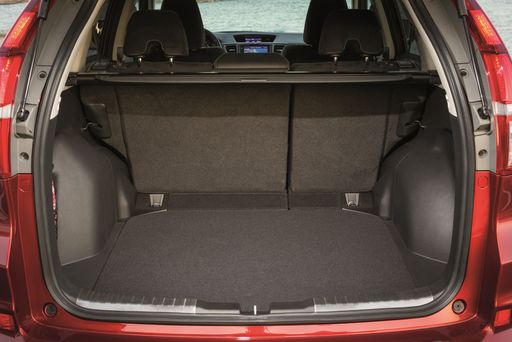
When space and comfort come into play, both the CR-V and RAV4 offer generous dimensions suitable for families. The Honda CR-V measures 4706 mm in length and boasts a trunk capacity ranging from 579 to 617 liters, depending on the specific configuration. It accommodates five passengers comfortably, ensuring ample legroom and storage for long road trips.

Meanwhile, the Toyota RAV4, with a 4600 mm length, may slightly fall short in utility compared to its Honda rival. However, it still provides a commendable trunk capacity of 580 liters, along with a spacious five-seat layout. The RAV4's dimensions offer a versatile interior that can be customized to various needs, ensuring a balance between passenger comfort and cargo space.

CR-V

Fuel Efficiency and Environmental Impact

Fuel efficiency remains a critical consideration for buyers, especially in today’s environmentally conscious market. The Honda CR-V excels with its hybrid and plug-in options, where the combined CO2 emissions can be as low as 135 g/km, contributing to its appeal as an eco-friendly vehicle. Additionally, with a fuel tank capacity of 57 liters, the CR-V allows for extended journeys without frequent stops.

In comparison, the Toyota RAV4 also demonstrates competence in this aspect, with emissions starting at 126 g/km for its hybrids. With a slightly smaller 55-liter fuel tank, drivers may need to stop a bit more often, but the overall efficiency holds up thanks to its advanced hybrid technology.

RAV4

Innovative Features and Technology

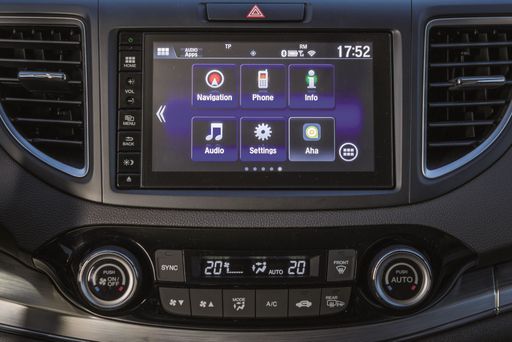
Modern technology is integral to both the Honda CR-V and Toyota RAV4. The CR-V offers a suite of advanced safety features under the Honda Sensing umbrella, including adaptive cruise control, lane-keeping assistance, and advanced collision mitigation systems. Inside, the central infotainment system is user-friendly, featuring options for Apple CarPlay and Android Auto integration, assertively addressing convenience.

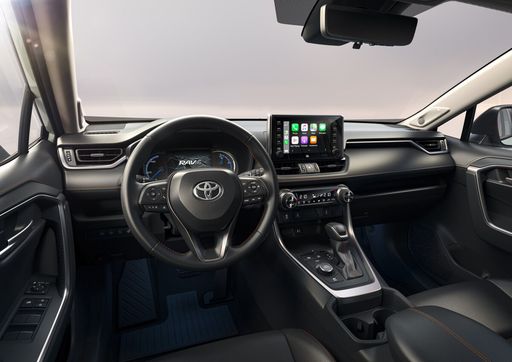
The RAV4, backed by Toyota's safety and technology prowess, includes the Toyota Safety Sense package in all trims. This suite encompasses forward-collision warning, lane departure alert, and a pre-collision system. The infotainment setup also supports Apple CarPlay and Android Auto, ensuring seamless connectivity for tech-savvy users.

CR-V

Final Thoughts

Choosing between the Honda CR-V and Toyota RAV4 ultimately comes down to individual preferences and priorities. The CR-V excels in trunk capacity and fuel efficiency, making it an excellent choice for families who prioritize practicality. Meanwhile, the RAV4 impresses with higher power outputs and swift acceleration times, appealing to those seeking a dynamic driving experience. Both models offer a rich array of features and reliable performance, ensuring that whichever you choose, you’ll be driving a well-rounded and capable SUV.

Here’s where it gets real: The technical differences in detail

RAV4

Costs and Efficiency:

When it comes to price and running costs, the biggest differences usually appear. This is often where you see which car fits your budget better in the long run.

Toyota RAV4 is clearly cheaper – starting at 35,100 £ , while the Honda CR-V costs 42,800 £ . That’s a price difference of around 7,637 £.

Fuel consumption also shows a difference: the Toyota RAV4 uses 1 L/100km and is significantly more efficient than the Honda CR-V with 2.6 L/100km. The difference is about 1.6 L/100km.

As for electric range, the Honda CR-V offers barely more range – reaching up to 78 km, about 3 km more than the Toyota RAV4.

CR-V

Engine and Performance:

Under the bonnet, it becomes clear which model is tuned for sportiness and which one takes the lead when you hit the accelerator.

When it comes to engine power, the Toyota RAV4 offers markedly more power – delivering 306 HP compared to 184 HP. That’s roughly 122 HP more horsepower.

When accelerating from 0 to 100 km/h, the Toyota RAV4 is substantially quicker – completing the sprint in 6 s, while the Honda CR-V takes 9 s. That’s about 3 s quicker.

RAV4

Space and Everyday Use:

Cabin size, boot volume and payload all play a role in everyday practicality. Here, comfort and flexibility make the difference.

Both vehicles offer seating for 5 people.

In terms of curb weight, Toyota RAV4 is marginally lighter – 1,745 kg compared to 1,821 kg. The difference is around 76 kg.

Looking at boot space, the Honda CR-V offers marginally more boot space – 617 L compared to 580 L. That’s a difference of about 37 L.

When it comes to payload, the Toyota RAV4 carries visibly more – 600 kg compared to 475 kg. That’s a difference of about 125 kg.

Who wins the race in the data check?

The Toyota RAV4 is far ahead overall in the objective data comparison.
This result only shows which model scores more points on paper – not which of the two cars feels right for you.

from £35,100
RAV4

Toyota RAV4

  • Engine Type : Full Hybrid, Plugin Hybrid
  • Transmission : Automatic
  • Drive Type : Front-Wheel Drive, All-Wheel Drive
  • Power HP : 218 - 306 HP
  • Consumption L/100km : 1 - 5.6 L/100km
  • Electric Range : 75 km
Toyota RAV4
Honda CR-V

Costs and Consumption

View detailed analysis

Engine and Performance

View detailed analysis

Dimensions and Body

View detailed analysis

Toyota RAV4

The Toyota RAV4 feels like a sensible friend on the road, marrying dependable practicality with a dash of SUV personality that keeps daily driving from turning dull. Comfortable and easy to live with, it looks tough without shouting and quietly gets the job done — a sensible pick for buyers who want versatility without drama.

details

Honda CR-V

The Honda CR-V blends sensible practicality with a polished feel, offering roomy interiors and a confident ride that keeps commutes and weekend escapes equally comfortable. Its unshowy styling and reliable reputation make it a smart, low‑drama choice for buyers who want versatility without fuss — the kind of car that quietly makes everyday life a little easier.

details
Toyota RAV4
Honda CR-V

Costs and Consumption

Price
35,100 - 55,700 £
Price
42,800 - 52,100 £
Consumption L/100km
1 - 5.6 L/100km
Consumption L/100km
2.6 - 6.7 L/100km
Consumption kWh/100km
-
Consumption kWh/100km
-
Electric Range
75 km
Electric Range
78 km
Battery Capacity
-
Battery Capacity
-
co2
22 - 128 g/km
co2
59 - 152 g/km
Fuel tank capacity
55 L
Fuel tank capacity
-

Dimensions and Body

Body Type
SUV
Body Type
SUV
Seats
5
Seats
5
Doors
5
Doors
-
Curb weight
1,745 - 1,910 kg
Curb weight
1,821 - 1,988 kg
Trunk capacity
520 - 580 L
Trunk capacity
579 - 617 L
Length
4,600 mm
Length
-
Width
1,855 mm
Width
1,866 mm
Height
1,685 mm
Height
-
Max trunk capacity
1,604 - 1,690 L
Max trunk capacity
-
Payload
390 - 600 kg
Payload
439 - 475 kg

Engine and Performance

Engine Type
Full Hybrid, Plugin Hybrid
Engine Type
Full Hybrid, Plugin Hybrid
Transmission
Automatic
Transmission
Automatic
Transmission Detail
CVT
Transmission Detail
CVT
Drive Type
Front-Wheel Drive, All-Wheel Drive
Drive Type
Front-Wheel Drive, All-Wheel Drive
Power HP
218 - 306 HP
Power HP
184 HP
Acceleration 0-100km/h
6 - 8.4 s
Acceleration 0-100km/h
9 - 9.5 s
Max Speed
180 km/h
Max Speed
-
Torque
-
Torque
335 Nm
Number of Cylinders
4
Number of Cylinders
4
Power kW
160 - 225 kW
Power kW
135 kW
Engine capacity
2,487 cm3
Engine capacity
1,993 cm3

General

Model Year
2,024 - 2,025
Model Year
2,025
CO2 Efficiency Class
D, B
CO2 Efficiency Class
D, E, B
Brand
Toyota
Brand
Honda
DriveDuel uses data analysis and artificial intelligence to evaluate vehicle data and create content. Content is regularly reviewed and improved. The displayed prices are estimates based on German list prices, adjusted to the respective country’s VAT. Country-specific registration taxes are not included. This information is not legally binding.