VS

Toyota RAV4 vs Nissan X-Trail comparison

Compare performance (306 HP vs 213 HP), boot space and price (35,100 £ vs 34,200 £ ) at a glance. Find out which car is the better choice for you – Toyota RAV4 or Nissan X-Trail?

Toyota RAV4 vs Nissan X-Trail: Key differences

Toyota RAV4

4.8 (6 Reviews)
rate
  • clearly more power
  • considerably more efficient
  • slightly quicker 0–100 km/h

Nissan X-Trail

4.6 (5 Reviews)
rate
  • barely cheaper
  • very slightly lighter
  • marginally more trunk space

All details on performance, efficiency, range and trunk space can be found in the technical comparison below – including user reviews for both models.

RAV4

Nissan X-Trail vs Toyota RAV4: A Closer Look at Two Leading SUVs

The SUV market is rife with options, but few competitors stand out like the Nissan X-Trail and Toyota RAV4. Both vehicles are designed to cater to a family-friendly audience while offering a mix of performance, comfort, and cutting-edge technologies. Today, we delve into a comparative analysis of these two titans, examining their technical specifications, innovations, and what they bring to the table for prospective buyers.

X-Trail

Engines and Performance

When it comes to performance, both the X-Trail and RAV4 offer a range of engine options tailored to different driving needs. The 2024 Nissan X-Trail provides a selection of petrol MHEV and full hybrid engines, with power outputs ranging from 163 to 213 HP. The vehicle can accelerate from 0-100 km/h in as little as 7 seconds, depending on the engine variant. It boasts a fuel consumption range between 5.7 to 6.9 L/100km, offering a responsible choice for eco-conscious consumers.

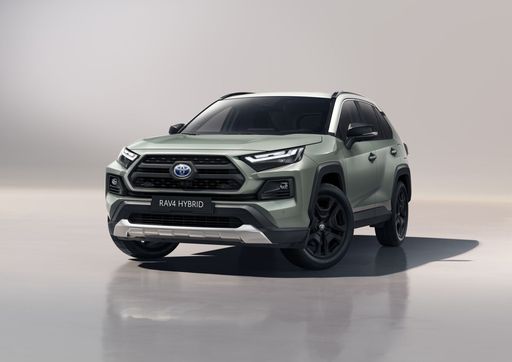
On the other hand, the Toyota RAV4 features full hybrid and plug-in hybrid engines, with outputs peaking at 306 HP. In terms of acceleration, it performs respectably with figures as low as 6 seconds for its quickest variant. However, fuel efficiency is commendable, especially with the RAV4 hybrid averaging around 5.6 L/100km, making it a strong contender in eco-friendly driving. The electric range of the plug-in variant adds further advantages in urban settings, with a range of approximately 75 km.

RAV4

Transmission and Drive Options

Both vehicles come equipped with automatic transmissions, but their specifications differ slightly. The Nissan X-Trail utilizes a Continuously Variable Transmission (CVT) and can also feature a reduction gearbox, catering to drivers who seek versatility in handling different terrains. It offers options for both front-wheel drive and all-wheel drive, enhancing its appeal for outdoor enthusiasts.

Conversely, the Toyota RAV4 primarily wings it with a conventional CVT and offers similar drive options. This dual-system approach allows drivers to choose between efficiency and performance, especially in varying road conditions.

X-Trail

Dimensions and Comfort

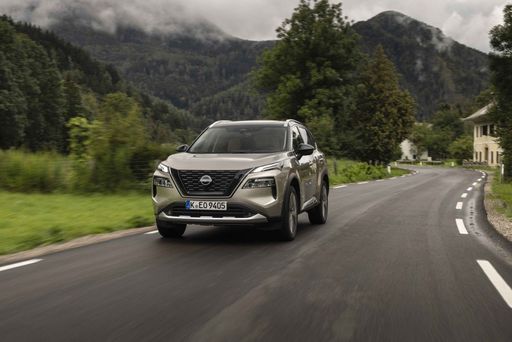
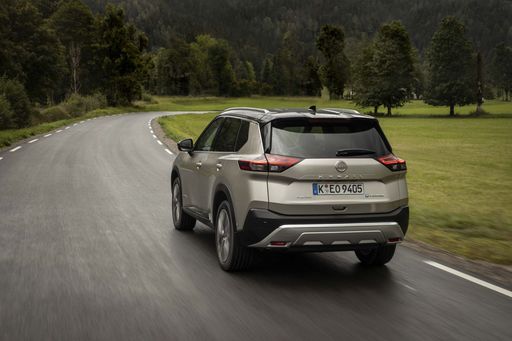
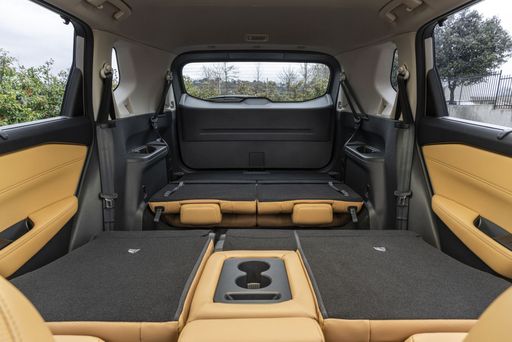
In terms of dimensions, the Nissan X-Trail is slightly larger, measuring 4680 mm in length, 1840 mm in width, and 1720 mm in height. It offers spacious cargo options, with a trunk capacity ranging from 575 to 585 liters, making it highly suitable for families and long road trips. Additionally, the X-Trail can seat up to seven passengers in specific configurations, which can be a game-changer for larger families.

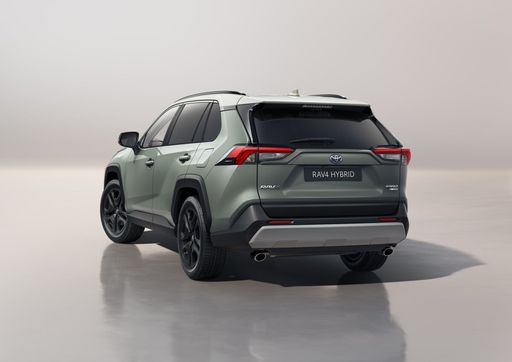
The Toyota RAV4, while shorter at 4600 mm in length and marginally wider at 1855 mm, still provides a robust trunk capacity ranging from 520 to 580 liters. With a focus on five passengers, it is adequately spacious for smaller families without compromising on comfort.

RAV4

Safety and Technology Innovations

Safety is a cornerstone for both models. The Nissan X-Trail comes equipped with advanced driver assistance systems, offering features like ProPILOT Assist for semi-autonomous driving and a comprehensive suite of airbags. Its CO2 emissions are rated between 131 to 161 g/km, anticipating regulatory demands for lower emissions in the coming years.

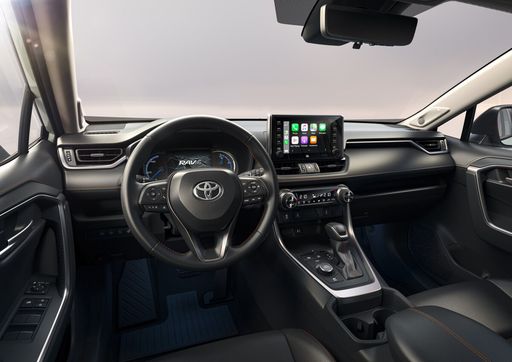
On the other hand, the RAV4 shines with its Toyota Safety Sense package, which includes pre-collision systems, lane departure alerts, and adaptive cruise control. Its CO2 output ranges from 126 to 128 g/km, which aligns well with modern environmental standards and showcases Toyota's commitment to sustainability.

X-Trail

Final Verdict

Choosing between the Nissan X-Trail and Toyota RAV4 ultimately depends on individual needs and preferences. If you prioritize spaciousness and versatility, particularly for larger families, the X-Trail has the edge. However, if fuel efficiency and cutting-edge safety technology are your top concerns, the RAV4 is hard to beat.

Both vehicles represent each brand's dedication to innovation and quality, ensuring that drivers receive a reliable SUV capable of meeting various demands on the road. With their respective strengths and weaknesses, one thing is sure: the competition between the X-Trail and RAV4 continues to elevate the game in the automotive world.

Here’s where it gets real: The technical differences in detail

RAV4

Costs and Efficiency:

When it comes to price and running costs, the biggest differences usually appear. This is often where you see which car fits your budget better in the long run.

Nissan X-Trail is barely cheaper – starting at 34,200 £ , while the Toyota RAV4 costs 35,100 £ . That’s a price difference of around 977 £.

Fuel consumption also shows a difference: the Toyota RAV4 uses 1 L/100km and is considerably more efficient than the Nissan X-Trail with 5.7 L/100km. The difference is about 4.7 L/100km.

X-Trail

Engine and Performance:

Under the bonnet, it becomes clear which model is tuned for sportiness and which one takes the lead when you hit the accelerator.

When it comes to engine power, the Toyota RAV4 offers clearly more power – delivering 306 HP compared to 213 HP. That’s roughly 93 HP more horsepower.

When accelerating from 0 to 100 km/h, the Toyota RAV4 is slightly quicker – completing the sprint in 6 s, while the Nissan X-Trail takes 7 s. That’s about 1 s quicker.

RAV4

Space and Everyday Use:

Beyond pure performance, interior space and usability matter most in daily life. This is where you see which car is more practical and versatile.

Seats: Nissan X-Trail offers more seats – 7 vs 5.

In terms of curb weight, Nissan X-Trail is very slightly lighter – 1,668 kg compared to 1,745 kg. The difference is around 77 kg.

Looking at boot space, the Nissan X-Trail offers marginally more boot space – 585 L compared to 580 L. That’s a difference of about 5 L.

When it comes to payload, the Toyota RAV4 carries very slightly more – 600 kg compared to 574 kg. That’s a difference of about 26 kg.

Who wins the race in the data check?

The Toyota RAV4 is clearly superior overall in the objective data comparison.
This result only shows which model scores more points on paper – not which of the two cars feels right for you.

from £35,100
RAV4

Toyota RAV4

  • Engine Type : Full Hybrid, Plugin Hybrid
  • Transmission : Automatic
  • Drive Type : Front-Wheel Drive, All-Wheel Drive
  • Power HP : 218 - 306 HP
  • Consumption L/100km : 1 - 5.6 L/100km
  • Electric Range : 75 km
Toyota RAV4
Nissan X-Trail

Costs and Consumption

View detailed analysis

Engine and Performance

View detailed analysis

Dimensions and Body

View detailed analysis

Toyota RAV4

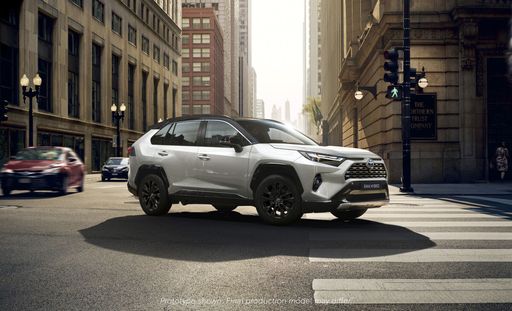
The Toyota RAV4 feels like a sensible friend on the road, marrying dependable practicality with a dash of SUV personality that keeps daily driving from turning dull. Comfortable and easy to live with, it looks tough without shouting and quietly gets the job done — a sensible pick for buyers who want versatility without drama.

details

Nissan X-Trail

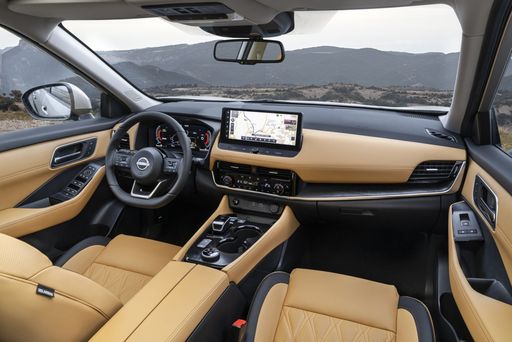
The Nissan X-Trail is a roomy, no-nonsense family SUV that mixes sensible practicality with a quietly modern look, making it an easy choice for busy lives and weekend escapes. It drives with calm confidence, delivers a comfortable ride and sensible tech, and won’t demand drama while doing the everyday heavy lifting.

details
Toyota RAV4
Nissan X-Trail

Costs and Consumption

Price
35,100 - 55,700 £
Price
34,200 - 50,500 £
Consumption L/100km
1 - 5.6 L/100km
Consumption L/100km
5.7 - 6.9 L/100km
Consumption kWh/100km
-
Consumption kWh/100km
-
Electric Range
75 km
Electric Range
-
Battery Capacity
-
Battery Capacity
-
co2
22 - 128 g/km
co2
131 - 161 g/km
Fuel tank capacity
55 L
Fuel tank capacity
-

Dimensions and Body

Body Type
SUV
Body Type
SUV
Seats
5
Seats
5 - 7
Doors
5
Doors
-
Curb weight
1,745 - 1,910 kg
Curb weight
1,668 - 1,961 kg
Trunk capacity
520 - 580 L
Trunk capacity
177 - 585 L
Length
4,600 mm
Length
-
Width
1,855 mm
Width
1,840 mm
Height
1,685 mm
Height
-
Max trunk capacity
1,604 - 1,690 L
Max trunk capacity
-
Payload
390 - 600 kg
Payload
432 - 574 kg

Engine and Performance

Engine Type
Full Hybrid, Plugin Hybrid
Engine Type
Petrol MHEV, Full Hybrid
Transmission
Automatic
Transmission
Automatic
Transmission Detail
CVT
Transmission Detail
CVT, Reduction Gearbox
Drive Type
Front-Wheel Drive, All-Wheel Drive
Drive Type
Front-Wheel Drive, All-Wheel Drive
Power HP
218 - 306 HP
Power HP
163 - 213 HP
Acceleration 0-100km/h
6 - 8.4 s
Acceleration 0-100km/h
7 - 9.6 s
Max Speed
180 km/h
Max Speed
-
Torque
-
Torque
300 - 525 Nm
Number of Cylinders
4
Number of Cylinders
3
Power kW
160 - 225 kW
Power kW
120 - 157 kW
Engine capacity
2,487 cm3
Engine capacity
1,497 cm3

General

Model Year
2,024 - 2,025
Model Year
2,025
CO2 Efficiency Class
D, B
CO2 Efficiency Class
F, D, E
Brand
Toyota
Brand
Nissan
DriveDuel uses data analysis and artificial intelligence to evaluate vehicle data and create content. Content is regularly reviewed and improved. The displayed prices are estimates based on German list prices, adjusted to the respective country’s VAT. Country-specific registration taxes are not included. This information is not legally binding.