VS

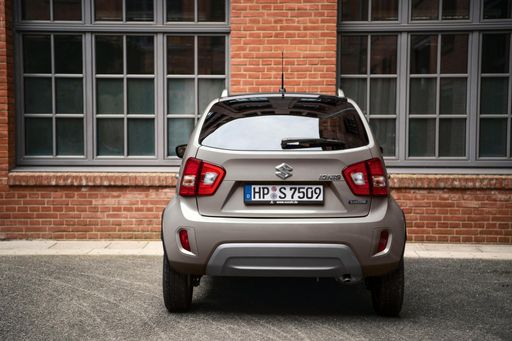
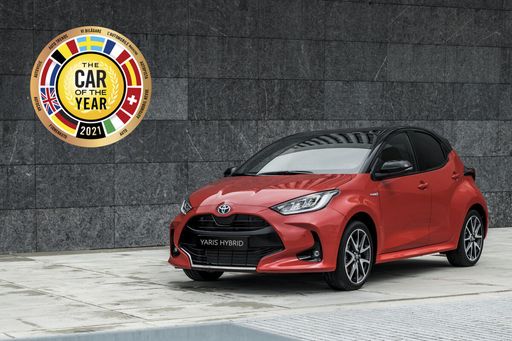
Toyota Yaris vs Suzuki Ignis comparison

Compare performance (280 HP vs 83 HP), boot space and price (21,900 £ vs 15,600 £ ) at a glance. Find out which car is the better choice for you – Toyota Yaris or Suzuki Ignis?

Toyota Yaris vs Suzuki Ignis: Key differences

Toyota Yaris

3.9 (3 Reviews)
rate
  • significantly more power
  • markedly more efficient
  • significantly quicker 0–100 km/h
  • only slightly more trunk space

Suzuki Ignis

4.7 (1 Reviews)
rate
  • considerably cheaper
  • slightly lighter

All details on performance, efficiency, range and trunk space can be found in the technical comparison below – including user reviews for both models.

Yaris

The Battle of the Compact Cars: Suzuki Ignis vs Toyota Yaris

In the world of compact cars, two names often stand out: the Suzuki Ignis and the Toyota Yaris. Both vehicles offer unique features, technical capabilities, and innovations aimed at making your driving experience more enjoyable and efficient. In this article, we will dissect the characteristics of each model, comparing their performance, interior space, and technology to help you make an informed decision.
Ignis

Design and Body Type

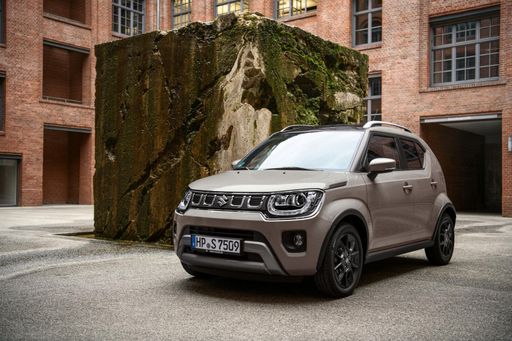
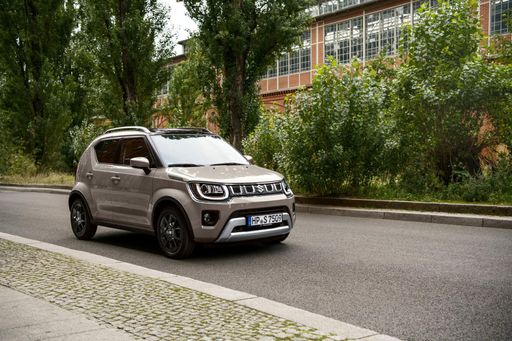
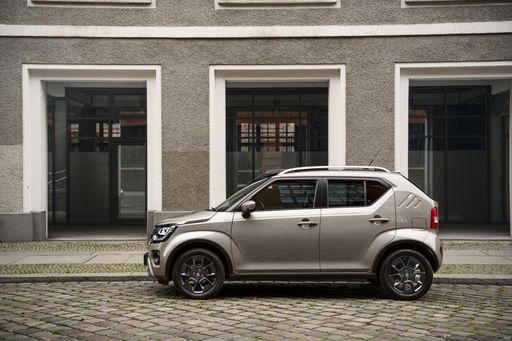
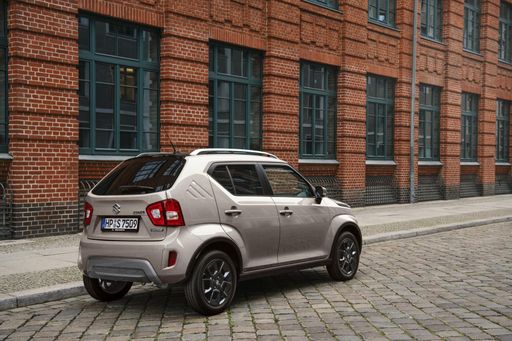
The Suzuki Ignis boasts a distinctive SUV body type, which attracts consumers looking for a compact vehicle without compromising on an adventurous spirit. With an exterior length of 3700 mm, width of 1690 mm, and height of 1605 mm, it delivers a spacious feel while maintaining a manageable size for city driving.

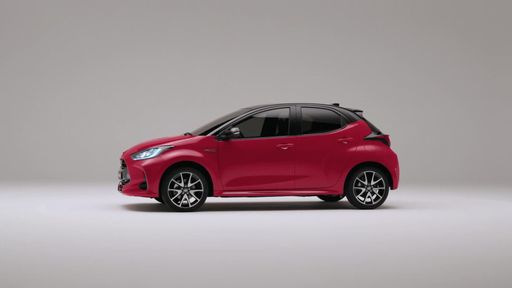
On the other hand, the Toyota Yaris adopts a sleek hatchback design. Measuring between 3940 mm to 3995 mm in length and 1745 mm to 1805 mm in width, it presents a stylish and modern aerodynamic silhouette that enhances fuel efficiency and overall performance.

Yaris

Engine Performance and Drive

The Suzuki Ignis comes equipped with a 1.2-liter Petrol MHEV engine that produces 83 hp and generates a torque of 107 Nm. It is available in both manual and CVT transmission variants and offers front-wheel and all-wheel drive options. This versatility makes it suitable for different driving conditions, while its fuel consumption averages around 4.9 to 5.4 liters per 100 km.

Conversely, the Toyota Yaris offers a range of engine options, including a full hybrid variant that reaches up to 130 hp, and even a powerful version capable of producing 280 hp. The Yaris performs exceptionally well, boasting an impressive acceleration of 0-100 km/h in as little as 5.5 seconds. With a fuel consumption figure ranging from 3.8 to 9.5 liters per 100 km, this model prioritizes efficiency without compromising performance.

Ignis

Interior Comfort and Cargo Capacity

Inside the Suzuki Ignis, you’ll find a practical cabin configured for 4 to 5 passengers. It offers ample headroom and legroom, making it suitable for city trips as well as longer journeys. With a trunk capacity of 216 to 267 liters, the Ignis provides enough space for groceries and gear.

In comparison, the Toyota Yaris accommodates 4 to 5 passengers and features a slightly larger trunk capacity of 141 to 286 liters. This hatchback is designed with modern finishes and a focus on passenger comfort, which is enhanced by the car's intuitive infotainment system and connectivity options.

Innovations and Technology

Both models showcase an array of innovations that enrich the driving experience. The Suzuki Ignis incorporates advanced safety features such as stability control and multiple airbags, ensuring that the ride remains secure. The inclusion of a multi-functional infotainment system caters to tech-savvy consumers who crave connectivity.

The Toyota Yaris takes technology a step further with its advanced driver-assistance systems, which range from lane-keeping assist to adaptive cruise control. Notably, its hybrid technology epitomizes Toyota's commitment to sustainability and innovation, providing an eco-friendly driving option while maintaining performance.

Conclusion: Which One Is Right for You?

Choosing between the Suzuki Ignis and the Toyota Yaris ultimately depends on your lifestyle and driving preferences. If you desire a compact SUV with a distinct character and solid practicality, the Ignis fits the bill. However, if fuel efficiency, power, and a focus on technology are high on your list, the Yaris may be the better choice.

Both vehicles offer a compelling case for anyone in the market for a compact car, boasting their unique strengths. Take the time to evaluate what matters most to you—be it performance, design, or technology—before making your choice on this exciting automotive comparison.

Here’s where it gets real: The technical differences in detail

Yaris

Costs and Efficiency:

When it comes to price and running costs, the biggest differences usually appear. This is often where you see which car fits your budget better in the long run.

Suzuki Ignis is considerably cheaper – starting at 15,600 £ , while the Toyota Yaris costs 21,900 £ . That’s a price difference of around 6,249 £.

Fuel consumption also shows a difference: the Toyota Yaris uses 3.8 L/100km and is markedly more efficient than the Suzuki Ignis with 4.9 L/100km. The difference is about 1.1 L/100km.

Ignis

Engine and Performance:

Power, torque and acceleration say a lot about how a car feels on the road. This is where you see which model delivers more driving dynamics.

When it comes to engine power, the Toyota Yaris offers significantly more power – delivering 280 HP compared to 83 HP. That’s roughly 197 HP more horsepower.

When accelerating from 0 to 100 km/h, the Toyota Yaris is significantly quicker – completing the sprint in 5.5 s, while the Suzuki Ignis takes 12.7 s. That’s about 7.2 s quicker.

There’s also a difference in torque: the Toyota Yaris delivers substantially more torque with 390 Nm compared to 107 Nm. That’s about 283 Nm more.

Yaris

Space and Everyday Use:

Beyond pure performance, interior space and usability matter most in daily life. This is where you see which car is more practical and versatile.

Both vehicles offer seating for 5 people.

In terms of curb weight, Suzuki Ignis is slightly lighter – 935 kg compared to 1,090 kg. The difference is around 155 kg.

Looking at boot space, the Toyota Yaris offers only slightly more boot space – 286 L compared to 267 L. That’s a difference of about 19 L.

When it comes to payload, the Toyota Yaris carries visibly more – 525 kg compared to 395 kg. That’s a difference of about 130 kg.

Who wins the race in the data check?

The Toyota Yaris stands well ahead of its rival in the objective data comparison.
This result only shows which model scores more points on paper – not which of the two cars feels right for you.

from £21,900
Yaris

Toyota Yaris

  • Engine Type : Full Hybrid, Petrol
  • Transmission : Automatic, Manuel
  • Drive Type : Front-Wheel Drive, All-Wheel Drive
  • Power HP : 116 - 280 HP
  • Consumption L/100km : 3.8 - 8.7 L/100km
Toyota Yaris
Suzuki Ignis

Costs and Consumption

View detailed analysis

Engine and Performance

View detailed analysis

Dimensions and Body

View detailed analysis

Toyota Yaris

The Toyota Yaris is a sprightly city hatch that packs clever packaging, surprising comfort and fuel-sipping manners into a neat, easy-to-park package. It rewards sensible buyers with low running costs, friendly ergonomics and a forgiving drive, delivered with Japanese reliability and just enough personality to make errands feel a little less ordinary.

details

Suzuki Ignis

The Suzuki Ignis is a cheeky compact crossover that turns city chores into cheerful adventures, with chunky styling and a surprisingly practical cabin. It won't pretend to be a sports car, but its nimble manners, low running costs and ample personality make it an ideal pick for urban buyers who want fun without pretension.

details
Toyota Yaris
Suzuki Ignis

Costs and Consumption

Price
21,900 - 40,800 £
Price
15,600 - 19,500 £
Consumption L/100km
3.8 - 8.7 L/100km
Consumption L/100km
4.9 - 5.4 L/100km
Consumption kWh/100km
-
Consumption kWh/100km
-
Electric Range
-
Electric Range
-
Battery Capacity
-
Battery Capacity
-
co2
87 - 197 g/km
co2
110 - 122 g/km
Fuel tank capacity
-
Fuel tank capacity
30 - 32 L

Dimensions and Body

Body Type
Hatchback
Body Type
SUV
Seats
4 - 5
Seats
4 - 5
Doors
-
Doors
5
Curb weight
1,090 - 1,356 kg
Curb weight
935 - 995 kg
Trunk capacity
141 - 286 L
Trunk capacity
204 - 267 L
Length
-
Length
3,700 mm
Width
1,745 - 1,805 mm
Width
1,690 mm
Height
-
Height
1,605 mm
Max trunk capacity
-
Max trunk capacity
1,086 - 1,100 L
Payload
289 - 525 kg
Payload
335 - 395 kg

Engine and Performance

Engine Type
Full Hybrid, Petrol
Engine Type
Petrol MHEV
Transmission
Automatic, Manuel
Transmission
Manuel, Automatic
Transmission Detail
CVT, Manual Gearbox
Transmission Detail
Manual Gearbox, CVT
Drive Type
Front-Wheel Drive, All-Wheel Drive
Drive Type
Front-Wheel Drive, All-Wheel Drive
Power HP
116 - 280 HP
Power HP
83 HP
Acceleration 0-100km/h
5.5 - 9.7 s
Acceleration 0-100km/h
12.7 - 12.8 s
Max Speed
-
Max Speed
155 - 165 km/h
Torque
390 Nm
Torque
107 Nm
Number of Cylinders
3
Number of Cylinders
4
Power kW
85 - 206 kW
Power kW
61 kW
Engine capacity
1,490 - 1,618 cm3
Engine capacity
1,197 cm3

General

Model Year
2,026
Model Year
2,020
CO2 Efficiency Class
B, G
CO2 Efficiency Class
C, D
Brand
Toyota
Brand
Suzuki
DriveDuel uses data analysis and artificial intelligence to evaluate vehicle data and create content. Content is regularly reviewed and improved. The displayed prices are estimates based on German list prices, adjusted to the respective country’s VAT. Country-specific registration taxes are not included. This information is not legally binding.