VS

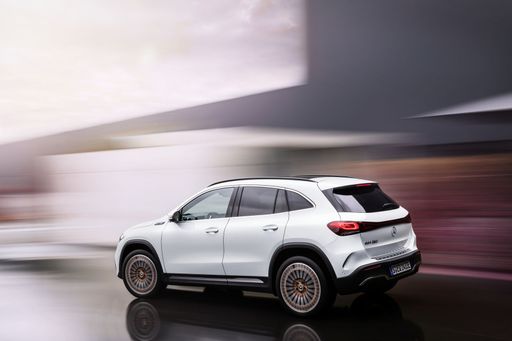
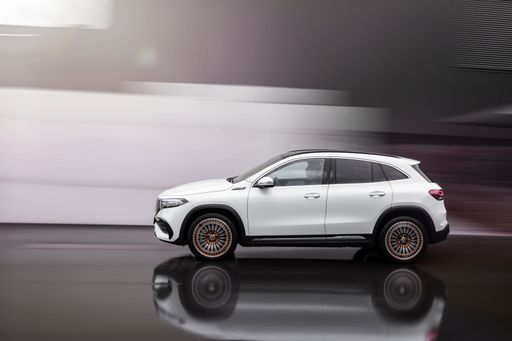
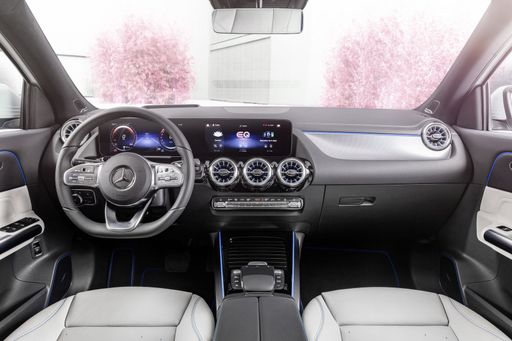
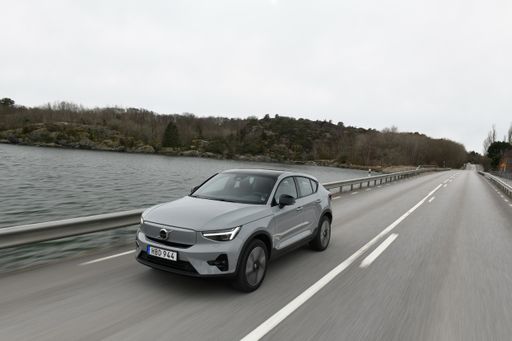
Volvo EC40 vs Mercedes EQA comparison

Compare performance (442 HP vs 292 HP), boot space and price (46,600 £ vs 44,200 £ ) at a glance. Find out which car is the better choice for you – Volvo EC40 or Mercedes EQA?

Volvo EC40 vs Mercedes EQA: Key differences

Volvo EC40

4.7 (1 Reviews)
rate
  • markedly more power
  • marginally more electric range
  • visibly quicker 0–100 km/h
  • moderately more trunk space

Mercedes EQA

5 (1 Reviews)
rate
  • marginally cheaper
  • somewhat more efficient
  • barely lighter
EC40

Introduction: A New Era of Compact Electric SUVs

As the automotive industry pivots towards electrification, the compact SUV segment is rapidly gaining traction among eco-conscious consumers. Two formidable contenders in this space are the Mercedes EQA and the Volvo EC40. These electric SUVs offer a blend of luxury, performance, and sustainability, vying for supremacy. Let’s delve into their technical aspects and innovative features to see how they stack up against each other.
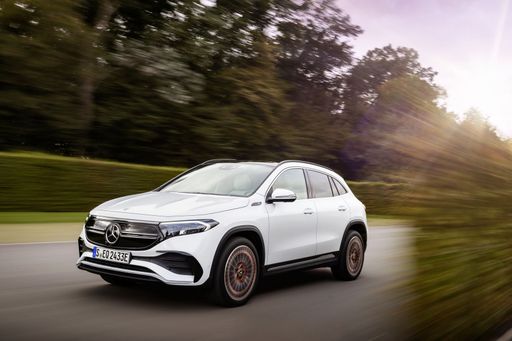
EQA

Performance and Power: A Tale of Two Drives

The Mercedes EQA is equipped with an electric motor producing between 190 and 292 HP, available in both front-wheel and all-wheel drive configurations. Its acceleration ranges from 8.6 to a brisk 6 seconds for 0 to 100 km/h, depending on the variant. With a maximum speed of 160 km/h, the EQA delivers a solid driving experience.

On the other hand, the Volvo EC40 offers slightly more potent performance options, producing between 238 and 408 HP. Available with rear-wheel and all-wheel drive options, it accelerates from 0 to 100 km/h in as fast as 4.6 seconds. Its top speed reaches 180 km/h, showcasing Volvo’s commitment to safety without compromising excitement.

Range and Efficiency: Where Distance Meets Economy

The EQA provides a commendable electric range, extending from 458 to 561 km on a single charge, with consumption varying from 14.4 to 16.9 kWh/100km. Its battery capacity ranges from 66.5 to 70.5 kWh, perfectly balancing power with efficiency.

Meanwhile, the EC40 competes fiercely with a range of 487 to 584 km, and energy consumption spanning from 16.2 to 17.3 kWh/100km. Boasting a slightly larger battery capacity of up to 79 kWh, the EC40 impresses with its efficiency over long distances.

Design and Dimensions: Crafting the Aesthetic

In terms of design, the EQA and EC40 are both quintessential examples of their brands. The EQA measures 4463 mm in length, 1834 mm in width, and up to 1613 mm in height, offering a compact yet substantial presence. Mercedes' signature styling and aerodynamic efficiency are evident throughout.

The EC40 stands slightly shorter, measuring 4440 mm in length and 1591 mm in height but rewards with greater width at 1873 mm. Volvo's contemporary design language shines, harmonizing aesthetics with function.

Interior Comfort and Space: Luxury Meets Utility

Both models seat up to five passengers comfortably. The EQA offers a trunk capacity of 340 liters, suitable for everyday needs. With the focus on luxury, Mercedes has integrated high-end materials and technology to enhance the driving experience.

The EC40 outmatches with a more generous trunk space of 404 liters, presenting Volvo's dedication to practicality. Interior design is infused with Scandinavian minimalism, offering both style and functionality.

Conclusion: Choosing the Right Fit

In choosing between the Mercedes EQA and Volvo EC40, buyers are treated to top-tier innovation and distinct personality traits. The EQA appeals to those seeking a blend of luxury and efficiency, complemented by Mercedes' hallmark features. Meanwhile, the EC40 caters to performance enthusiasts who prioritize cutting-edge design and spirited driving dynamics.

Ultimately, both models validate the shift towards electrification, representing a significant stride towards sustainable urban mobility. Whether you prefer the German precision of the EQA or the Scandinavian charm of the EC40, both of these electric SUVs represent the future of sustainable luxury.

Here’s where it gets real: The technical differences in detail

EC40

Costs and Efficiency:

Price and efficiency are often the first things buyers look at. Here it becomes clear which model has the long-term edge – whether at the pump, the plug, or in purchase price.

Mercedes EQA is marginally cheaper – starting at 44,200 £ , while the Volvo EC40 costs 46,600 £ . That’s a price difference of around 2,383 £.

In terms of energy consumption, the Mercedes EQA is somewhat more efficient: consuming 14.4 kWh/100km compared to 16.2 kWh/100km for the Volvo EC40. That’s a difference of about 1.8 kWh/100km.

As for electric range, the Volvo EC40 offers marginally more range – reaching up to 584 km, about 23 km more than the Mercedes EQA.

EQA

Engine and Performance:

Power, torque and acceleration are the classic benchmarks for car enthusiasts – and here, some clear differences start to show.

When it comes to engine power, the Volvo EC40 offers markedly more power – delivering 442 HP compared to 292 HP. That’s roughly 150 HP more horsepower.

When accelerating from 0 to 100 km/h, the Volvo EC40 is visibly quicker – completing the sprint in 4.6 s, while the Mercedes EQA takes 6 s. That’s about 1.4 s quicker.

Looking at top speed, the Volvo EC40 is somewhat faster – reaching 180 km/h, while the Mercedes EQA tops out at 160 km/h. The difference is around 20 km/h.

There’s also a difference in torque: the Volvo EC40 delivers visibly more torque with 670 Nm compared to 520 Nm. That’s about 150 Nm more.

Space and Everyday Use:

Whether family car or daily driver – which one offers more room, flexibility and comfort?

Both vehicles offer seating for 5 people.

In terms of curb weight, Mercedes EQA is barely lighter – 2,045 kg compared to 2,065 kg. The difference is around 20 kg.

Looking at boot space, the Volvo EC40 offers moderately more boot space – 404 L compared to 340 L. That’s a difference of about 64 L.

For maximum load capacity, the Mercedes EQA offers only slightly more capacity – up to 1,320 L, about 124 L more than the Volvo EC40.

When it comes to payload, the Volvo EC40 carries very slightly more – 435 kg compared to 425 kg. That’s a difference of about 10 kg.

Who wins the race in the data check?

The Volvo EC40 is clearly superior overall in the objective data comparison.
This result only shows which model scores more points on paper – not which of the two cars feels right for you.

from £46,600
EC40

Volvo EC40

  • Engine Type : Electric
  • Transmission : Automatic
  • Drive Type : Rear-Wheel Drive, All-Wheel Drive
  • Power HP : 238 - 442 HP
  • Consumption kWh/100km : 16.2 - 17.3 kWh/100km
  • Electric Range : 488 - 584 km
Volvo EC40
Mercedes EQA

Costs and Consumption

View detailed analysis

Engine and Performance

View detailed analysis

Dimensions and Body

View detailed analysis

Volvo EC40

The Volvo EC40 feels like a polished slice of Scandinavian calm on wheels, blending minimalist design with a cocoon-like interior that makes everyday driving surprisingly serene. It’s an electric compact that puts safety and comfort front and center, while still injecting enough personality and tech-savvy charm to keep city buyers smiling.

details

Mercedes EQA

The Mercedes EQA slips into the electric crossover ranks with the brand’s familiar luxury polish, offering a quiet, fuss-free drive that feels perfectly at home in the city or on a country escape. Inside it’s neatly finished and tech-forward, projecting grown-up refinement even if it plays things a bit safe for anyone chasing outright excitement.

details
Volvo EC40
Mercedes EQA

Costs and Consumption

Price
46,600 - 59,000 £
Price
44,200 - 57,400 £
Consumption L/100km
-
Consumption L/100km
-
Consumption kWh/100km
16.2 - 17.3 kWh/100km
Consumption kWh/100km
14.4 - 16.9 kWh/100km
Electric Range
488 - 584 km
Electric Range
476 - 561 km
Battery Capacity
67 - 79 kWh
Battery Capacity
70.5 kWh
co2
0 g/km
co2
0 g/km
Fuel tank capacity
-
Fuel tank capacity
-

Dimensions and Body

Body Type
SUV
Body Type
SUV
Seats
5
Seats
5
Doors
5
Doors
5
Curb weight
2,065 - 2,185 kg
Curb weight
2,045 - 2,115 kg
Trunk capacity
404 L
Trunk capacity
340 L
Length
4,440 mm
Length
4,463 mm
Width
1,873 mm
Width
1,834 mm
Height
1,591 mm
Height
1,608 - 1,613 mm
Max trunk capacity
1,196 L
Max trunk capacity
1,320 L
Payload
395 - 435 kg
Payload
425 kg

Engine and Performance

Engine Type
Electric
Engine Type
Electric
Transmission
Automatic
Transmission
Automatic
Transmission Detail
Reduction Gearbox
Transmission Detail
Reduction Gearbox
Drive Type
Rear-Wheel Drive, All-Wheel Drive
Drive Type
Front-Wheel Drive, All-Wheel Drive
Power HP
238 - 442 HP
Power HP
190 - 292 HP
Acceleration 0-100km/h
4.6 - 7.3 s
Acceleration 0-100km/h
6 - 8.6 s
Max Speed
180 km/h
Max Speed
160 km/h
Torque
420 - 670 Nm
Torque
385 - 520 Nm
Number of Cylinders
-
Number of Cylinders
-
Power kW
175 - 325 kW
Power kW
140 - 215 kW
Engine capacity
-
Engine capacity
-

General

Model Year
2,024
Model Year
2,024 - 2,025
CO2 Efficiency Class
A
CO2 Efficiency Class
A
Brand
Volvo
Brand
Mercedes-Benz
DriveDuel uses data analysis and artificial intelligence to evaluate vehicle data and create content. Content is regularly reviewed and improved. The displayed prices are estimates based on German list prices, adjusted to the respective country’s VAT. Country-specific registration taxes are not included. This information is not legally binding.