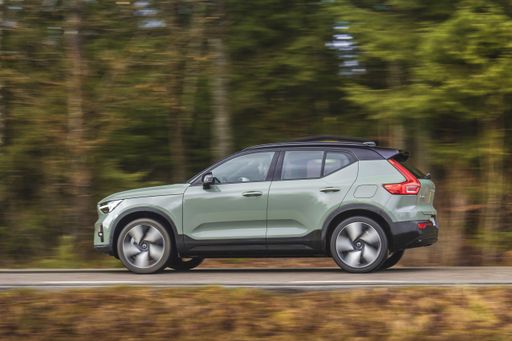
VS

Volvo EC40 vs Volvo EX40 comparison

Compare performance (442 HP vs 442 HP), boot space and price (46,600 £ vs 42,800 £ ) at a glance. Find out which car is the better choice for you – Volvo EC40 or Volvo EX40?

Volvo EC40 vs Volvo EX40: Key differences

Volvo EC40

4.7 (1 Reviews)
rate
  • barely more efficient
  • only slightly more electric range

Volvo EX40

5 (1 Reviews)
rate
  • very slightly cheaper
  • marginally lighter
  • barely more trunk space
EC40

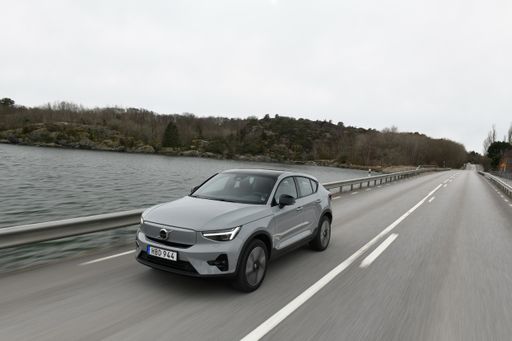
Volvo has carved out a niche in the electric vehicle market with its innovative lineup, and the release of the EC40 and EX40 models further solidifies the brand's commitment to sustainability and cutting-edge technology. In this comparison, we will delve into the technical specifications, performance metrics, and unique features of both the Volvo EC40 and EX40 to help you determine which electric SUV might be the right fit for your lifestyle.
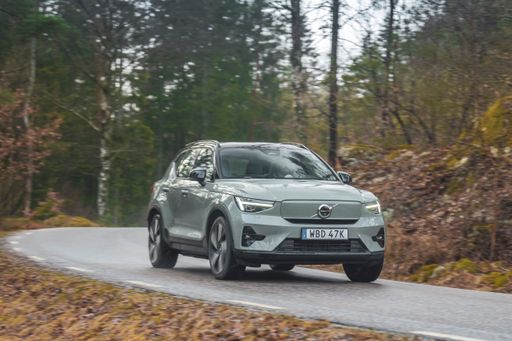
EX40

Design and Dimensions

Both the Volvo EC40 and EX40 share a similar design language that blends sleek lines with a robust SUV stance. Measuring 4440 mm in length, the vehicles are spacious enough to accommodate five passengers comfortably. However, while the EC40 stands at 1591 mm, the EX40 is slightly taller at 1647 mm, providing a more commanding view of the road.

In terms of width, the EC40 is 1873 mm wide compared to the EX40’s 1863 mm, resulting in minimal differences in maneuverability. Both models feature five doors for easy access and a consistent aesthetic that underscores Volvo’s commitment to premium design.

Performance and Powertrain Comparison

The EC40 is available with two power outputs: a 175 kW variant offering 238 HP and a 185 kW variant providing 252 HP. The EX40 steps up the game with two additional options, reaching up to 300 kW or 408 HP, catering to drivers looking for more exhilarating performance. This enhancement in the EX40’s performance is evident in its acceleration; the higher-powered variant achieves 0-100 km/h in a mere 4.8 seconds, a significant improvement over the EC40's 7.3 seconds.

Both models utilize a rear-wheel drive layout, but the EX40 also offers an all-wheel drive option for those who require enhanced traction and stability, especially in challenging weather conditions.

Battery and Range

Both the EC40 and EX40 feature two battery size options: 67 kWh and 79 kWh. The EC40 provides an electric range of up to 584 km, while the EX40 offers a slightly lower maximum range of 576 km but achieves comparable performance metrics across its different power variants. With consumption rates of 16.2 to 17.5 kWh/100 km for the EC40 and EX40, respectively, both vehicles maintain excellent efficiency scores.

Interior Comfort and Trunk Capacity

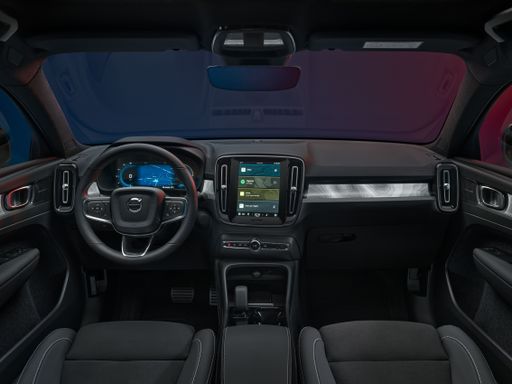
Inside, both models prioritize comfort and technology, with ample legroom for all passengers. The trunk capacity of the EC40 is 404 liters, which minimally expands to 410 liters in the EX40, providing sufficient space for luggage or other cargo. Standard features in both SUVs include state-of-the-art infotainment systems and safety features synonymous with the Volvo brand.

Safety and Sustainability

True to its heritage, Volvo emphasizes safety as a core value in both the EC40 and EX40. Both models come with advanced safety technologies including automatic emergency braking, lane-keeping assistance, and adaptive cruise control, ensuring peace of mind whether you’re commuting in urban settings or embarking on a road trip. With a CO2 efficiency class rating of “A,” these vehicles showcase their electric prowess while contributing to a lower carbon footprint.

Conclusion: Which One to Choose?

Deciding between the Volvo EC40 and EX40 largely depends on your personal preferences and driving needs. If you seek a budget-friendly, efficient electric SUV that doesn’t compromise on comfort and tech, the EC40 is a stellar choice. However, if you require additional power, quicker acceleration, and the versatility of all-wheel drive, the EX40 stands out as the more compelling option. Either way, both models reflect Volvo’s dedication to innovation, safety, and sustainability in the electric vehicle space.

Here’s where it gets real: The technical differences in detail

EC40

Costs and Efficiency:

When it comes to price and running costs, the biggest differences usually appear. This is often where you see which car fits your budget better in the long run.

Volvo EX40 is very slightly cheaper – starting at 42,800 £ , while the Volvo EC40 costs 46,600 £ . That’s a price difference of around 3,772 £.

In terms of energy consumption, the Volvo EC40 is barely more efficient: consuming 16.2 kWh/100km compared to 16.6 kWh/100km for the Volvo EX40. That’s a difference of about 0.4 kWh/100km.

As for electric range, the Volvo EC40 offers only slightly more range – reaching up to 584 km, about 8 km more than the Volvo EX40.

EX40

Engine and Performance:

Under the bonnet, it becomes clear which model is tuned for sportiness and which one takes the lead when you hit the accelerator.

Both models deliver identical power – 442 HP each.

Both models accelerate almost equally fast – 4.6 s from 0 to 100 km/h.

There’s no difference in top speed – both reach 180 km/h.

Both models offer the same torque – 670 Nm.

Space and Everyday Use:

Cabin size, boot volume and payload all play a role in everyday practicality. Here, comfort and flexibility make the difference.

Both vehicles offer seating for 5 people.

In terms of curb weight, Volvo EX40 is marginally lighter – 2,040 kg compared to 2,065 kg. The difference is around 25 kg.

Looking at boot space, the Volvo EX40 offers barely more boot space – 410 L compared to 404 L. That’s a difference of about 6 L.

For maximum load capacity, the Volvo EX40 offers a bit more capacity – up to 1,400 L, about 204 L more than the Volvo EC40.

When it comes to payload, the Volvo EX40 carries barely more – 480 kg compared to 435 kg. That’s a difference of about 45 kg.

Who wins the race in the data check?

The Volvo EX40 shows a few small advantages in the objective data comparison.
This result only shows which model scores more points on paper – not which of the two cars feels right for you.

from £42,800
EX40

Volvo EX40

  • Engine Type : Electric
  • Transmission : Automatic
  • Drive Type : Rear-Wheel Drive, All-Wheel Drive
  • Power HP : 238 - 442 HP
  • Consumption kWh/100km : 16.6 - 17.6 kWh/100km
  • Electric Range : 480 - 576 km
Volvo EC40
Volvo EX40

Costs and Consumption

View detailed analysis

Engine and Performance

View detailed analysis

Dimensions and Body

View detailed analysis

Volvo EC40

The Volvo EC40 feels like a polished slice of Scandinavian calm on wheels, blending minimalist design with a cocoon-like interior that makes everyday driving surprisingly serene. It’s an electric compact that puts safety and comfort front and center, while still injecting enough personality and tech-savvy charm to keep city buyers smiling.

details

Volvo EX40

The Volvo EX40 wraps Scandinavian calm and clever practicality into a compact electric package that feels both premium and refreshingly uncomplicated. It's the grown-up answer to flashier rivals — a safe, comfy, and city-friendly EV with thoughtful tech that makes everyday driving quietly satisfying.

details
Volvo EC40
Volvo EX40

Costs and Consumption

Price
46,600 - 59,000 £
Price
42,800 - 58,200 £
Consumption L/100km
-
Consumption L/100km
-
Consumption kWh/100km
16.2 - 17.3 kWh/100km
Consumption kWh/100km
16.6 - 17.6 kWh/100km
Electric Range
488 - 584 km
Electric Range
480 - 576 km
Battery Capacity
67 - 79 kWh
Battery Capacity
67 - 79 kWh
co2
0 g/km
co2
0 g/km
Fuel tank capacity
-
Fuel tank capacity
-

Dimensions and Body

Body Type
SUV
Body Type
SUV
Seats
5
Seats
5
Doors
5
Doors
5
Curb weight
2,065 - 2,185 kg
Curb weight
2,040 - 2,170 kg
Trunk capacity
404 L
Trunk capacity
410 L
Length
4,440 mm
Length
4,440 mm
Width
1,873 mm
Width
1,863 mm
Height
1,591 mm
Height
1,647 mm
Max trunk capacity
1,196 L
Max trunk capacity
1,400 L
Payload
395 - 435 kg
Payload
430 - 480 kg

Engine and Performance

Engine Type
Electric
Engine Type
Electric
Transmission
Automatic
Transmission
Automatic
Transmission Detail
Reduction Gearbox
Transmission Detail
Reduction Gearbox
Drive Type
Rear-Wheel Drive, All-Wheel Drive
Drive Type
Rear-Wheel Drive, All-Wheel Drive
Power HP
238 - 442 HP
Power HP
238 - 442 HP
Acceleration 0-100km/h
4.6 - 7.3 s
Acceleration 0-100km/h
4.6 - 7.3 s
Max Speed
180 km/h
Max Speed
180 km/h
Torque
420 - 670 Nm
Torque
420 - 670 Nm
Number of Cylinders
-
Number of Cylinders
-
Power kW
175 - 325 kW
Power kW
175 - 325 kW
Engine capacity
-
Engine capacity
-

General

Model Year
2,024
Model Year
2,024
CO2 Efficiency Class
A
CO2 Efficiency Class
A
Brand
Volvo
Brand
Volvo
DriveDuel uses data analysis and artificial intelligence to evaluate vehicle data and create content. Content is regularly reviewed and improved. The displayed prices are estimates based on German list prices, adjusted to the respective country’s VAT. Country-specific registration taxes are not included. This information is not legally binding.