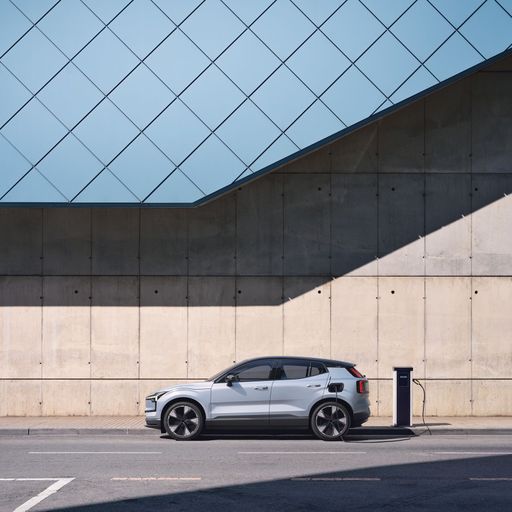
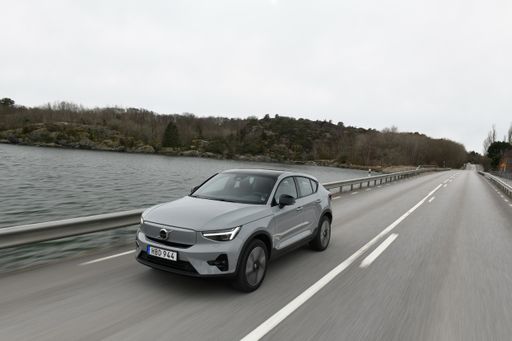
VS

Volvo EX30 vs Volvo EC40 comparison

Compare performance (428 HP vs 442 HP), boot space and price (30,000 £ vs 46,500 £ ) at a glance. Find out which car is the better choice for you – Volvo EX30 or Volvo EC40?

Volvo EX30 vs Volvo EC40: Key differences

Volvo EX30

3.5 (8 Reviews)
rate
  • considerably cheaper
  • noticeably quicker 0–100 km/h
  • somewhat lighter
details

Volvo EC40

4.7 (1 Reviews)
rate
  • barely more power
  • very slightly more efficient
  • somewhat more electric range
  • visibly more trunk space
details

All details on performance, efficiency, range and trunk space can be found in the technical comparison below – including user reviews for both models.

By Achim Sedelmaier

EX30

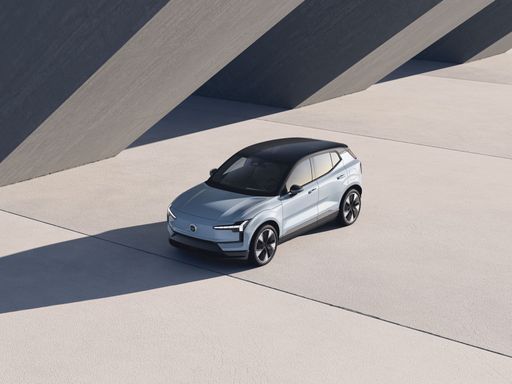
Volvo EX30 vs Volvo EC40 — first look at two compact Volvo EVs

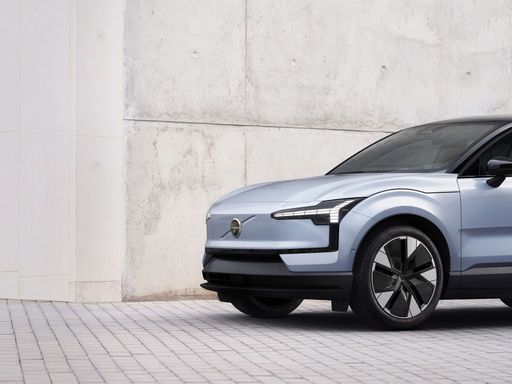
The Volvo EX30 and Volvo EC40 sit in the same small‑SUV family but take markedly different approaches to the same brief. The EX30 leans into minimalism, punchy acceleration and urban agility, while the EC40 favors a more cocooned, comfort‑first experience and a higher level of refinement. If you search for Volvo EX30 VS Volvo EC40 comparisons, the conversation quickly becomes one of trade‑offs: liveliness and value against calmness and long‑distance composure. Both wear a Volvo badge and Google infotainment, yet they will appeal to quite different daily needs and expectations.
EC40

Character and driving feel: sharp city sprinter vs relaxed cruiser

The EX30 drives like a small, eager car — light on its feet, with immediate throttle response that makes short sprints and city overtakes feel lively. The EC40, by contrast, is built around steadiness: it feels heavier and more planted, rewarding steady inputs and offering a composed demeanor at speed. That contrast means the EX30 will satisfy buyers who enjoy punchy, engaging bursts in town, whereas the EC40 will suit those who prefer a settled, predictable companion for long drives. Steering and suspension tuning underline the split: the EX30 prioritizes agility, the EC40 prioritizes serenity.

EX30

Comfort and long‑distance behavior: front‑row comfort vs true touring calm

Both Volvos put comfort high on the list, but they deliver it differently. The EX30 surprises with very comfortable front seats and a soft, forgiving ride that makes shorter highway runs pleasant, though its rear seat and cargo compromises become obvious on extended trips. The EC40 trades a touch of urban nimbleness for superior noise insulation and seat support, so long motorway stretches feel less tiring and more refined. If you regularly cover long distances with adult passengers, the EC40’s quieter cabin and broader seat adjustability will be noticeably kinder than the EX30’s compact packaging.

Usability and cabin practicality: minimalist style vs conventional ergonomics

The EX30 leans hard into a minimal, screen‑centric interior that looks modern but forces compromises in everyday usability: menus replace physical controls and the rear space is tight. The EC40 keeps a more traditional Volvo sensibility in terms of seating comfort and perceived material quality, even if the coupé‑style roofline trims headroom and rear visibility. Storage, door bins and luggage handling feel more practical in the EC40 for habitual passengers, while the EX30 scores when you need to squeeze into tight urban spaces or want a fuss‑free driving position up front. Both suffer some touchscreen ergonomics, but the trade‑off is stylish, restrained cabins versus conventional convenience.

City friendliness and everyday usability: tiny footprint vs relaxed commuter

In the city, the EX30’s compact dimensions, easy steering and parking aids make life noticeably simpler; it’s forgiving in tight spots and feels at home on busy streets. The EC40 is still usable in town but its heavier presence and reduced rear sightlines make low‑speed maneuvers feel less effortless than in the EX30. For commuters who split time between congested urban driving and long motorway stints, the EC40’s more comfortable seats and quieter cabin will win on fatigue, while urban‑first buyers will appreciate the EX30’s agility and lower running costs. Both offer good driver assistance, but the EX30’s camera and sensor package is particularly useful in tight parking situations.

Buyer fit: who should choose which — and why the details matter

Choose the Volvo EX30 if you prioritise value, city manoeuvrability and a modern, punchy driving experience with strong front‑seat comfort and a compact footprint. Opt for the Volvo EC40 if you do a lot of motorway miles, carry adults in the back regularly and want the quietest, most composed cabin with conventional usability and stronger long‑distance manners. The decision comes down to daily patterns: the EX30 rewards urban agility and lower entry cost, the EC40 rewards touring comfort and perceived refinement. The technical comparison that follows will unpack the drivetrain, range and charging trade‑offs that translate these character differences into everyday consequences.

Here’s where it gets real: The technical differences in detail

EX30

Costs and Efficiency:

Price and efficiency are often the first things buyers look at. Here it becomes clear which model has the long-term edge – whether at the pump, the plug, or in purchase price.

Volvo EX30 is considerably cheaper – starting at 30,000 £ , while the Volvo EC40 costs 46,500 £ . That’s a price difference of around 16,543 £.

In terms of energy consumption, the Volvo EC40 is very slightly more efficient: consuming 16.2 kWh/100km compared to 17 kWh/100km for the Volvo EX30. That’s a difference of about 0.8 kWh/100km.

As for electric range, the Volvo EC40 offers somewhat more range – reaching up to 585 km, about 110 km more than the Volvo EX30.

EC40

Engine and Performance:

Power, torque and acceleration are the classic benchmarks for car enthusiasts – and here, some clear differences start to show.

When it comes to engine power, the Volvo EC40 offers barely more power – delivering 442 HP compared to 428 HP. That’s roughly 14 HP more horsepower.

When accelerating from 0 to 100 km/h, the Volvo EX30 is noticeably quicker – completing the sprint in 3.6 s, while the Volvo EC40 takes 4.6 s. That’s about 1 s quicker.

There’s also a difference in torque: the Volvo EC40 delivers moderately more torque with 670 Nm compared to 543 Nm. That’s about 127 Nm more.

EX30

Space and Everyday Use:

Cabin size, boot volume and payload all play a role in everyday practicality. Here, comfort and flexibility make the difference.

Both vehicles offer seating for 5 people.

In terms of curb weight, Volvo EX30 is somewhat lighter – 1,840 kg compared to 2,065 kg. The difference is around 225 kg.

Looking at boot space, the Volvo EC40 offers visibly more boot space – 404 L compared to 318 L. That’s a difference of about 86 L.

When it comes to payload, the Volvo EC40 carries a bit more – 435 kg compared to 390 kg. That’s a difference of about 45 kg.

Who wins the race in the data check?

The Volvo EX30 holds a slight edge in the objective data comparison.
This result only shows which model scores more points on paper – not which of the two cars feels right for you.

from £30,000
EX30

Volvo EX30

  • Engine Type Electric
  • Transmission Automatic
  • Drive Type Rear-Wheel Drive, All-Wheel Drive
  • Power HP 150 - 428 HP
  • Consumption kWh/100km 17 - 18.3 kWh/100km
  • Electric Range 339 - 475 km
Volvo EX30
Volvo EC40

Costs and Consumption

View detailed analysis

Engine and Performance

View detailed analysis

Dimensions and Body

View detailed analysis

Volvo EX30

The Volvo EX30 is a compact all-electric crossover that mixes Volvo's strong safety focus with clean Scandinavian design for a really city-friendly package. It feels lively and easy to live with, pairing a premium-feeling interior and modern connectivity with a practical footprint for urban driving.

details

Volvo EC40

The Volvo EC40 feels like a polished slice of Scandinavian calm on wheels, blending minimalist design with a cocoon-like interior that makes everyday driving surprisingly serene. It’s an electric compact that puts safety and comfort front and center, while still injecting enough personality and tech-savvy charm to keep city buyers smiling.

details
Volvo EX30
Volvo EC40

Costs and Consumption

Price
30,000 - 47,800 £
Price
46,500 - 56,800 £
Consumption L/100km
-
Consumption L/100km
-
Consumption kWh/100km
17 - 18.3 kWh/100km
Consumption kWh/100km
16.2 - 17.3 kWh/100km
Electric Range
339 - 475 km
Electric Range
486 - 585 km
Battery Capacity
-
Battery Capacity
-
co2
0 g/km
co2
0 g/km
Fuel tank capacity
-
Fuel tank capacity
-

Dimensions and Body

Body Type
SUV
Body Type
SUV
Seats
5
Seats
5
Doors
-
Doors
-
Curb weight
1,840 - 1,960 kg
Curb weight
2,065 - 2,185 kg
Trunk capacity
318 L
Trunk capacity
404 L
Length
-
Length
-
Width
1,838 mm
Width
1,873 mm
Height
-
Height
-
Max trunk capacity
-
Max trunk capacity
-
Payload
370 - 390 kg
Payload
395 - 435 kg

Engine and Performance

Engine Type
Electric
Engine Type
Electric
Transmission
Automatic
Transmission
Automatic
Transmission Detail
Reduction Gearbox
Transmission Detail
Reduction Gearbox
Drive Type
Rear-Wheel Drive, All-Wheel Drive
Drive Type
Rear-Wheel Drive, All-Wheel Drive
Power HP
150 - 428 HP
Power HP
238 - 442 HP
Acceleration 0-100km/h
3.6 - 8.6 s
Acceleration 0-100km/h
4.6 - 7.3 s
Max Speed
-
Max Speed
-
Torque
343 - 543 Nm
Torque
420 - 670 Nm
Number of Cylinders
-
Number of Cylinders
-
Power kW
110 - 315 kW
Power kW
175 - 325 kW
Engine capacity
-
Engine capacity
-

General

Model Year
2026
Model Year
2,024 - 2,026
CO2 Efficiency Class
A
CO2 Efficiency Class
A
Brand
Volvo
Brand
Volvo
DriveDuel uses data analysis and artificial intelligence to evaluate vehicle data and create content. Content is regularly reviewed and improved. The displayed prices are estimates based on German list prices, adjusted to the respective country’s VAT. Country-specific registration taxes are not included. This information is not legally binding.