VS

Volvo XC40 vs Mazda CX-5 comparison

Compare performance (197 HP vs 141 HP), boot space and price (36,800 £ vs 30,000 £ ) at a glance. Find out which car is the better choice for you – Volvo XC40 or Mazda CX-5?

Volvo XC40 vs Mazda CX-5: Key differences

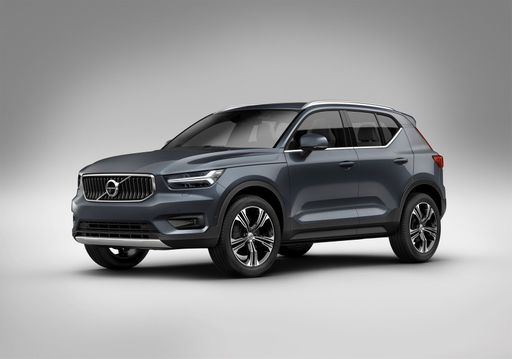
Volvo XC40

5 (4 Reviews)
rate
  • visibly more power
  • very slightly more efficient
  • noticeably quicker 0–100 km/h

Mazda CX-5

4.6 (7 Reviews)
rate
  • markedly cheaper
  • only slightly lighter
  • visibly more trunk space

All details on performance, efficiency, range and trunk space can be found in the technical comparison below – including user reviews for both models.

XC40

The mid-sized SUV market has become increasingly competitive, with consumers seeking a blend of performance, comfort, and cutting-edge technology. In this article, we will compare two popular models: the Mazda CX-5 and the Volvo XC40. Both vehicles boast impressive features, but they cater to different preferences. Let's dive deeper into their technical specifications, innovations, and overall performance.

CX-5

Design and Dimensions

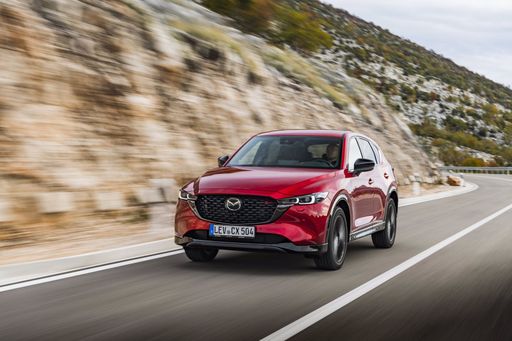
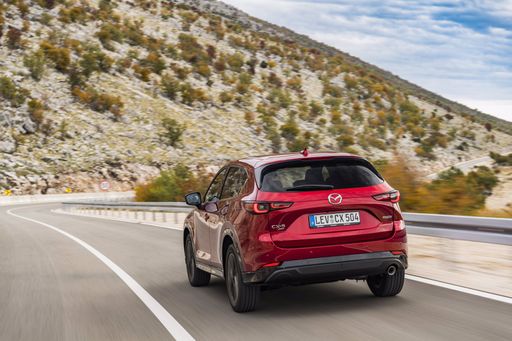
The Mazda CX-5 presents a sleek and sporty design, standing at 4575 mm in length, 1845 mm in width, and 1680 mm in height. Its bold front grille and flowing lines contribute to a more dynamic appearance. In contrast, the Volvo XC40 is slightly smaller at 4425 mm long, 1863 mm wide, and 1652 mm high. This compact SUV has a more minimalist and elegant design, typical of Volvo's Scandinavian ethos.

XC40

Performance Features

When it comes to engines, the Mazda CX-5 offers flexibility with options for petrol MHEV and diesel engines, delivering power outputs ranging from 150 to 194 HP, depending on the configuration. Its engines provide impressive torque figures, with the maximum reaching 445 Nm, ensuring a spirited driving experience. Furthermore, the CX-5 can accelerate from 0-100 km/h in as little as 9.2 seconds, highlighting its sporty nature.

On the other hand, the Volvo XC40 is equipped solely with petrol MHEV engines, producing between 163 to 197 HP. The torque of the XC40 peaks at 300 Nm, providing ample power for both city and highway driving. This model boasts faster acceleration times, capable of reaching 0-100 km/h in just 7.6 seconds, making it a performance-oriented choice.

CX-5

Driving Dynamics and Comfort

The CX-5 can be configured with either front-wheel drive or all-wheel drive, allowing for better handling across various terrains. Its suspension system strikes a balance between comfort and sportiness, making it enjoyable for both daily commuting and long-distance driving.

Meanwhile, the XC40 features front-wheel drive and utilizes a dual-clutch automatic transmission, providing rapid gear shifts and a smooth driving experience. The XC40 is celebrated for its comfort and refinement, featuring a spacious interior that prioritizes passenger comfort and a quiet ride, characteristic of the Volvo brand.

XC40

Fuel Efficiency and Emissions

In terms of fuel efficiency, both SUVs are competitive. The Mazda CX-5 showcases various configurations that can achieve consumption figures as low as 5.6 L/100km, depending on the engine choice. The CO2 emissions range from 146 to 173 g/km, depending on the variant, placing it in the E and F efficiency classes.

The Volvo XC40, however, matches this performance with a consumption figure of just 6.5 L/100km and an impressive CO2 emission rating of 147 g/km, also placing it in the E efficiency class. This demonstrates Volvo's commitment to sustainability without compromising performance.

CX-5

Interior Technology and Safety Innovations

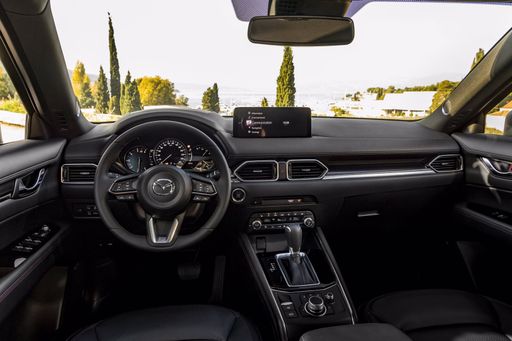
Inside, the Mazda CX-5 features an intuitive layout with a focus on driver engagement. The infotainment system, while functional, has drawn critiques for its somewhat dated interface compared to competitors. Mazda offers various tech options, including advanced safety features that enhance drive assistance and occupant protection.

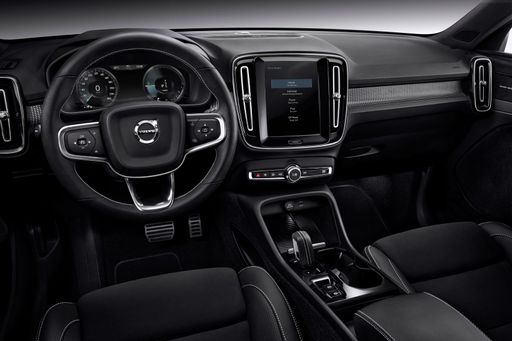
The XC40, in contrast, comes equipped with Volvo's latest infotainment system, integrating Google services for a more connected experience. This user-friendly system is lauded for its responsiveness and seamless smartphone compatibility. Additionally, Volvo is renowned for its emphasis on safety, offering a comprehensive suite of driver-assistance systems as standard, further reinforcing its reputation as a leader in this arena.

XC40

Conclusion

Choosing between the Mazda CX-5 and the Volvo XC40 ultimately depends on individual preferences. The CX-5 shines for those seeking a sporty design and versatile engine options. In contrast, the XC40 appeals to buyers who prioritize performance, cutting-edge technology, and comfort.

Both models provide excellent value in the mid-sized SUV segment, ensuring they remain popular choices for year-round driving. Whether you lean towards the spirited handling of the CX-5 or the refined luxury of the XC40, both vehicles represent the best of their respective brands.

Here’s where it gets real: The technical differences in detail

XC40

Costs and Efficiency:

Looking at overall running costs, both models reveal some interesting differences in everyday economy.

Mazda CX-5 is markedly cheaper – starting at 30,000 £ , while the Volvo XC40 costs 36,800 £ . That’s a price difference of around 6,771 £.

Fuel consumption also shows a difference: the Volvo XC40 uses 6.5 L/100km and is very slightly more efficient than the Mazda CX-5 with 7 L/100km. The difference is about 0.5 L/100km.

CX-5

Engine and Performance:

Power, torque and acceleration say a lot about how a car feels on the road. This is where you see which model delivers more driving dynamics.

When it comes to engine power, the Volvo XC40 offers visibly more power – delivering 197 HP compared to 141 HP. That’s roughly 56 HP more horsepower.

When accelerating from 0 to 100 km/h, the Volvo XC40 is noticeably quicker – completing the sprint in 7.6 s, while the Mazda CX-5 takes 10.5 s. That’s about 2.9 s quicker.

Looking at top speed, the Mazda CX-5 is very slightly faster – reaching 195 km/h, while the Volvo XC40 tops out at 180 km/h. The difference is around 15 km/h.

There’s also a difference in torque: the Volvo XC40 delivers markedly more torque with 300 Nm compared to 238 Nm. That’s about 62 Nm more.

XC40

Space and Everyday Use:

Whether family car or daily driver – which one offers more room, flexibility and comfort?

Both vehicles offer seating for 5 people.

In terms of curb weight, Mazda CX-5 is only slightly lighter – 1,629 kg compared to 1,688 kg. The difference is around 59 kg.

Looking at boot space, the Mazda CX-5 offers visibly more boot space – 583 L compared to 452 L. That’s a difference of about 131 L.

For maximum load capacity, the Mazda CX-5 offers clearly more capacity – up to 2,019 L, about 691 L more than the Volvo XC40.

When it comes to payload, the Mazda CX-5 carries moderately more – 601 kg compared to 532 kg. That’s a difference of about 69 kg.

Who wins the race in the data check?

The Volvo XC40 sits just ahead overall in the objective data comparison.
This result only shows which model scores more points on paper – not which of the two cars feels right for you.

from £36,800
XC40

Volvo XC40

  • Engine Type : Petrol MHEV
  • Transmission : Automatic
  • Drive Type : Front-Wheel Drive
  • Power HP : 163 - 197 HP
  • Consumption L/100km : 6.5 L/100km
Volvo XC40
Mazda CX-5

Costs and Consumption

View detailed analysis

Engine and Performance

View detailed analysis

Dimensions and Body

View detailed analysis

Volvo XC40

The Volvo XC40 wraps Scandinavian minimalism into a compact, city-ready SUV with a premium cabin that feels both practical and grown-up. It will suit buyers who prize safety, clever storage and a composed ride, proving that small dimensions don't mean small personality.

details

Mazda CX-5

The Mazda CX-5 blends elegant, athletic styling with a surprisingly engaging driving character, turning routine trips into small, satisfying adventures. Inside it feels thoughtfully built and comfortable, offering sensible practicality and a premium feel that punches above its price.

details
Volvo XC40
Mazda CX-5

Costs and Consumption

Price
36,800 - 47,200 £
Price
30,000 - 39,500 £
Consumption L/100km
6.5 L/100km
Consumption L/100km
7 - 7.4 L/100km
Consumption kWh/100km
-
Consumption kWh/100km
-
Electric Range
-
Electric Range
-
Battery Capacity
-
Battery Capacity
-
co2
147 - 148 g/km
co2
157 - 168 g/km
Fuel tank capacity
54 L
Fuel tank capacity
56 - 58 L

Dimensions and Body

Body Type
SUV
Body Type
SUV
Seats
5
Seats
5
Doors
5
Doors
5
Curb weight
1,688 kg
Curb weight
1,629 - 1,671 kg
Trunk capacity
452 L
Trunk capacity
466 - 583 L
Length
4,425 mm
Length
4,690 mm
Width
1,863 mm
Width
1,860 mm
Height
1,652 mm
Height
1,695 mm
Max trunk capacity
1,328 L
Max trunk capacity
2,019 L
Payload
532 kg
Payload
601 kg

Engine and Performance

Engine Type
Petrol MHEV
Engine Type
Petrol MHEV
Transmission
Automatic
Transmission
Automatic
Transmission Detail
Dual-Clutch Automatic
Transmission Detail
Automatic Gearbox
Drive Type
Front-Wheel Drive
Drive Type
Front-Wheel Drive, All-Wheel Drive
Power HP
163 - 197 HP
Power HP
141 HP
Acceleration 0-100km/h
7.6 - 8.6 s
Acceleration 0-100km/h
10.5 - 10.9 s
Max Speed
180 km/h
Max Speed
195 km/h
Torque
265 - 300 Nm
Torque
238 Nm
Number of Cylinders
4
Number of Cylinders
4
Power kW
120 - 145 kW
Power kW
104 kW
Engine capacity
1,969 cm3
Engine capacity
2,488 cm3

General

Model Year
2,024
Model Year
2,025
CO2 Efficiency Class
E
CO2 Efficiency Class
F
Brand
Volvo
Brand
Mazda
DriveDuel uses data analysis and artificial intelligence to evaluate vehicle data and create content. Content is regularly reviewed and improved. The displayed prices are estimates based on German list prices, adjusted to the respective country’s VAT. Country-specific registration taxes are not included. This information is not legally binding.