VS

Volvo XC40 vs Mazda CX-60 comparison

Compare performance (197 HP vs 327 HP), boot space and price (36,800 £ vs 43,700 £ ) at a glance. Find out which car is the better choice for you – Volvo XC40 or Mazda CX-60?

Volvo XC40 vs Mazda CX-60: Key differences

Volvo XC40

5 (4 Reviews)
rate
  • moderately cheaper
  • somewhat lighter

Mazda CX-60

4.6 (7 Reviews)
rate
  • clearly more power
  • clearly more efficient
  • noticeably quicker 0–100 km/h
  • clearly more trunk space

All details on performance, efficiency, range and trunk space can be found in the technical comparison below – including user reviews for both models.

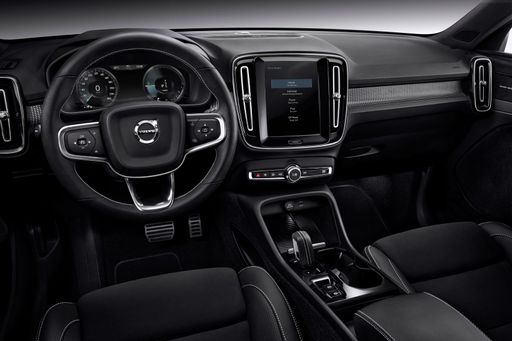
XC40

In the ever-evolving world of SUVs, the compact SUV segment continues to grow in popularity, leading automotive enthusiasts to compare standout contenders like the Mazda CX-60 and the Volvo XC40. Both vehicles boast contemporary design, innovative technology, and driving comfort, but they approach the market with distinct philosophies. In this article, we will closely examine the technical aspects, innovations, and overall performance of these two vehicles to help you make an informed choice.
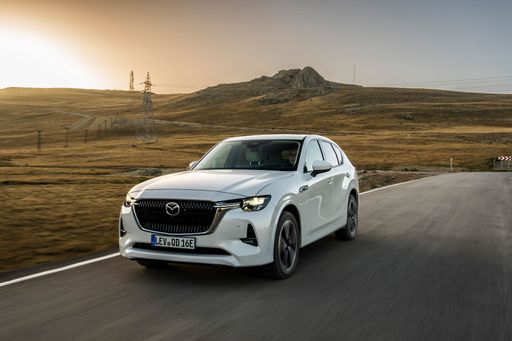
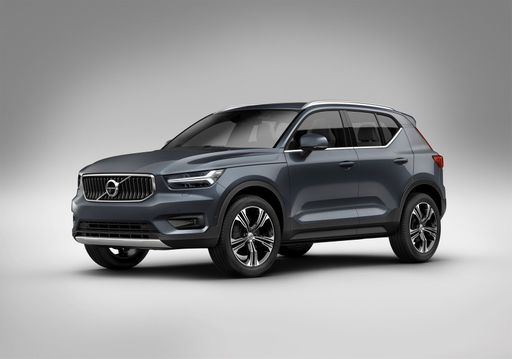
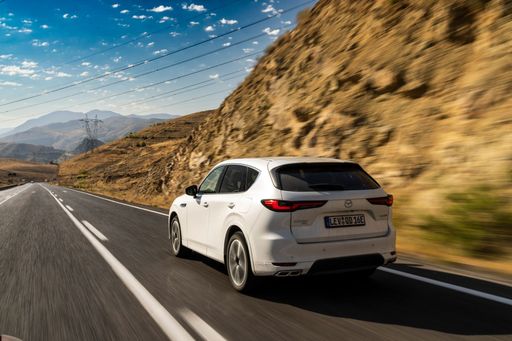
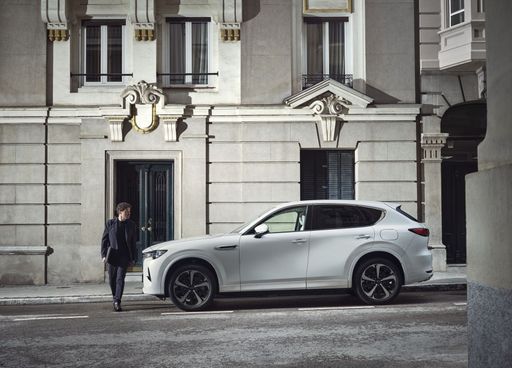
CX-60

Performance and Engine Options

The Mazda CX-60 comes with a choice of powertrains that cater to a variety of preferences. It offers a plug-in hybrid with 327 HP and a diesel mild-hybrid engine that generates power levels of 200 HP and 254 HP, supported by an automatic gearbox. This versatility means drivers can select between impressive electric range and fuel efficiency, with consumption levels peaking at just 1.4 L/100km for the plug-in hybrid variant.

In contrast, the Volvo XC40 is powered by petrol mild-hybrid engines producing either 163 HP or 197 HP. While the XC40's performance is commendable, it doesn’t match the higher output offered by the Mazda CX-60. With a slightly higher consumption rate of approximately 6.5 L/100km, the XC40 positions itself towards traditional fuel efficiency rather than plug-in electric capability.

XC40

Driving Experience and Handling

The Mazda CX-60 surprises many with its driving dynamics, featuring options for both all-wheel drive and rear-wheel drive systems. The CX-60 achieves a quick 0-100 km/h sprint in just 5.8 seconds when equipped with the most powerful engine. The SUV’s stability and handling emphasize a sporty character often associated with Mazda vehicles, promising an engaging driving experience.

On the other hand, the Volvo XC40, with a front-wheel drive layout, takes a more understated approach to handling. With a 0-100 km/h time of 8.6 seconds for its base model, the XC40 is no slouch but offers a more comfort-oriented experience compared to the CX-60’s sportiness. The XC40 excels in city maneuverability thanks to its compact dimensions, and while it may not be the fastest in acceleration, it feels planted and secure on the road.

CX-60

Dimensions and Practicality

When it comes to size, the Mazda CX-60 stretches to a length of 4745 mm, making it significantly longer than the Volvo XC40, which measures 4425 mm. This contributes to a greater trunk capacity of 570 liters in the CX-60 versus the XC40's 452 liters, offering more room for luggage and cargo.

Both SUVs comfortably seat five passengers, but the Mazda CX-60 has a slightly taller cabin and is rated to carry up to 612 kg of payload compared to the XC40’s 532 kg. This additional space and capacity make the Mazda a more appealing choice for families or those requiring extra storage.

XC40

Innovations and Technology

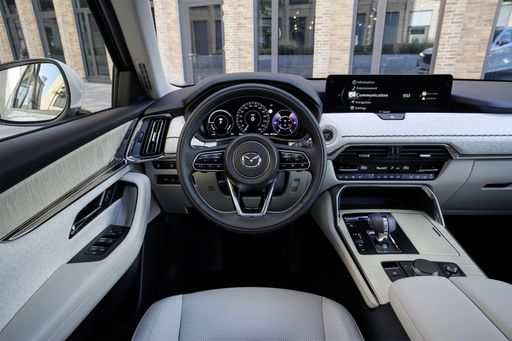
Both the Mazda CX-60 and Volvo XC40 are equipped with an array of technological innovations aimed at enhancing the driving experience. The CX-60 offers a sophisticated infotainment system with seamless smartphone integration, advanced driver assistance features, and an intuitive head-up display that improves driving safety. Mazda’s commitment to driver engagement is evident in its interior design, which prioritizes ergonomics and an uncluttered layout.

Volvo, on the other hand, integrates its well-known safety features into the XC40, including the latest advanced driver assistance systems, adaptive cruise control, and automatic emergency braking. Volvo’s infotainment system prides itself on a clean, minimalist design with a robust set of features, although some users may find it a bit less intuitive compared to Mazda’s setup.

CX-60

Conclusion: Choosing Your SUV

The decision between the Mazda CX-60 and the Volvo XC40 ultimately comes down to personal preferences and priorities. If you seek performance, versatility in power options, and a roomier interior, the Mazda CX-60 shines as a remarkable contender. However, if safety features, comfort, and a premium feel matter more to you, then the Volvo XC40 sets the benchmark for those criteria.

Ultimately, both SUVs exemplify quality in the compact SUV category, proudly representing the expertise of their respective brands. Regardless of your choice, a test drive of both vehicles is essential to appreciate their unique offerings fully.

Here’s where it gets real: The technical differences in detail

XC40

Costs and Efficiency:

Price and efficiency are often the first things buyers look at. Here it becomes clear which model has the long-term edge – whether at the pump, the plug, or in purchase price.

Volvo XC40 is moderately cheaper – starting at 36,800 £ , while the Mazda CX-60 costs 43,700 £ . That’s a price difference of around 6,909 £.

Fuel consumption also shows a difference: the Mazda CX-60 uses 3.8 L/100km and is clearly more efficient than the Volvo XC40 with 6.5 L/100km. The difference is about 2.7 L/100km.

CX-60

Engine and Performance:

Power, torque and acceleration say a lot about how a car feels on the road. This is where you see which model delivers more driving dynamics.

When it comes to engine power, the Mazda CX-60 offers clearly more power – delivering 327 HP compared to 197 HP. That’s roughly 130 HP more horsepower.

When accelerating from 0 to 100 km/h, the Mazda CX-60 is noticeably quicker – completing the sprint in 5.8 s, while the Volvo XC40 takes 7.6 s. That’s about 1.8 s quicker.

There’s also a difference in torque: the Mazda CX-60 delivers significantly more torque with 550 Nm compared to 300 Nm. That’s about 250 Nm more.

XC40

Space and Everyday Use:

Beyond pure performance, interior space and usability matter most in daily life. This is where you see which car is more practical and versatile.

Both vehicles offer seating for 5 people.

In terms of curb weight, Volvo XC40 is somewhat lighter – 1,688 kg compared to 1,890 kg. The difference is around 202 kg.

Looking at boot space, the Mazda CX-60 offers clearly more boot space – 570 L compared to 452 L. That’s a difference of about 118 L.

When it comes to payload, the Mazda CX-60 carries somewhat more – 612 kg compared to 532 kg. That’s a difference of about 80 kg.

Who wins the race in the data check?

The Mazda CX-60 holds a decisive overall lead in the objective data comparison.
This result only shows which model scores more points on paper – not which of the two cars feels right for you.

from £43,700
CX-60

Mazda CX-60

  • Engine Type : Plugin Hybrid, Diesel MHEV
  • Transmission : Automatic
  • Drive Type : All-Wheel Drive, Rear-Wheel Drive
  • Power HP : 200 - 327 HP
  • Consumption L/100km : 3.8 - 5.2 L/100km
  • Electric Range : 63 km
Volvo XC40
Mazda CX-60

Costs and Consumption

View detailed analysis

Engine and Performance

View detailed analysis

Dimensions and Body

View detailed analysis

Volvo XC40

The Volvo XC40 wraps Scandinavian minimalism into a compact, city-ready SUV with a premium cabin that feels both practical and grown-up. It will suit buyers who prize safety, clever storage and a composed ride, proving that small dimensions don't mean small personality.

details

Mazda CX-60

The Mazda CX-60 pairs sculpted, understated looks with poised handling and a cabin that punches above its class, making long drives feel unexpectedly civilized. For buyers who want a premium feel without the showroom swagger, it's the sort of car that earns respect quietly — and still manages a wink when you push on.

details
Volvo XC40
Mazda CX-60

Costs and Consumption

Price
36,800 - 47,200 £
Price
43,700 - 57,900 £
Consumption L/100km
6.5 L/100km
Consumption L/100km
3.8 - 5.2 L/100km
Consumption kWh/100km
-
Consumption kWh/100km
-
Electric Range
-
Electric Range
63 km
Battery Capacity
-
Battery Capacity
-
co2
147 - 148 g/km
co2
85 - 137 g/km
Fuel tank capacity
54 L
Fuel tank capacity
-

Dimensions and Body

Body Type
SUV
Body Type
SUV
Seats
5
Seats
5
Doors
5
Doors
-
Curb weight
1,688 kg
Curb weight
1,890 - 2,055 kg
Trunk capacity
452 L
Trunk capacity
570 L
Length
4,425 mm
Length
-
Width
1,863 mm
Width
1,890 mm
Height
1,652 mm
Height
-
Max trunk capacity
1,328 L
Max trunk capacity
-
Payload
532 kg
Payload
581 - 612 kg

Engine and Performance

Engine Type
Petrol MHEV
Engine Type
Plugin Hybrid, Diesel MHEV
Transmission
Automatic
Transmission
Automatic
Transmission Detail
Dual-Clutch Automatic
Transmission Detail
Automatic Gearbox
Drive Type
Front-Wheel Drive
Drive Type
All-Wheel Drive, Rear-Wheel Drive
Power HP
163 - 197 HP
Power HP
200 - 327 HP
Acceleration 0-100km/h
7.6 - 8.6 s
Acceleration 0-100km/h
5.8 - 8.4 s
Max Speed
180 km/h
Max Speed
-
Torque
265 - 300 Nm
Torque
450 - 550 Nm
Number of Cylinders
4
Number of Cylinders
4 - 6
Power kW
120 - 145 kW
Power kW
147 - 241 kW
Engine capacity
1,969 cm3
Engine capacity
2,488 - 3,283 cm3

General

Model Year
2,024
Model Year
2,025
CO2 Efficiency Class
E
CO2 Efficiency Class
B, D, E
Brand
Volvo
Brand
Mazda
DriveDuel uses data analysis and artificial intelligence to evaluate vehicle data and create content. Content is regularly reviewed and improved. The displayed prices are estimates based on German list prices, adjusted to the respective country’s VAT. Country-specific registration taxes are not included. This information is not legally binding.