VS

Volvo XC60 vs Ford Kuga comparison

Compare performance (406 HP vs 243 HP), boot space and price (58,300 £ vs 34,200 £ ) at a glance. Find out which car is the better choice for you – Volvo XC60 or Ford Kuga?

Volvo XC60 vs Ford Kuga: Key differences

Volvo XC60

4.7 (7 Reviews)
rate
  • clearly more power
  • clearly more efficient
  • somewhat more electric range
  • considerably quicker 0–100 km/h
details

Ford Kuga

4.2 (6 Reviews)
rate
  • clearly cheaper
  • clearly lighter
details

All details on performance, efficiency, range and trunk space can be found in the technical comparison below – including user reviews for both models.

By Achim Sedelmaier

XC60

Ford Kuga VS Volvo XC60 — quick verdict for shoppers

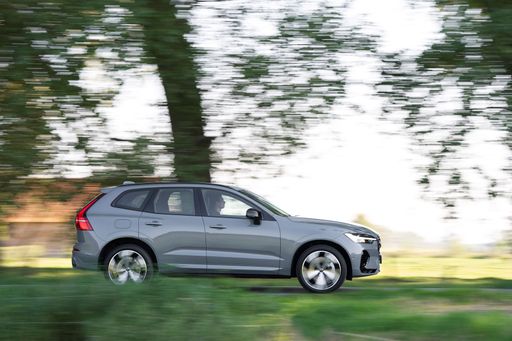
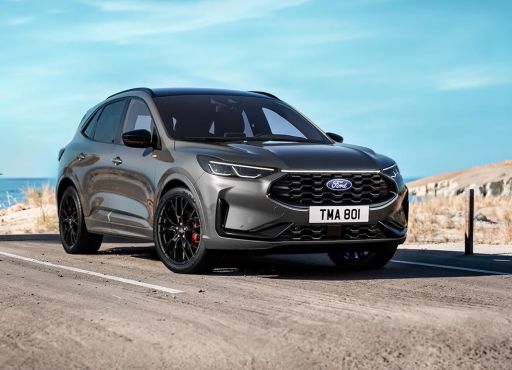
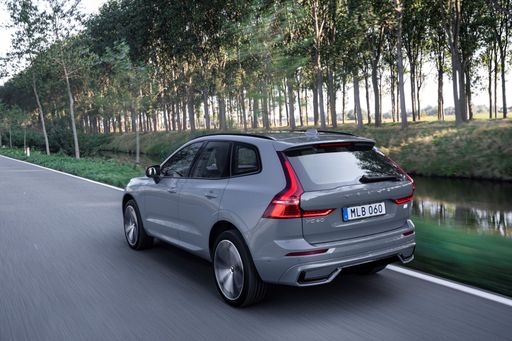
The Ford Kuga and the Volvo XC60 meet here as two different answers to the same brief: a compact SUV for families and commuters. The Ford Kuga leans toward driver engagement, practical flexibility and a more affordable entry, while the Volvo XC60 pitches premium calm, superior materials and long‑distance composure. That contrast — sporty pragmatism versus serene refinement — is the main theme you’ll notice day to day. Read on to see how those personalities affect comfort, cabin feel, usability and who each car really suits before we dive into the numbers. This matchup highlights trade‑offs you can feel, not just figures on a spec sheet.
Kuga

Character and driving dynamics

The Ford Kuga feels more like a compact driver's car in this class: direct steering, flatter responses and an eagerness through corners that rewards a more engaged style. The Volvo XC60, by contrast, is tuned for composure and predictability; it soaks up inputs and prioritises serenity over sporty feedback. In real-world overtaking and motorway merging the XC60’s stronger power delivery makes it feel brisk and effortless, whereas the Kuga asks for more revs and intention to keep pace. If you value crisp steering and a car that invites you to hustle on backroads, the Kuga will please; if you want relaxed progress and unflappable stability, the XC60 is the one to choose.

XC60

Comfort and long-distance behaviour

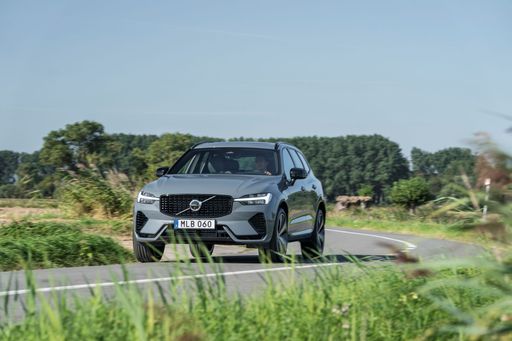
On long runs the Volvo XC60 establishes a clear edge: superior seat comfort, quieter cabin and a suspension setup that favours plushness and reduces fatigue over hours at speed. The Ford Kuga is no slouch on the motorway — it’s quiet and stable — but its suspension is generally firmer, and certain trims accentuate that tautness over poor surfaces. The Kuga’s hybrid driveline can sound intrusive under hard acceleration, which interrupts the otherwise calm cruise; the XC60 maintains a more refined aural backdrop even when you ask for extra pace. For buyers who rack up motorway miles or prize a relaxed cabin, the XC60 will feel more restful; for those who prefer a bit more connection to the road, the Kuga keeps things lively.

Kuga

Cabin feel, tech and perceived quality

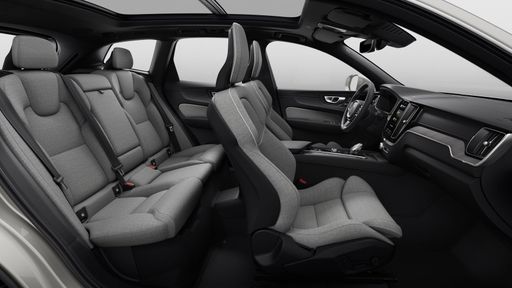
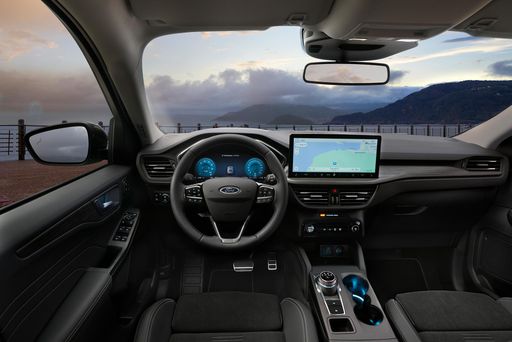
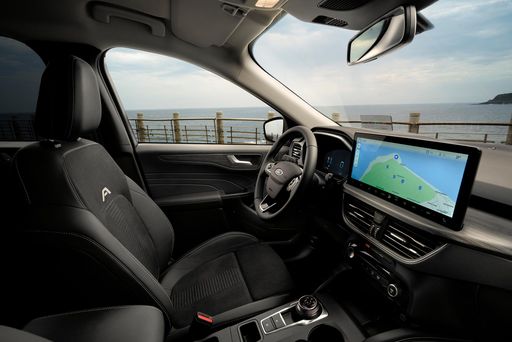
The Volvo XC60’s interior reads as a premium space: soft materials, careful detailing and a minimal Scandinavian layout create a distinctly upmarket impression. The Ford Kuga opts for a functional cabin with a sizeable infotainment screen and modern connectivity, but tactile quality and the number of hard plastics remind you it’s not in the same luxury bracket. Both cars favour touchscreen controls for climate and many settings, which can slow down simple adjustments — the difference is the XC60’s materials and isolation make that compromise feel less aggravating. If a classic “luxury” ambience matters to you, the XC60 delivers; if you value tech features and practical ergonomics more than plush finishes, the Kuga is convincing and pragmatic.

XC60

Practicality, usability and city friendliness

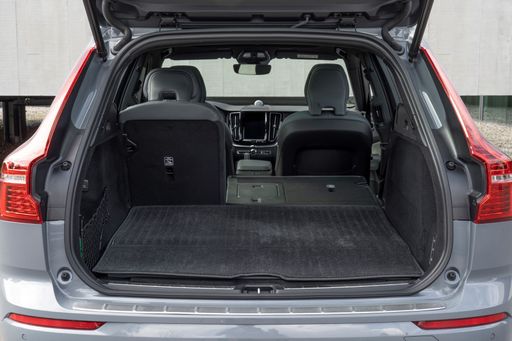
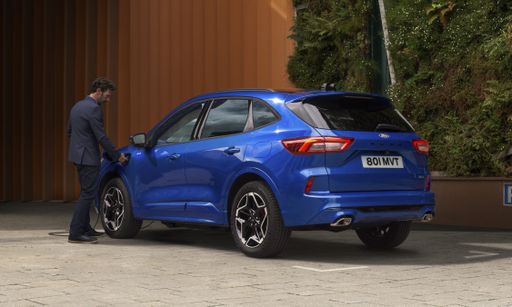
Practical differences play out in everyday use: the Ford Kuga’s sliding rear bench and hospital‑bed simplicity of loading make it exceptionally flexible for family life and weekend gear. The Volvo XC60 provides very comfortable rear seats and excellent visibility aided by cameras and sensors, but it sacrifices some boot space compared with the Kuga and its plug‑in models further reduce available luggage room. In town the Kuga’s compact agility, good sightlines and parking aids make it easy to live with, while the XC60’s camera suite and calm ride dismiss urban stress at the cost of a larger footprint. Budget and loading needs push buyers toward the Kuga; those prioritising cabin refinement and park‑assist tech will prefer the XC60 despite the higher price and smaller boot.

Kuga

Who each car suits — buyer fit before the specs

Choose the Ford Kuga if you want a driver‑oriented compact SUV with flexible rear space, strong city and hybrid efficiency and a friendlier price-of-entry that rewards practical families and commuters. Opt for the Volvo XC60 if you prioritise long‑distance comfort, a genuinely premium cabin, quieter cruising and advanced safety/assist features, accepting a higher cost and slightly less cargo room. Both cars make sense as family SUVs, but the Kuga skews toward active drivers and value seekers while the XC60 targets comfort‑first, prestige‑minded buyers who spend a lot of time on motorways. With those buyer fits in mind, the technical comparison that follows will make the trade‑offs explicit so you can match numbers to the everyday impressions above.

Here’s where it gets real: The technical differences in detail

XC60

Costs and Efficiency:

When it comes to price and running costs, the biggest differences usually appear. This is often where you see which car fits your budget better in the long run.

Ford Kuga is clearly cheaper – starting at 34,200 £ , while the Volvo XC60 costs 58,300 £ . That’s a price difference of around 24,035 £.

Fuel consumption also shows a difference: the Volvo XC60 uses 1.6 L/100km and is clearly more efficient than the Ford Kuga with 2.8 L/100km. The difference is about 1.2 L/100km.

As for electric range, the Volvo XC60 offers somewhat more range – reaching up to 79 km, about 11 km more than the Ford Kuga.

Kuga

Engine and Performance:

Under the bonnet, it becomes clear which model is tuned for sportiness and which one takes the lead when you hit the accelerator.

When it comes to engine power, the Volvo XC60 offers clearly more power – delivering 406 HP compared to 243 HP. That’s roughly 163 HP more horsepower.

When accelerating from 0 to 100 km/h, the Volvo XC60 is considerably quicker – completing the sprint in 4.9 s, while the Ford Kuga takes 7.3 s. That’s about 2.4 s quicker.

There’s also a difference in torque: the Volvo XC60 delivers clearly more torque with 669 Nm compared to 240 Nm. That’s about 429 Nm more.

XC60

Space and Everyday Use:

Whether family car or daily driver – which one offers more room, flexibility and comfort?

Both vehicles offer seating for 5 people.

In terms of curb weight, Ford Kuga is clearly lighter – 1,526 kg compared to 2,150 kg. The difference is around 624 kg.

When it comes to payload, the Ford Kuga carries only slightly more – 550 kg compared to 510 kg. That’s a difference of about 40 kg.

Who wins the race in the data check?

The Volvo XC60 stands well ahead of its rival in the objective data comparison.
This result only shows which model scores more points on paper – not which of the two cars feels right for you.

from £58,300
XC60

Volvo XC60

  • Engine Type : Plugin Hybrid
  • Transmission : Automatic
  • Drive Type : All-Wheel Drive
  • Power HP : 335 - 406 HP
  • Consumption L/100km : 1.6 L/100km
  • Electric Range : 79 km
Volvo XC60
Ford Kuga

Costs and Consumption

View detailed analysis

Engine and Performance

View detailed analysis

Dimensions and Body

View detailed analysis

Volvo XC60

The Volvo XC60 blends Scandinavian calm with confident presence, offering a cabin that feels plush without shouting for attention. It’s a smart pick for buyers after a composed ride, clever practicality and thoughtful safety touches — it even makes running the family shuttle feel almost serene, which is a small miracle.

details

Ford Kuga

The Kuga is Ford’s adaptable family SUV that blends usable space with a surprisingly lively driving character, making daily commutes and weekend escapes equally enjoyable. With smart interior packaging, an easy-to-use infotainment setup and composed road manners, it’s a sensible choice for buyers who want a bit of fun without the fuss.

details
Volvo XC60
Ford Kuga

Costs and Consumption

Price
58,300 - 71,400 £
Price
34,200 - 46,300 £
Consumption L/100km
1.6 L/100km
Consumption L/100km
2.8 - 6.8 L/100km
Consumption kWh/100km
-
Consumption kWh/100km
-
Electric Range
79 km
Electric Range
68 km
Battery Capacity
-
Battery Capacity
-
co2
59 g/km
co2
55 - 154 g/km
Fuel tank capacity
-
Fuel tank capacity
-

Dimensions and Body

Body Type
SUV
Body Type
SUV
Seats
5
Seats
5
Doors
-
Doors
-
Curb weight
2,150 kg
Curb weight
1,526 - 1,859 kg
Trunk capacity
-
Trunk capacity
-
Length
-
Length
-
Width
1,902 mm
Width
1,882 mm
Height
-
Height
-
Max trunk capacity
-
Max trunk capacity
-
Payload
510 kg
Payload
541 - 550 kg

Engine and Performance

Engine Type
Plugin Hybrid
Engine Type
Petrol, Full Hybrid, Plugin Hybrid
Transmission
Automatic
Transmission
Manuel, Automatic
Transmission Detail
Automatic Gearbox
Transmission Detail
Manual Gearbox, CVT, Automatic Gearbox
Drive Type
All-Wheel Drive
Drive Type
Front-Wheel Drive, All-Wheel Drive
Power HP
335 - 406 HP
Power HP
150 - 243 HP
Acceleration 0-100km/h
4.9 - 5.7 s
Acceleration 0-100km/h
7.3 - 9.9 s
Max Speed
-
Max Speed
-
Torque
589 - 669 Nm
Torque
240 Nm
Number of Cylinders
4
Number of Cylinders
3 - 4
Power kW
247 - 299 kW
Power kW
111 - 178 kW
Engine capacity
1,969 cm3
Engine capacity
1,496 - 2,488 cm3

General

Model Year
2026
Model Year
2025
CO2 Efficiency Class
B
CO2 Efficiency Class
E, D, B
Brand
Volvo
Brand
Ford
DriveDuel uses data analysis and artificial intelligence to evaluate vehicle data and create content. Content is regularly reviewed and improved. The displayed prices are estimates based on German list prices, adjusted to the respective country’s VAT. Country-specific registration taxes are not included. This information is not legally binding.