VS

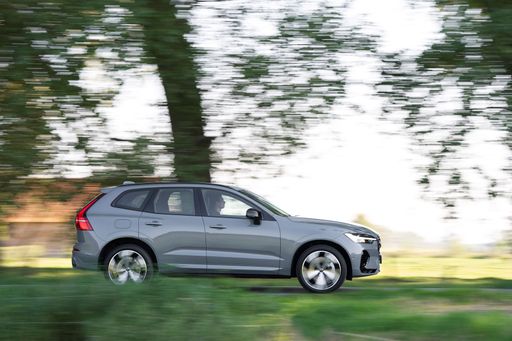
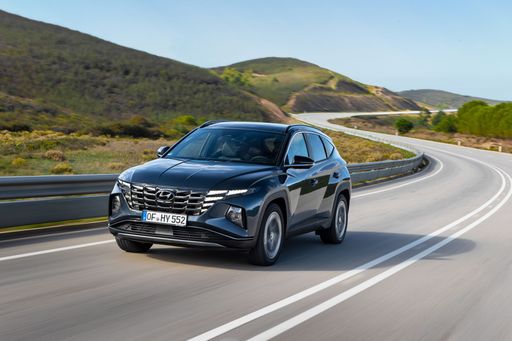
Volvo XC60 vs Hyundai Tucson comparison

Compare performance (455 HP vs 288 HP), boot space and price (49,200 £ vs 20,900 £ ) at a glance. Find out which car is the better choice for you – Volvo XC60 or Hyundai Tucson?

Volvo XC60 vs Hyundai Tucson: Key differences

Volvo XC60

4.8 (6 Reviews)
rate
  • noticeably more power
  • moderately more electric range
  • considerably quicker 0–100 km/h

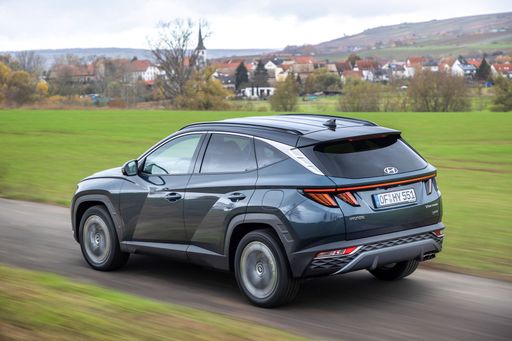
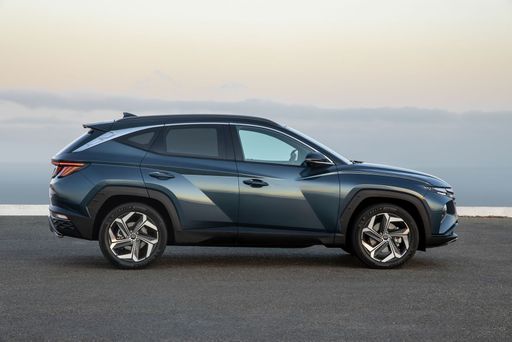
Hyundai Tucson

4.6 (4 Reviews)
rate
  • considerably cheaper
  • very slightly more efficient
  • clearly lighter
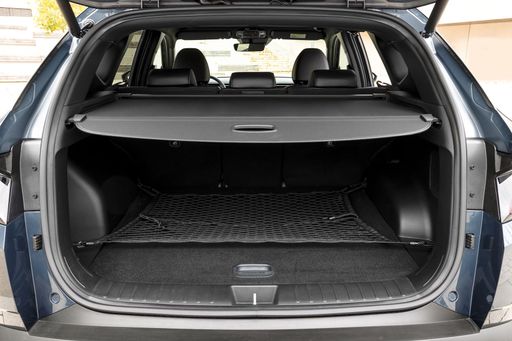
  • noticeably more trunk space

All details on performance, efficiency, range and trunk space can be found in the technical comparison below – including user reviews for both models.

XC60

A Clash of Titans: Hyundai Tucson vs. Volvo XC60

When it comes to compact SUVs, the Hyundai Tucson and Volvo XC60 stand out in a crowded field. With their distinctive designs, advanced technologies, and varying price points, each offers a unique blend of features appealing to diverse audiences. In this article, we’ll delve into a detailed comparison of these two popular models, focusing on performance, comfort, technology, and innovation.
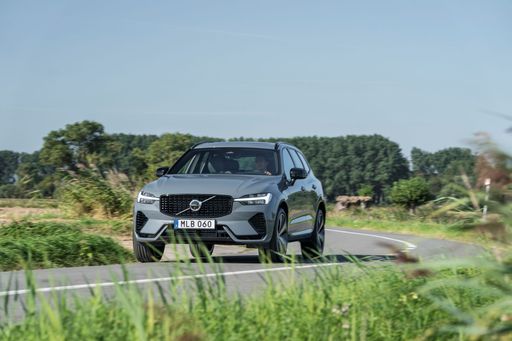
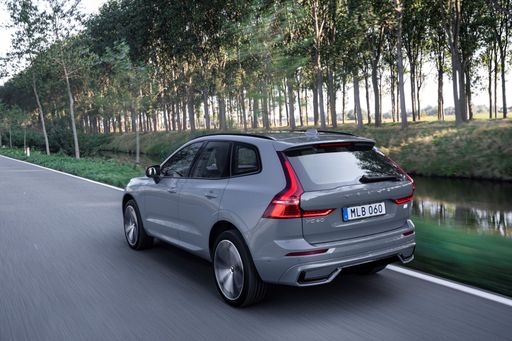
Tucson

Price and Value

Price differences are evident right from the start. The Hyundai Tucson offers a more budget-friendly entry point, with prices starting at approximately €34,990 and going up to €54,050 for top trims. In contrast, the Volvo XC60 starts at around €58,590, climbing to a hefty €86,990. This significant price gap signals that while both vehicles deliver quality, buyers looking for luxury and advanced features might lean towards the XC60.

XC60

Performance and Powertrains

The Hyundai Tucson is a versatile option available with multiple powertrains including petrol, diesel, full hybrid, and plug-in hybrid options. The range includes engines producing up to 252 HP and torque reaching 367 Nm, allowing for dynamic performance across various trim levels. The Tucson's consumption figures range from 5.1 to 6.8 L/100 km, making it an efficient choice for everyday driving, while the 0 to 100 km/h acceleration capabilities vary from 7.9 to 11.6 seconds, depending on the variant.

On the other hand, the Volvo XC60 is no slouch in terms of performance either, favoring a more powerful selection. Its powertrains are framed around petrol MHEV and plug-in hybrid systems that deliver up to 455 HP and torque figures soaring to 709 Nm. Acceleration from 0 to 100 km/h can be achieved in just 4.9 seconds, showcasing the XC60’s sporty ambitions. Still, the XC60's fuel consumption ranges from 7.7 L/100 km for its petrol engines to a remarkable 0.9 L/100 km for hybrids.

Tucson

Interior Comfort and Space

Space and comfort are crucial in the compact SUV segment. The Hyundai Tucson is on the generous side with a trunk capacity that ranges from 546 to 620 liters, offering plenty of room for luggage and gear. Its dimensions provide a spacious cabin for five passengers, supported by a solid build quality and innovative seating features.

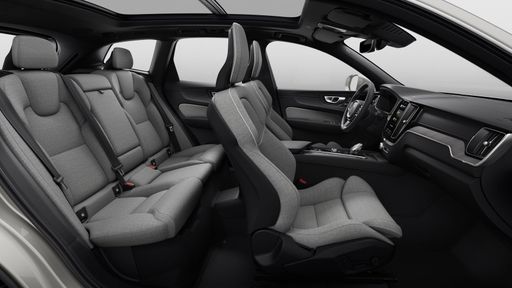
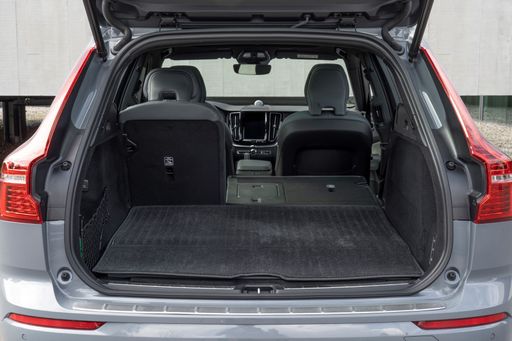
The Volvo XC60, while slightly smaller in trunk space at around 483 to 468 liters, compensates with premium materials and an upscale finish. The XC60's interior reflects Volvo's commitment to luxury and comfort, offering an inviting atmosphere with ample legroom that is difficult to surpass even in more expensive models.

XC60

Technology and Innovations

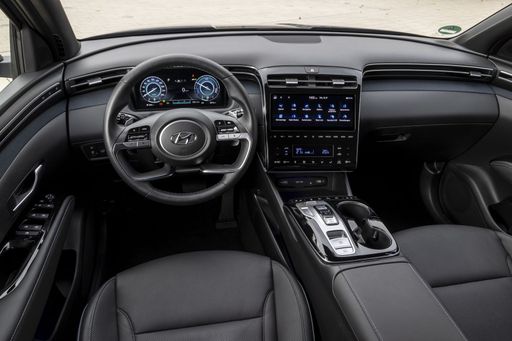
Both the Hyundai Tucson and Volvo XC60 excel in integrating technology. The Tucson's latest model incorporates a high-resolution touchscreen, Apple CarPlay, and Android Auto as standard, while its safety tech is top-tier with numerous driver assistance systems, showcasing Hyundai's push for innovation in safety.

In the XC60, technology takes a different angle with a focus on luxury and comfort. It features a state-of-the-art infotainment system with a user-friendly interface and premium audio systems that enhance the driving experience. Additionally, advanced safety features, including Pilot Assist, demonstrate Volvo's commitment to enhancing driver assistance technology and ensuring passenger safety.

Tucson

Final Thoughts: Which SUV Should You Choose?

The choice between the Hyundai Tucson and the Volvo XC60 ultimately hinges on your priorities. If you’re seeking affordability, efficiency, and a feature-rich environment, the Tucson is a strong contender. However, for those willing to invest in luxury, superior performance, and advanced safety features, the XC60 emerges as the clear winner. Both vehicles embody quality craftsmanship and innovative technology, making them worthy competitors in the SUV market.

Here’s where it gets real: The technical differences in detail

XC60

Costs and Efficiency:

When it comes to price and running costs, the biggest differences usually appear. This is often where you see which car fits your budget better in the long run.

Hyundai Tucson is considerably cheaper – starting at 20,900 £ , while the Volvo XC60 costs 49,200 £ . That’s a price difference of around 28,294 £.

Fuel consumption also shows a difference: the Hyundai Tucson uses 2.7 L/100km and is very slightly more efficient than the Volvo XC60 with 2.8 L/100km. The difference is about 0.1 L/100km.

As for electric range, the Volvo XC60 offers moderately more range – reaching up to 82 km, about 12 km more than the Hyundai Tucson.

Tucson

Engine and Performance:

Power, torque and acceleration say a lot about how a car feels on the road. This is where you see which model delivers more driving dynamics.

When it comes to engine power, the Volvo XC60 offers noticeably more power – delivering 455 HP compared to 288 HP. That’s roughly 167 HP more horsepower.

When accelerating from 0 to 100 km/h, the Volvo XC60 is considerably quicker – completing the sprint in 4.9 s, while the Hyundai Tucson takes 7.5 s. That’s about 2.6 s quicker.

Looking at top speed, the Hyundai Tucson is slightly faster – reaching 204 km/h, while the Volvo XC60 tops out at 180 km/h. The difference is around 24 km/h.

There’s also a difference in torque: the Volvo XC60 delivers clearly more torque with 709 Nm compared to 379 Nm. That’s about 330 Nm more.

XC60

Space and Everyday Use:

Beyond pure performance, interior space and usability matter most in daily life. This is where you see which car is more practical and versatile.

Both vehicles offer seating for 5 people.

In terms of curb weight, Hyundai Tucson is clearly lighter – 1,542 kg compared to 1,900 kg. The difference is around 358 kg.

Looking at boot space, the Hyundai Tucson offers noticeably more boot space – 620 L compared to 483 L. That’s a difference of about 137 L.

For maximum load capacity, the Hyundai Tucson offers somewhat more capacity – up to 1,799 L, about 256 L more than the Volvo XC60.

When it comes to payload, the Volvo XC60 carries only slightly more – 550 kg compared to 545 kg. That’s a difference of about 5 kg.

Who wins the race in the data check?

The Volvo XC60 is narrowly ahead in the objective data comparison.
This result only shows which model scores more points on paper – not which of the two cars feels right for you.

from £49,200
XC60

Volvo XC60

  • Engine Type : Petrol MHEV, Plugin Hybrid
  • Transmission : Automatic
  • Drive Type : All-Wheel Drive
  • Power HP : 250 - 455 HP
  • Consumption L/100km : 2.8 - 7.5 L/100km
  • Electric Range : 74 - 82 km
Volvo XC60
Hyundai Tucson

Costs and Consumption

View detailed analysis

Engine and Performance

View detailed analysis

Dimensions and Body

View detailed analysis

Volvo XC60

The Volvo XC60 blends Scandinavian calm with confident presence, offering a cabin that feels plush without shouting for attention. It’s a smart pick for buyers after a composed ride, clever practicality and thoughtful safety touches — it even makes running the family shuttle feel almost serene, which is a small miracle.

details

Hyundai Tucson

Hyundai Tucson marries bold, sculpted looks with a clever, roomy cabin that feels smarter than its price tag suggests. It's composed on the road, easy to live with day-to-day, and a sensible choice for buyers who want SUV style without the showroom theatrics.

details
Volvo XC60
Hyundai Tucson

Costs and Consumption

Price
49,200 - 75,100 £
Price
20,900 - 47,900 £
Consumption L/100km
2.8 - 7.5 L/100km
Consumption L/100km
2.7 - 7.6 L/100km
Consumption kWh/100km
-
Consumption kWh/100km
-
Electric Range
74 - 82 km
Electric Range
63 - 70 km
Battery Capacity
-
Battery Capacity
-
co2
64 - 169 g/km
co2
62 - 172 g/km
Fuel tank capacity
71 L
Fuel tank capacity
52 - 54 L

Dimensions and Body

Body Type
SUV
Body Type
SUV
Seats
5
Seats
5
Doors
5
Doors
5
Curb weight
1,900 - 2,150 kg
Curb weight
1,542 - 1,893 kg
Trunk capacity
468 - 483 L
Trunk capacity
546 - 620 L
Length
4,708 mm
Length
4,525 - 4,535 mm
Width
1,902 mm
Width
1,865 mm
Height
1,655 mm
Height
1,650 mm
Max trunk capacity
1,543 L
Max trunk capacity
1,795 - 1,799 L
Payload
510 - 550 kg
Payload
518 - 545 kg

Engine and Performance

Engine Type
Petrol MHEV, Plugin Hybrid
Engine Type
Petrol, Full Hybrid, Plugin Hybrid, Diesel MHEV
Transmission
Automatic
Transmission
Manuel, Automatic
Transmission Detail
Automatic Gearbox
Transmission Detail
Manual Gearbox, Dual-Clutch Automatic, Automatic Gearbox
Drive Type
All-Wheel Drive
Drive Type
Front-Wheel Drive, All-Wheel Drive
Power HP
250 - 455 HP
Power HP
136 - 288 HP
Acceleration 0-100km/h
4.9 - 6.9 s
Acceleration 0-100km/h
7.5 - 11.6 s
Max Speed
180 km/h
Max Speed
196 - 204 km/h
Torque
350 - 709 Nm
Torque
250 - 379 Nm
Number of Cylinders
4
Number of Cylinders
4
Power kW
184 - 335 kW
Power kW
100 - 212 kW
Engine capacity
1,969 cm3
Engine capacity
1,598 cm3

General

Model Year
2,025
Model Year
2,025
CO2 Efficiency Class
F, B
CO2 Efficiency Class
F, D, E, B
Brand
Volvo
Brand
Hyundai
DriveDuel uses data analysis and artificial intelligence to evaluate vehicle data and create content. Content is regularly reviewed and improved. The displayed prices are estimates based on German list prices, adjusted to the respective country’s VAT. Country-specific registration taxes are not included. This information is not legally binding.