VS

Volvo XC90 vs Volvo V90 comparison

Compare performance (455 HP vs 455 HP), boot space and price (69,800 £ vs 62,300 £ ) at a glance. Find out which car is the better choice for you – Volvo XC90 or Volvo V90?

Volvo XC90 vs Volvo V90: Key differences

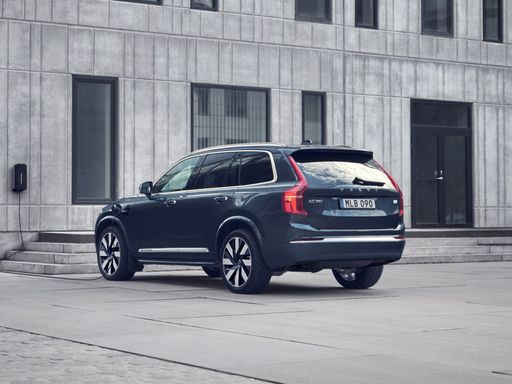
Volvo XC90

5 (1 Reviews)
rate

Volvo V90

  • slightly cheaper
  • substantially more efficient
  • moderately more electric range
  • moderately quicker 0–100 km/h
  • very slightly lighter
  • markedly more trunk space

All details on performance, efficiency, range and trunk space can be found in the technical comparison below – including user reviews for both models.

XC90

Volvo V90 vs. Volvo XC90: A Comprehensive Comparison

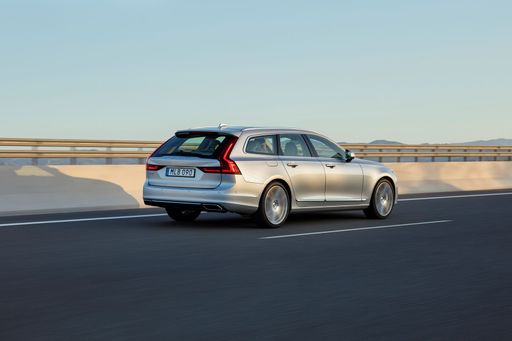
When it comes to luxury vehicles, Volvo has established itself as a brand synonymous with safety, innovation, and style. Today, we dive deep into two of its impressive offerings: the Volvo V90 and Volvo XC90. Each car represents a different approach to automotive mastery, showcasing Volvo’s diverse capability in producing both a premium wagon and a luxurious SUV. But which model caters best to your specific needs? Let’s explore the specifics.
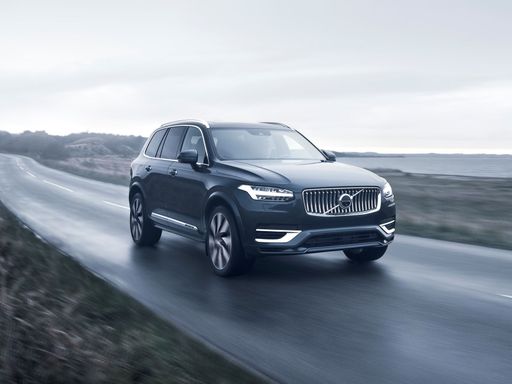
V90

Design and Dimensions

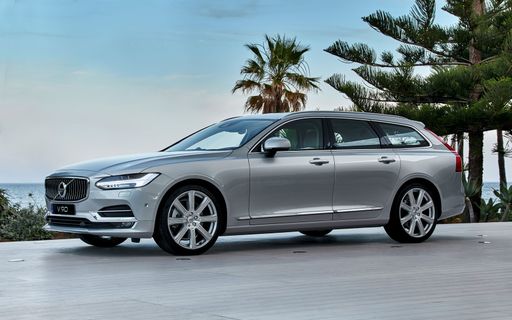
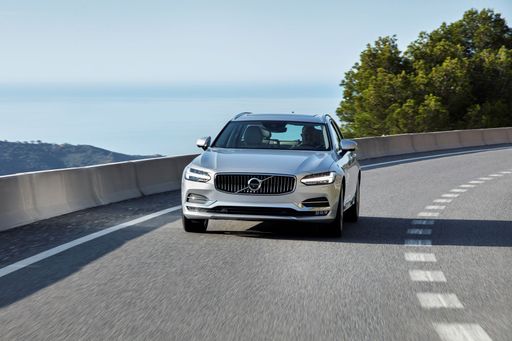
The Volvo V90 is designed as a sophisticated wagon, sporting sleek, elongated lines with a length of 4945 to 4959 mm, and a height of up to 1537 mm. This aesthetic provides a refined silhouette that suits city drives and long countryside excursions alike. Its five-door configuration and robust cargo space with a trunk capacity ranging from 488 to 507 liters further enhance its practical appeal.

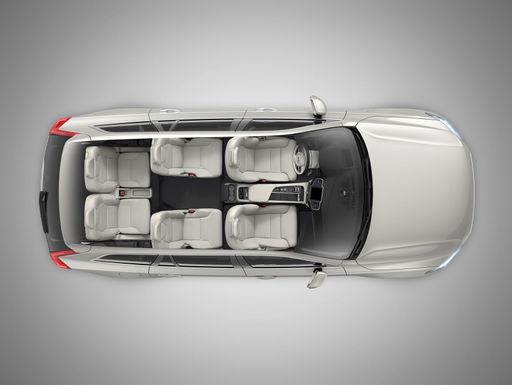
On the other hand, the Volvo XC90 is a classic SUV with a commanding road presence. With a length of 4953 mm, a width of 1923 mm, and a height of 1771 mm, the XC90 is designed to conquer both urban environments and rugged terrain. It features a robust trunk capacity from 262 to 302 liters, balancing passenger comfort with utility. The XC90’s additional seating capacity to accommodate seven passengers also makes it an ideal choice for families.

XC90

Power and Performance

Both vehicles prioritize performance but in slightly different ways. The V90 offers a range of engines including Petrol MHEV, Diesel MHEV, and Plugin Hybrid options, with Power HP ratings ranging from 197 to 455. Its fuel efficiency varies between 5.6 to 7.7 L/100km with an electric variant consuming as little as 0.8 L/100 km.

In comparison, the XC90 also provides the Petrol MHEV and Plugin Hybrid engines, featuring power ratings of 250 and 455 HP. Its consumption is slightly higher at 8.5 L/100km but impressively drops to 1.2 L/100km for its hybrid model. Both models cap their speed at 180 km/h, emphasizing Volvo's consistent focus on safety over maximum speed.

V90

Technological Innovations

Volvo has always been at the forefront of automotive technology. Both models integrate advanced safety features and driver-assistance systems. The V90 brings a total electric range of 88 km thanks to its 14.7 kWh battery, promising efficiency that’s friendly to the environment.

Similarly, the XC90 offers a slightly lower electric range of 71 km with the same battery capacity, but its features cater to those needing more weight and cargo support by offering a higher payload capacity of up to 710 kg.

XC90

Interior and Comfort

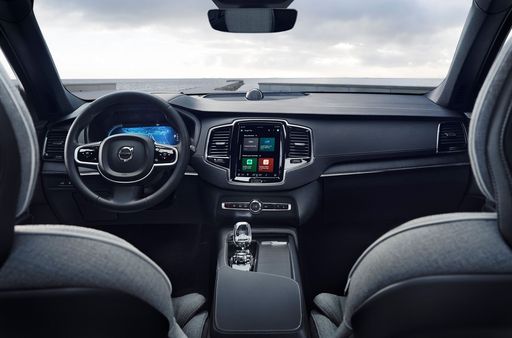
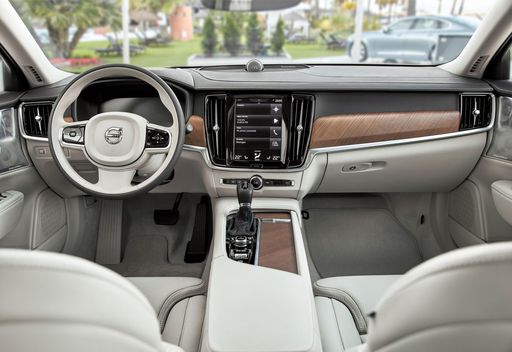
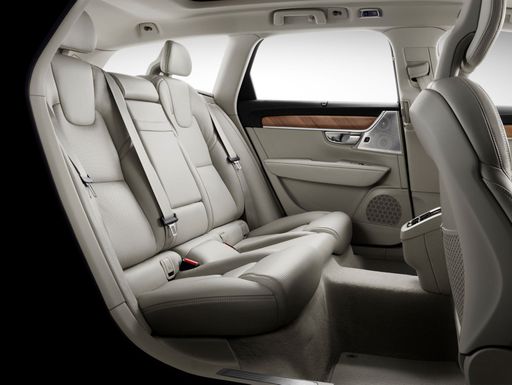
The interior of a Volvo is where luxury truly shines. Both models exude elegance with their attention to detail and craftsmanship. The V90 offers ample space for five passengers, wrapping them in comfort with premium materials and intuitive technology integrations that enhance the driving experience.

The XC90 expands comfort further to accommodate up to seven passengers, making it the preferred choice for larger families or those who often find themselves needing additional seating. Its spaciousness combined with Volvo's renowned high-quality upholstery and finishings deliver an exceptional on-road experience.

V90

Conclusion

Choosing between the Volvo V90 and XC90 ultimately depends on your specific lifestyle needs. If you seek an elegant, efficient wagon with remarkable efficiency, the V90 is an excellent choice. However, if your preference leans towards a commanding SUV with ample seating and versatility, the XC90 emerges as a compelling contender.

Both vehicles epitomize Volvo’s commitment to safety, innovation, and luxury, cementing their status as leading options in their respective categories. Whether you prefer a wagon's refined road stance or an SUV's versatile prowess, you can’t go wrong with either Volvo masterpiece.

Here’s where it gets real: The technical differences in detail

XC90

Costs and Efficiency:

When it comes to price and running costs, the biggest differences usually appear. This is often where you see which car fits your budget better in the long run.

Volvo V90 is slightly cheaper – starting at 62,300 £ , while the Volvo XC90 costs 69,800 £ . That’s a price difference of around 7,457 £.

Fuel consumption also shows a difference: the Volvo V90 uses 0.8 L/100km and is substantially more efficient than the Volvo XC90 with 3.5 L/100km. The difference is about 2.7 L/100km.

As for electric range, the Volvo V90 offers moderately more range – reaching up to 88 km, about 17 km more than the Volvo XC90.

V90

Engine and Performance:

Power, torque and acceleration are the classic benchmarks for car enthusiasts – and here, some clear differences start to show.

Both models deliver identical power – 455 HP each.

When accelerating from 0 to 100 km/h, the Volvo V90 is moderately quicker – completing the sprint in 4.8 s, while the Volvo XC90 takes 5.4 s. That’s about 0.6 s quicker.

There’s no difference in top speed – both reach 180 km/h.

Both models offer the same torque – 709 Nm.

XC90

Space and Everyday Use:

Whether family car or daily driver – which one offers more room, flexibility and comfort?

Seats: Volvo XC90 offers more seats – 7 vs 5.

In terms of curb weight, Volvo V90 is very slightly lighter – 2,075 kg compared to 2,080 kg. The difference is around 5 kg.

Looking at boot space, the Volvo V90 offers markedly more boot space – 488 L compared to 302 L. That’s a difference of about 186 L.

For maximum load capacity, the Volvo XC90 offers noticeably more capacity – up to 1,856 L, about 402 L more than the Volvo V90.

When it comes to payload, the Volvo XC90 carries noticeably more – 710 kg compared to 515 kg. That’s a difference of about 195 kg.

Who wins the race in the data check?

The Volvo V90 is decisively ahead in the objective data comparison.
This result only shows which model scores more points on paper – not which of the two cars feels right for you.

from £62,300
V90

Volvo V90

  • Engine Type : Plugin Hybrid
  • Transmission : Automatic
  • Drive Type : All-Wheel Drive
  • Power HP : 398 - 455 HP
  • Consumption L/100km : 0.8 L/100km
  • Electric Range : 88 km
Volvo XC90
Volvo V90

Costs and Consumption

View detailed analysis

Engine and Performance

View detailed analysis

Dimensions and Body

View detailed analysis

Volvo XC90

The Volvo XC90 is a serene Scandinavian SUV that mixes minimalist luxury with a composed, confidence-inspiring presence — ideal for buyers who want family practicality without sacrificing style. Inside it serves up a calm, well-crafted cabin and user-friendly tech that keeps long journeys pleasant and tantrums to a minimum, making the XC90 a smart, stylish pick for sensible drivers.

details

Volvo V90

The Volvo V90 blends Scandinavian elegance with estate practicality, delivering a composed ride and an interior that's both luxurious and perfectly sensible. Packed with clever storage and top-flight safety kit, it's the choice for buyers who want to look classy while hauling life's chaos — without making a fuss about it.

details
Volvo XC90
Volvo V90

Costs and Consumption

Price
69,800 - 84,600 £
Price
62,300 - 71,700 £
Consumption L/100km
3.5 - 8.5 L/100km
Consumption L/100km
0.8 L/100km
Consumption kWh/100km
-
Consumption kWh/100km
-
Electric Range
71 km
Electric Range
88 km
Battery Capacity
-
Battery Capacity
14.7 kWh
co2
79 - 191 g/km
co2
18 g/km
Fuel tank capacity
71 L
Fuel tank capacity
60 L

Dimensions and Body

Body Type
SUV
Body Type
Estate
Seats
7
Seats
5
Doors
5
Doors
5
Curb weight
2,080 - 2,297 kg
Curb weight
2,075 kg
Trunk capacity
262 - 302 L
Trunk capacity
488 L
Length
4,953 mm
Length
4,945 mm
Width
1,923 mm
Width
1,879 mm
Height
1,771 mm
Height
1,472 mm
Max trunk capacity
1,856 L
Max trunk capacity
1,454 L
Payload
653 - 710 kg
Payload
515 kg

Engine and Performance

Engine Type
Petrol MHEV, Plugin Hybrid
Engine Type
Plugin Hybrid
Transmission
Automatic
Transmission
Automatic
Transmission Detail
Automatic Gearbox
Transmission Detail
Automatic Gearbox
Drive Type
All-Wheel Drive
Drive Type
All-Wheel Drive
Power HP
250 - 455 HP
Power HP
398 - 455 HP
Acceleration 0-100km/h
5.4 - 7.7 s
Acceleration 0-100km/h
4.8 - 5.5 s
Max Speed
180 km/h
Max Speed
180 km/h
Torque
360 - 709 Nm
Torque
659 - 709 Nm
Number of Cylinders
4
Number of Cylinders
4
Power kW
184 - 335 kW
Power kW
293 - 335 kW
Engine capacity
1,969 cm3
Engine capacity
1,969 cm3

General

Model Year
2,024 - 2,025
Model Year
2,024
CO2 Efficiency Class
G, B
CO2 Efficiency Class
B
Brand
Volvo
Brand
Volvo
DriveDuel uses data analysis and artificial intelligence to evaluate vehicle data and create content. Content is regularly reviewed and improved. The displayed prices are estimates based on German list prices, adjusted to the respective country’s VAT. Country-specific registration taxes are not included. This information is not legally binding.