@ Volkswagen AG / VW Media
VS

VW Arteon vs VW Tayron – Which car suits you better?

Both models have their strengths – but which one suits you more?
Compare performance, efficiency, price and space directly: VW Arteon or VW Tayron?

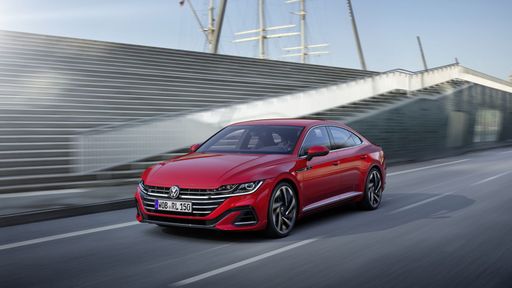
Arteon @ Volkswagen AG / VW Media

When it comes to blending style, performance, and cutting-edge technology, Volkswagen has two remarkable offerings: the VW Arteon and the VW Tayron. While both vehicles carry the VW badge, they cater to different segments of the automotive market. This comparison will delve into their technical specifications, innovations, and overall performance to help potential buyers make an informed decision.

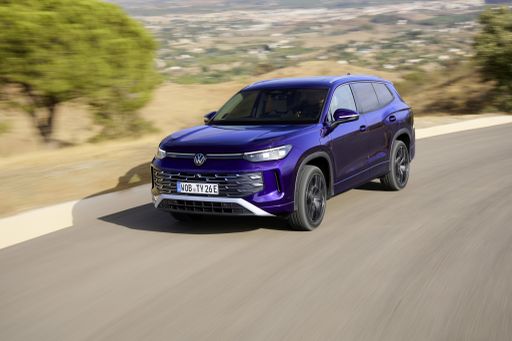
Tayron @ Volkswagen AG / VW Media

Design and Body Type

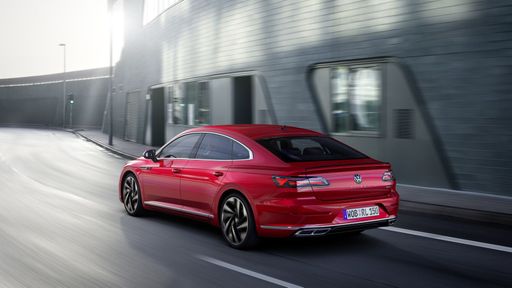
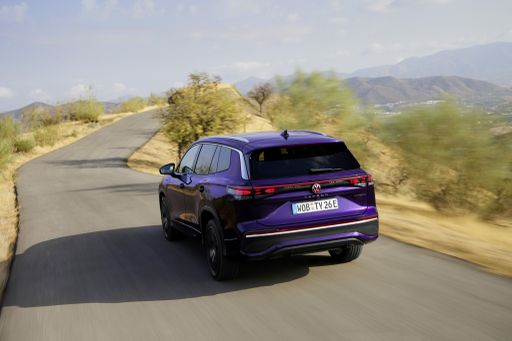
Starting with their fundamental designs, the VW Arteon is classified as a wagon, characterized by its sleek, elongated silhouette and premium finish. It boasts a length of 4866 mm, width of 1871 mm, and height of 1451 mm, offering remarkable aerodynamics and elegance. On the other hand, the VW Tayron adopts the SUV body type, standing taller and more robust at 4792 mm in length, 1853 mm in width, and 1668 mm in height. The Tayron's higher stance and commanding presence are ideal for off-road capabilities and urban adventures alike.

Arteon @ Volkswagen AG / VW Media

Engine Options and Performance

Both vehicles offer a variety of engine options, appealing to a broad spectrum of driver preferences. The Arteon comes equipped with multiple engine variants ranging from 150 to 320 horsepower, with options for both petrol and diesel. Its diesel engines achieve fuel consumption figures as low as 5.1 L/100 km, making it an efficient choice. The Arteon's dual-clutch automatic transmission allows for smooth acceleration, achieving 0-100 km/h in as little as 4.9 seconds for the more powerful variants.

In comparison, the Tayron features an array of engine types as well, including petrol MHEV (Mild Hybrid Electric Vehicle), plug-in hybrid, and diesel engines. With power outputs ranging from 150 to 272 horsepower, the Tayron is versatile, offering a blend of efficiency and performance. Its mild-hybrid and plug-in hybrid options provide an electric range of up to 126 km, revolutionizing the SUV driving experience. The Tayron's acceleration reaches 0-100 km/h in as little as 6.1 seconds, showcasing its sporty side.


Tayron @ Volkswagen AG / VW Media

Innovative Features and Technology

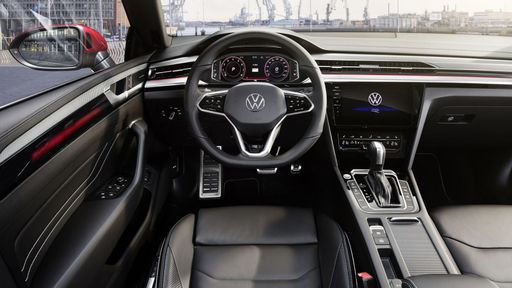
Technology is at the forefront of both models. The Arteon comes equipped with advanced driver assistance systems and a luxurious infotainment setup. With features like adaptive cruise control, lane assist, and a digital cockpit, the Arteon ensures a high-tech driving experience that prioritizes safety and comfort.

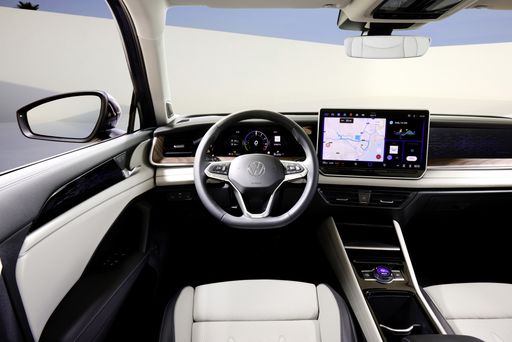
The Tayron, however, raises the bar with its hybrid technology. The innovative hybrid variants not only improve fuel efficiency but also incorporate a regenerative braking system, allowing for better energy recovery. Additionally, the Tayron offers a comprehensive digital array with VW's latest infotainment software, providing connectivity features that enhance the driving experience.

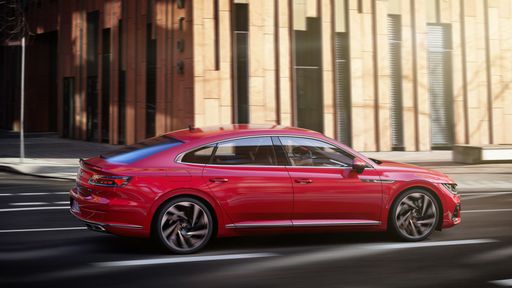
Arteon @ Volkswagen AG / VW Media

Interior Space and Comfort

When considering interior space, the VW Arteon impresses with its trunk capacity of up to 590 liters, perfect for families or those needing extra storage. The wagon's spacious interior is designed for comfort, with five seats accommodating passengers with generous legroom and premium material choices.

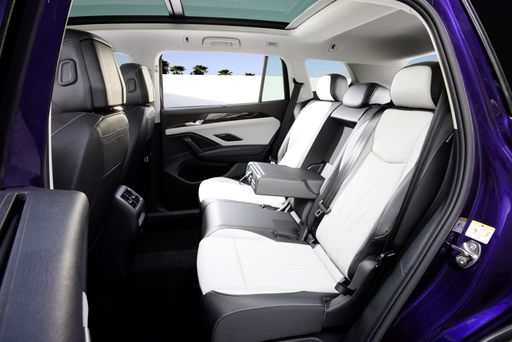
The VW Tayron, designed as an SUV, steps up with a trunk capacity of 885 liters, providing ample room for both passengers and cargo. Despite its slightly smaller footprint, the Tayron maintains a spacious interior with a modern aesthetic, making it an ideal choice for adventure-seekers.

Tayron @ Volkswagen AG / VW Media

Conclusion: Which One is Right for You?

In conclusion, choosing between the VW Arteon and the VW Tayron ultimately depends on your driving preferences and lifestyle. The Arteon appeals more to those seeking a luxurious, sporty wagon with impressive efficiency and performance. Alternatively, the Tayron caters to those desiring rugged versatility along with advanced hybrid technology and spacious interiors. Both vehicles reflect Volkswagen's commitment to quality and innovation, ensuring that whichever model you choose, you are in for an outstanding driving experience.

Here’s where it gets real: The technical differences in detail

Arteon @ Volkswagen AG / VW Media

Costs and Efficiency:

Price and efficiency are often the first things buyers look at. Here it becomes clear which model has the long-term edge – whether at the pump, the plug, or in purchase price.

VW Tayron has a hardly perceptible advantage in terms of price – it starts at 39600 £, while the VW Arteon costs 43300 £. That’s a price difference of around 3669 £.

Fuel consumption also shows a difference: VW Tayron manages with 1.50 L and is therefore clearly more efficient than the VW Arteon with 5.10 L. The difference is about 3.60 L per 100 km.

Tayron @ Volkswagen AG / VW Media

Engine and Performance:

Power, torque and acceleration say a lot about how a car feels on the road. This is where you see which model delivers more driving dynamics.

When it comes to engine power, the VW Arteon has a a bit edge – offering 320 HP compared to 272 HP. That’s roughly 48 HP more horsepower.

In acceleration from 0 to 100 km/h, the VW Arteon is clearly perceptible quicker – completing the sprint in 4.90 s, while the VW Tayron takes 6.10 s. That’s about 1.20 s faster.

In terms of top speed, the VW Arteon performs minimal better – reaching 250 km/h, while the VW Tayron tops out at 240 km/h. The difference is around 10 km/h.

There’s also a difference in torque: VW Arteon pulls barely noticeable stronger with 420 Nm compared to 400 Nm. That’s about 20 Nm difference.

Space and Everyday Use:

Cabin size, boot volume and payload all play a role in everyday practicality. Here, comfort and flexibility make the difference.

Both vehicles offer seating for 5 people.

In curb weight, VW Arteon is hardly perceptible lighter – 1607 kg compared to 1682 kg. The difference is around 75 kg.

In terms of boot space, the VW Tayron offers noticeable more room – 885 L compared to 590 L. That’s a difference of about 295 L.

In maximum load capacity, the VW Tayron performs clearly perceptible better – up to 2090 L, which is about 458 L more than the VW Arteon.

When it comes to payload, VW Arteon slight takes the win – 569 kg compared to 566 kg. That’s a difference of about 3 kg.

Who comes out on top?

Overall, the VW Tayron shows itself to be is largely superior and secures the title of DriveDuel Champion.
It convinces with the more balanced overall package and proves to be the more versatile choice for everyday use.

from about £39,600
Tayron @ Volkswagen AG / VW Media

VW Tayron

  • Engine Type : Petrol MHEV, Diesel, Petrol, Plugin Hybrid
  • Transmission : Automatic
  • Drive Type : Front-Wheel Drive, All-Wheel Drive
  • Power HP : 150 - 272 HP
  • Consumption L/100km : 1.5 - 8.5 L
  • Electric Range : 116 - 123 km

VW Arteon

5 (1)
rate

The VW Arteon is a striking example of modern automotive design, combining sleek aesthetics with cutting-edge technology. Its dynamic silhouette and expressive front grille give it an unmistakable presence on the road, appealing to those who value style and sophistication. Inside, the cabin offers a seamless blend of comfort and connectivity, ensuring a premium experience for both driver and passengers.

details

VW Tayron

The VW Tayron is Volkswagen's roomy, no-nonsense SUV that pairs clean, familiar styling with a practical cabin built for families and everyday use. It rides comfortably, packs sensible tech and creature comforts, and feels like the sensible sweater of SUVs for buyers who prefer steady value over headline-grabbing drama.

details
VW Arteon
VW Tayron
Arteon @ Volkswagen AG / VW Media
Tayron @ Volkswagen AG / VW Media

Costs and Consumption

Price
43300 - 60800 £
Price
39600 - 53300 £
Consumption L/100km
5.1 - 8.6 L
Consumption L/100km
1.5 - 8.5 L
Consumption kWh/100km
-
Consumption kWh/100km
-
Electric Range
-
Electric Range
116 - 123 km
Battery Capacity
-
Battery Capacity
19.70 kWh
co2
133 - 195 g/km
co2
33 - 192 g/km
Fuel tank capacity
66 L
Fuel tank capacity
45 - 58 L

Dimensions and Body

Body Type
Estate
Body Type
SUV
Seats
5
Seats
5
Doors
5
Doors
5
Curb weight
1607 - 1773 kg
Curb weight
1682 - 1948 kg
Trunk capacity
590 L
Trunk capacity
705 - 885 L
Length
4866 mm
Length
4792 mm
Width
1871 mm
Width
1853 - 1866 mm
Height
1434 - 1451 mm
Height
1666 - 1668 mm
Max trunk capacity
1632 L
Max trunk capacity
1915 - 2090 L
Payload
467 - 569 kg
Payload
489 - 566 kg

Engine and Performance

Engine Type
Diesel, Petrol
Engine Type
Petrol MHEV, Diesel, Petrol, Plugin Hybrid
Transmission
Automatic
Transmission
Automatic
Transmission Detail
Dual-Clutch Automatic
Transmission Detail
Dual-Clutch Automatic
Drive Type
Front-Wheel Drive, All-Wheel Drive
Drive Type
Front-Wheel Drive, All-Wheel Drive
Power HP
150 - 320 HP
Power HP
150 - 272 HP
Acceleration 0-100km/h
4.9 - 9.4 s
Acceleration 0-100km/h
6.1 - 9.7 s
Max Speed
216 - 250 km/h
Max Speed
204 - 240 km/h
Torque
320 - 420 Nm
Torque
250 - 400 Nm
Number of Cylinders
4
Number of Cylinders
4
Power kW
110 - 235 kW
Power kW
110 - 200 kW
Engine capacity
1968 - 1984 cm3
Engine capacity
1498 - 1984 cm3

General

Model Year
2024
Model Year
2025
CO2 Efficiency Class
D, E, F, G
CO2 Efficiency Class
E, F, G, B
Brand
VW
Brand
VW
What drivetrain options does the VW Arteon have?

The VW Arteon is available as Front-Wheel Drive or All-Wheel Drive.

The prices and data displayed are estimates based on German list prices and may vary by country. This information is not legally binding.