VS

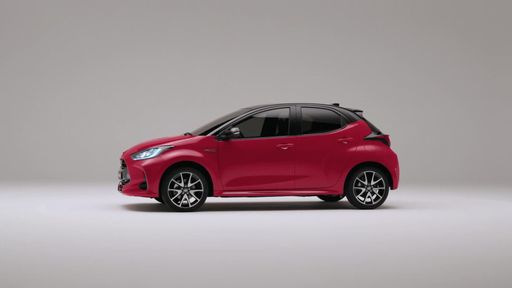
VW Golf vs Toyota Yaris comparison

Compare performance (333 HP vs 280 HP), boot space and price (25,200 £ vs 21,900 £ ) at a glance. Find out which car is the better choice for you – VW Golf or Toyota Yaris?

VW Golf vs Toyota Yaris: Key differences

VW Golf

4.6 (1 Reviews)
rate
  • moderately more power
  • significantly more efficient
  • slightly quicker 0–100 km/h
  • noticeably more trunk space

Toyota Yaris

3.9 (3 Reviews)
rate
  • a bit cheaper
  • slightly lighter

All details on performance, efficiency, range and trunk space can be found in the technical comparison below – including user reviews for both models.

Golf

Toyota Yaris vs. VW Golf: The Hatchback Showdown

The hatchback segment has always been popular among car enthusiasts and daily drivers alike, and now, the 2024 models of Toyota Yaris and VW Golf arrive with a bang. Both vehicles boast advanced features, high-performance metrics, and the latest innovations, making it a tough choice for consumers. Let's dive into the details to see how they stack up against each other.

Yaris

Performance and Power

The Toyota Yaris offers a variety of engine types, including a Full Hybrid and Petrol option. With power outputs ranging from 116 to 280 HP and a quick 0-100 km/h acceleration time ranging from 9.7 to 5.5 seconds, the Yaris caters to a variety of driving preferences. The three-cylinder engine options provide substantial torque of up to 390 Nm, ensuring a responsive driving experience.

On the other hand, the VW Golf presents a broader range of engine types - from Petrol MHEV, Diesel to Plugin Hybrid configurations. The Golf's power spectrum extends up to 333 HP with acceleration times starting at 4.6 seconds from 0-100 km/h. With a sturdier 4-cylinder engine, the Golf delivers up to 420 Nm of torque, offering a balance of power and efficiency.

Golf

Efficiency and Environmental Impact

The Toyota Yaris places a strong emphasis on fuel efficiency and eco-friendliness. Its Full Hybrid model consumes as little as 3.8 L/100 km and emits only 87 g/km of CO2, showcasing an excellent CO2 efficiency class of B, potentially appealing to environmentally conscious drivers.

Meanwhile, the VW Golf's Plugin Hybrid option shines with a consumption rate as low as 0.3 L/100 km when combined with its electric drive. With a CO2 efficiency class ranging from B to D, and an electric range reaching up to 143 km, the Golf offers competitive sustainability credentials.

Yaris

Design and Practicality

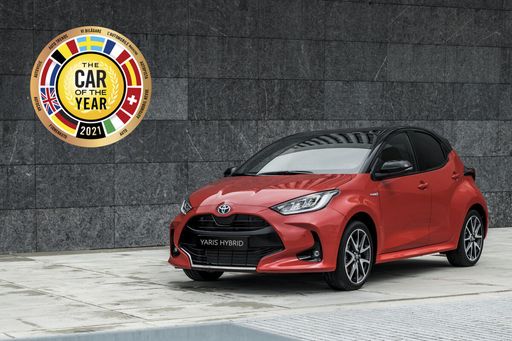
Both vehicles deliver on style and practicality. The Toyota Yaris, with its compact hatchback body, stands at a length of up to 3995 mm, providing a trunk capacity of 286 liters while maintaining a curb weight ranging from 1090 to 1356 kg. It's designed for urban agility without compromising on passenger comfort and cargo capability.

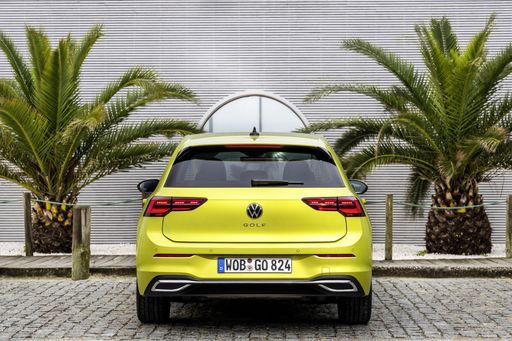
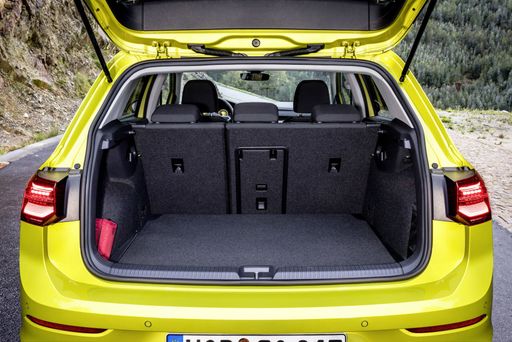
The VW Golf, slightly longer with a maximum length of 4292 mm, accommodates a generous trunk space of 381 liters. Its broader stance at 1789 mm in width and a curb weight from 1304 to 1670 kg emphasizes a stable and planted ride. The Golf supports versatility and daily usability, making it a hit among compact car buyers.

Golf

Innovations and Technology

Toyota's Yaris incorporates cutting-edge tech features with its hybrid technology, offering seamless driving transitions and improved fuel economy. The vehicle's advanced driving aids and infotainment systems ensure comfort and engagement for every journey.

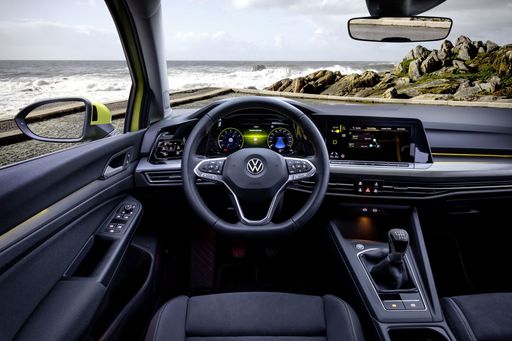
The VW Golf, a traditionally tech-savvy model, houses innovations such as a dual-clutch automatic transmission and a comprehensive electric range for the hybrid variants. Its refined infotainment ecosystem coupled with driver-assistance technologies further cements its position as a tech leader in the hatchback market.

Conclusion

Ultimately, the choice between the Toyota Yaris and VW Golf boils down to individual preferences. The Yaris exudes efficiency and practicality, making it perfect for city dwellers and eco-minded individuals. Conversely, the VW Golf appeals to those seeking variety, power, and advanced technology. Both models encapsulate the essence of modern hatchbacks, ensuring a thrilling ride for any driver behind their wheel.

Here’s where it gets real: The technical differences in detail

Golf

Costs and Efficiency:

Price and efficiency are key factors when choosing a car – and this is often where the real differences emerge.

Toyota Yaris is a bit cheaper – starting at 21,900 £ , while the VW Golf costs 25,200 £ . That’s a price difference of around 3,338 £.

Fuel consumption also shows a difference: the VW Golf uses 1.1 L/100km and is significantly more efficient than the Toyota Yaris with 3.8 L/100km. The difference is about 2.7 L/100km.

Yaris

Engine and Performance:

Under the bonnet, it becomes clear which model is tuned for sportiness and which one takes the lead when you hit the accelerator.

When it comes to engine power, the VW Golf offers moderately more power – delivering 333 HP compared to 280 HP. That’s roughly 53 HP more horsepower.

When accelerating from 0 to 100 km/h, the VW Golf is slightly quicker – completing the sprint in 4.6 s, while the Toyota Yaris takes 5.5 s. That’s about 0.9 s quicker.

There’s also a difference in torque: the VW Golf delivers marginally more torque with 420 Nm compared to 390 Nm. That’s about 30 Nm more.

Golf

Space and Everyday Use:

Beyond pure performance, interior space and usability matter most in daily life. This is where you see which car is more practical and versatile.

Both vehicles offer seating for 5 people.

In terms of curb weight, Toyota Yaris is slightly lighter – 1,090 kg compared to 1,307 kg. The difference is around 217 kg.

Looking at boot space, the VW Golf offers noticeably more boot space – 381 L compared to 286 L. That’s a difference of about 95 L.

When it comes to payload, the Toyota Yaris carries marginally more – 525 kg compared to 508 kg. That’s a difference of about 17 kg.

Who wins the race in the data check?

The VW Golf is decisively ahead in the objective data comparison.
This result only shows which model scores more points on paper – not which of the two cars feels right for you.

from £25,200
Golf

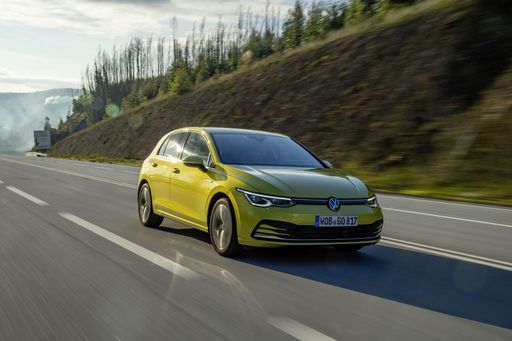
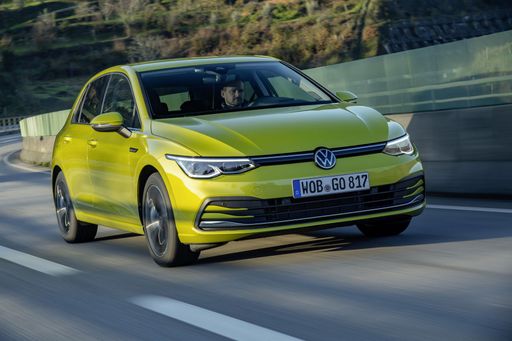
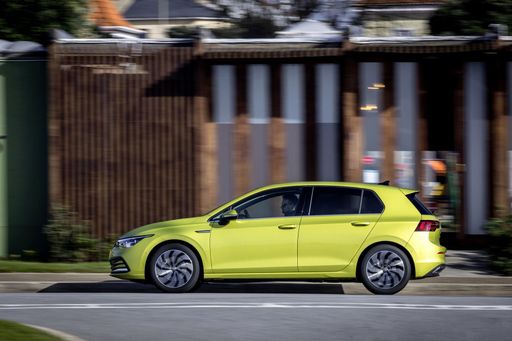
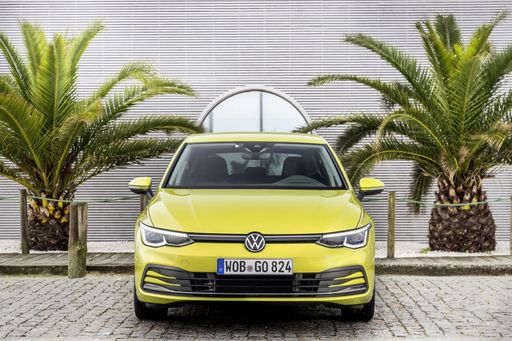
VW Golf

  • Engine Type : Petrol MHEV, Petrol, Diesel, Plugin Hybrid
  • Transmission : Automatic, Manuel
  • Drive Type : Front-Wheel Drive, All-Wheel Drive
  • Power HP : 116 - 333 HP
  • Consumption L/100km : 1.1 - 8.1 L/100km
  • Electric Range : 131 - 143 km
VW Golf
Toyota Yaris

Costs and Consumption

View detailed analysis

Engine and Performance

View detailed analysis

Dimensions and Body

View detailed analysis

VW Golf

The VW Golf remains the everyman’s favourite — cleverly balanced, composed and just posh enough to feel grown-up without pretending to be something it’s not. It slips through town and eats up longer trips with a refined cabin, practical layout and a kindly, capable character that turns everyday driving into something a little bit special.

details

Toyota Yaris

The Toyota Yaris is a sprightly city hatch that packs clever packaging, surprising comfort and fuel-sipping manners into a neat, easy-to-park package. It rewards sensible buyers with low running costs, friendly ergonomics and a forgiving drive, delivered with Japanese reliability and just enough personality to make errands feel a little less ordinary.

details
VW Golf
Toyota Yaris

Costs and Consumption

Price
25,200 - 47,600 £
Price
21,900 - 40,800 £
Consumption L/100km
1.1 - 8.1 L/100km
Consumption L/100km
3.8 - 8.7 L/100km
Consumption kWh/100km
-
Consumption kWh/100km
-
Electric Range
131 - 143 km
Electric Range
-
Battery Capacity
19.7 kWh
Battery Capacity
-
co2
25 - 184 g/km
co2
87 - 197 g/km
Fuel tank capacity
40 - 55 L
Fuel tank capacity
-

Dimensions and Body

Body Type
Hatchback
Body Type
Hatchback
Seats
5
Seats
4 - 5
Doors
5
Doors
-
Curb weight
1,307 - 1,662 kg
Curb weight
1,090 - 1,356 kg
Trunk capacity
273 - 381 L
Trunk capacity
141 - 286 L
Length
4,282 - 4,296 mm
Length
-
Width
1,789 mm
Width
1,745 - 1,805 mm
Height
1,454 - 1,483 mm
Height
-
Max trunk capacity
1,129 - 1,237 L
Max trunk capacity
-
Payload
438 - 508 kg
Payload
289 - 525 kg

Engine and Performance

Engine Type
Petrol MHEV, Petrol, Diesel, Plugin Hybrid
Engine Type
Full Hybrid, Petrol
Transmission
Automatic, Manuel
Transmission
Automatic, Manuel
Transmission Detail
Dual-Clutch Automatic, Manual Gearbox
Transmission Detail
CVT, Manual Gearbox
Drive Type
Front-Wheel Drive, All-Wheel Drive
Drive Type
Front-Wheel Drive, All-Wheel Drive
Power HP
116 - 333 HP
Power HP
116 - 280 HP
Acceleration 0-100km/h
4.6 - 10.2 s
Acceleration 0-100km/h
5.5 - 9.7 s
Max Speed
203 - 270 km/h
Max Speed
-
Torque
220 - 420 Nm
Torque
390 Nm
Number of Cylinders
4
Number of Cylinders
3
Power kW
85 - 245 kW
Power kW
85 - 206 kW
Engine capacity
1,498 - 1,984 cm3
Engine capacity
1,490 - 1,618 cm3

General

Model Year
2,024 - 2,025
Model Year
2,026
CO2 Efficiency Class
D, F, G, C, B
CO2 Efficiency Class
B, G
Brand
VW
Brand
Toyota
DriveDuel uses data analysis and artificial intelligence to evaluate vehicle data and create content. Content is regularly reviewed and improved. The displayed prices are estimates based on German list prices, adjusted to the respective country’s VAT. Country-specific registration taxes are not included. This information is not legally binding.