VS

VW ID.3 vs MINI Aceman comparison

Compare performance (231 HP vs 258 HP), boot space and price (29,100 £ vs 27,000 £ ) at a glance. Find out which car is the better choice for you – VW ID.3 or MINI Aceman?

VW ID.3 vs MINI Aceman: Key differences

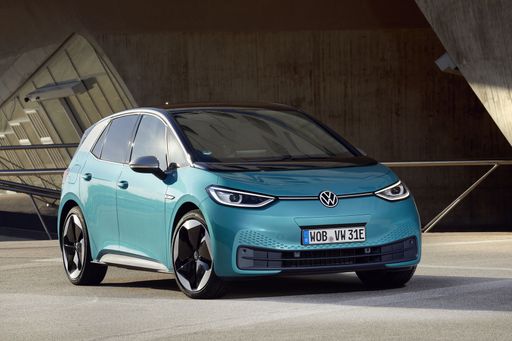
VW ID.3

4.8 (6 Reviews)
rate
  • only slightly more efficient
  • clearly more electric range
  • markedly more trunk space
details

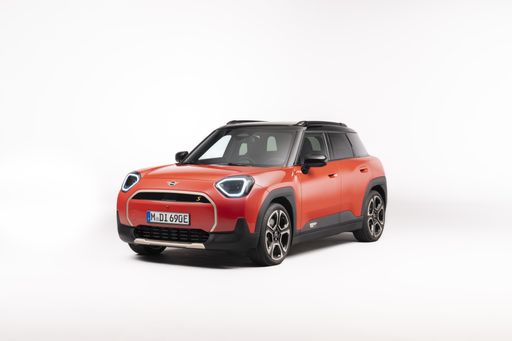
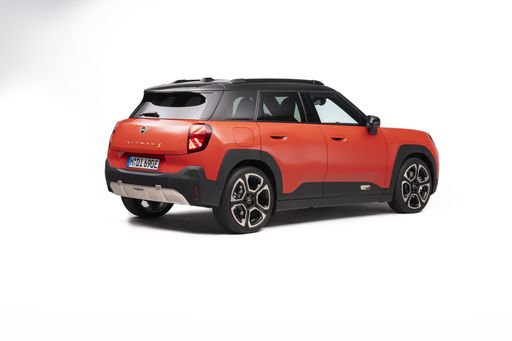
MINI Aceman

4.5 (2 Reviews)
rate
  • marginally cheaper
  • moderately more power
  • slightly quicker 0–100 km/h
  • only slightly lighter
details

All details on performance, efficiency, range and trunk space can be found in the technical comparison below – including user reviews for both models.

By Achim Sedelmaier

ID.3

MINI Aceman VS VW ID.3 — quick read for shoppers weighing style against substance

MINI Aceman and VW ID.3 land in the same compact-EV class but speak to very different priorities: one trades charm and sharp handling for a smaller, more intimate cabin, the other swaps sparkle for space and composure. This comparison focuses on the things owners notice day after day — character, comfort, practicality and perceived quality — rather than spec-sheets. Expect clear trade-offs: the Aceman emphasizes playful driving and design flair, while the ID.3 prioritizes quiet cruising, interior room and useful range. Read on to see which trade-offs map to your daily life and where you’ll feel the pinch first.
Aceman

Character and driving feel: playful Go‑Kart DNA versus calm competence

The MINI Aceman is tuned to feel alive — quick steering, eager throttle response and a playful chassis that rewards cornering and short urban hops. By contrast, the VW ID.3 prefers to be invisible: composed steering, smooth power delivery and a driving demeanour designed to reduce fatigue rather than excite. That personality split matters on real roads: Aceman owners will smile in town and on twisty B‑roads but may find long, straight runs less soothing, whereas ID.3 owners appreciate a steady, confidence-inspiring tempo for commutes and motorways. If you like to be connected to the car, the Aceman gives you that; if you want to arrive relaxed and unruffled, the ID.3 does the calming work.

ID.3

Comfort and long-distance behavior: taut and direct vs quiet and relaxed

On imperfect urban asphalt the MINI Aceman’s firmer setup can feel brisk but also brittle, turning potholes and patched surfaces into a reminder that suspension trade-offs were made for agility. The VW ID.3 cushions rough patches better and keeps a lower noise level at speed, which makes it easier to cover long distances without counting every bump. Those differences also echo in charging and range behavior: the ID.3’s packaging supports longer stints between stops and generally quicker high-power charging, whereas the Aceman’s efficient economy helps in everyday driving but asks for more careful route planning on long trips. In short, pick the Aceman if you accept a sprightlier ride for urban fun; choose the ID.3 if motorway comfort and tranquillity top your list.

Aceman

Practicality and everyday usability: city-ready footprint versus weekend-ready space

The MINI Aceman wins in tight-city situations with compact dimensions and nimble manoeuvrability that make parking and lane changes effortless, and its five-door layout still handles child seats well. The VW ID.3 answers with visibly more usable space: more rear legroom, a flatter floor and a noticeably larger boot that eases weekend luggage and family errands. That difference translates into everyday friction — folding strollers, supermarket runs and trips with a dog feel easier in the ID.3, while the Aceman demands more thoughtful packing and often a lift over a higher loading lip. Both work for city driving, but the ID.3 turns weekend practicality into a simpler, less fiddly experience.

ID.3

Cabin feel, tech and perceived quality: personality and panache against mature refinement

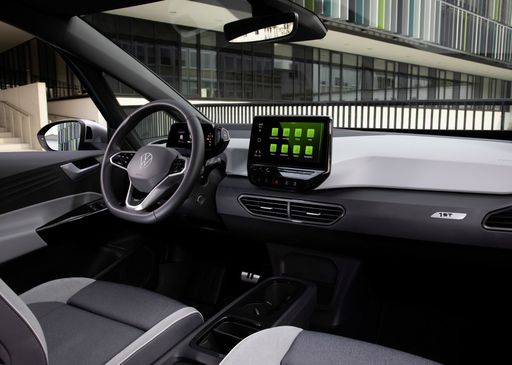
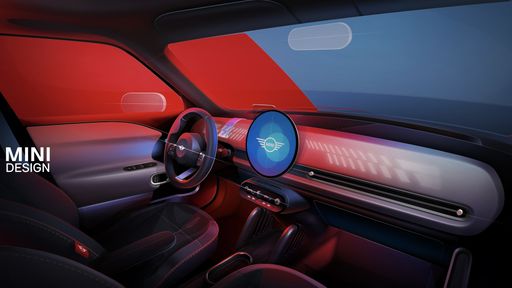
The MINI Aceman’s cabin is a deliberate style statement with a distinctive round display and playful materials that give a premium, characterful impression the moment you sit down. The VW ID.3 leans the other way: cleaner lines, softer surfaces after the facelift, and a sense of grown-up solidity that reads as trustworthy rather than theatrical. Both have infotainment compromises — Aceman’s touch-first climate controls can be fiddly, ID.3’s interface still shows quirks despite updates — so usability depends on how much patience you have for touchscreen menus. If you want interior wow and a boutique feel, the Aceman scores; if you prefer straightforward ergonomics and a calmer, higher-perceived build, the ID.3 will suit you better.

Aceman

Buyer fit: who should pick which car and what to check next

If you’re a design-aware urban buyer who values sharp steering, low running costs in daily use and a car that feels like a personal statement, the MINI Aceman fits that lifestyle — but be ready to compromise on boot space and long-range convenience. If your priorities are family practicality, relaxed long-distance driving and faster, less stressful charging on trips, the VW ID.3 is the more sensible companion without the sportscar pretense. For buyers split between the two, decide whether you want personality or room most days; that answer will guide your options list and option packs. The technical comparison that follows lays out how range, charging speed, weight and luggage space turn those practical trade-offs into measurable differences you can plan around.

Here’s where it gets real: The technical differences in detail

ID.3

Costs and Efficiency:

When it comes to price and running costs, the biggest differences usually appear. This is often where you see which car fits your budget better in the long run.

MINI Aceman is marginally cheaper – starting at 27,000 £ , while the VW ID.3 costs 29,100 £ . That’s a price difference of around 2,138 £.

In terms of energy consumption, the VW ID.3 is only slightly more efficient: consuming 13.9 kWh/100km compared to 14.1 kWh/100km for the MINI Aceman. That’s a difference of about 0.2 kWh/100km.

As for electric range, the VW ID.3 offers clearly more range – reaching up to 629 km, about 274 km more than the MINI Aceman.

Aceman

Engine and Performance:

Power, torque and acceleration say a lot about how a car feels on the road. This is where you see which model delivers more driving dynamics.

When it comes to engine power, the MINI Aceman offers moderately more power – delivering 258 HP compared to 231 HP. That’s roughly 27 HP more horsepower.

When accelerating from 0 to 100 km/h, the MINI Aceman is slightly quicker – completing the sprint in 6.4 s, while the VW ID.3 takes 7.1 s. That’s about 0.7 s quicker.

Both models offer the same torque – 350 Nm.

ID.3

Space and Everyday Use:

Cabin size, boot volume and payload all play a role in everyday practicality. Here, comfort and flexibility make the difference.

Both vehicles offer seating for 5 people.

In terms of curb weight, MINI Aceman is only slightly lighter – 1,720 kg compared to 1,885 kg. The difference is around 165 kg.

Looking at boot space, the VW ID.3 offers markedly more boot space – 383 L compared to 300 L. That’s a difference of about 83 L.

When it comes to payload, the MINI Aceman carries slightly more – 530 kg compared to 464 kg. That’s a difference of about 66 kg.

Who wins the race in the data check?

The VW ID.3 holds a slight edge in the objective data comparison.
This result only shows which model scores more points on paper – not which of the two cars feels right for you.

from £29,100
ID.3

VW ID.3

  • Engine Type Electric
  • Transmission Automatic
  • Drive Type Rear-Wheel Drive
  • Power HP 170 - 231 HP
  • Consumption kWh/100km 13.9 - 14.4 kWh/100km
  • Electric Range 410 - 629 km
VW ID.3
MINI Aceman

Costs and Consumption

View detailed analysis

Engine and Performance

View detailed analysis

Dimensions and Body

View detailed analysis

VW ID.3

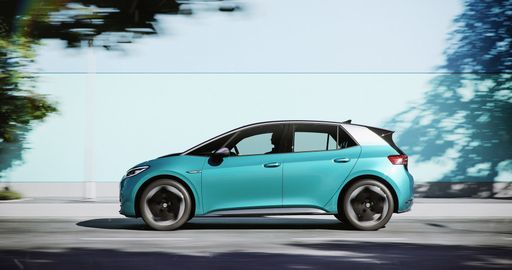
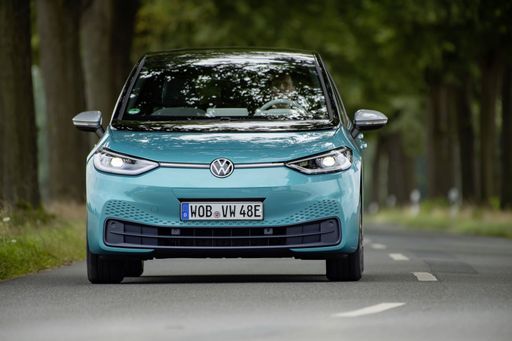
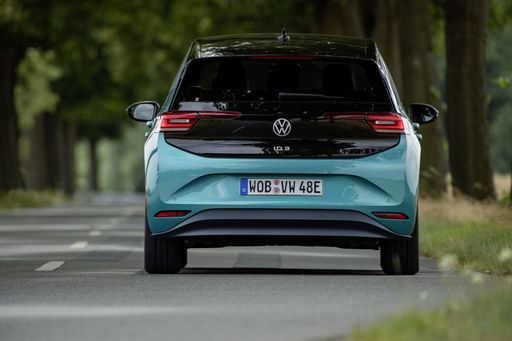
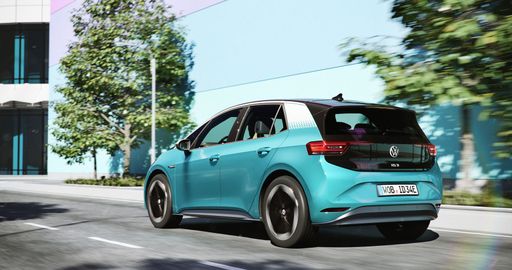
The VW ID.3 is Volkswagen’s compact electric hatch that prioritizes practical daily usability with a comfortable, modern interior. It delivers a smooth, quiet driving experience and intuitive tech that makes switching to electric straightforward.

details

MINI Aceman

The MINI Aceman squeezes classic MINI charm into a sharper, more crossover-ready shape, trading some of the old curves for grown-up practicality while keeping the wink-and-grin personality buyers crave. Inside it's a surprisingly premium, customizable cabin that feels clever rather than cluttered, and on the road the Aceman is eager and nimble — ideal for city dwellers who want an SUV silhouette with proper fun behind the wheel.

details
VW ID.3
MINI Aceman

Costs and Consumption

Price
29,100 - 40,800 £
Price
27,000 - 36,400 £
Consumption L/100km
-
Consumption L/100km
-
Consumption kWh/100km
13.9 - 14.4 kWh/100km
Consumption kWh/100km
14.1 - 16 kWh/100km
Electric Range
410 - 629 km
Electric Range
309 - 355 km
Battery Capacity
-
Battery Capacity
-
co2
0 g/km
co2
0 g/km
Fuel tank capacity
-
Fuel tank capacity
-

Dimensions and Body

Body Type
Hatchback
Body Type
SUV
Seats
5
Seats
5
Doors
-
Doors
-
Curb weight
1,885 - 1,966 kg
Curb weight
1,720 - 1,825 kg
Trunk capacity
383 L
Trunk capacity
300 L
Length
-
Length
-
Width
1,809 mm
Width
1,754 mm
Height
-
Height
-
Max trunk capacity
-
Max trunk capacity
-
Payload
422 - 464 kg
Payload
450 - 530 kg

Engine and Performance

Engine Type
Electric
Engine Type
Electric
Transmission
Automatic
Transmission
Automatic
Transmission Detail
Reduction Gearbox
Transmission Detail
Reduction Gearbox
Drive Type
Rear-Wheel Drive
Drive Type
Front-Wheel Drive
Power HP
170 - 231 HP
Power HP
184 - 258 HP
Acceleration 0-100km/h
7.1 - 8 s
Acceleration 0-100km/h
6.4 - 7.9 s
Max Speed
-
Max Speed
-
Torque
350 Nm
Torque
290 - 350 Nm
Number of Cylinders
-
Number of Cylinders
-
Power kW
125 - 170 kW
Power kW
135 - 190 kW
Engine capacity
-
Engine capacity
-

General

Model Year
2026
Model Year
2,025 - 2,026
CO2 Efficiency Class
A
CO2 Efficiency Class
A
Brand
VW
Brand
MINI
DriveDuel uses data analysis and artificial intelligence to evaluate vehicle data and create content. Content is regularly reviewed and improved. The displayed prices are estimates based on German list prices, adjusted to the respective country’s VAT. Country-specific registration taxes are not included. This information is not legally binding.