VS

VW ID.7 vs Peugeot 5008 comparison

Compare performance (340 HP vs 325 HP), boot space and price (46,400 £ vs 37,600 £ ) at a glance. Find out which car is the better choice for you – VW ID.7 or Peugeot 5008?

VW ID.7 vs Peugeot 5008: Key differences

VW ID.7

4 (4 Reviews)
rate
  • very slightly more power
  • visibly more efficient
  • marginally more electric range
  • noticeably quicker 0–100 km/h
  • clearly more trunk space
details

Peugeot 5008

4.7 (1 Reviews)
rate
  • visibly cheaper
  • markedly lighter
details

All details on performance, efficiency, range and trunk space can be found in the technical comparison below – including user reviews for both models.

By Achim Sedelmaier

ID.7

Comparing the Peugeot 5008 and Volkswagen ID.7: Where Versatility Meets Innovation

In the ever-evolving landscape of the automotive industry, consumers are faced with a multitude of options when it comes to choosing their next vehicle. This article delves into a head-to-head comparison between the Peugeot 5008 and the Volkswagen ID.7, two vehicles that embody different philosophies of automotive design and engineering. While the 5008 stands as a versatile SUV, the ID.7 represents the cutting edge of electric vehicle technology.
5008

Design and Dimensions

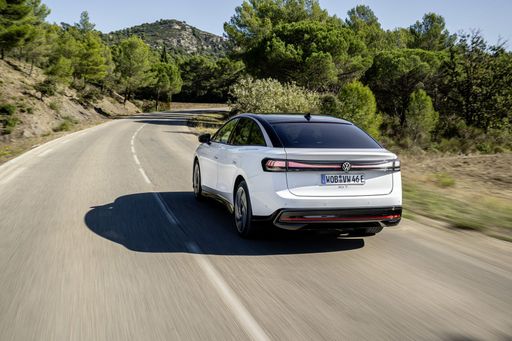
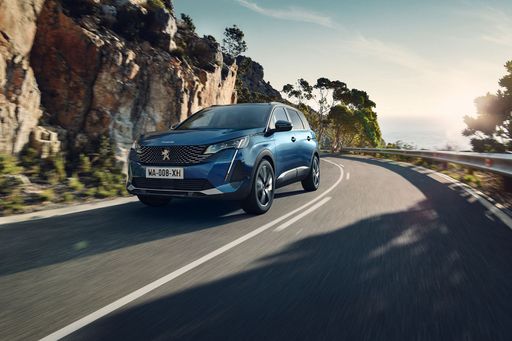
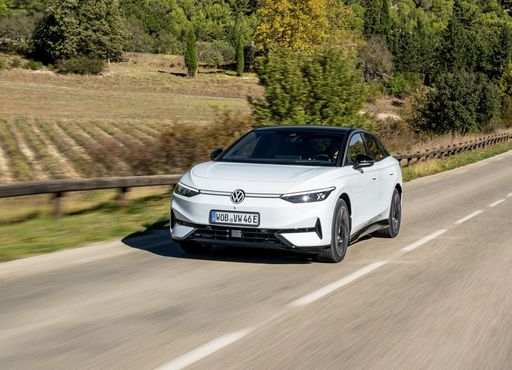
The Peugeot 5008, showcasing a rugged SUV profile, measures 4,791mm in length and 1,895mm in width, with a height of 1,694mm. Its muscular stance and contemporary design elements underscore its capability as a family vehicle, offering seating for up to seven passengers. In contrast, the Volkswagen ID.7 adopts a more streamlined hatchback silhouette, stretching 4,961mm in length and 1,862mm in width, with a height of 1,536mm. Designed for five occupants, the ID.7’s focus on aerodynamics is evident in its sleek lines.

ID.7

Powertrains and Performance

The Peugeot 5008 offers various engine options, including petrol mild-hybrid, plug-in hybrid, and electric variants, with power outputs ranging from 136 to 231 HP. Its fuel consumption rates vary, with the petrol engines offering 5.8 L/100 km while its electric versions achieve up to 664 km on a single charge. Acceleration is respectable, with the quickest model reaching 0-100 km/h in just 8.8 seconds.

On the other hand, the ID.7 is exclusively electric, with power outputs of up to 340 HP. It boasts impressive efficiency, consuming as little as 13.6 kWh per 100 km, and an outstanding electric range of up to 709 km, depending on the battery size. The ID.7 can sprint from 0-100 km/h in a mere 5.4 seconds, showcasing its performance credentials.

5008

Technological Innovations

In terms of technological advancements, the Peugeot 5008 is equipped with a suite of driver-assistance features, including adaptive cruise control and a state-of-the-art infotainment system that integrates seamlessly with smartphones. With options for a panoramic sunroof and customizable interior ambiance, the 5008 emphasizes comfort and practicality.

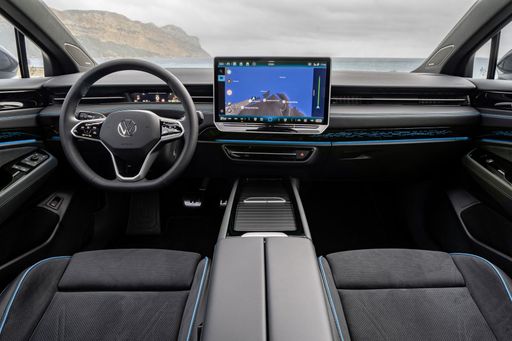
Meanwhile, the Volkswagen ID.7 takes innovation to another level with its advanced electric platform. The car features an intuitive interface with a large touchscreen, over-the-air updates, and the latest in driver assistance technology. The ID.7’s regenerative braking system enhances efficiency by reclaiming energy during deceleration, a hallmark of electric vehicle design.

ID.7

Interior Space and Cargo Capacity

For families or those needing extra space, the Peugeot 5008 excels with a cavernous trunk capacity of 748 liters, making it one of the most practical options in its category. The flexible seating arrangements allow for a customization that adapts to various needs, whether it’s carrying passengers or bulky cargo.

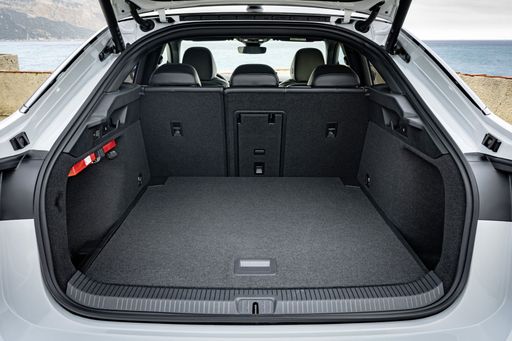
In contrast, the Volkswagen ID.7 offers a respectable trunk capacity of 532 liters. While trailing the 5008 in cargo space, it compensates with a spacious and premium interior. The minimalistic design approach focuses on comfort and tech integration, offering an inviting environment for both driver and passengers.

5008

Conclusion: Which Vehicle Reigns Supreme?

Choosing between the Peugeot 5008 and the Volkswagen ID.7 ultimately depends on the driver’s priorities. The 5008 shines with its versatility, spaciousness, and range of hybrid options, making it an ideal family SUV. Conversely, the ID.7 stands at the forefront of electric vehicle innovation, boasting impressive efficiency, performance, and the green credentials of an all-electric drive. As the automotive market continues to shift towards electrification, both vehicles represent significant offerings catering to different segments of consumer needs.

Here’s where it gets real: The technical differences in detail

ID.7

Costs and Efficiency:

Price and efficiency are key factors when choosing a car – and this is often where the real differences emerge.

Peugeot 5008 is visibly cheaper – starting at 37,600 £ , while the VW ID.7 costs 46,400 £ . That’s a price difference of around 8,781 £.

In terms of energy consumption, the VW ID.7 is visibly more efficient: consuming 13.6 kWh/100km compared to 17.8 kWh/100km for the Peugeot 5008. That’s a difference of about 4.2 kWh/100km.

As for electric range, the VW ID.7 offers marginally more range – reaching up to 708 km, about 39 km more than the Peugeot 5008.

5008

Engine and Performance:

Power, torque and acceleration say a lot about how a car feels on the road. This is where you see which model delivers more driving dynamics.

When it comes to engine power, the VW ID.7 offers very slightly more power – delivering 340 HP compared to 325 HP. That’s roughly 15 HP more horsepower.

When accelerating from 0 to 100 km/h, the VW ID.7 is noticeably quicker – completing the sprint in 5.4 s, while the Peugeot 5008 takes 6.5 s. That’s about 1.1 s quicker.

Looking at top speed, the Peugeot 5008 is barely faster – reaching 198 km/h, while the VW ID.7 tops out at 180 km/h. The difference is around 18 km/h.

There’s also a difference in torque: the VW ID.7 delivers clearly more torque with 679 Nm compared to 511 Nm. That’s about 168 Nm more.

ID.7

Space and Everyday Use:

Whether family car or daily driver – which one offers more room, flexibility and comfort?

Seats: Peugeot 5008 offers more seats – 7 vs 5.

In terms of curb weight, Peugeot 5008 is markedly lighter – 1,700 kg compared to 2,180 kg. The difference is around 480 kg.

Looking at boot space, the VW ID.7 offers clearly more boot space – 532 L compared to 348 L. That’s a difference of about 184 L.

For maximum load capacity, the Peugeot 5008 offers markedly more capacity – up to 2,232 L, about 646 L more than the VW ID.7.

When it comes to payload, the Peugeot 5008 carries clearly more – 640 kg compared to 465 kg. That’s a difference of about 175 kg.

Who wins the race in the data check?

The Peugeot 5008 has the upper hand in the objective data comparison.
This result only shows which model scores more points on paper – not which of the two cars feels right for you.

from £37,600
5008

Peugeot 5008

  • Engine Type : Electric, Petrol MHEV, Plugin Hybrid
  • Transmission : Automatic
  • Drive Type : Front-Wheel Drive, All-Wheel Drive
  • Power HP : 145 - 325 HP
  • Consumption L/100km : 2.7 - 5.6 L/100km
  • Consumption kWh/100km : 17.8 - 18.6 kWh/100km
  • Electric Range : 78 - 669 km
VW ID.7
Peugeot 5008

Costs and Consumption

View detailed analysis

Engine and Performance

View detailed analysis

Dimensions and Body

View detailed analysis

VW ID.7

VW ID.7 arrives as Volkswagen's electric grand tourer, pairing a low-slung, aerodynamic silhouette with a calm, understated interior that prioritizes comfort and space. It’s a sensible choice for buyers who want a relaxed, high-tech cruiser that covers motorway miles with poise rather than bravado.

details

Peugeot 5008

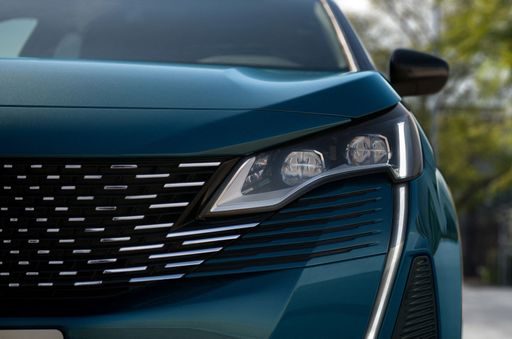
The Peugeot 5008 blends Peugeot's sharp design with the space and versatility families actually need, wrapping clever packaging and a premium-feeling cabin in a crisp, SUV-like silhouette. It drives with more poise than you'd expect from a people carrier, serves up practical touches and flexible seating for everyday chaos, and still looks good when parked outside the school gates.

details
VW ID.7
Peugeot 5008

Costs and Consumption

Price
46,400 - 54,200 £
Price
37,600 - 54,200 £
Consumption L/100km
-
Consumption L/100km
2.7 - 5.6 L/100km
Consumption kWh/100km
13.6 - 16.2 kWh/100km
Consumption kWh/100km
17.8 - 18.6 kWh/100km
Electric Range
594 - 708 km
Electric Range
78 - 669 km
Battery Capacity
77 - 86 kWh
Battery Capacity
0.4 - 96.9 kWh
co2
0 g/km
co2
0 - 127 g/km
Fuel tank capacity
-
Fuel tank capacity
55 L

Dimensions and Body

Body Type
Hatchback
Body Type
SUV
Seats
5
Seats
7
Doors
5
Doors
5
Curb weight
2,180 - 2,325 kg
Curb weight
1,700 - 2,344 kg
Trunk capacity
532 L
Trunk capacity
294 - 348 L
Length
4,961 mm
Length
4,791 mm
Width
1,862 mm
Width
1,895 mm
Height
1,535 - 1,536 mm
Height
1,694 mm
Max trunk capacity
1,586 L
Max trunk capacity
2,178 - 2,232 L
Payload
460 - 465 kg
Payload
596 - 640 kg

Engine and Performance

Engine Type
Electric
Engine Type
Electric, Petrol MHEV, Plugin Hybrid
Transmission
Automatic
Transmission
Automatic
Transmission Detail
Reduction Gearbox
Transmission Detail
Reduction Gearbox, Dual-Clutch Automatic
Drive Type
Rear-Wheel Drive, All-Wheel Drive
Drive Type
Front-Wheel Drive, All-Wheel Drive
Power HP
286 - 340 HP
Power HP
145 - 325 HP
Acceleration 0-100km/h
5.4 - 6.6 s
Acceleration 0-100km/h
6.5 - 10.2 s
Max Speed
180 km/h
Max Speed
170 - 198 km/h
Torque
545 - 679 Nm
Torque
230 - 511 Nm
Number of Cylinders
-
Number of Cylinders
3 - 4
Power kW
210 - 250 kW
Power kW
107 - 239 kW
Engine capacity
-
Engine capacity
1,199 - 1,598 cm3

General

Model Year
2,023 - 2,024
Model Year
2,024 - 2,026
CO2 Efficiency Class
A
CO2 Efficiency Class
A, D, B
Brand
VW
Brand
Peugeot
DriveDuel uses data analysis and artificial intelligence to evaluate vehicle data and create content. Content is regularly reviewed and improved. The displayed prices are estimates based on German list prices, adjusted to the respective country’s VAT. Country-specific registration taxes are not included. This information is not legally binding.