VS

VW Passat vs Skoda Octavia Combi comparison

Compare performance (272 HP vs 204 HP), boot space and price (36,500 £ vs 25,600 £ ) at a glance. Find out which car is the better choice for you – VW Passat or Skoda Octavia Combi?

VW Passat vs Skoda Octavia Combi: Key differences

VW Passat

4.8 (4 Reviews)
rate
  • markedly more power
  • considerably more efficient
  • marginally more trunk space
details

Skoda Octavia Combi

4.6 (3 Reviews)
rate
  • considerably cheaper
  • only slightly quicker 0–100 km/h
  • slightly lighter
details

All details on performance, efficiency, range and trunk space can be found in the technical comparison below – including user reviews for both models.

By Achim Sedelmaier

Passat

Skoda Octavia Combi VS VW Passat — which estate suits you?

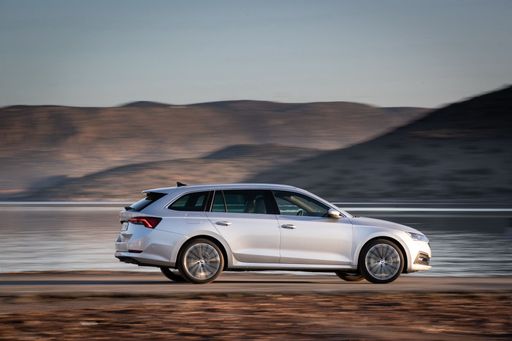
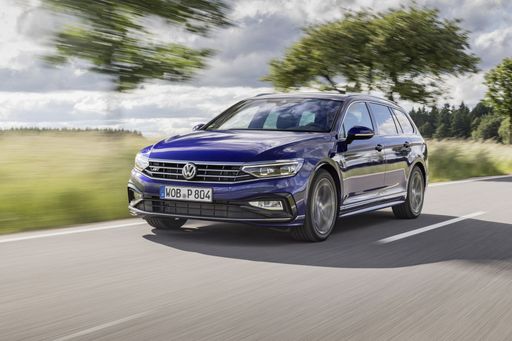
Skoda Octavia Combi VS VW Passat sets up a familiar contest: two large European estates that promise space, comfort and long-range usability but with different emphases. The Skoda Octavia Combi arrives as the pragmatic, hard-working option that squeezes maximum utility and value out of every inch. The VW Passat trades some of that hard-nosed practicality for a quieter, more refined cabin and a broader suite of higher-end options. Read on to see how those choices play out in everyday life — from motorway miles to supermarket runs — and which car fits which buyer profile.
Octavia Combi

Character and driving feel

The Skoda Octavia Combi feels workmanlike and composed: predictable steering, a steady highway demeanour and little drama make it an easy car to live with day after day. The VW Passat leans toward a more grown-up character — smoother isolation, a more refined ride and more potent engines that bring livelier acceleration when you want it. If you crave engagement and sporty feedback, neither base Octavia nor Passat is a hot hatch, but the Octavia feels more focused on stability while the Passat prioritises low-effort cruising. In short, the Octavia is the steady companion; the Passat is the quieter, slightly more polished companion for longer runs.

Passat

Comfort and long-distance behavior

On long trips the VW Passat tends to feel a touch more relaxed thanks to superior soundproofing and very comfortable seat choices, so fatigue melts away quicker over long motorway stretches. The Skoda Octavia Combi is also comfortable and can be fitted with dampers that broaden its comfort window, but its diesel engines are more audible under load and the cabin feels a little less hushed at high speed. Both offer capable adaptive dampers on higher trims, yet the Passat’s overall manners reward frequent motorway miles more convincingly. Choose the Octavia if you want efficient, steady comfort; opt for the Passat if silence and seat comfort are top priorities.

Octavia Combi

Practicality, boot and family usability

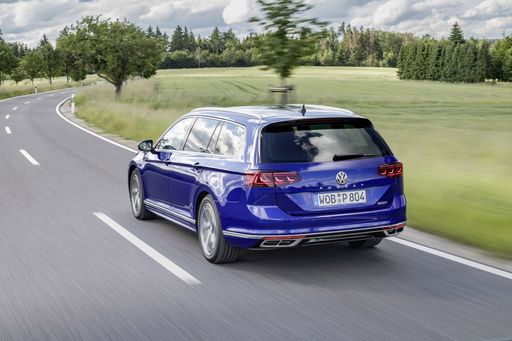
Practicality is where both cars shine, but they take different approaches: the Skoda Octavia Combi makes everyday loading easier with clever touches, a very usable boot opening and numerous small helpers that show the design was thought through for families. The VW Passat offers the larger, flatter cargo area and a slightly more luxurious feel when you load up for long trips, and it keeps that composure even when fully laden. Families who need to fit three child seats or who value intuitive storage solutions will appreciate the Octavia’s pragmatic details, while those hauling bulky luggage or prioritising maximum volume will like the Passat’s sheer capacity. Remember that electrified Passat variants sacrifice some boot depth, so that trade-off matters if you need every litre for trips.

Passat

City manners, controls and day-to-day usability

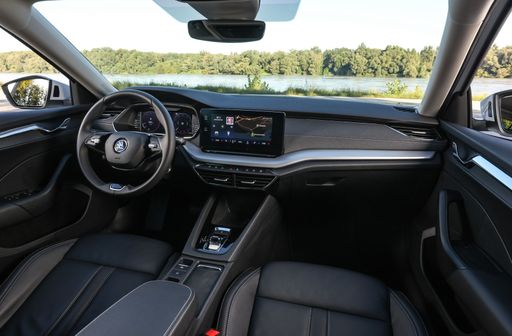
In town the Skoda Octavia Combi feels a fraction easier to handle because it’s lighter and set up for uncomplicated daily use, but its touch‑centric climate and infotainment layout can be fiddly when you just want to tweak settings quickly. The VW Passat has moved toward clearer controls with illuminated sliders and real buttons on the wheel, making operation feel a bit more grown-up, though its size and restricted rearward visibility demand more reliance on cameras and parking aids. Both cars benefit from modern driver assistance, but the Octavia’s practical ergonomics win small convenience points while the Passat’s refinement and tech polish ease the effort of urban manoeuvres if you don’t mind using the aids. If frequent tight parking is your reality, the Octavia’s slightly smaller footprint and simpler ergonomics are the more forgiving choice.

Octavia Combi

Who should buy which car?

If your priority is getting the most space, lowest running costs and practical cleverness for the money, the Skoda Octavia Combi is aimed squarely at pragmatic families and cost-conscious long-distance users who prize usability over badge prestige. If you place a premium on cabin quietness, seat comfort, higher-spec technology and don’t mind paying more for refinement — or you want the extended electric range of a Passat hybrid — the VW Passat fits better. Both are excellent for motorway miles and family duties, but the Octavia tilts value and everyday cleverness in its favour while the Passat tilts refinement and option breadth toward itself. Below you’ll find the technical comparison that drills into the drivetrain, interior fittings and running-cost implications so you can match those practical trade-offs to your priorities.

Here’s where it gets real: The technical differences in detail

Passat

Costs and Efficiency:

Price and efficiency are often the first things buyers look at. Here it becomes clear which model has the long-term edge – whether at the pump, the plug, or in purchase price.

Skoda Octavia Combi is considerably cheaper – starting at 25,600 £ , while the VW Passat costs 36,500 £ . That’s a price difference of around 10,885 £.

Fuel consumption also shows a difference: the VW Passat uses 1.2 L/100km and is considerably more efficient than the Skoda Octavia Combi with 4.4 L/100km. The difference is about 3.2 L/100km.

Octavia Combi

Engine and Performance:

Power, torque and acceleration say a lot about how a car feels on the road. This is where you see which model delivers more driving dynamics.

When it comes to engine power, the VW Passat offers markedly more power – delivering 272 HP compared to 204 HP. That’s roughly 68 HP more horsepower.

When accelerating from 0 to 100 km/h, the Skoda Octavia Combi is only slightly quicker – completing the sprint in 6.7 s, while the VW Passat takes 7.1 s. That’s about 0.4 s quicker.

There’s also a difference in torque: the VW Passat delivers barely more torque with 400 Nm compared to 360 Nm. That’s about 40 Nm more.

Passat

Space and Everyday Use:

Cabin size, boot volume and payload all play a role in everyday practicality. Here, comfort and flexibility make the difference.

Both vehicles offer seating for 5 people.

In terms of curb weight, Skoda Octavia Combi is slightly lighter – 1,366 kg compared to 1,573 kg. The difference is around 207 kg.

Looking at boot space, the VW Passat offers marginally more boot space – 690 L compared to 640 L. That’s a difference of about 50 L.

When it comes to payload, the VW Passat carries very slightly more – 577 kg compared to 534 kg. That’s a difference of about 43 kg.

Who wins the race in the data check?

The VW Passat is far ahead overall in the objective data comparison.
This result only shows which model scores more points on paper – not which of the two cars feels right for you.

from £36,500
Passat

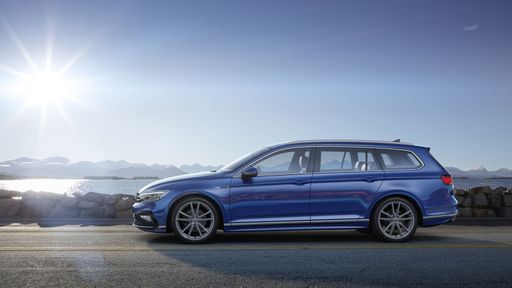
VW Passat

  • Engine Type : Petrol MHEV, Diesel, Plugin Hybrid
  • Transmission : Automatic
  • Drive Type : Front-Wheel Drive, All-Wheel Drive
  • Power HP : 122 - 272 HP
  • Consumption L/100km : 1.2 - 5.8 L/100km
  • Electric Range : 124 - 135 km
VW Passat
Skoda Octavia Combi

Costs and Consumption

View detailed analysis

Engine and Performance

View detailed analysis

Dimensions and Body

View detailed analysis

VW Passat

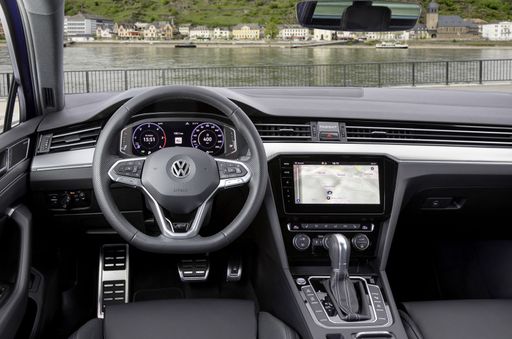
The VW Passat is the grown-up family car that gets the basics absolutely right — roomy, comfortable and built to handle weekday commutes and weekend getaways without fuss. It won't set your pulse racing, but its calm composure and sensible packaging make it boring in the best possible way: a dependable, no‑drama choice for buyers who value practicality over flash.

details

Skoda Octavia Combi

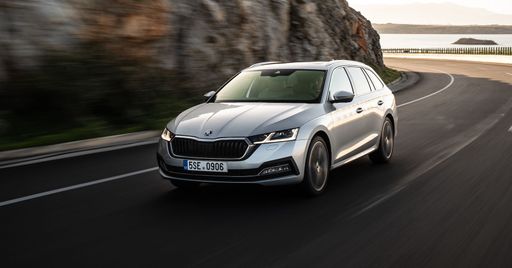
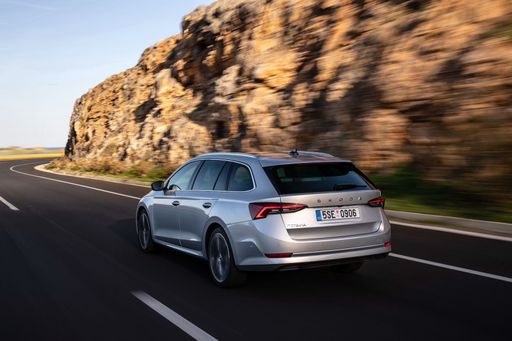
The Skoda Octavia Combi is a practical, well‑packaged estate that delivers generous and flexible interior space ideal for families or active owners. Its sensible cabin layout, comfortable ride and solid reputation for reliability make it a pragmatic choice for buyers who value utility over flash.

details
VW Passat
Skoda Octavia Combi

Costs and Consumption

Price
36,500 - 58,500 £
Price
25,600 - 39,600 £
Consumption L/100km
1.2 - 5.8 L/100km
Consumption L/100km
4.4 - 6.9 L/100km
Consumption kWh/100km
-
Consumption kWh/100km
-
Electric Range
124 - 135 km
Electric Range
-
Battery Capacity
-
Battery Capacity
-
co2
28 - 153 g/km
co2
113 - 157 g/km
Fuel tank capacity
-
Fuel tank capacity
-

Dimensions and Body

Body Type
Estate
Body Type
Estate
Seats
5
Seats
5
Doors
-
Doors
-
Curb weight
1,573 - 1,858 kg
Curb weight
1,366 - 1,553 kg
Trunk capacity
510 - 690 L
Trunk capacity
640 L
Length
-
Length
-
Width
1,849 mm
Width
1,829 mm
Height
-
Height
-
Max trunk capacity
-
Max trunk capacity
-
Payload
501 - 577 kg
Payload
502 - 534 kg

Engine and Performance

Engine Type
Petrol MHEV, Diesel, Plugin Hybrid
Engine Type
Petrol, Petrol MHEV, Diesel
Transmission
Automatic
Transmission
Automatic, Manuel
Transmission Detail
Dual-Clutch Automatic
Transmission Detail
Dual-Clutch Automatic, Manual Gearbox
Drive Type
Front-Wheel Drive, All-Wheel Drive
Drive Type
All-Wheel Drive, Front-Wheel Drive
Power HP
122 - 272 HP
Power HP
116 - 204 HP
Acceleration 0-100km/h
7.1 - 10.7 s
Acceleration 0-100km/h
6.7 - 10.7 s
Max Speed
-
Max Speed
-
Torque
250 - 400 Nm
Torque
220 - 360 Nm
Number of Cylinders
4
Number of Cylinders
4
Power kW
90 - 200 kW
Power kW
85 - 150 kW
Engine capacity
1,498 - 1,968 cm3
Engine capacity
1,498 - 1,984 cm3

General

Model Year
2,024 - 2,025
Model Year
2025
CO2 Efficiency Class
D, E, B
CO2 Efficiency Class
E, F, D, C
Brand
VW
Brand
Skoda
DriveDuel uses data analysis and artificial intelligence to evaluate vehicle data and create content. Content is regularly reviewed and improved. The displayed prices are estimates based on German list prices, adjusted to the respective country’s VAT. Country-specific registration taxes are not included. This information is not legally binding.