
 Deutschland
 France
 Nederland
 Great Britain
 Sverige
 Danmark
 Suomi
Suomi Italia
 Polska
 España
VS
VW Passat vs VW Touran comparison
Compare performance (272 HP vs 150 HP), boot space and price (36,500 £ vs 36,000 £ ) at a glance. Find out which car is the better choice for you – VW Passat or VW Touran?
Passat
Costs and Efficiency:
Price and efficiency are often the first things buyers look at. Here it becomes clear which model has the long-term edge – whether at the pump, the plug, or in purchase price.
VW Touran is very slightly cheaper – starting at 36,000 £ , while the VW Passat costs 36,500 £ . That’s a price difference of around 467 £.
Fuel consumption also shows a difference: the VW Passat uses 1.2 L/100km and is significantly more efficient than the VW Touran with 5.2 L/100km. The difference is about 4 L/100km.
Touran
Engine and Performance:
Under the bonnet, it becomes clear which model is tuned for sportiness and which one takes the lead when you hit the accelerator.
When it comes to engine power, the VW Passat offers substantially more power – delivering 272 HP compared to 150 HP. That’s roughly 122 HP more horsepower.
When accelerating from 0 to 100 km/h, the VW Passat is substantially quicker – completing the sprint in 5.8 s, while the VW Touran takes 8.9 s. That’s about 3.1 s quicker.
There’s also a difference in torque: the VW Passat delivers very slightly more torque with 400 Nm compared to 360 Nm. That’s about 40 Nm more.
Passat
Space and Everyday Use:
Cabin size, boot volume and payload all play a role in everyday practicality. Here, comfort and flexibility make the difference.
Both vehicles offer seating for 5 people.
In terms of curb weight, VW Touran is only slightly lighter – 1,520 kg compared to 1,573 kg. The difference is around 53 kg.
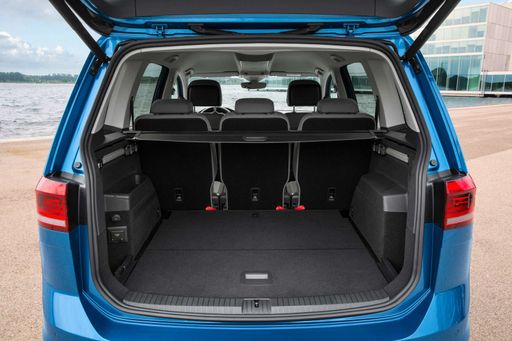
Looking at boot space, the VW Touran offers somewhat more boot space – 834 L compared to 690 L. That’s a difference of about 144 L.
When it comes to payload, the VW Touran carries barely more – 601 kg compared to 577 kg. That’s a difference of about 24 kg.
Who wins the race in the data check?
The VW Passat holds a decisive overall lead in the objective data comparison.
This result only shows which model scores more points on paper – not which of the two cars feels right for you.
from £36,500
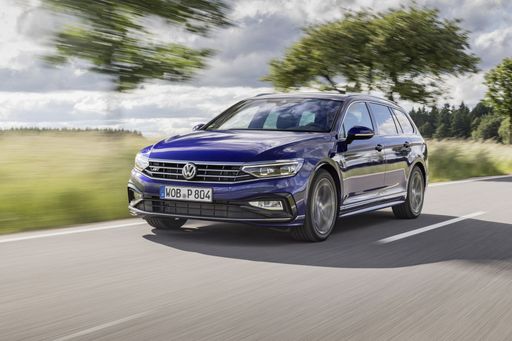
VW Passat
VW Passat
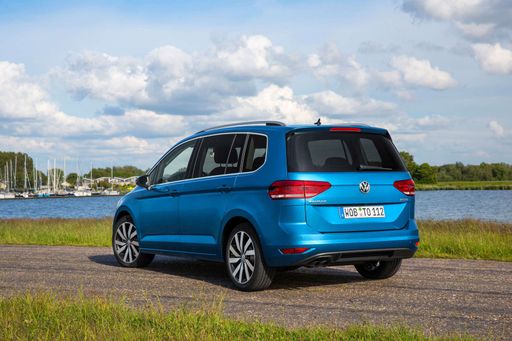
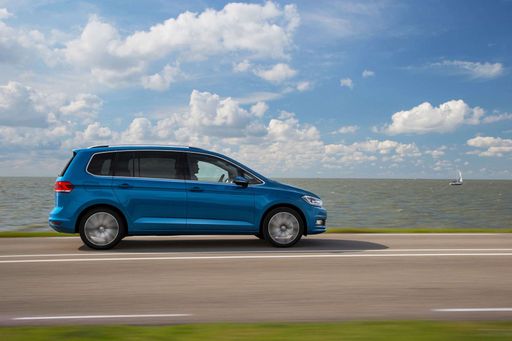
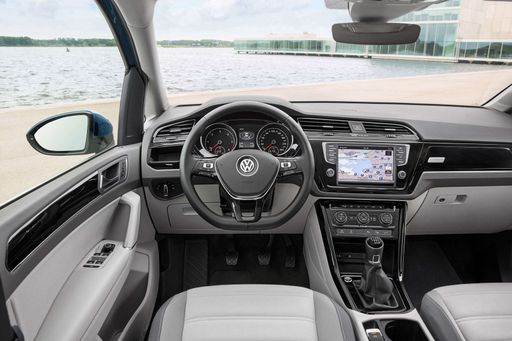
VW Touran
Costs and Consumption
View detailed analysis
View detailed analysis
Engine and Performance
View detailed analysis
View detailed analysis
Dimensions and Body
View detailed analysis
View detailed analysis
VW Passat
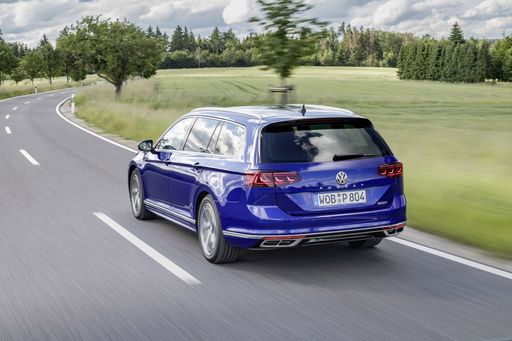
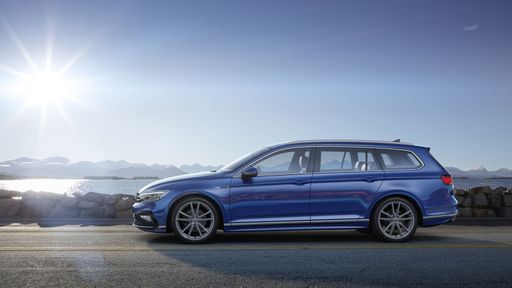
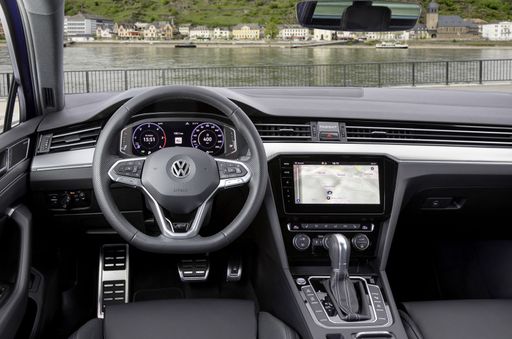
The VW Passat is the grown-up family car that gets the basics absolutely right — roomy, comfortable and built to handle weekday commutes and weekend getaways without fuss. It won't set your pulse racing, but its calm composure and sensible packaging make it boring in the best possible way: a dependable, no‑drama choice for buyers who value practicality over flash.
details
VW Touran
The VW Touran is a sensible family people‑carrier that mixes practical packaging with tidy, German-built refinement, making everyday life with kids and shopping feel a lot less chaotic. If you want a reliable, no-nonsense companion that drives with surprising poise and values usefulness over flash, the Touran is a very persuasive choice.
details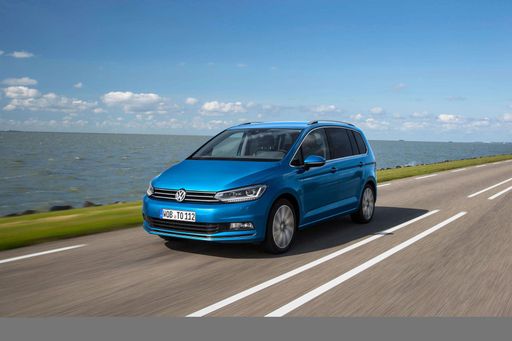
VW Passat
VW Touran
Costs and Consumption |
|
|---|---|
|
Price
36,500 - 58,500 £
|
Price
36,000 - 45,300 £
|
|
Consumption L/100km
1.2 - 8 L/100km
|
Consumption L/100km
5.2 - 6.5 L/100km
|
|
Consumption kWh/100km
-
|
Consumption kWh/100km
-
|
|
Electric Range
124 - 135 km
|
Electric Range
-
|
|
Battery Capacity
19.7 kWh
|
Battery Capacity
-
|
|
co2
28 - 181 g/km
|
co2
136 - 149 g/km
|
|
Fuel tank capacity
45 - 66 L
|
Fuel tank capacity
-
|
Dimensions and Body |
|
|---|---|
|
Body Type
Estate
|
Body Type
MPV
|
|
Seats
5
|
Seats
5
|
|
Doors
5
|
Doors
-
|
|
Curb weight
1,573 - 1,858 kg
|
Curb weight
1,520 - 1,631 kg
|
|
Trunk capacity
510 - 690 L
|
Trunk capacity
834 L
|
|
Length
4,917 mm
|
Length
-
|
|
Width
1,849 mm
|
Width
1,829 mm
|
|
Height
1,521 mm
|
Height
-
|
|
Max trunk capacity
1,770 L
|
Max trunk capacity
-
|
|
Payload
501 - 577 kg
|
Payload
590 - 601 kg
|
Engine and Performance |
|
|---|---|
|
Engine Type
Petrol, Petrol MHEV, Diesel, Plugin Hybrid
|
Engine Type
Petrol, Diesel
|
|
Transmission
Automatic
|
Transmission
Manuel, Automatic
|
|
Transmission Detail
Dual-Clutch Automatic
|
Transmission Detail
Manual Gearbox, Dual-Clutch Automatic
|
|
Drive Type
All-Wheel Drive, Front-Wheel Drive
|
Drive Type
Front-Wheel Drive
|
|
Power HP
122 - 272 HP
|
Power HP
122 - 150 HP
|
|
Acceleration 0-100km/h
5.8 - 10.7 s
|
Acceleration 0-100km/h
8.9 - 10.8 s
|
|
Max Speed
220 - 250 km/h
|
Max Speed
-
|
|
Torque
250 - 400 Nm
|
Torque
250 - 360 Nm
|
|
Number of Cylinders
4
|
Number of Cylinders
4
|
|
Power kW
90 - 200 kW
|
Power kW
90 - 110 kW
|
|
Engine capacity
1,498 - 1,984 cm3
|
Engine capacity
1,498 - 1,968 cm3
|
General |
|
|---|---|
|
Model Year
2,024 - 2,025
|
Model Year
2,024 - 2,025
|
|
CO2 Efficiency Class
G, D, E, B
|
CO2 Efficiency Class
E
|
|
Brand
VW
|
Brand
VW
|
DriveDuel uses data analysis and artificial intelligence to evaluate vehicle data and create content. Content is regularly reviewed and improved.
The displayed prices are estimates based on German list prices, adjusted to the respective country’s VAT. Country-specific registration taxes are not included. This information is not legally binding.