VS

VW T-Cross vs Fiat Grande Panda comparison

Compare performance (150 HP vs 113 HP), boot space and price (21,400 £ vs 16,300 £ ) at a glance. Find out which car is the better choice for you – VW T-Cross or Fiat Grande Panda?

VW T-Cross vs Fiat Grande Panda: Key differences

VW T-Cross

4.3 (3 Reviews)
rate
  • markedly more power
  • clearly quicker 0–100 km/h
  • barely lighter
  • barely more trunk space

Fiat Grande Panda

3.8 (1 Reviews)
rate
  • clearly cheaper
  • marginally more efficient

All details on performance, efficiency, range and trunk space can be found in the technical comparison below – including user reviews for both models.

T-Cross

Introduction to the Urban SUV Showdown

In the competitive landscape of compact SUVs, the Volkswagen T-Cross and Fiat Grande Panda emerge as two popular choices for urban drivers. While both vehicles boast stylish designs and practicality, their technical aspects and innovations set them apart. This article delves into the details of these two models, examining their performance, efficiency, and cutting-edge features to help potential buyers make an informed decision.
Grande Panda

Dimensions and Design

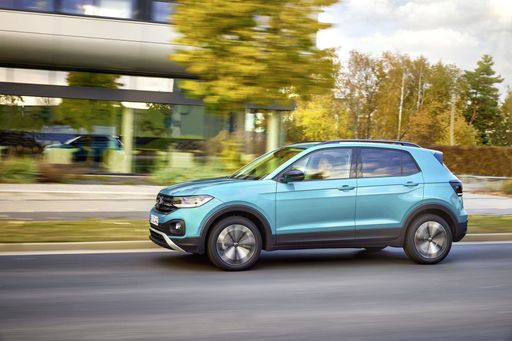
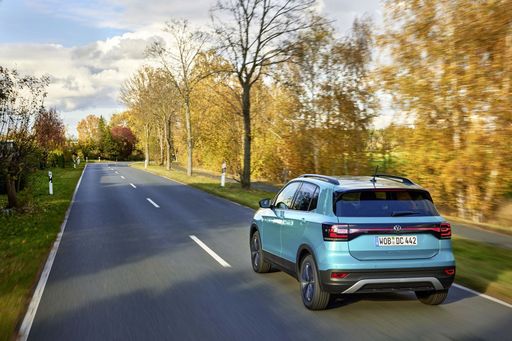
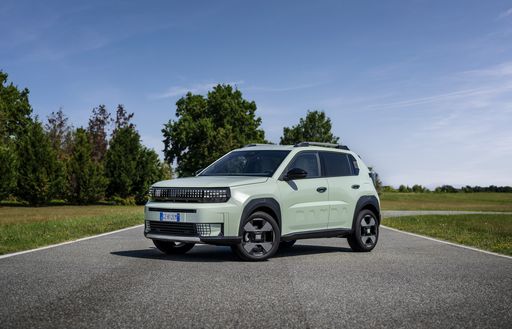
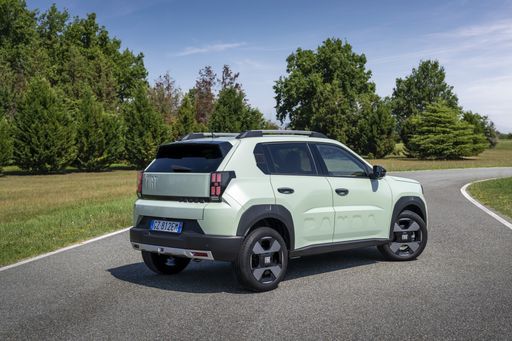
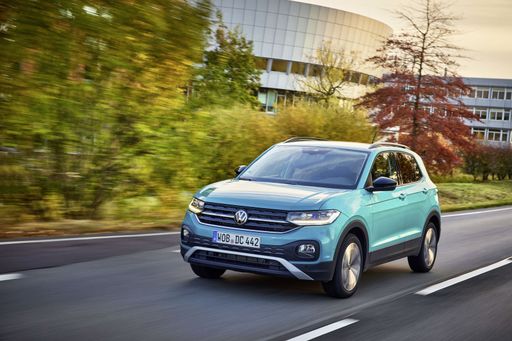
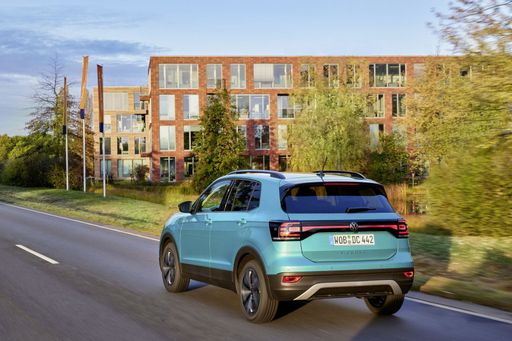
The VW T-Cross, with a length of 4127 mm, width of 1784 mm, and a height of 1573 mm, offers a roomier presence on the road. It features a modern SUV silhouette that appeals to youthful buyers looking for practicality without compromising aesthetics. On the other hand, the Fiat Grande Panda measures slightly smaller at 3999 mm in length, 1763 mm in width, and height options ranging from 1581 mm to 1629 mm, giving it a compact urban-friendly profile.

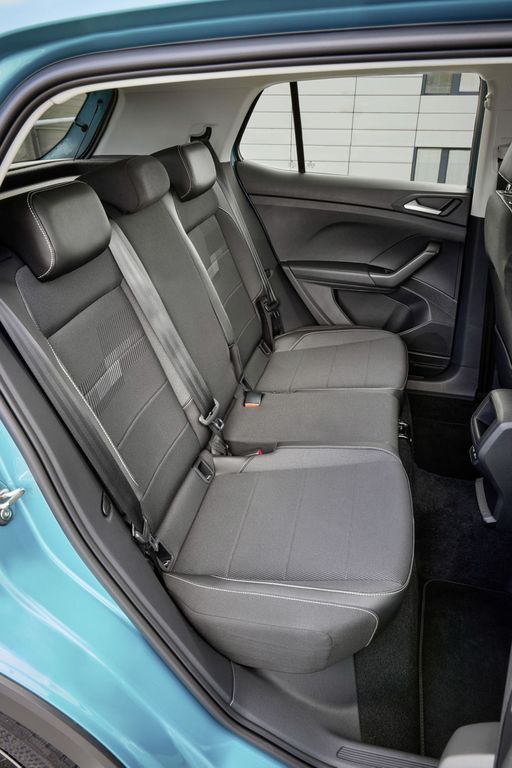
Both vehicles offer five doors and seating for five passengers, making them versatile for city commutes or weekend getaways. The T-Cross holds a trunk capacity of 455 liters, providing ample storage space, while the Grande Panda offers variations between 361 and 412 liters, accommodating everyday needs with versatility.

T-Cross

Powertrain Performance

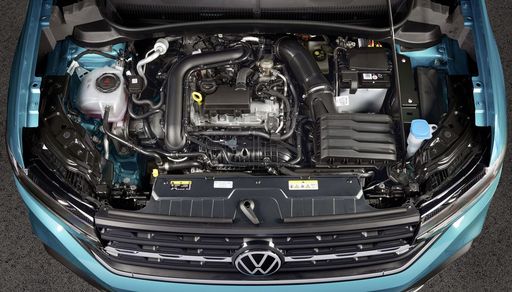
The Volkswagen T-Cross comes equipped with a range of petrol engines, producing power outputs of 95 HP, 116 HP, and 150 HP. Coupled with either a manual gearbox or a dual-clutch automatic transmission, it combines efficiency with an engaging driving experience. The T-Cross achieves a respectable fuel consumption ranging from 5.6 to 6 L/100km, and its acceleration from 0 to 100 km/h varies from 8.4 to 11.2 seconds based on the engine choice.

In contrast, the Fiat Grande Panda presents a mix of petrol mild hybrid and electric options. Its most powerful petrol engine delivers 113 HP, while the electric variant promotes eco-friendly driving with a range of up to 320 km on a full charge. The Grande Panda’s automatic transmission, coupled with a fuel consumption of just 5.4 L/100km for petrol and an efficient 17.4 kWh/100km for electric driving, caters to both traditional and modern preferences in fuel technology.

Grande Panda

Efficiency and Environmental Impact

Considering environmental impacts, the VW T-Cross holds a CO2 efficiency class of D, generating emissions between 127 and 135 g/km. While it is efficient, the Grande Panda takes a notable lead in eco-friendliness with a CO2 efficiency classification of either A or D, depending on the variant. The electric model, generating zero tailpipe emissions, positions the Grande Panda as a favorable option for environmentally conscious consumers.

T-Cross

Technological Innovations

On the technology front, the T-Cross is designed with modern drivers in mind. Features like a user-friendly infotainment system, smartphone connectivity, and advanced safety features enhance the overall driving experience. Optional adaptive cruise control and lane-keeping assistance make it a solid choice for those seeking innovation and comfort.

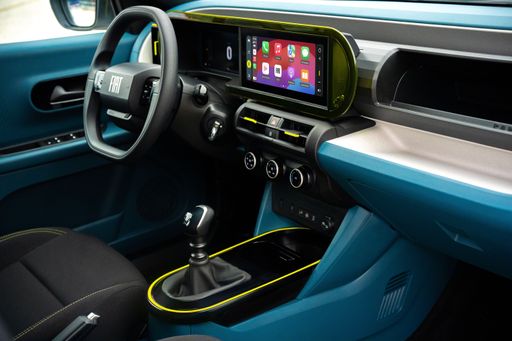
The Grande Panda doesn't lag in technological advancements; its electric model is equipped with a battery capacity of 43.8 kWh, ensuring impressive energy efficiency, while also incorporating Fiat's latest infotainment options. From connectivity to safety systems, it remains competitive with its Volkswagen counterpart, ensuring drivers stay connected without compromising on safety.

Grande Panda

Conclusion: Which One is Your Ideal Urban Companion?

When comparing the VW T-Cross and Fiat Grande Panda, it ultimately comes down to individual preferences and priorities. The T-Cross shines with its roomier dimensions, powerful engine options, and contemporary design, making it ideal for those who prioritize performance and storage. Meanwhile, the Grande Panda appeals to drivers looking for innovative electric options and eco-friendly characteristics without sacrificing style or space.

Whether you opt for the German engineering of the VW T-Cross or the Italian flair of the Fiat Grande Panda, both vehicles offer unique value propositions suitable for navigating the urban landscape. Choose wisely based on your driving style and environmental considerations, and enjoy the journey ahead.

Here’s where it gets real: The technical differences in detail

T-Cross

Costs and Efficiency:

Price and efficiency are often the first things buyers look at. Here it becomes clear which model has the long-term edge – whether at the pump, the plug, or in purchase price.

Fiat Grande Panda is clearly cheaper – starting at 16,300 £ , while the VW T-Cross costs 21,400 £ . That’s a price difference of around 5,117 £.

Fuel consumption also shows a difference: the Fiat Grande Panda uses 5.1 L/100km and is marginally more efficient than the VW T-Cross with 5.4 L/100km. The difference is about 0.3 L/100km.

Grande Panda

Engine and Performance:

Power, torque and acceleration are the classic benchmarks for car enthusiasts – and here, some clear differences start to show.

When it comes to engine power, the VW T-Cross offers markedly more power – delivering 150 HP compared to 113 HP. That’s roughly 37 HP more horsepower.

When accelerating from 0 to 100 km/h, the VW T-Cross is clearly quicker – completing the sprint in 8.4 s, while the Fiat Grande Panda takes 11.2 s. That’s about 2.8 s quicker.

There’s also a difference in torque: the VW T-Cross delivers a bit more torque with 250 Nm compared to 205 Nm. That’s about 45 Nm more.

T-Cross

Space and Everyday Use:

Whether family car or daily driver – which one offers more room, flexibility and comfort?

Both vehicles offer seating for 5 people.

In terms of curb weight, VW T-Cross is barely lighter – 1,267 kg compared to 1,295 kg. The difference is around 28 kg.

Looking at boot space, the VW T-Cross offers barely more boot space – 455 L compared to 412 L. That’s a difference of about 43 L.

When it comes to payload, the VW T-Cross carries marginally more – 480 kg compared to 453 kg. That’s a difference of about 27 kg.

Who wins the race in the data check?

The VW T-Cross is slightly ahead in the objective data comparison.
This result only shows which model scores more points on paper – not which of the two cars feels right for you.

from £21,400
T-Cross

VW T-Cross

  • Engine Type : Petrol
  • Transmission : Manuel, Automatic
  • Drive Type : Front-Wheel Drive
  • Power HP : 95 - 150 HP
  • Consumption L/100km : 5.4 - 6 L/100km
VW T-Cross
Fiat Grande Panda

Costs and Consumption

View detailed analysis

Engine and Performance

View detailed analysis

Dimensions and Body

View detailed analysis

VW T-Cross

The VW T-Cross turns everyday practicality into a style statement, offering a roomy-feeling cabin, clever storage and playful design that suits town life and family duties alike. On the road it's composed and relaxed, rewarding buyers who want the raised seating and confident presence of an SUV without the weighty compromises.

details

Fiat Grande Panda

The Grande Panda is a delightful blend of practicality and charm, making it a popular choice for urban dwellers and families alike. With its compact design, the car navigates city streets effortlessly while providing ample interior space for passengers and cargo. Its quirky styling and user-friendly features make the Grande Panda not just a mode of transport, but a fun driving experience.

details
VW T-Cross
Fiat Grande Panda

Costs and Consumption

Price
21,400 - 32,000 £
Price
16,300 - 25,700 £
Consumption L/100km
5.4 - 6 L/100km
Consumption L/100km
5.1 - 5.7 L/100km
Consumption kWh/100km
-
Consumption kWh/100km
16.8 kWh/100km
Electric Range
-
Electric Range
320 km
Battery Capacity
-
Battery Capacity
-
co2
124 - 136 g/km
co2
0 - 131 g/km
Fuel tank capacity
-
Fuel tank capacity
44 L

Dimensions and Body

Body Type
SUV
Body Type
SUV
Seats
5
Seats
5
Doors
-
Doors
5
Curb weight
1,267 - 1,338 kg
Curb weight
1,295 - 1,554 kg
Trunk capacity
455 L
Trunk capacity
361 - 412 L
Length
-
Length
3,999 mm
Width
1,784 mm
Width
1,763 mm
Height
-
Height
1,598 mm
Max trunk capacity
-
Max trunk capacity
1,366 L
Payload
463 - 480 kg
Payload
353 - 453 kg

Engine and Performance

Engine Type
Petrol
Engine Type
Electric, Petrol MHEV, Petrol
Transmission
Manuel, Automatic
Transmission
Automatic, Manuel
Transmission Detail
Manual Gearbox, Dual-Clutch Automatic
Transmission Detail
Reduction Gearbox, Dual-Clutch Automatic, Manual Gearbox
Drive Type
Front-Wheel Drive
Drive Type
Front-Wheel Drive
Power HP
95 - 150 HP
Power HP
100 - 113 HP
Acceleration 0-100km/h
8.4 - 11.3 s
Acceleration 0-100km/h
11.2 - 11.5 s
Max Speed
-
Max Speed
160 km/h
Torque
175 - 250 Nm
Torque
122 - 205 Nm
Number of Cylinders
3 - 4
Number of Cylinders
3
Power kW
70 - 110 kW
Power kW
74 - 83 kW
Engine capacity
999 - 1,498 cm3
Engine capacity
1,199 cm3

General

Model Year
2,024 - 2,025
Model Year
2,025
CO2 Efficiency Class
D, E
CO2 Efficiency Class
A, D
Brand
VW
Brand
Fiat
DriveDuel uses data analysis and artificial intelligence to evaluate vehicle data and create content. Content is regularly reviewed and improved. The displayed prices are estimates based on German list prices, adjusted to the respective country’s VAT. Country-specific registration taxes are not included. This information is not legally binding.