VS

VW T-Cross vs Vauxhall Mokka comparison

Compare performance (150 HP vs 281 HP), boot space and price (21,400 £ vs 23,000 £ ) at a glance. Find out which car is the better choice for you – VW T-Cross or Vauxhall Mokka?

VW T-Cross vs Vauxhall Mokka: Key differences

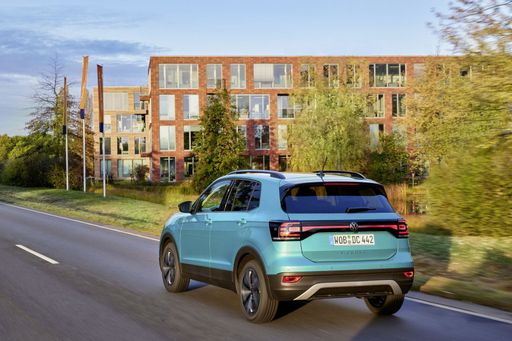
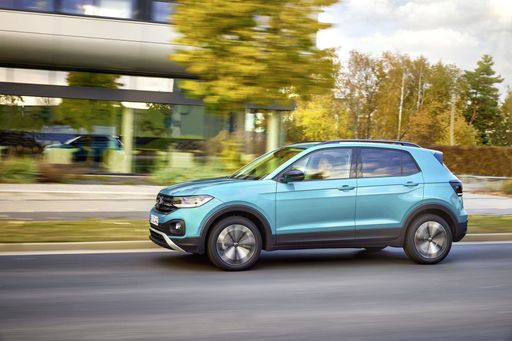
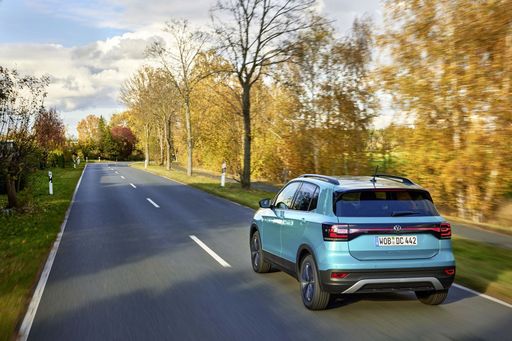
VW T-Cross

4.5 (2 Reviews)
rate
  • only slightly cheaper
  • marginally lighter
  • markedly more trunk space

Vauxhall Mokka

4.3 (3 Reviews)
rate
  • significantly more power
  • somewhat more efficient
  • significantly quicker 0–100 km/h

All details on performance, efficiency, range and trunk space can be found in the technical comparison below – including user reviews for both models.

T-Cross

Opel Mokka vs VW T-Cross: A Comprehensive Comparison

The compact SUV segment has exploded in popularity over the past few years, and two strong contenders are the Opel Mokka and the VW T-Cross. Both vehicles offer a blend of practicality, comfort, and innovative technology. In this article, we will delve into their key technical aspects, performance metrics, and recent innovations to help you decide which vehicle suits your needs best.
Mokka

Design and Dimensions

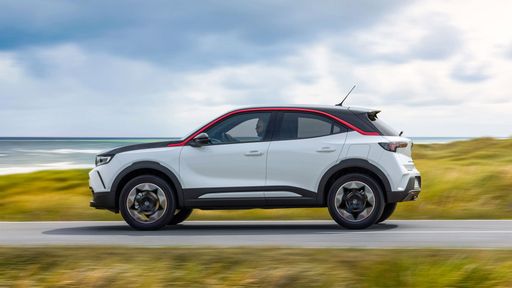
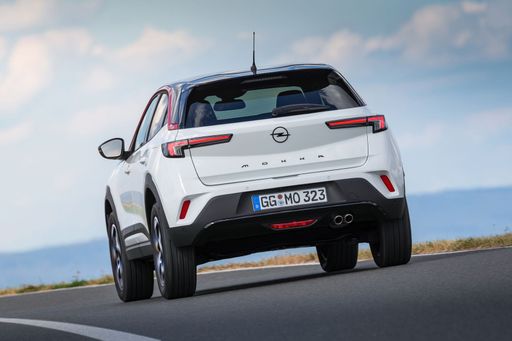
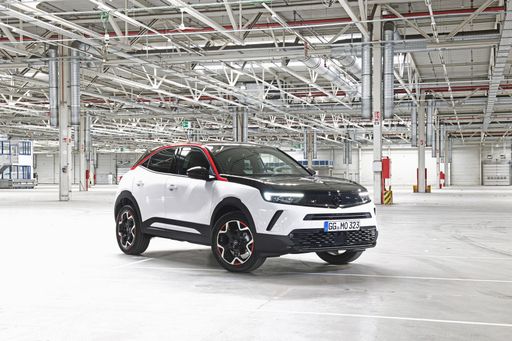
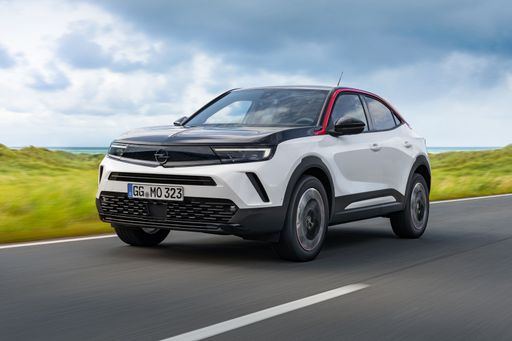
The Opel Mokka boasts a modern and striking exterior design that features sharp lines and a bold front grille. Measuring 4,150 mm in length, 1,787 mm in width, and 1,535 mm in height, the Mokka presents a robust yet compact footprint ideal for city driving.

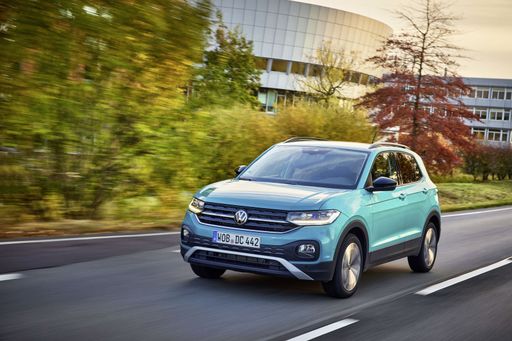
On the other hand, the VW T-Cross, with its slightly more traditional design language, measures 4,127 mm in length, 1,784 mm in width, and 1,573 mm in height. While it may be marginally smaller, it offers a spacious interior and impressive trunk capacity of 455 liters, which surpasses the Mokka's 350 liters.

T-Cross

Engine Performance and Efficiency

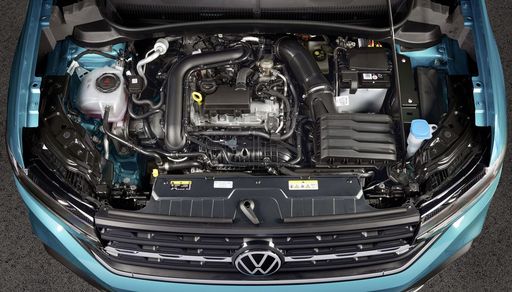
Under the hood, the Opel Mokka offers various options, including petrol, hybrid, and electric variants, with horsepower ranging from 130 to 156 HP. The new model year of 2024 features efficient engine consumption rates from 4.8 to 6.2 L/100 km for its petrol engines. Notably, the electric version presents an impressive range of up to 403 km on a full charge.

Conversely, the VW T-Cross is available with petrol engines only, offering a power range from 95 to 150 HP. Its fuel consumption ratings vary from 5.6 to 6 L/100 km. This makes the T-Cross competitive in terms of efficiency but lacks the hybrid and electric options that the Mokka provides, catering to a broader audience seeking sustainability.

Mokka

Transmission and Driving Experience

Both vehicles come equipped with manual and automatic transmission options, enhancing driver convenience. The Mokka's transmission choices include an automatic gearbox or dual-clutch automatic, making shifts smooth and efficient.

The VW T-Cross presents a similar offering, with a manual gearbox and dual-clutch automatic options. While both vehicles provide front-wheel drive, enthusiasts may prefer the T-Cross's slightly quicker acceleration, with a top speed of up to 200 km/h compared to the Mokka's 207 km/h. However, the acceleration from 0 to 100 km/h for the T-Cross takes longer at up to 11.2 seconds, while the Mokka leads with a best time of 9 seconds.

T-Cross

Interior Comfort and Technological Innovations

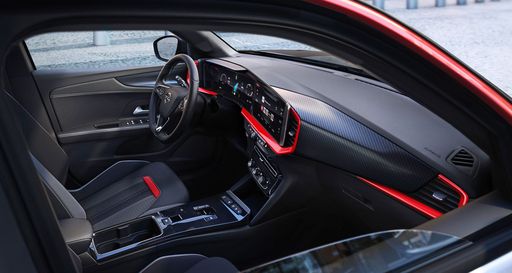
Inside, both the Opel Mokka and VW T-Cross are designed to offer comfort for five passengers. The Mokka is equipped with modern infotainment systems and a user-friendly interface that enhances the driving experience. Features such as a digital cockpit and advanced safety technologies make the Mokka a strong choice for tech-savvy consumers.

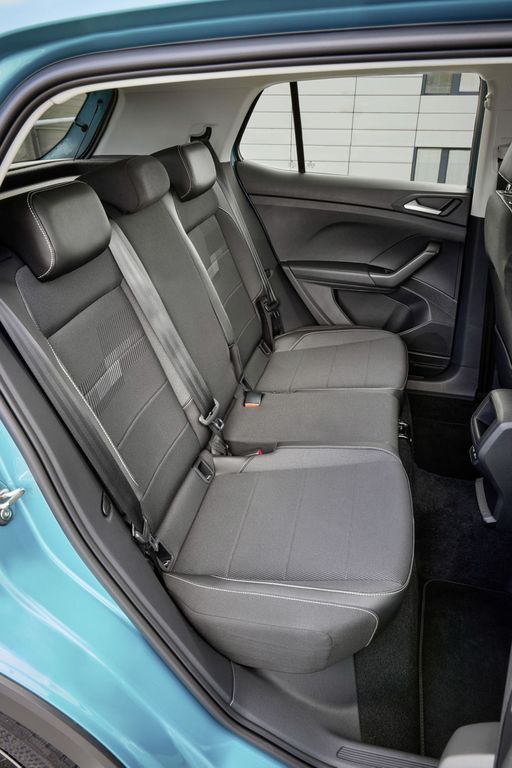
The T-Cross, synonymous with VW's quality, provides a spacious and versatile interior, including the option to adjust the rear seats for additional cargo space. It also emphasizes connectivity features, with smart integration for smartphones via Apple CarPlay and Android Auto.

Mokka

Safety and CO2 Efficiency

When it comes to safety, both vehicles come equipped with a range of driver assistance systems. The Opel Mokka has an efficient CO2 rating with emissions as low as 108 g/km, making it an environmentally friendly choice. On the flip side, the T-Cross holds a CO2 efficiency class of D, with emissions ranging from 127 to 135 g/km. Both vehicles meet the safety standards expected in their segment, ensuring peace of mind for drivers and passengers alike.

T-Cross

Conclusion: Which SUV Will You Choose?

Ultimately, the choice between the Opel Mokka and VW T-Cross hinges on your personal preferences and priorities. The Mokka shines with its innovative hybrid and electric options, impressive acceleration, and modern design, making it a fantastic choice for environmentally conscious drivers. Meanwhile, the T-Cross stands out for its spacious interior, traditional appeal, and a solid range of petrol engine options.

Both vehicles exemplify the best in the compact SUV category, ensuring that either choice promises comfort, style, and advanced technology on the road. Your next adventure awaits, so consider your lifestyle needs and take a test drive to find your perfect match!

Here’s where it gets real: The technical differences in detail

T-Cross

Costs and Efficiency:

When it comes to price and running costs, the biggest differences usually appear. This is often where you see which car fits your budget better in the long run.

VW T-Cross is only slightly cheaper – starting at 21,400 £ , while the Vauxhall Mokka costs 23,000 £ . That’s a price difference of around 1,654 £.

Fuel consumption also shows a difference: the Vauxhall Mokka uses 4.9 L/100km and is somewhat more efficient than the VW T-Cross with 5.4 L/100km. The difference is about 0.5 L/100km.

Mokka

Engine and Performance:

Power, torque and acceleration are the classic benchmarks for car enthusiasts – and here, some clear differences start to show.

When it comes to engine power, the Vauxhall Mokka offers significantly more power – delivering 281 HP compared to 150 HP. That’s roughly 131 HP more horsepower.

When accelerating from 0 to 100 km/h, the Vauxhall Mokka is significantly quicker – completing the sprint in 5.9 s, while the VW T-Cross takes 8.4 s. That’s about 2.5 s quicker.

There’s also a difference in torque: the Vauxhall Mokka delivers markedly more torque with 345 Nm compared to 250 Nm. That’s about 95 Nm more.

T-Cross

Space and Everyday Use:

Cabin size, boot volume and payload all play a role in everyday practicality. Here, comfort and flexibility make the difference.

Both vehicles offer seating for 5 people.

In terms of curb weight, VW T-Cross is marginally lighter – 1,267 kg compared to 1,294 kg. The difference is around 27 kg.

Looking at boot space, the VW T-Cross offers markedly more boot space – 455 L compared to 350 L. That’s a difference of about 105 L.

When it comes to payload, the VW T-Cross carries moderately more – 480 kg compared to 400 kg. That’s a difference of about 80 kg.

Who wins the race in the data check?

The Vauxhall Mokka is clearly superior overall in the objective data comparison.
This result only shows which model scores more points on paper – not which of the two cars feels right for you.

from £23,000
Mokka

Vauxhall Mokka

  • Engine Type : Electric, Petrol MHEV, Petrol
  • Transmission : Automatic, Manuel
  • Drive Type : Front-Wheel Drive
  • Power HP : 136 - 281 HP
  • Consumption L/100km : 4.9 - 5.7 L/100km
  • Consumption kWh/100km : 15.4 - 18.5 kWh/100km
  • Electric Range : 336 - 403 km
VW T-Cross
Vauxhall Mokka

Costs and Consumption

View detailed analysis

Engine and Performance

View detailed analysis

Dimensions and Body

View detailed analysis

VW T-Cross

The VW T-Cross turns everyday practicality into a style statement, offering a roomy-feeling cabin, clever storage and playful design that suits town life and family duties alike. On the road it's composed and relaxed, rewarding buyers who want the raised seating and confident presence of an SUV without the weighty compromises.

details

Vauxhall Mokka

The Opel Mokka cuts a smart, modern silhouette that feels right at home in the city while still turning heads on the open road. It's a practical, easy-to-live-with crossover that blends comfy driving manners with enough flair and tech to keep daily commutes interesting — and it won’t make you regret trading up.

details
VW T-Cross
Vauxhall Mokka

Costs and Consumption

Price
21,400 - 32,000 £
Price
23,000 - 40,500 £
Consumption L/100km
5.4 - 6 L/100km
Consumption L/100km
4.9 - 5.7 L/100km
Consumption kWh/100km
-
Consumption kWh/100km
15.4 - 18.5 kWh/100km
Electric Range
-
Electric Range
336 - 403 km
Battery Capacity
-
Battery Capacity
51 kWh
co2
124 - 136 g/km
co2
0 - 129 g/km
Fuel tank capacity
-
Fuel tank capacity
44 L

Dimensions and Body

Body Type
SUV
Body Type
SUV
Seats
5
Seats
5
Doors
-
Doors
5
Curb weight
1,267 - 1,338 kg
Curb weight
1,294 - 1,672 kg
Trunk capacity
455 L
Trunk capacity
310 - 350 L
Length
-
Length
4,150 mm
Width
1,784 mm
Width
1,787 mm
Height
-
Height
1,515 - 1,535 mm
Max trunk capacity
-
Max trunk capacity
1,060 - 1,105 L
Payload
463 - 480 kg
Payload
388 - 400 kg

Engine and Performance

Engine Type
Petrol
Engine Type
Electric, Petrol MHEV, Petrol
Transmission
Manuel, Automatic
Transmission
Automatic, Manuel
Transmission Detail
Manual Gearbox, Dual-Clutch Automatic
Transmission Detail
Reduction Gearbox, Dual-Clutch Automatic, Manual Gearbox
Drive Type
Front-Wheel Drive
Drive Type
Front-Wheel Drive
Power HP
95 - 150 HP
Power HP
136 - 281 HP
Acceleration 0-100km/h
8.4 - 11.3 s
Acceleration 0-100km/h
5.9 - 9 s
Max Speed
-
Max Speed
150 - 209 km/h
Torque
175 - 250 Nm
Torque
230 - 345 Nm
Number of Cylinders
3 - 4
Number of Cylinders
3
Power kW
70 - 110 kW
Power kW
100 - 207 kW
Engine capacity
999 - 1,498 cm3
Engine capacity
1,199 cm3

General

Model Year
2,024 - 2,025
Model Year
2,024 - 2,025
CO2 Efficiency Class
D, E
CO2 Efficiency Class
A, C, D
Brand
VW
Brand
Vauxhall
DriveDuel uses data analysis and artificial intelligence to evaluate vehicle data and create content. Content is regularly reviewed and improved. The displayed prices are estimates based on German list prices, adjusted to the respective country’s VAT. Country-specific registration taxes are not included. This information is not legally binding.