VS

VW T-Cross vs SEAT Arona comparison

Compare performance (150 HP vs 150 HP), boot space and price (21,400 £ vs 20,700 £ ) at a glance. Find out which car is the better choice for you – VW T-Cross or SEAT Arona?

VW T-Cross vs SEAT Arona: Key differences

VW T-Cross

4.5 (2 Reviews)
rate
  • moderately more trunk space

SEAT Arona

4.9 (2 Reviews)
rate
  • only slightly cheaper
  • only slightly more efficient
  • very slightly quicker 0–100 km/h
  • marginally lighter

All details on performance, efficiency, range and trunk space can be found in the technical comparison below – including user reviews for both models.

T-Cross

Two small SUVs under the spotlight

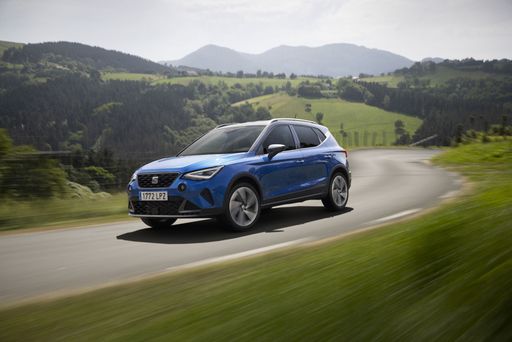
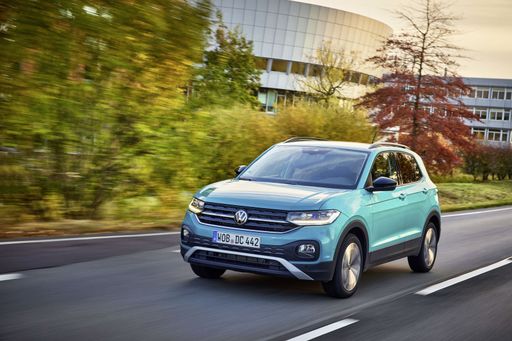
The SEAT Arona and the VW T-Cross go head-to-head in this compact crossover comparison — a straight-up SEAT Arona VS VW T-Cross showdown for buyers who want practical daily transport with a dash of personality. Both cars are small SUVs built for cities that occasionally need to handle country lanes, but they arrive with different attitudes and priorities. If you’re searching for a compact crossover that balances everyday sense with a distinct character, this face-off is exactly the tune-up your decision needs. Below we’ll tease apart how the SEAT Arona and the VW T-Cross feel in the real world, not just on paper.

Arona

Character clash: sporty bite vs measured poise

The SEAT Arona wears a sportier mask — sharper graphics, a chirpy steering feel and a bias toward engagement that makes town driving feel lively rather than clinical. The VW T-Cross plays it more composed and conservative, with a calm, predictable personality that comforts rather than excites. Materials and finishes tip the scales differently too: the SEAT Arona leans youthful and expressive, while the VW T-Cross trades a little flair for a more restrained, mainstream sheen. In short, the Arona asks to be noticed; the T-Cross asks to be trusted.

T-Cross

Daily life: nimble city nipper or spacious family helper?

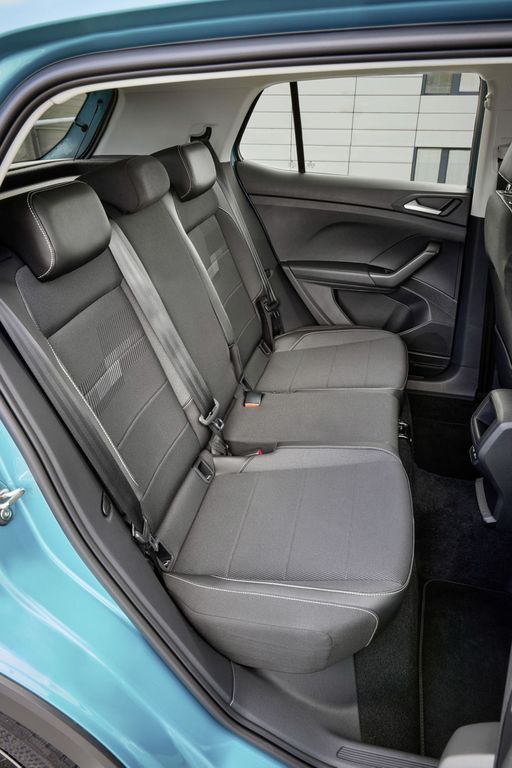
The SEAT Arona feels lighter on its feet around town — easier to hustle into tight parking and more willing to turn quick corners without fuss, which suits single commuters and apartment-dwellers. The VW T-Cross answers with a roomier, more accommodating cabin and a boot that swallows errands and weekend kit with less compromise, so it’s better suited to families and shoppers who load up often. Both cars are straightforward to live with, but the Arona prioritises driver engagement and urban agility while the T-Cross prioritises day-to-day practicality and a reassuringly solid ride. Choose based on whether your daily grind is about tight city maneuvers or making life with passengers and cargo simpler.

Arona

Buying with pride: what story does the car let you tell?

For image-conscious buyers the SEAT Arona is the easier sell — it feels a touch more youthful and energetic, which works if you want a car that looks like it has personality as well as purpose. The VW T-Cross makes a quieter case: it signals sensible judgement, mainstream appeal and an emphasis on usability over flash. If your purchase is a statement — either of style or sensible competence — these two send different messages at the curb. Neither is shy; one shouts, the other nods approvingly.

T-Cross

Who should seriously consider the SEAT Arona?

The SEAT Arona suits buyers who lean toward design and expression, people who want an engaging little crossover that feels fun to drive and stands out in the car park. It’s a smart pick for commuters who value nimble handling, younger owners who prioritise looks and anyone who enjoys a sprightlier steering feel in town. Compared with the VW T-Cross, the Arona trades a bit of bulk for personality and driving zest. If you’re buying with heart as much as head, the Arona makes that case loudly.

Arona

Who should favour the VW T-Cross — and remember the Arona?

The VW T-Cross is aimed squarely at pragmatists and safety-minded buyers who want a compact SUV that behaves like the adult in the room: roomy, predictable and easy to live with day after day. It’s the better choice for parents, regular long-distance commuters who value comfort over theatrics, and buyers who prioritise interior space and sensible packaging. That said, if you’re wavering because you want a bit more personality, glance back at the SEAT Arona — it’s the zippier alternative. Read on to see the numbers and option details that back up these impressions.

Here’s where it gets real: The technical differences in detail

T-Cross

Costs and Efficiency:

Looking at overall running costs, both models reveal some interesting differences in everyday economy.

SEAT Arona is only slightly cheaper – starting at 20,700 £ , while the VW T-Cross costs 21,400 £ . That’s a price difference of around 694 £.

Fuel consumption also shows a difference: the SEAT Arona uses 5.3 L/100km and is only slightly more efficient than the VW T-Cross with 5.4 L/100km. The difference is about 0.1 L/100km.

Arona

Engine and Performance:

Power, torque and acceleration are the classic benchmarks for car enthusiasts – and here, some clear differences start to show.

Both models deliver identical power – 150 HP each.

When accelerating from 0 to 100 km/h, the SEAT Arona is very slightly quicker – completing the sprint in 8.3 s, while the VW T-Cross takes 8.4 s. That’s about 0.1 s quicker.

Both models offer the same torque – 250 Nm.

T-Cross

Space and Everyday Use:

Beyond pure performance, interior space and usability matter most in daily life. This is where you see which car is more practical and versatile.

Both vehicles offer seating for 5 people.

In terms of curb weight, SEAT Arona is marginally lighter – 1,188 kg compared to 1,267 kg. The difference is around 79 kg.

Looking at boot space, the VW T-Cross offers moderately more boot space – 455 L compared to 400 L. That’s a difference of about 55 L.

When it comes to payload, the SEAT Arona carries barely more – 522 kg compared to 480 kg. That’s a difference of about 42 kg.

Who wins the race in the data check?

The SEAT Arona is narrowly ahead in the objective data comparison.
This result only shows which model scores more points on paper – not which of the two cars feels right for you.

from £20,700
Arona

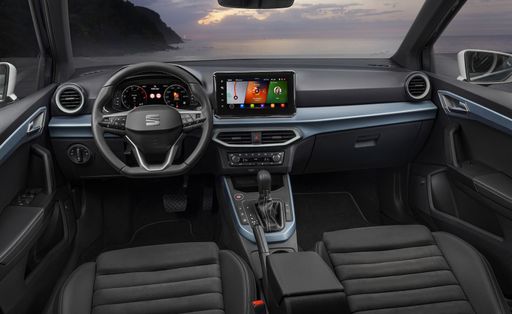
SEAT Arona

  • Engine Type : Petrol
  • Transmission : Manuel, Automatic
  • Drive Type : Front-Wheel Drive
  • Power HP : 95 - 150 HP
  • Consumption L/100km : 5.3 - 5.8 L/100km
VW T-Cross
SEAT Arona

Costs and Consumption

View detailed analysis

Engine and Performance

View detailed analysis

Dimensions and Body

View detailed analysis

VW T-Cross

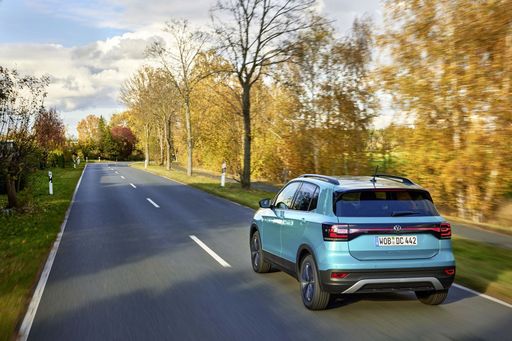
The VW T-Cross turns everyday practicality into a style statement, offering a roomy-feeling cabin, clever storage and playful design that suits town life and family duties alike. On the road it's composed and relaxed, rewarding buyers who want the raised seating and confident presence of an SUV without the weighty compromises.

details

SEAT Arona

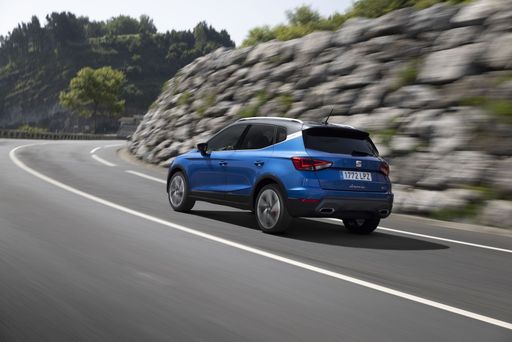
The SEAT Arona is a cheeky urban crossover that mixes sharp styling with sensible practicality, making it an appealing choice for buyers who want personality without fuss. It’s zippy in traffic, comfortable enough for daily driving, and brings enough character to make routine journeys feel a little more fun.

details
VW T-Cross
SEAT Arona

Costs and Consumption

Price
21,400 - 32,000 £
Price
20,700 - 30,500 £
Consumption L/100km
5.4 - 6 L/100km
Consumption L/100km
5.3 - 5.8 L/100km
Consumption kWh/100km
-
Consumption kWh/100km
-
Electric Range
-
Electric Range
-
Battery Capacity
-
Battery Capacity
-
co2
124 - 136 g/km
co2
120 - 132 g/km
Fuel tank capacity
-
Fuel tank capacity
-

Dimensions and Body

Body Type
SUV
Body Type
SUV
Seats
5
Seats
5
Doors
-
Doors
-
Curb weight
1,267 - 1,338 kg
Curb weight
1,188 - 1,268 kg
Trunk capacity
455 L
Trunk capacity
400 L
Length
-
Length
-
Width
1,784 mm
Width
1,780 mm
Height
-
Height
-
Max trunk capacity
-
Max trunk capacity
-
Payload
463 - 480 kg
Payload
502 - 522 kg

Engine and Performance

Engine Type
Petrol
Engine Type
Petrol
Transmission
Manuel, Automatic
Transmission
Manuel, Automatic
Transmission Detail
Manual Gearbox, Dual-Clutch Automatic
Transmission Detail
Manual Gearbox, Dual-Clutch Automatic
Drive Type
Front-Wheel Drive
Drive Type
Front-Wheel Drive
Power HP
95 - 150 HP
Power HP
95 - 150 HP
Acceleration 0-100km/h
8.4 - 11.3 s
Acceleration 0-100km/h
8.3 - 11.1 s
Max Speed
-
Max Speed
-
Torque
175 - 250 Nm
Torque
175 - 250 Nm
Number of Cylinders
3 - 4
Number of Cylinders
3 - 4
Power kW
70 - 110 kW
Power kW
70 - 110 kW
Engine capacity
999 - 1,498 cm3
Engine capacity
999 - 1,498 cm3

General

Model Year
2,024 - 2,025
Model Year
2,025
CO2 Efficiency Class
D, E
CO2 Efficiency Class
D
Brand
VW
Brand
SEAT
DriveDuel uses data analysis and artificial intelligence to evaluate vehicle data and create content. Content is regularly reviewed and improved. The displayed prices are estimates based on German list prices, adjusted to the respective country’s VAT. Country-specific registration taxes are not included. This information is not legally binding.