VS

VW T-Cross vs Skoda Elroq comparison

Compare performance (150 HP vs 340 HP), boot space and price (21,400 £ vs 32,000 £ ) at a glance. Find out which car is the better choice for you – VW T-Cross or Skoda Elroq?

VW T-Cross vs Skoda Elroq: Key differences

VW T-Cross

3.9 (4 Reviews)
rate
  • significantly cheaper
  • clearly lighter
details

Skoda Elroq

4.5 (8 Reviews)
rate
  • substantially more power
  • considerably quicker 0–100 km/h
  • only slightly more trunk space
details

All details on performance, efficiency, range and trunk space can be found in the technical comparison below – including user reviews for both models.

By Achim Sedelmaier

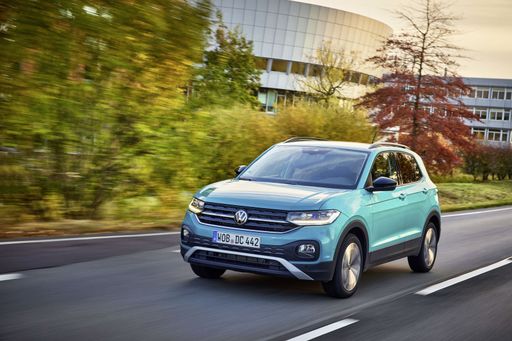
T-Cross

In the ever-evolving landscape of the automotive industry, compact SUVs continue to gain popularity among consumers, offering a blend of practicality, style, and innovation. This article delves into a comparative analysis of two formidable contenders in this segment: the VW T-Cross and the Skoda Elroq. While both vehicles serve the compact SUV niche, they approach the market with distinctly different technical specifications and features. Let’s explore how they stack up against each other.
Elroq

Design and Dimensions

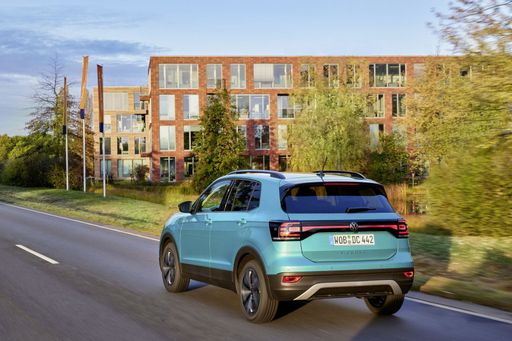
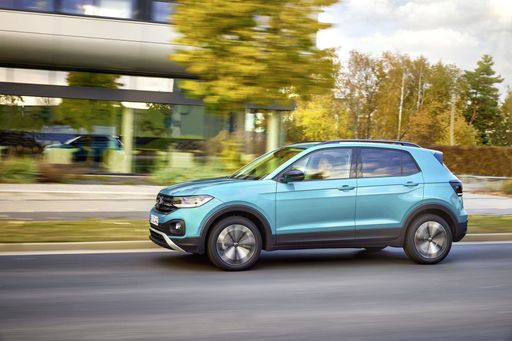
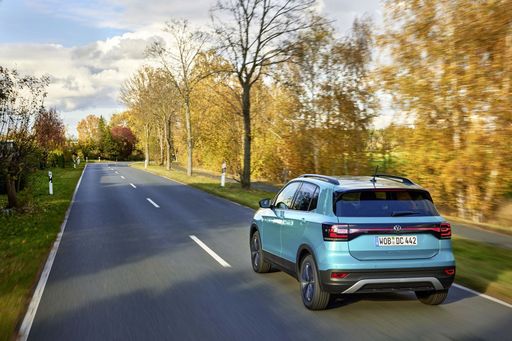
First impressions matter, and both the VW T-Cross and Skoda Elroq have visually appealing designs that cater to modern consumers. The T-Cross measures 4127mm in length, 1784mm in width, and stands at 1573mm high. This compact design makes it an agile option in urban settings.

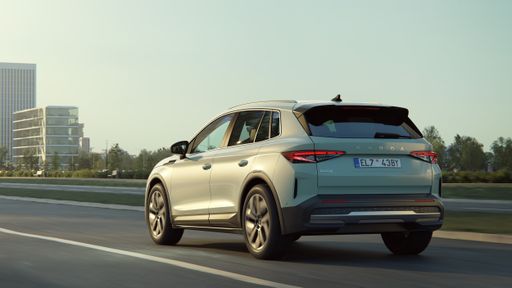
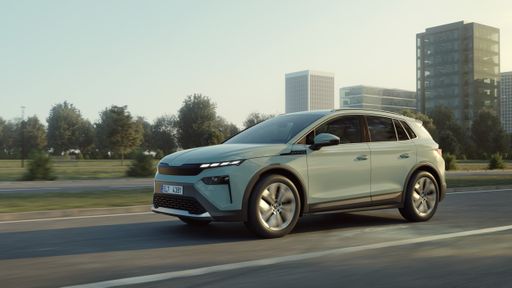
In contrast, the Skoda Elroq is slightly larger, with dimensions of 4488mm in length, 1884mm in width, and a height of 1625mm. This size advantage is reflected in the Elroq’s larger trunk capacity of 470 liters compared to the T-Cross's 455 liters, making it more versatile for families or those needing extra cargo space.

T-Cross

Engine and Performance

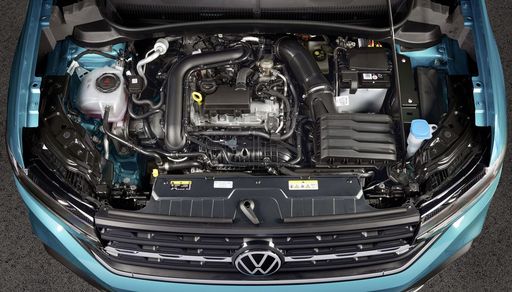
The VW T-Cross offers a range of petrol engines, including options with outputs of 95, 116, and 150 HP, paired with either a manual or dual-clutch automatic transmission. Its acceleration from 0 to 100 km/h varies from 8.4 seconds to 11.2 seconds depending on the engine choice. Fuel consumption is commendable, ranging from 5.6 to 6.0 L/100km, with CO2 emissions classified under category D.

On the other hand, the Skoda Elroq leans into the future with its all-electric engine lineup, producing between 170 and 286 HP, depending on the configuration. The Elroq's 0-100 km/h performance ranges from 6.6 seconds to 9 seconds, indicating a strong performance, particularly in the higher-spec models. With an electric consumption of 15.2 to 16.4 kWh/100km, it boasts an impressive range of up to 580 km, placing it firmly in the eco-friendly category with zero CO2 emissions.

Elroq

Driving Experience and Technology

While both vehicles are front-wheel drive in the T-Cross and rear-wheel drive in the Elroq, they deliver distinct driving experiences. The T-Cross offers a more traditional driving feel which many drivers might appreciate, especially those accustomed to petrol engines. The automatic options provide smooth shifting and ease of operation during city commutes.

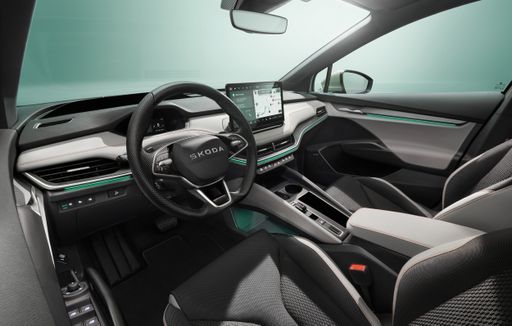
In contrast, the Elroq introduces an innovative, seamless driving experience thanks to its advanced electric powertrain and reduction gearbox. The immediate torque of 310 Nm in the base model and up to 545 Nm in the high-performance variant means quicker responsiveness, making it an exhilarating option for enthusiasts. Moreover, Skoda’s adherence to high-tech features such as adaptive cruise control, digital cockpit, and smart infotainment options elevates the driving experience.

T-Cross

Interior Comfort and Features

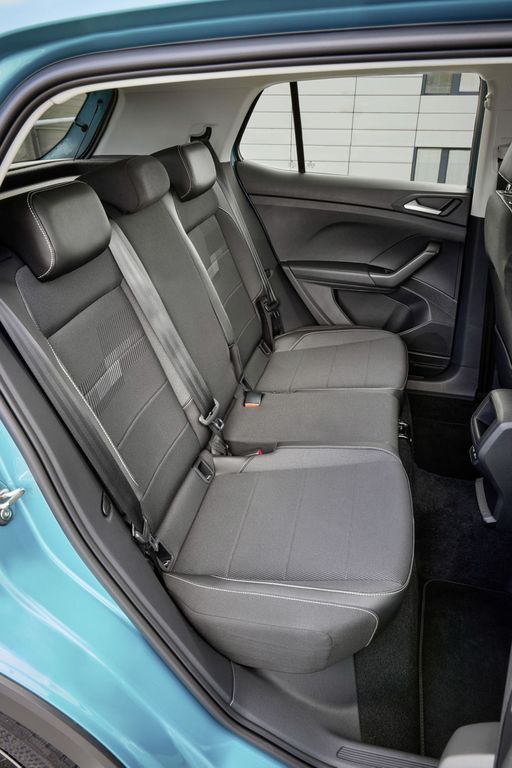
When it comes to cabin comfort, both SUVs can seat up to five occupants. The T-Cross provides a modern interior with a user-friendly touchscreen interface and quality materials, ensuring a comfortable ride for everyday journeys.

On the flip side, the Skoda Elroq stays true to its brand ethos of spaciousness, offering more headroom and legroom, particularly for those seated in the back. Additionally, generous storage spaces and a sophisticated infotainment system enhance usability and comfort for all passengers.

Elroq

Conclusion: Which One to Choose?

Ultimately, the choice between the VW T-Cross and Skoda Elroq boils down to individual needs and preferences. The T-Cross remains a solid option for those seeking a reliable, efficient petrol SUV, while the Skoda Elroq positions itself as a pioneer in the electric vehicle market, offering cutting-edge technology and sustainability. As automotive demands continue to evolve, both models stand as testaments to their manufacturers’ dedication to innovation and customer satisfaction.

Whether you’re zipping through city streets or taking a road trip, either the T-Cross or Elroq will certainly leave a mark on the compact SUV segment. Choose wisely based on your driving habits and eco-consciousness, and you may just find the perfect companion for your next adventure.

Video - Skoda Elroq

Video Thumbnail

Here’s where it gets real: The technical differences in detail

T-Cross

Costs and Efficiency:

When it comes to price and running costs, the biggest differences usually appear. This is often where you see which car fits your budget better in the long run.

VW T-Cross is significantly cheaper – starting at 21,400 £ , while the Skoda Elroq costs 32,000 £ . That’s a price difference of around 10,654 £.

Elroq

Engine and Performance:

Under the bonnet, it becomes clear which model is tuned for sportiness and which one takes the lead when you hit the accelerator.

When it comes to engine power, the Skoda Elroq offers substantially more power – delivering 340 HP compared to 150 HP. That’s roughly 190 HP more horsepower.

When accelerating from 0 to 100 km/h, the Skoda Elroq is considerably quicker – completing the sprint in 5.4 s, while the VW T-Cross takes 8.4 s. That’s about 3 s quicker.

There’s also a difference in torque: the Skoda Elroq delivers substantially more torque with 679 Nm compared to 250 Nm. That’s about 429 Nm more.

T-Cross

Space and Everyday Use:

Cabin size, boot volume and payload all play a role in everyday practicality. Here, comfort and flexibility make the difference.

Both vehicles offer seating for 5 people.

In terms of curb weight, VW T-Cross is clearly lighter – 1,267 kg compared to 2,036 kg. The difference is around 769 kg.

Looking at boot space, the Skoda Elroq offers only slightly more boot space – 470 L compared to 455 L. That’s a difference of about 15 L.

When it comes to payload, the Skoda Elroq carries moderately more – 549 kg compared to 480 kg. That’s a difference of about 69 kg.

Who wins the race in the data check?

The Skoda Elroq stands well ahead of its rival in the objective data comparison.
This result only shows which model scores more points on paper – not which of the two cars feels right for you.

from £32,000
Elroq

Skoda Elroq

  • Engine Type : Electric
  • Transmission : Automatic
  • Drive Type : Rear-Wheel Drive, All-Wheel Drive
  • Power HP : 190 - 340 HP
  • Consumption kWh/100km : 15.1 - 16.3 kWh/100km
  • Electric Range : 441 - 574 km
VW T-Cross
Skoda Elroq

Costs and Consumption

View detailed analysis

Engine and Performance

View detailed analysis

Dimensions and Body

View detailed analysis

VW T-Cross

The VW T-Cross is a small, city-friendly crossover that blends practical packaging with easygoing driving manners and a high seating position for good visibility. It’s a sensible, comfortable choice for buyers who want the convenience and style of an SUV without big compromises.

details

Skoda Elroq

The Skoda Elroq is a practical and well-rounded compact SUV that blends clever packaging with a calm, comfortable ride. It offers a sensible interior, straightforward technology and a value-focused approach, making it a particularly good choice for families and everyday drivers.

details
VW T-Cross
Skoda Elroq

Costs and Consumption

Price
21,400 - 32,000 £
Price
32,000 - 47,000 £
Consumption L/100km
5.4 - 6 L/100km
Consumption L/100km
-
Consumption kWh/100km
-
Consumption kWh/100km
15.1 - 16.3 kWh/100km
Electric Range
-
Electric Range
441 - 574 km
Battery Capacity
-
Battery Capacity
-
co2
124 - 136 g/km
co2
0 g/km
Fuel tank capacity
-
Fuel tank capacity
-

Dimensions and Body

Body Type
SUV
Body Type
SUV
Seats
5
Seats
5
Doors
-
Doors
-
Curb weight
1,267 - 1,338 kg
Curb weight
2,036 - 2,255 kg
Trunk capacity
455 L
Trunk capacity
470 L
Length
-
Length
-
Width
1,784 mm
Width
1,884 mm
Height
-
Height
-
Max trunk capacity
-
Max trunk capacity
-
Payload
463 - 480 kg
Payload
482 - 549 kg

Engine and Performance

Engine Type
Petrol
Engine Type
Electric
Transmission
Manuel, Automatic
Transmission
Automatic
Transmission Detail
Manual Gearbox, Dual-Clutch Automatic
Transmission Detail
Reduction Gearbox
Drive Type
Front-Wheel Drive
Drive Type
Rear-Wheel Drive, All-Wheel Drive
Power HP
95 - 150 HP
Power HP
190 - 340 HP
Acceleration 0-100km/h
8.4 - 11.3 s
Acceleration 0-100km/h
5.4 - 8.5 s
Max Speed
-
Max Speed
-
Torque
175 - 250 Nm
Torque
350 - 679 Nm
Number of Cylinders
3 - 4
Number of Cylinders
-
Power kW
70 - 110 kW
Power kW
140 - 250 kW
Engine capacity
999 - 1,498 cm3
Engine capacity
-

General

Model Year
2,024 - 2,025
Model Year
2026
CO2 Efficiency Class
D, E
CO2 Efficiency Class
A
Brand
VW
Brand
Skoda
DriveDuel uses data analysis and artificial intelligence to evaluate vehicle data and create content. Content is regularly reviewed and improved. The displayed prices are estimates based on German list prices, adjusted to the respective country’s VAT. Country-specific registration taxes are not included. This information is not legally binding.