VS

VW Tayron vs Audi Q3 comparison

Compare performance (272 HP vs 272 HP), boot space and price (40,200 £ vs 38,200 £ ) at a glance. Find out which car is the better choice for you – VW Tayron or Audi Q3?

VW Tayron vs Audi Q3: Key differences

VW Tayron

4.5 (6 Reviews)
rate
  • slightly more efficient
  • marginally more electric range
  • clearly more trunk space
details

Audi Q3

4.2 (3 Reviews)
rate
  • very slightly cheaper
  • barely quicker 0–100 km/h
  • only slightly lighter
details

All details on performance, efficiency, range and trunk space can be found in the technical comparison below – including user reviews for both models.

By Achim Sedelmaier

Tayron

The compact SUV segment is one of the most competitive in the automotive industry, with various models vying for attention from consumers. Today, we’ll take a closer look at two popular choices: the Audi Q3 and the VW Tayron. While both vehicles hail from reputable manufacturers, they each bring unique strengths and innovations to the table.

Q3

Design and Dimensions

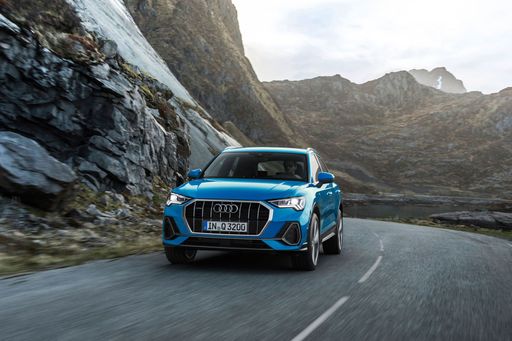
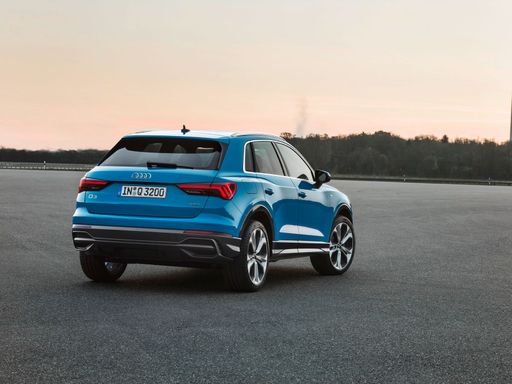
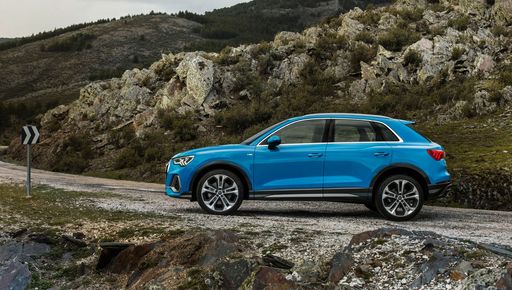
The Audi Q3 measures 4484 mm in length and 1849 mm in width, standing at a height of 1585 mm. It boasts a sleek and sophisticated exterior that is quintessentially Audi, complete with a bold front grille and sharp LED headlights. With a trunk capacity of 530 liters, it provides ample space for both passengers and cargo.

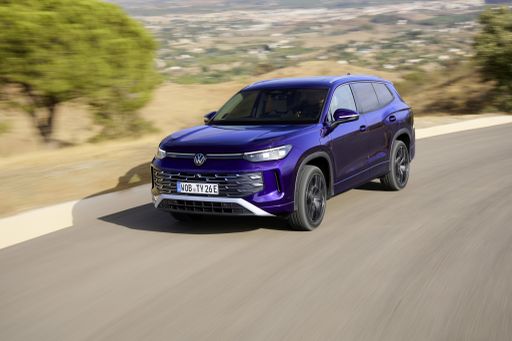
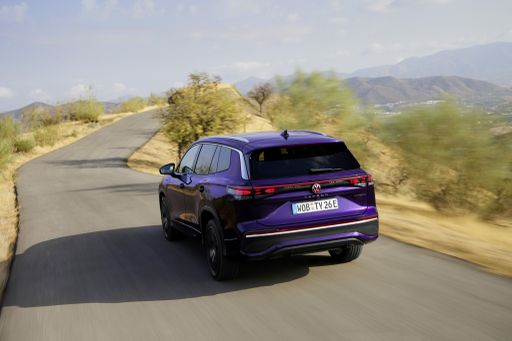
On the other hand, the VW Tayron is slightly larger, measuring 4792 mm in length and 1853 mm in width, with a height of 1668 mm. Its design leans towards a robust and modern aesthetic, showcasing VW's signature styling cues. The Tayron takes the lead in trunk capacity, offering an impressive 885 liters, perfect for family adventures or weekend getaways.

Tayron

Powertrains and Performance

Under the hood, the Audi Q3 offers a range of engine options. Consumers can choose from petrol and diesel variants, with horsepower ranging between 150 and 245 HP. With its dual-clutch automatic transmission and available all-wheel drive, the Q3 can accelerate from 0-100 km/h in as little as 5.8 seconds. The fuel consumption varies from 5.5 to 8.5 L/100km, depending on the engine configuration, making it relatively efficient for its class.

The VW Tayron, meanwhile, presents a diversified engine lineup, including petrol MHEV, plug-in hybrid, and diesel options, with power ranging from 150 to a robust 272 HP. Its acceleration times are impressive as well, with the quickest variants achieving 0-100 km/h in just 6.1 seconds. The Tayron maintains a competitive edge in fuel economy, offering consumptions between 5.4 and 7.8 L/100km and electric-only range options of up to 126 km for hybrid versions.


Q3

Technological Innovations

Both models showcase significant technological advancements aimed at enhancing the driving experience. The Audi Q3 comes equipped with the latest MMI infotainment system, featuring a high-resolution touchscreen display, voice recognition, and smartphone integration. Beyond entertainment, it also offers advanced driver-assistance features such as adaptive cruise control, lane-keeping assist, and parking assist.

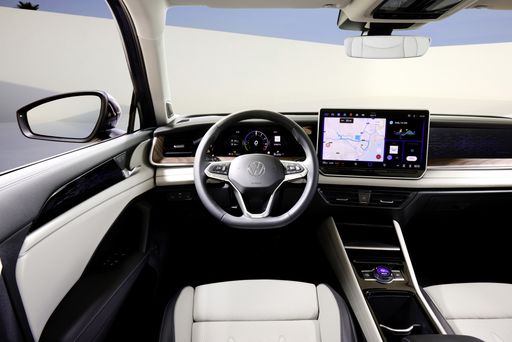
The VW Tayron, in turn, emphasizes versatility with its infotainment system, including a Digital Cockpit that provides customizable displays for navigation, performance metrics, and media. On the safety front, the Tayron also boasts a suite of advanced driver-assistance technologies, including travel assist and an adaptive front-lighting system to enhance nighttime visibility.

Tayron

Comfort and Interior Quality

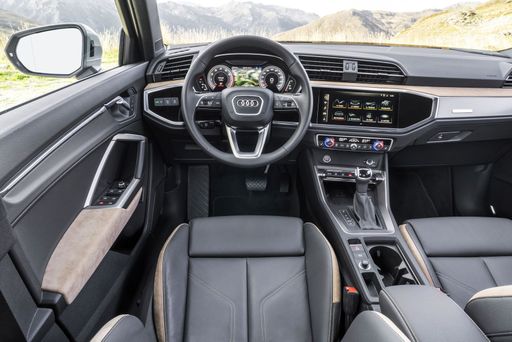
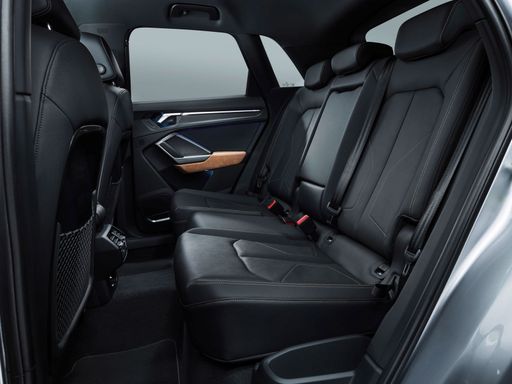
Inside the Audi Q3, high-quality materials enhance the luxurious feel. With seating for five, it offers excellent comfort for both front and rear passengers, accentuated by ambient lighting and spacious legroom. The rear seats are adjustable, adding further flexibility for cargo space when needed.

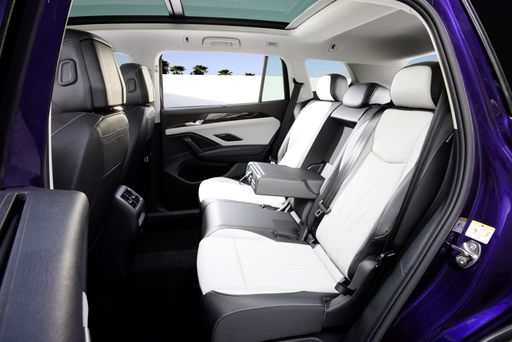
The VW Tayron, while slightly utilitarian in design, doesn’t compromise on comfort. The interior layout is practical and user-friendly, with quality finishes and a spacious cabin that also comfortably seats five. The open cockpit design gives a commanding view of the road, while the rear seats also offer a similar adjustability feature as the Q3, ensuring a versatile interior space.

Q3

Conclusion: Audi Q3 vs. VW Tayron

Ultimately, the choice between the Audi Q3 and the VW Tayron will depend on buyer preferences. The Q3 caters to those looking for a rugged yet luxurious SUV experience with sophisticated tech features. In contrast, the Tayron appeals to those seeking practicality and innovation, especially in hybrid configurations.

Both vehicles are well-equipped to meet the demands of modern drivers, making them top contenders in the compact SUV segment. Test-driving each model is highly recommended to truly appreciate their distinctive qualities and innovations.

Here’s where it gets real: The technical differences in detail

Tayron

Costs and Efficiency:

When it comes to price and running costs, the biggest differences usually appear. This is often where you see which car fits your budget better in the long run.

Audi Q3 is very slightly cheaper – starting at 38,200 £ , while the VW Tayron costs 40,200 £ . That’s a price difference of around 1,993 £.

Fuel consumption also shows a difference: the VW Tayron uses 1.5 L/100km and is slightly more efficient than the Audi Q3 with 1.7 L/100km. The difference is about 0.2 L/100km.

As for electric range, the VW Tayron offers marginally more range – reaching up to 123 km, about 4 km more than the Audi Q3.

Q3

Engine and Performance:

Power, torque and acceleration say a lot about how a car feels on the road. This is where you see which model delivers more driving dynamics.

Both models deliver identical power – 272 HP each.

When accelerating from 0 to 100 km/h, the Audi Q3 is barely quicker – completing the sprint in 5.7 s, while the VW Tayron takes 6.1 s. That’s about 0.4 s quicker.

Both models offer the same torque – 400 Nm.

Tayron

Space and Everyday Use:

Cabin size, boot volume and payload all play a role in everyday practicality. Here, comfort and flexibility make the difference.

Both vehicles offer seating for 5 people.

In terms of curb weight, Audi Q3 is only slightly lighter – 1,635 kg compared to 1,682 kg. The difference is around 47 kg.

Looking at boot space, the VW Tayron offers clearly more boot space – 885 L compared to 488 L. That’s a difference of about 397 L.

When it comes to payload, the VW Tayron carries marginally more – 573 kg compared to 535 kg. That’s a difference of about 38 kg.

Who wins the race in the data check?

The VW Tayron holds a decisive overall lead in the objective data comparison.
This result only shows which model scores more points on paper – not which of the two cars feels right for you.

from £40,200
Tayron

VW Tayron

  • Engine Type Petrol MHEV, Diesel, Petrol, Plugin Hybrid
  • Transmission Automatic
  • Drive Type Front-Wheel Drive, All-Wheel Drive
  • Power HP 150 - 272 HP
  • Consumption L/100km 1.5 - 8.5 L/100km
  • Electric Range 116 - 123 km
VW Tayron
Audi Q3

Costs and Consumption

View detailed analysis

Engine and Performance

View detailed analysis

Dimensions and Body

View detailed analysis

VW Tayron

The VW Tayron combines a roomy, practical interior with a composed, comfortable ride that suits both daily commuting and longer journeys. With a restrained, modern design and a focus on straightforward tech and safety, it’s a sensible choice for buyers who want Volkswagen refinement without unnecessary flash.

details

Audi Q3

The Audi Q3 is a compact premium crossover that blends sharp styling with a well-crafted interior, making it an appealing choice for urban drivers who want a touch of luxury. It delivers a composed ride, intuitive tech features and a practical cabin, so it works well as a comfortable daily driver with an upscale feel.

details
VW Tayron
Audi Q3

Costs and Consumption

Price
40,200 - 56,000 £
Price
38,200 - 52,900 £
Consumption L/100km
1.5 - 8.5 L/100km
Consumption L/100km
1.7 - 8.6 L/100km
Consumption kWh/100km
-
Consumption kWh/100km
-
Electric Range
116 - 123 km
Electric Range
118 - 119 km
Battery Capacity
-
Battery Capacity
-
co2
33 - 192 g/km
co2
39 - 195 g/km
Fuel tank capacity
-
Fuel tank capacity
-

Dimensions and Body

Body Type
SUV
Body Type
SUV
Seats
5
Seats
5
Doors
-
Doors
-
Curb weight
1,682 - 1,948 kg
Curb weight
1,635 - 1,900 kg
Trunk capacity
705 - 885 L
Trunk capacity
375 - 488 L
Length
-
Length
-
Width
1,853 - 1,866 mm
Width
1,859 mm
Height
-
Height
-
Max trunk capacity
-
Max trunk capacity
-
Payload
497 - 573 kg
Payload
505 - 535 kg

Engine and Performance

Engine Type
Petrol MHEV, Diesel, Petrol, Plugin Hybrid
Engine Type
Petrol MHEV, Petrol, Plugin Hybrid, Diesel
Transmission
Automatic
Transmission
Automatic
Transmission Detail
Dual-Clutch Automatic
Transmission Detail
Dual-Clutch Automatic
Drive Type
Front-Wheel Drive, All-Wheel Drive
Drive Type
Front-Wheel Drive, All-Wheel Drive
Power HP
150 - 272 HP
Power HP
150 - 272 HP
Acceleration 0-100km/h
6.1 - 9.7 s
Acceleration 0-100km/h
5.7 - 9.2 s
Max Speed
-
Max Speed
-
Torque
250 - 400 Nm
Torque
250 - 400 Nm
Number of Cylinders
4
Number of Cylinders
4
Power kW
110 - 200 kW
Power kW
110 - 200 kW
Engine capacity
1,498 - 1,984 cm3
Engine capacity
1,498 - 1,984 cm3

General

Model Year
2,025 - 2,026
Model Year
2,025 - 2,026
CO2 Efficiency Class
E, F, B, G
CO2 Efficiency Class
E, G, B, F
Brand
VW
Brand
Audi
DriveDuel uses data analysis and artificial intelligence to evaluate vehicle data and create content. Content is regularly reviewed and improved. The displayed prices are estimates based on German list prices, adjusted to the respective country’s VAT. Country-specific registration taxes are not included. This information is not legally binding.