VS

VW Tayron vs BMW X3 comparison

Compare performance (272 HP vs 398 HP), boot space and price (40,200 £ vs 51,700 £ ) at a glance. Find out which car is the better choice for you – VW Tayron or BMW X3?

VW Tayron vs BMW X3: Key differences

VW Tayron

4.5 (6 Reviews)
rate
  • noticeably cheaper
  • clearly more efficient
  • visibly more electric range
  • somewhat lighter
  • clearly more trunk space
details

BMW X3

4.6 (1 Reviews)
rate
  • markedly more power
  • visibly quicker 0–100 km/h
details

All details on performance, efficiency, range and trunk space can be found in the technical comparison below – including user reviews for both models.

By Achim Sedelmaier

Tayron

Quick comparison: BMW X3 VS VW Tayron

BMW X3 VS VW Tayron pits a driver-focused premium SUV against a roomy, comfort-minded family hauler. The BMW X3 plays to people who value steering precision, taut responses and a composed autobahn demeanor, while the VW Tayron prioritises rear-seat space, a large usable boot and a mellow ride. Price and specification choices push their characters further apart: the X3 leans into sportier engines and options, the Tayron into practicality and luggage capacity. Read on for how those choices translate into everyday life, not just spec sheets.
X3

Character and long-distance behavior

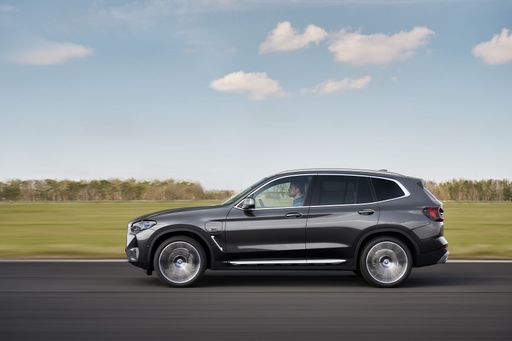
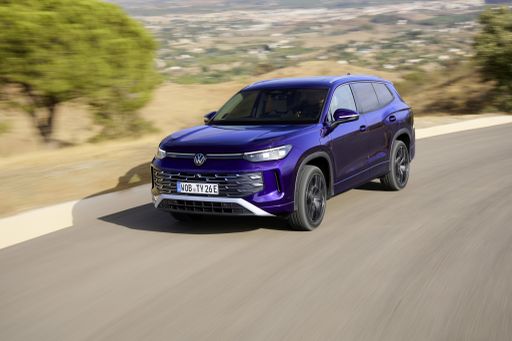
The BMW X3 feels like a car built by people who drive fast long distances: direct steering, firm control and a planted feel that soaks up motorway speeds with assurance. The VW Tayron takes the opposite approach on the open road, trading razor-sharp responses for a cushioned, limousine-like cruise that keeps passengers relaxed for hours. That contrast also shows up under throttle: the X3 delivers more immediate shove and drivetrain presence, whereas the Tayron accelerates with less drama but more composure. For buyers who frequently tackle long motorway journeys and want engagement, the X3 will feel livelier; families who prioritise serenity over sport will prefer the Tayron's long-distance calm.

Tayron

Cabin feel and controls

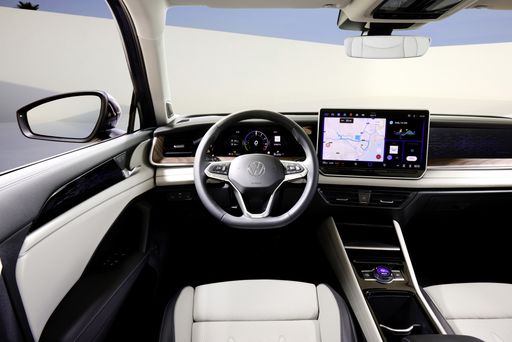
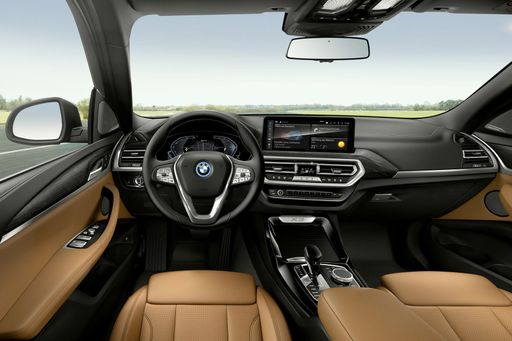
Step inside the BMW X3 and you notice a cockpit tuned toward the driver, but with a touch-heavy control layout that sacrifices tactile buttons for sleek screens; some surface materials feel more functional than luxurious. The VW Tayron leans toward straightforward usability, with clearer control logic, practical sliders and trim choices that generally feel warmer to the touch. Seats are another dividing line: the X3's seats are supportive and tuned for longer stints behind the wheel, while the Tayron emphasises softer support that passengers will find immediately comfortable. If you value physical controls and a more traditionally comforting cabin, the Tayron nudges ahead; if you want a sporty, driver-centric interior even at the cost of some haptics, the X3 suits better.

X3

Practicality and family usability

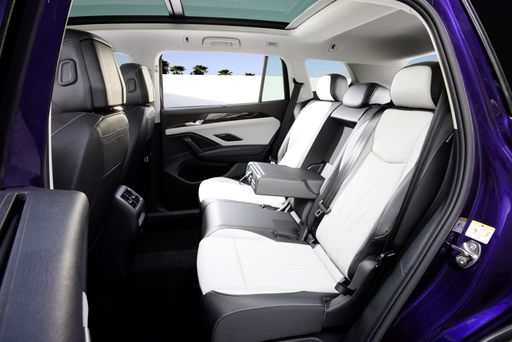
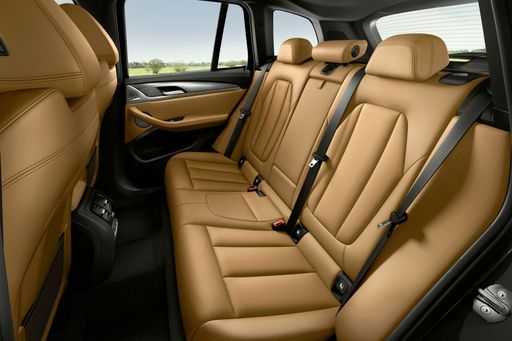
The VW Tayron clearly targets families: extra rear legroom, a lower loading sill and a noticeably larger, more serviceable boot make everyday errands and holiday packing easier. The BMW X3 still offers genuine rear comfort and clever seat folding, but real-world luggage space and the higher loading lip can complicate bulky items. The Tayron also offers an optional third row that is handy for children, while the X3 keeps the focus on five-seat versatility rather than occasional extra occupants. For buyers who regularly carry rear-seat passengers or need usable cargo space, the Tayron answers those needs more directly than the X3.

Tayron

City friendliness and everyday usability

In town the two feel different for predictable reasons: the BMW X3, wider and firmer, can feel a touch cumbersome in tight parking and narrow streets, making cameras and parking aids almost essential. The VW Tayron, despite its size, generally feels a little easier to steer and live with in urban settings, but its larger turning circle still requires care in tight maneuvers. Visibility is mixed in both cars—each compensates with driver aids—yet the X3's sharper suspension and focus on road feel make it less forgiving over city potholes compared with the Tayron's softer ride. If your life is mostly urban chopping and tight garages, the Tayron's more relaxed manners will be less stressful day-to-day than the X3's sportier posture.

X3

Buyer fit and the trade-offs to weigh before the tech sheet

Choosing between the BMW X3 and the VW Tayron comes down to priorities: pick the X3 if driver engagement, sharper handling and a premium badge that emphasises road manners are top of your list. Opt for the Tayron if you need maximum rear-seat comfort, a large, practical boot and a hushed highway experience for family life. Expect to trade off raw sportiness for everyday usability—neither car is strictly superior across the board, but each is clearly lean toward a different household need. Next up, check the technical comparison to match engines, fuel economy and towing or charging capability to the real-world roles I've described.

Here’s where it gets real: The technical differences in detail

Tayron

Costs and Efficiency:

When it comes to price and running costs, the biggest differences usually appear. This is often where you see which car fits your budget better in the long run.

VW Tayron is noticeably cheaper – starting at 40,200 £ , while the BMW X3 costs 51,700 £ . That’s a price difference of around 11,464 £.

Fuel consumption also shows a difference: the VW Tayron uses 1.5 L/100km and is clearly more efficient than the BMW X3 with 2.8 L/100km. The difference is about 1.3 L/100km.

As for electric range, the VW Tayron offers visibly more range – reaching up to 123 km, about 35 km more than the BMW X3.

X3

Engine and Performance:

Under the bonnet, it becomes clear which model is tuned for sportiness and which one takes the lead when you hit the accelerator.

When it comes to engine power, the BMW X3 offers markedly more power – delivering 398 HP compared to 272 HP. That’s roughly 126 HP more horsepower.

When accelerating from 0 to 100 km/h, the BMW X3 is visibly quicker – completing the sprint in 4.6 s, while the VW Tayron takes 6.1 s. That’s about 1.5 s quicker.

There’s also a difference in torque: the BMW X3 delivers considerably more torque with 670 Nm compared to 400 Nm. That’s about 270 Nm more.

Tayron

Space and Everyday Use:

Cabin size, boot volume and payload all play a role in everyday practicality. Here, comfort and flexibility make the difference.

Both vehicles offer seating for 5 people.

In terms of curb weight, VW Tayron is somewhat lighter – 1,682 kg compared to 1,930 kg. The difference is around 248 kg.

Looking at boot space, the VW Tayron offers clearly more boot space – 885 L compared to 570 L. That’s a difference of about 315 L.

When it comes to payload, the VW Tayron carries marginally more – 573 kg compared to 570 kg. That’s a difference of about 3 kg.

Who wins the race in the data check?

The VW Tayron holds a decisive overall lead in the objective data comparison.
This result only shows which model scores more points on paper – not which of the two cars feels right for you.

from £40,200
Tayron

VW Tayron

  • Engine Type Petrol MHEV, Diesel, Petrol, Plugin Hybrid
  • Transmission Automatic
  • Drive Type Front-Wheel Drive, All-Wheel Drive
  • Power HP 150 - 272 HP
  • Consumption L/100km 1.5 - 8.5 L/100km
  • Electric Range 116 - 123 km
VW Tayron
BMW X3

Costs and Consumption

View detailed analysis

Engine and Performance

View detailed analysis

Dimensions and Body

View detailed analysis

VW Tayron

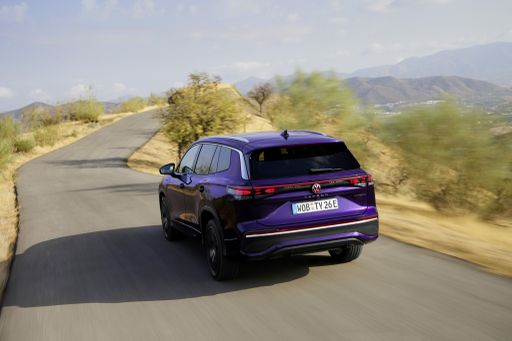
The VW Tayron combines a roomy, practical interior with a composed, comfortable ride that suits both daily commuting and longer journeys. With a restrained, modern design and a focus on straightforward tech and safety, it’s a sensible choice for buyers who want Volkswagen refinement without unnecessary flash.

details

BMW X3

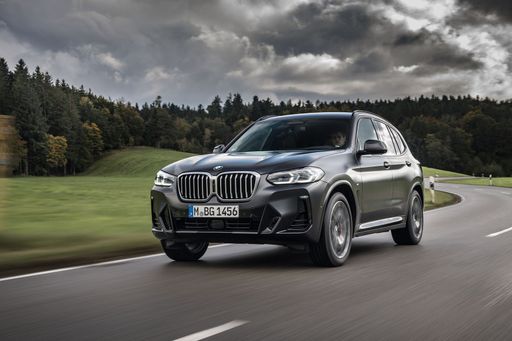
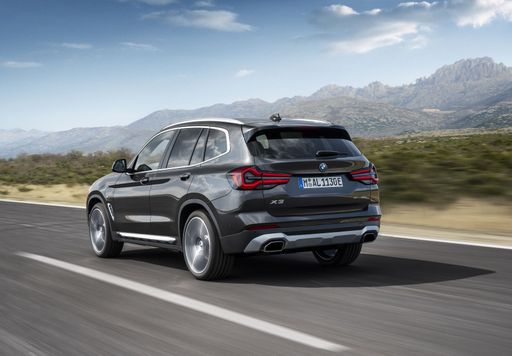
The BMW X3 blends sporty handling with premium comfort, making it a strong choice for drivers who want an engaging everyday SUV. Its well-appointed interior and confident road manners give it broad appeal for families and commuters who value style and versatility.

details
VW Tayron
BMW X3

Costs and Consumption

Price
40,200 - 56,000 £
Price
51,700 - 73,000 £
Consumption L/100km
1.5 - 8.5 L/100km
Consumption L/100km
2.8 - 7.7 L/100km
Consumption kWh/100km
-
Consumption kWh/100km
-
Electric Range
116 - 123 km
Electric Range
88 km
Battery Capacity
-
Battery Capacity
-
co2
33 - 192 g/km
co2
64 - 175 g/km
Fuel tank capacity
-
Fuel tank capacity
-

Dimensions and Body

Body Type
SUV
Body Type
SUV
Seats
5
Seats
5
Doors
-
Doors
-
Curb weight
1,682 - 1,948 kg
Curb weight
1,930 - 2,140 kg
Trunk capacity
705 - 885 L
Trunk capacity
460 - 570 L
Length
-
Length
-
Width
1,853 - 1,866 mm
Width
1,920 mm
Height
-
Height
-
Max trunk capacity
-
Max trunk capacity
-
Payload
497 - 573 kg
Payload
570 kg

Engine and Performance

Engine Type
Petrol MHEV, Diesel, Petrol, Plugin Hybrid
Engine Type
Petrol MHEV, Diesel MHEV, Plugin Hybrid
Transmission
Automatic
Transmission
Automatic
Transmission Detail
Dual-Clutch Automatic
Transmission Detail
Automatic Gearbox
Drive Type
Front-Wheel Drive, All-Wheel Drive
Drive Type
All-Wheel Drive
Power HP
150 - 272 HP
Power HP
197 - 398 HP
Acceleration 0-100km/h
6.1 - 9.7 s
Acceleration 0-100km/h
4.6 - 7.8 s
Max Speed
-
Max Speed
-
Torque
250 - 400 Nm
Torque
330 - 670 Nm
Number of Cylinders
4
Number of Cylinders
4 - 6
Power kW
110 - 200 kW
Power kW
145 - 293 kW
Engine capacity
1,498 - 1,984 cm3
Engine capacity
1,995 - 2,998 cm3

General

Model Year
2,025 - 2,026
Model Year
2,024 - 2,025
CO2 Efficiency Class
E, F, B, G
CO2 Efficiency Class
F, E, B
Brand
VW
Brand
BMW
DriveDuel uses data analysis and artificial intelligence to evaluate vehicle data and create content. Content is regularly reviewed and improved. The displayed prices are estimates based on German list prices, adjusted to the respective country’s VAT. Country-specific registration taxes are not included. This information is not legally binding.