VS

VW Tayron vs VW Tiguan comparison

Compare performance (272 HP vs 272 HP), boot space and price (39,600 £ vs 33,600 £ ) at a glance. Find out which car is the better choice for you – VW Tayron or VW Tiguan?

VW Tayron vs VW Tiguan: Key differences

VW Tayron

4.8 (2 Reviews)
rate
  • noticeably more trunk space
details

VW Tiguan

4.1 (9 Reviews)
rate
  • somewhat cheaper
  • only slightly more efficient
  • very slightly more electric range
  • marginally quicker 0–100 km/h
  • very slightly lighter
details

All details on performance, efficiency, range and trunk space can be found in the technical comparison below – including user reviews for both models.

By Achim Sedelmaier

Tayron

Two VWs, Two Moods

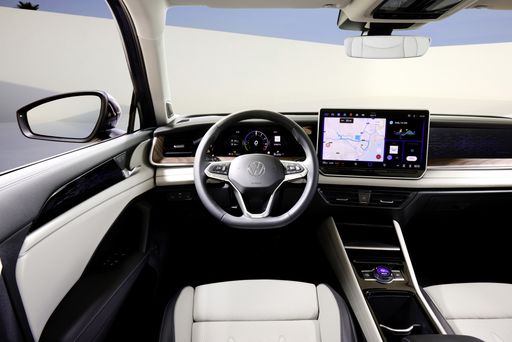
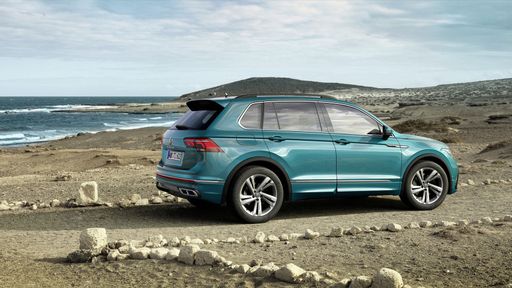
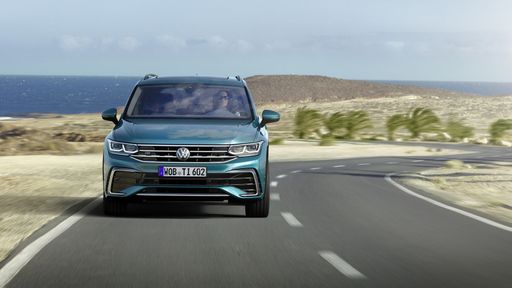
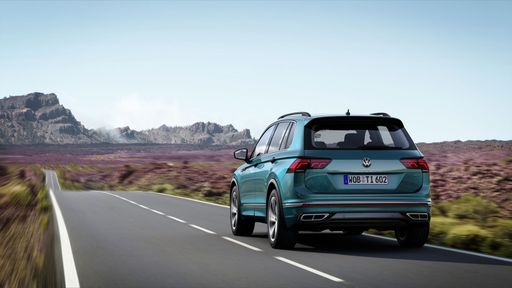
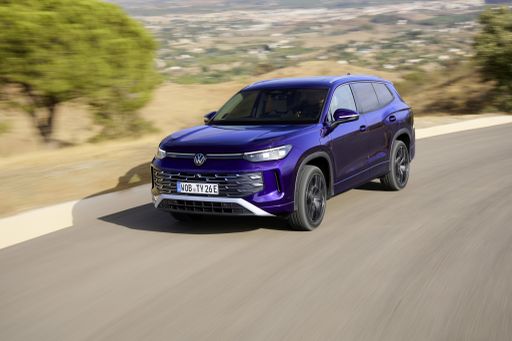
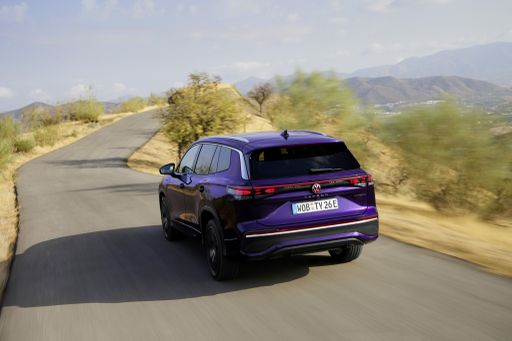
Meet the contenders: the familiar, easy-going VW Tiguan and its roomier, more assertive sibling, the VW Tayron. Both wear the VW badge with confidence, but they aim at slightly different people at the carpark — one wants to blend into weekday life, the other wants a bit more presence. This duel is less about proving a champion and more about figuring which personality fits your driveway. Think of it as choosing between a reliable companion and a slightly more theatrical housemate.
Tiguan

Understated Versus Assertive

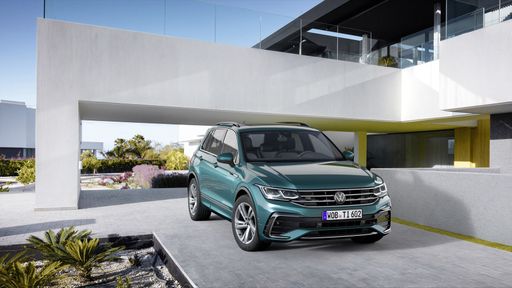
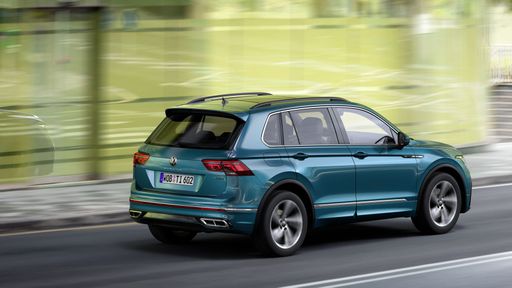
The Tiguan leans into restraint: neat lines, predictable manners and a calm driving demeanor that doesn’t demand attention. The Tayron feels like the bolder sibling — it stands taller in a crowd and carries a heftier road presence that suggests utility and status in equal measure. One whispers competence, the other announces capability; both look like they know the route home. For buyers, that difference translates immediately into daily mood and curb appeal.

Tayron

Which One Lives Better in Your Routine

If your day is a mix of tight city streets, school runs and supermarket dashes, the Tiguan’s nimbleness and user-friendly layout reward you every commute. If weekend kit, longer stretches and flexible cargo space are your norm, the Tayron turns chores into less of a logistics exercise and more of a relaxed plan. Neither turns errands into drama, but they approach those chores with different attitudes — one practical and light-footed, the other confident and capacious. Your calendar will tell you which temperament fits best.

Tiguan

Buying It for Image or Use (or Both)

Choose the Tiguan if you want sensible style that says “I made a thoughtful choice” without shouting about it; it’s the kind of car that earns compliments for balance rather than bravado. The Tayron is the purchase that signals a readiness for bigger tasks — and a taste for a slightly more commanding look — so it’s an easier conversation starter at the school run or campsite. Both cars give you reasons to justify the decision to friends and family, just with different talking points: one practical, one a touch more declarative. Either way, you get a familiar German recipe with different seasonings.

Tayron

Who Should Consider the Tiguan

The Tiguan suits the Rational Decision-Maker who values efficiency and sensible choices, and the Pragmatist who needs day-to-day usability without fuss. It rewards drivers who prioritise predictable comfort, simple user interfaces and a smaller footprint in tight urban life. If you like your decisions to feel economical and your car to make life easier rather than louder, this is the taciturn option. It’s the model you buy when you care more about the job getting done than making a statement.

Tiguan

Who Should Consider the Tayron

The Tayron appeals to the Design & Brand-Oriented Buyer who wants presence and perceived quality, and to the Comfort Seeker who values roomy surroundings on longer drives; it’s an obvious step up in expressive intent compared with the Tiguan. If you enjoy a bit more space, a bolder stance and the sense that your car will handle weekend projects without breaking a sweat, this is the comfortable, confident choice. Read on if you want to see how those character differences translate into the finer details — the numbers and evidence live in the next section.

Here’s where it gets real: The technical differences in detail

Tayron

Costs and Efficiency:

Price and efficiency are often the first things buyers look at. Here it becomes clear which model has the long-term edge – whether at the pump, the plug, or in purchase price.

VW Tiguan is somewhat cheaper – starting at 33,600 £ , while the VW Tayron costs 39,600 £ . That’s a price difference of around 6,034 £.

Fuel consumption also shows a difference: the VW Tiguan uses 1.4 L/100km and is only slightly more efficient than the VW Tayron with 1.5 L/100km. The difference is about 0.1 L/100km.

As for electric range, the VW Tiguan offers very slightly more range – reaching up to 126 km, about 3 km more than the VW Tayron.

Tiguan

Engine and Performance:

Under the bonnet, it becomes clear which model is tuned for sportiness and which one takes the lead when you hit the accelerator.

Both models deliver identical power – 272 HP each.

When accelerating from 0 to 100 km/h, the VW Tiguan is marginally quicker – completing the sprint in 5.9 s, while the VW Tayron takes 6.1 s. That’s about 0.2 s quicker.

Looking at top speed, the VW Tayron is very slightly faster – reaching 221 km/h, while the VW Tiguan tops out at 215 km/h. The difference is around 6 km/h.

Both models offer the same torque – 400 Nm.

Tayron

Space and Everyday Use:

Whether family car or daily driver – which one offers more room, flexibility and comfort?

Both vehicles offer seating for 5 people.

In terms of curb weight, VW Tiguan is very slightly lighter – 1,599 kg compared to 1,682 kg. The difference is around 83 kg.

Looking at boot space, the VW Tayron offers noticeably more boot space – 885 L compared to 652 L. That’s a difference of about 233 L.

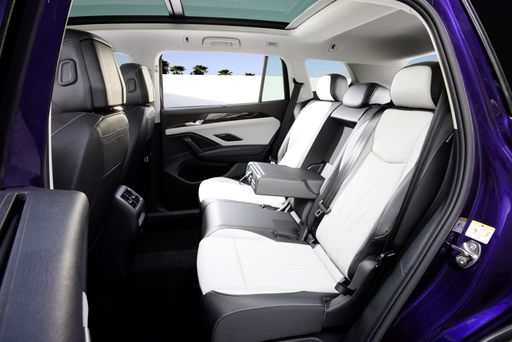
For maximum load capacity, the VW Tayron offers markedly more capacity – up to 2,090 L, about 604 L more than the VW Tiguan.

When it comes to payload, the VW Tayron carries marginally more – 566 kg compared to 533 kg. That’s a difference of about 33 kg.

Who wins the race in the data check?

The VW Tayron is clearly ahead overall in the objective data comparison.
This result only shows which model scores more points on paper – not which of the two cars feels right for you.

from £39,600
Tayron

VW Tayron

  • Engine Type : Petrol MHEV, Diesel, Petrol, Plugin Hybrid
  • Transmission : Automatic
  • Drive Type : Front-Wheel Drive, All-Wheel Drive
  • Power HP : 150 - 272 HP
  • Consumption L/100km : 1.5 - 8.5 L/100km
  • Electric Range : 116 - 123 km
VW Tayron
VW Tiguan

Costs and Consumption

View detailed analysis

Engine and Performance

View detailed analysis

Dimensions and Body

View detailed analysis

VW Tayron

The VW Tayron is Volkswagen's roomy, no-nonsense SUV that pairs clean, familiar styling with a practical cabin built for families and everyday use. It rides comfortably, packs sensible tech and creature comforts, and feels like the sensible sweater of SUVs for buyers who prefer steady value over headline-grabbing drama.

details

VW Tiguan

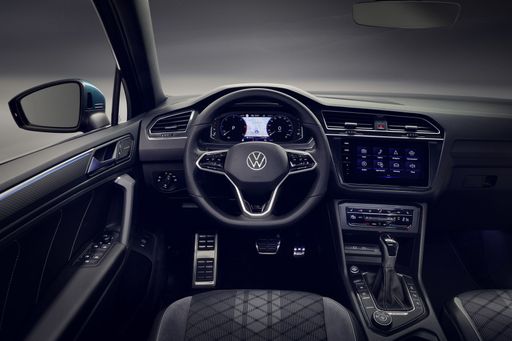
The VW Tiguan is a calm, family‑first compact SUV that impresses with cavernous rear room, a versatile boot and sofa‑like seats that make motorway miles feel effortless, while its revamped infotainment is quicker and cleaner than before. It does demand a healthy budget and some compromises — the cabin leans heavily on touch controls for climate and the limited rear child‑seat anchoring and wide mirrors can frustrate buyers who prize simplicity or maximal flexibility.

details
VW Tayron
VW Tiguan

Costs and Consumption

Price
39,600 - 56,000 £
Price
33,600 - 54,600 £
Consumption L/100km
1.5 - 8.5 L/100km
Consumption L/100km
1.4 - 8.4 L/100km
Consumption kWh/100km
-
Consumption kWh/100km
-
Electric Range
116 - 123 km
Electric Range
118 - 126 km
Battery Capacity
19.7 kWh
Battery Capacity
19.7 kWh
co2
33 - 192 g/km
co2
32 - 190 g/km
Fuel tank capacity
45 - 58 L
Fuel tank capacity
45 L

Dimensions and Body

Body Type
SUV
Body Type
SUV
Seats
5
Seats
5
Doors
5
Doors
5
Curb weight
1,682 - 1,948 kg
Curb weight
1,599 - 1,879 kg
Trunk capacity
705 - 885 L
Trunk capacity
490 - 652 L
Length
4,792 mm
Length
4,539 mm
Width
1,853 - 1,866 mm
Width
1,842 - 1,859 mm
Height
1,666 - 1,668 mm
Height
1,658 mm
Max trunk capacity
1,915 - 2,090 L
Max trunk capacity
1,486 L
Payload
489 - 566 kg
Payload
460 - 533 kg

Engine and Performance

Engine Type
Petrol MHEV, Diesel, Petrol, Plugin Hybrid
Engine Type
Petrol MHEV, Petrol, Diesel, Plugin Hybrid
Transmission
Automatic
Transmission
Automatic
Transmission Detail
Dual-Clutch Automatic
Transmission Detail
Dual-Clutch Automatic
Drive Type
Front-Wheel Drive, All-Wheel Drive
Drive Type
Front-Wheel Drive, All-Wheel Drive
Power HP
150 - 272 HP
Power HP
130 - 272 HP
Acceleration 0-100km/h
6.1 - 9.7 s
Acceleration 0-100km/h
5.9 - 10.6 s
Max Speed
204 - 221 km/h
Max Speed
210 - 215 km/h
Torque
250 - 400 Nm
Torque
220 - 400 Nm
Number of Cylinders
4
Number of Cylinders
4
Power kW
110 - 200 kW
Power kW
96 - 200 kW
Engine capacity
1,498 - 1,984 cm3
Engine capacity
1,498 - 1,984 cm3

General

Model Year
2,025 - 2,026
Model Year
2,024 - 2,026
CO2 Efficiency Class
E, F, G, B
CO2 Efficiency Class
D, E, F, B, G
Brand
VW
Brand
VW
DriveDuel uses data analysis and artificial intelligence to evaluate vehicle data and create content. Content is regularly reviewed and improved. The displayed prices are estimates based on German list prices, adjusted to the respective country’s VAT. Country-specific registration taxes are not included. This information is not legally binding.