VS

VW Tiguan vs BYD Seal U comparison

Compare performance (272 HP vs 324 HP), boot space and price (33,600 £ vs 34,300 £ ) at a glance. Find out which car is the better choice for you – VW Tiguan or BYD Seal U?

VW Tiguan vs BYD Seal U: Key differences

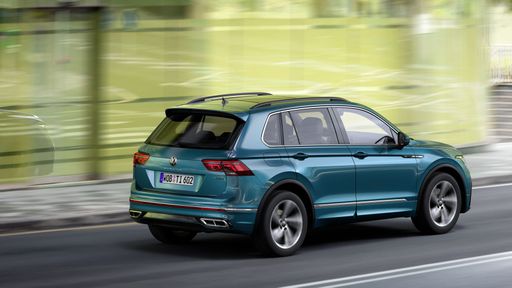
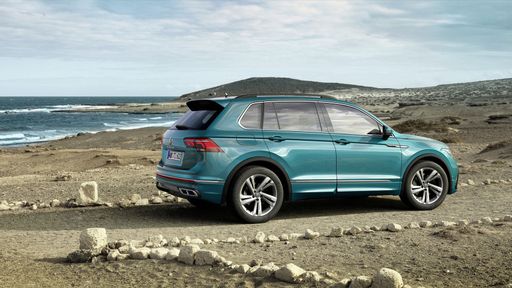
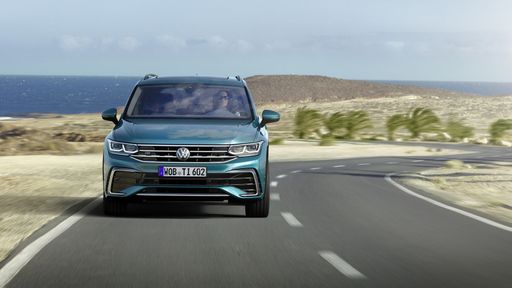
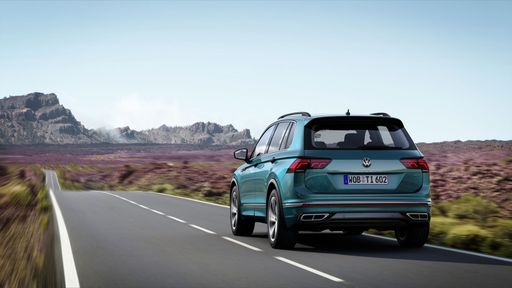
VW Tiguan

4.1 (8 Reviews)
rate
  • very slightly cheaper
  • noticeably lighter
  • slightly more trunk space

BYD Seal U

4.1 (7 Reviews)
rate
  • a bit more power
  • substantially more electric range

All details on performance, efficiency, range and trunk space can be found in the technical comparison below – including user reviews for both models.

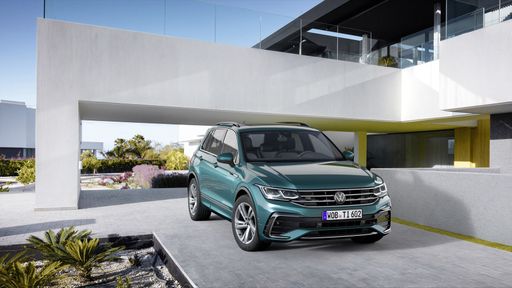
Tiguan

BYD Seal U vs. VW Tiguan: A Tech-Driven Showdown

The automotive landscape is evolving rapidly, with electric and hybrid vehicles redefining the future of mobility. Among the frontrunners in this trend are the BYD Seal U and the VW Tiguan, both presenting themselves as robust SUV options but with contrasting technologies and innovations. Let’s dive into a detailed comparison of these two dynamic contenders.
Seal U

Powertrain and Performance

The BYD Seal U offers a choice between a Plugin Hybrid and an all-electric variant. It boasts a powerful electric motor producing between 160 kW (218 hp) and 238 kW (324 hp) with torque figures ranging from 300 to a remarkable 550 Nm, facilitating thrilling acceleration from 0-100 km/h in as little as 5.9 seconds. Its electric range is also impressive, going up to 500 km on a single charge, making it suitable for long-distance travels.

In contrast, the VW Tiguan provides a broader engine lineup, including petrol MHEV, diesel, and hybrid variants. Power outputs span from 130 hp to 272 hp, accommodating a diverse consumer base while maintaining competitive torque figures of up to 400 Nm. Acceleration for the Tiguan ranges from 5.9 seconds to 10.6 seconds, appealing to drivers who seek efficiency as well as performance. However, its electric range is notably shorter, capped at around 113 km for the hybrid variants.

Tiguan

Fuel Efficiency and Emissions

When it comes to fuel efficiency, the BYD Seal U shines brightly in both hybrid and fully electric formats. It achieves a remarkable consumption rate of only 0.9 L/100 km for hybrid models and 19.9 kWh/100 km for its electric variant. The CO2 emissions are equally impressive, with ratings of 0 g/km for the all-electric version and 20 g/km for hybrids, placing it in the A and B efficiency classes.

In comparison, the VW Tiguan offers variable fuel consumption around 5.3 to 8.5 L/100 km, demonstrating solid performance but trailing behind BYD's figures. Its CO2 emissions range more widely, with figures like 9 g/km for its most efficient hybrid version, showing that while the Tiguan provides adaptable options, it does not hit the same low-emission marks as the Seal U.

Seal U

Interior and Comfort

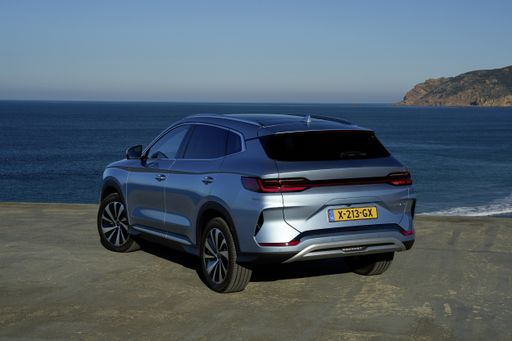
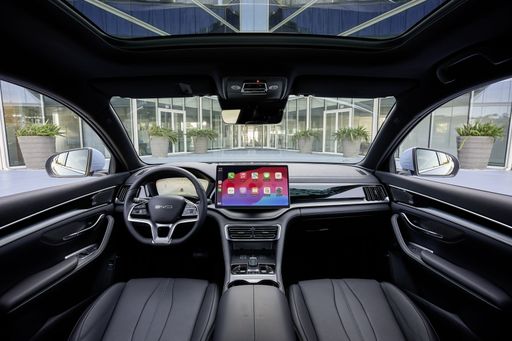
Both vehicles seat five passengers comfortably, but the BYD Seal U provides varying trunk capacities of 425 L to 552 L based on configuration, allowing for generous cargo space. Its dimensions, measuring 4775 mm in length and 1890 mm in width, indicate a robust and spacious interior layout. The Seal U is well-equipped with modern tech features tailored for convenience and entertainment.

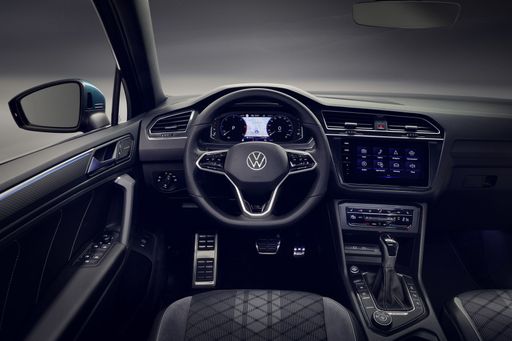
The VW Tiguan, while slightly shorter at 4539 mm, compensates with a maximum trunk capacity of 652 L, making it one of the most versatile SUVs in its segment. The interior design focuses on quality materials and usability, complemented by an intuitive infotainment system that many VW enthusiasts appreciate. With luxury and practicality in mind, the Tiguan often feels like a step up in terms of craftsmanship.

Tiguan

Safety Technologies

Safety is paramount in both the BYD Seal U and the VW Tiguan. The Seal U is equipped with advanced driver assistance systems, featuring autonomous emergency braking, lane departure warning, and adaptive cruise control. These innovations aim to enhance driver confidence and occupant safety, creating a futuristic driving experience.

The Tiguan is recognized for its robust safety credentials, receiving high marks in crash tests and offering a comprehensive suite of safety features, including adaptive cruise control, lane assist, and a blind spot monitoring system. Volkswagen’s commitment to safety ensures that the Tiguan remains a favorite for families and safety-conscious consumers.

Seal U

Conclusion: Which SUV Reigns Supreme?

Choosing between the BYD Seal U and the VW Tiguan ultimately depends on consumer priorities. If you want cutting-edge electric technology with low emissions and spacious interiors, the Seal U is the clear frontrunner. However, if you prioritize versatility, driving dynamics, and a premium feel, the Tiguan may better suit your needs. Both models showcase the ongoing evolution in the automotive industry, where innovation meets consumer demand.

Here’s where it gets real: The technical differences in detail

Tiguan

Costs and Efficiency:

Price and efficiency are key factors when choosing a car – and this is often where the real differences emerge.

VW Tiguan is very slightly cheaper – starting at 33,600 £ , while the BYD Seal U costs 34,300 £ . That’s a price difference of around 699 £.

As for electric range, the BYD Seal U offers substantially more range – reaching up to 500 km, about 374 km more than the VW Tiguan.

Seal U

Engine and Performance:

Power, torque and acceleration say a lot about how a car feels on the road. This is where you see which model delivers more driving dynamics.

When it comes to engine power, the BYD Seal U offers a bit more power – delivering 324 HP compared to 272 HP. That’s roughly 52 HP more horsepower.

Both models accelerate almost equally fast – 5.9 s from 0 to 100 km/h.

Looking at top speed, the VW Tiguan is moderately faster – reaching 215 km/h, while the BYD Seal U tops out at 175 km/h. The difference is around 40 km/h.

There’s also a difference in torque: the BYD Seal U delivers clearly more torque with 550 Nm compared to 400 Nm. That’s about 150 Nm more.

Tiguan

Space and Everyday Use:

Whether family car or daily driver – which one offers more room, flexibility and comfort?

Both vehicles offer seating for 5 people.

In terms of curb weight, VW Tiguan is noticeably lighter – 1,599 kg compared to 1,940 kg. The difference is around 341 kg.

Looking at boot space, the VW Tiguan offers slightly more boot space – 652 L compared to 552 L. That’s a difference of about 100 L.

For maximum load capacity, the VW Tiguan offers very slightly more capacity – up to 1,486 L, about 46 L more than the BYD Seal U.

When it comes to payload, the VW Tiguan carries clearly more – 533 kg compared to 410 kg. That’s a difference of about 123 kg.

Who wins the race in the data check?

The BYD Seal U is far ahead overall in the objective data comparison.
This result only shows which model scores more points on paper – not which of the two cars feels right for you.

from £34,300
Seal U

BYD Seal U

  • Engine Type : Electric, Plugin Hybrid
  • Transmission : Automatic
  • Drive Type : Front-Wheel Drive, All-Wheel Drive
  • Power HP : 218 - 324 HP
  • Consumption kWh/100km : 12.1 - 20.5 kWh/100km
  • Electric Range : 70 - 500 km
VW Tiguan
BYD Seal U

Costs and Consumption

View detailed analysis

Engine and Performance

View detailed analysis

Dimensions and Body

View detailed analysis

VW Tiguan

The VW Tiguan blends sensible family practicality with a dash of German polish, delivering a calm, reassuring ride and a cabin that never feels like an afterthought. For buyers who want an SUV that’s easy to live with yet still nicely dressed, the Tiguan is the grown‑up choice that keeps a cheeky wink in reserve.

details

BYD Seal U

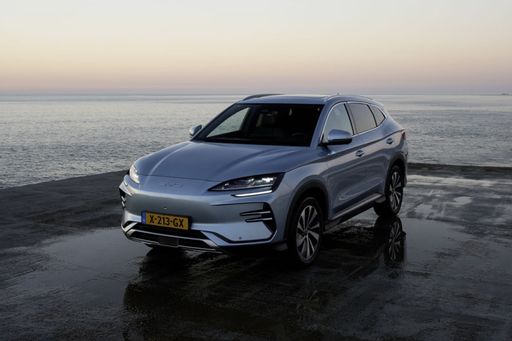
The BYD Seal U pairs a sleek fastback silhouette with a surprisingly roomy, tech-rich cabin, giving electric chic without the showroom pretension. It's a smart pick for buyers after confident handling, sensible practicality and standout value — all wrapped up with a cheeky grin when you put your foot down.

details
VW Tiguan
BYD Seal U

Costs and Consumption

Price
33,600 - 54,600 £
Price
34,300 - 39,800 £
Consumption L/100km
1.4 - 8.4 L/100km
Consumption L/100km
-
Consumption kWh/100km
-
Consumption kWh/100km
12.1 - 20.5 kWh/100km
Electric Range
118 - 126 km
Electric Range
70 - 500 km
Battery Capacity
19.7 kWh
Battery Capacity
-
co2
32 - 190 g/km
co2
0 - 71 g/km
Fuel tank capacity
45 L
Fuel tank capacity
-

Dimensions and Body

Body Type
SUV
Body Type
SUV
Seats
5
Seats
5
Doors
5
Doors
5
Curb weight
1,599 - 1,879 kg
Curb weight
1,940 - 2,147 kg
Trunk capacity
490 - 652 L
Trunk capacity
425 - 552 L
Length
4,539 mm
Length
4,785 mm
Width
1,842 - 1,859 mm
Width
1,890 mm
Height
1,658 mm
Height
1,668 mm
Max trunk capacity
1,486 L
Max trunk capacity
1,440 L
Payload
460 - 533 kg
Payload
410 kg

Engine and Performance

Engine Type
Petrol MHEV, Petrol, Diesel, Plugin Hybrid
Engine Type
Electric, Plugin Hybrid
Transmission
Automatic
Transmission
Automatic
Transmission Detail
Dual-Clutch Automatic
Transmission Detail
Reduction Gearbox, Automatic Gearbox
Drive Type
Front-Wheel Drive, All-Wheel Drive
Drive Type
Front-Wheel Drive, All-Wheel Drive
Power HP
130 - 272 HP
Power HP
218 - 324 HP
Acceleration 0-100km/h
5.9 - 10.6 s
Acceleration 0-100km/h
5.9 - 9.6 s
Max Speed
210 - 215 km/h
Max Speed
175 km/h
Torque
220 - 400 Nm
Torque
300 - 550 Nm
Number of Cylinders
4
Number of Cylinders
4
Power kW
96 - 200 kW
Power kW
160 - 238 kW
Engine capacity
1,498 - 1,984 cm3
Engine capacity
1,497 - 1,498 cm3

General

Model Year
2,024 - 2,026
Model Year
2,024 - 2,026
CO2 Efficiency Class
D, E, F, B, G
CO2 Efficiency Class
A, B
Brand
VW
Brand
BYD
DriveDuel uses data analysis and artificial intelligence to evaluate vehicle data and create content. Content is regularly reviewed and improved. The displayed prices are estimates based on German list prices, adjusted to the respective country’s VAT. Country-specific registration taxes are not included. This information is not legally binding.