VS

VW Tiguan vs CUPRA Terramar comparison

Compare performance (272 HP vs 272 HP), boot space and price (33,600 £ vs 36,900 £ ) at a glance. Find out which car is the better choice for you – VW Tiguan or CUPRA Terramar?

VW Tiguan vs CUPRA Terramar: Key differences

VW Tiguan

4.1 (9 Reviews)
rate
  • very slightly cheaper
  • somewhat more efficient
  • barely more electric range
  • marginally lighter
  • slightly more trunk space
details

CUPRA Terramar

5 (5 Reviews)
rate
details

All details on performance, efficiency, range and trunk space can be found in the technical comparison below – including user reviews for both models.

By Achim Sedelmaier

Tiguan

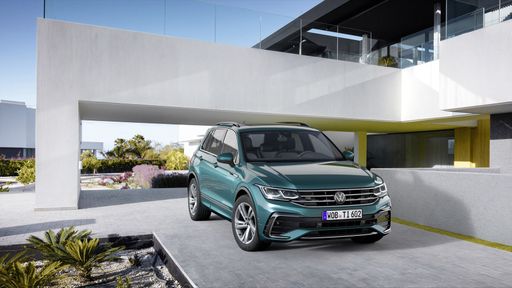
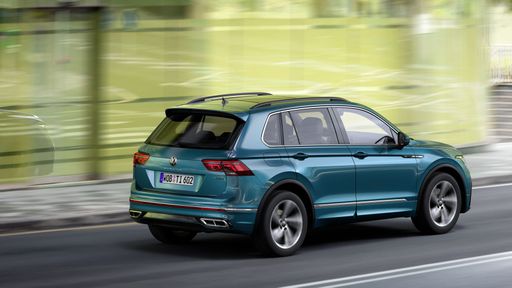
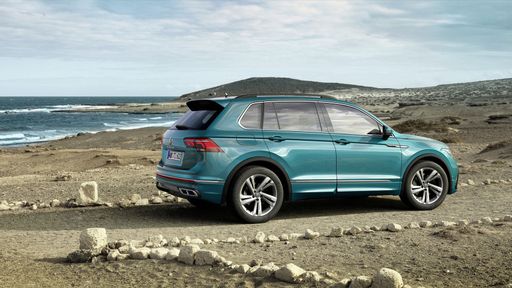
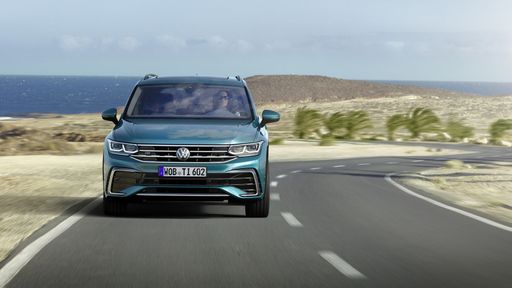
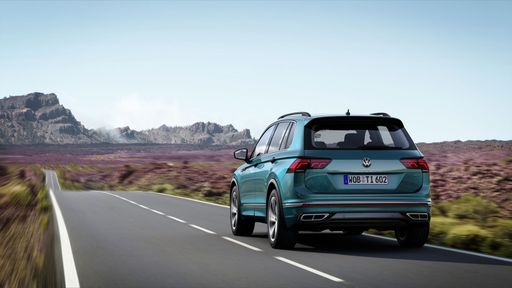
Road Attitude and Design Personality

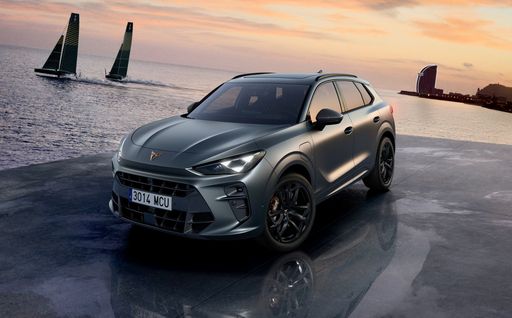
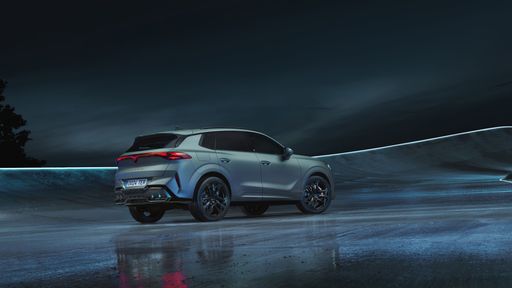
The new silhouettes tell the story at a glance: the CUPRA Terramar wears its performance ambitions on its sleeve with a taut, angular stance that feels younger and more provocative, while the VW Tiguan prefers a calm, composed presence that aims to appeal to the widest audience. The Terramar’s detailing leans sporty and emotive, ideal for buyers who want their SUV to make a statement on arrival. The Tiguan trades flash for timelessness, projecting sensible elegance that will age gracefully in suburban driveways and corporate car parks.

Terramar

How They Drive When the Road Gets Interesting

Behind the wheel the character divide becomes even clearer: the CUPRA Terramar rewards a firm hand and an eager right foot with sharper responses and a more engaged chassis feel, so it’s fun when the route straightens and the corners come alive. The VW Tiguan trades some of that edge for composure, favouring confidence and composure over theatrics, which makes it a reassuring companion on long commutes and unfamiliar roads. Both deliver a sense of polish, but they speak to different driving moods — one sporty and immediate, the other balanced and undemanding.

Tiguan

Daily Life and Practical Sense

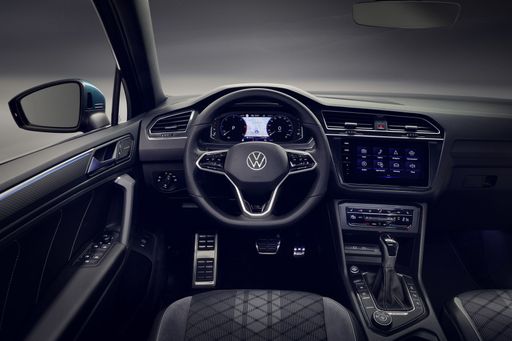
When you factor in the chores of everyday life, the VW Tiguan feels oriented toward family duty and flexible use, with an interior layout and load-carrying mindset that suit grocery runs, school runs and weekend escapes without fuss. The CUPRA Terramar is more about the driver’s experience, offering a cockpit that prioritises engagement and style over maximum utility, so buyers who prize flair over outright practicality will find it compelling. Both manage the essentials well, but your priorities — cargo-first or driver-first — will steer your choice.

Terramar

Comfort, Cabin Charm and Usability

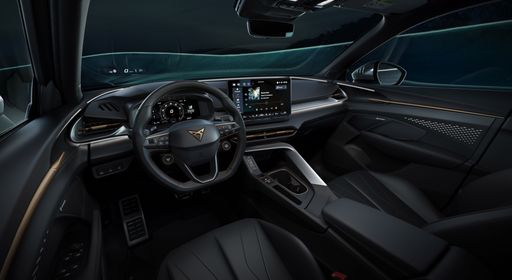
The Tiguan leans into approachable ergonomics and a forgiving ride that smooths out the everyday bumps, while its controls and displays are straightforward and aimed at ease of use rather than show. The Terramar’s cabin focuses on sport-oriented touches, firmer seating and a more theatrical atmosphere that feels special but can be less forgiving on longer, softer journeys. In short, the Tiguan is the comfortable all-rounder at ease with long days behind the wheel, and the Terramar is the one that makes ordinary commutes feel a little more spirited.

Tiguan

Who Should Put One on Their Shortlist

Buyers who want a practical, no-nonsense SUV that blends family-friendly manners with broad appeal will likely be drawn to the VW Tiguan, while those who prioritise style, sharper handling and a more distinctive image will find the CUPRA Terramar hard to resist. Consider how often you’ll carry passengers or bulky loads versus how much you value dynamic flair and a sporty persona when parked on the street. Each car clearly targets a different kind of buyer, so think about day-to-day priorities before you decide.

Terramar

The Next Page Holds the Verdict

We’ve set the scene and mapped the personalities; now it’s time to see which car best matches your needs and tastes — keep reading to find out which model earns the DriveDuel Champion title in our final reckoning. After this, the choice will be clearer and a test-drive decision that much easier to make. Stay with us for the wrap-up and our practical recommendations.

Here’s where it gets real: The technical differences in detail

Tiguan

Costs and Efficiency:

Price and efficiency are often the first things buyers look at. Here it becomes clear which model has the long-term edge – whether at the pump, the plug, or in purchase price.

VW Tiguan is very slightly cheaper – starting at 33,600 £ , while the CUPRA Terramar costs 36,900 £ . That’s a price difference of around 3,296 £.

Fuel consumption also shows a difference: the VW Tiguan uses 1.4 L/100km and is somewhat more efficient than the CUPRA Terramar with 1.6 L/100km. The difference is about 0.2 L/100km.

As for electric range, the VW Tiguan offers barely more range – reaching up to 126 km, about 8 km more than the CUPRA Terramar.

Terramar

Engine and Performance:

Power, torque and acceleration say a lot about how a car feels on the road. This is where you see which model delivers more driving dynamics.

Both models deliver identical power – 272 HP each.

Both models accelerate almost equally fast – 5.9 s from 0 to 100 km/h.

Looking at top speed, the CUPRA Terramar is moderately faster – reaching 243 km/h, while the VW Tiguan tops out at 215 km/h. The difference is around 28 km/h.

Both models offer the same torque – 400 Nm.

Tiguan

Space and Everyday Use:

Beyond pure performance, interior space and usability matter most in daily life. This is where you see which car is more practical and versatile.

Both vehicles offer seating for 5 people.

In terms of curb weight, VW Tiguan is marginally lighter – 1,599 kg compared to 1,638 kg. The difference is around 39 kg.

Looking at boot space, the VW Tiguan offers slightly more boot space – 652 L compared to 540 L. That’s a difference of about 112 L.

When it comes to payload, the CUPRA Terramar carries very slightly more – 542 kg compared to 533 kg. That’s a difference of about 9 kg.

Who wins the race in the data check?

The VW Tiguan is slightly ahead in the objective data comparison.
This result only shows which model scores more points on paper – not which of the two cars feels right for you.

from £33,600
Tiguan

VW Tiguan

  • Engine Type : Petrol MHEV, Petrol, Diesel, Plugin Hybrid
  • Transmission : Automatic
  • Drive Type : Front-Wheel Drive, All-Wheel Drive
  • Power HP : 130 - 272 HP
  • Consumption L/100km : 1.4 - 8.4 L/100km
  • Electric Range : 118 - 126 km
VW Tiguan
CUPRA Terramar

Costs and Consumption

View detailed analysis

Engine and Performance

View detailed analysis

Dimensions and Body

View detailed analysis

VW Tiguan

The VW Tiguan is a calm, family‑first compact SUV that impresses with cavernous rear room, a versatile boot and sofa‑like seats that make motorway miles feel effortless, while its revamped infotainment is quicker and cleaner than before. It does demand a healthy budget and some compromises — the cabin leans heavily on touch controls for climate and the limited rear child‑seat anchoring and wide mirrors can frustrate buyers who prize simplicity or maximal flexibility.

details

CUPRA Terramar

The CUPRA Terramar is a sharply styled, sporty SUV that brings athletic handling and bold design to buyers who want performance with everyday usability. Inside, premium finishes meet driver-focused flair and family-friendly practicality, making it a tempting pick for anyone who wants thrills without turning their daily routine into a chore.

details
VW Tiguan
CUPRA Terramar

Costs and Consumption

Price
33,600 - 54,600 £
Price
36,900 - 50,600 £
Consumption L/100km
1.4 - 8.4 L/100km
Consumption L/100km
1.6 - 8.4 L/100km
Consumption kWh/100km
-
Consumption kWh/100km
-
Electric Range
118 - 126 km
Electric Range
118 km
Battery Capacity
19.7 kWh
Battery Capacity
-
co2
32 - 190 g/km
co2
36 - 191 g/km
Fuel tank capacity
45 L
Fuel tank capacity
55 - 60 L

Dimensions and Body

Body Type
SUV
Body Type
SUV
Seats
5
Seats
5
Doors
5
Doors
5
Curb weight
1,599 - 1,879 kg
Curb weight
1,638 - 1,904 kg
Trunk capacity
490 - 652 L
Trunk capacity
450 - 540 L
Length
4,539 mm
Length
4,519 mm
Width
1,842 - 1,859 mm
Width
1,869 mm
Height
1,658 mm
Height
1,586 mm
Max trunk capacity
1,486 L
Max trunk capacity
-
Payload
460 - 533 kg
Payload
512 - 542 kg

Engine and Performance

Engine Type
Petrol MHEV, Petrol, Diesel, Plugin Hybrid
Engine Type
Petrol MHEV, Petrol, Plugin Hybrid
Transmission
Automatic
Transmission
Automatic
Transmission Detail
Dual-Clutch Automatic
Transmission Detail
Dual-Clutch Automatic
Drive Type
Front-Wheel Drive, All-Wheel Drive
Drive Type
Front-Wheel Drive, All-Wheel Drive
Power HP
130 - 272 HP
Power HP
150 - 272 HP
Acceleration 0-100km/h
5.9 - 10.6 s
Acceleration 0-100km/h
5.9 - 9.3 s
Max Speed
210 - 215 km/h
Max Speed
205 - 243 km/h
Torque
220 - 400 Nm
Torque
250 - 400 Nm
Number of Cylinders
4
Number of Cylinders
4
Power kW
96 - 200 kW
Power kW
110 - 200 kW
Engine capacity
1,498 - 1,984 cm3
Engine capacity
1,498 - 1,984 cm3

General

Model Year
2,024 - 2,026
Model Year
2,024 - 2,025
CO2 Efficiency Class
D, E, F, B, G
CO2 Efficiency Class
E, G, F, B
Brand
VW
Brand
CUPRA
DriveDuel uses data analysis and artificial intelligence to evaluate vehicle data and create content. Content is regularly reviewed and improved. The displayed prices are estimates based on German list prices, adjusted to the respective country’s VAT. Country-specific registration taxes are not included. This information is not legally binding.