VS

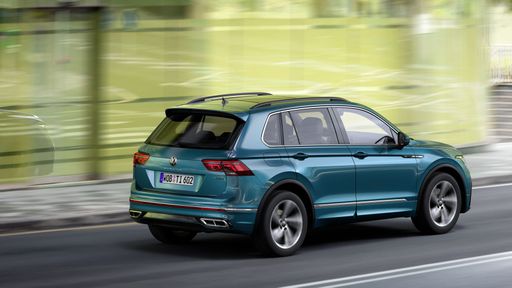
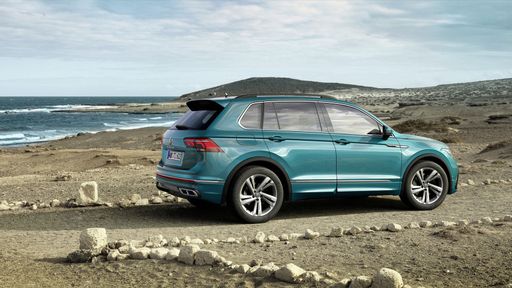
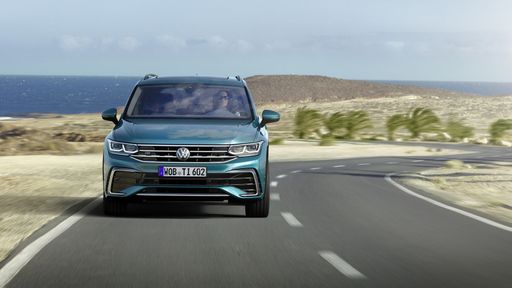
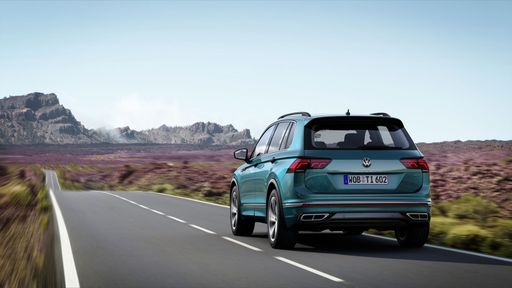
VW Tiguan vs Jeep Compass comparison

Compare performance (272 HP vs 225 HP), boot space and price (33,600 £ vs 34,200 £ ) at a glance. Find out which car is the better choice for you – VW Tiguan or Jeep Compass?

VW Tiguan vs Jeep Compass: Key differences

VW Tiguan

4.1 (8 Reviews)
rate
  • only slightly cheaper
  • somewhat more power
  • significantly more efficient
  • clearly quicker 0–100 km/h
  • barely lighter
  • moderately more trunk space

Jeep Compass

2.4 (4 Reviews)
rate
  • significantly more electric range

All details on performance, efficiency, range and trunk space can be found in the technical comparison below – including user reviews for both models.

Tiguan

The Modern SUV Showdown: Jeep Compass vs. VW Tiguan

When it comes to compact SUVs, the competition is intensely fierce. In the heart of this automotive battle, two contenders stand out, the Jeep Compass and the VW Tiguan. Both vehicles have carved their niche within the SUV segment and cater to a broad audience with their unique qualities. This head-to-head comparison delves into the technical aspects, performance, and innovations offered by these SUVs in their 2024 models.
Compass

Performance and Power Delivery

The Jeep Compass makes a mark with its diverse engine options, featuring both a petrol mild hybrid electric vehicle (MHEV) and a plug-in hybrid, with power outputs ranging from 130 HP to 240 HP (96 kW to 177 kW). Its acceleration from 0-100 km/h varies between 10.3 to 7.3 seconds, showcasing a blend of power and efficiency, particularly with a torque of 240 Nm. Meanwhile, maximum speeds hit up to 200 km/h, providing a decent speed spectrum for various driving preferences.

In comparison, the VW Tiguan offers an even broader range of powertrains, including petrol, diesel, and hybrid options. The power outputs range from 130 HP to a robust 272 HP (96 kW to 200 kW). The Tiguan's acceleration deficit is minor, with times between 10.6 and 5.9 seconds, thanks to torque figures reaching up to 400 Nm. This allows for a higher maximum speed of up to 242 km/h, appealing to those favoring performance.

Tiguan

Innovations and Technical Features

Both SUVs showcase innovative hybrid technology. The Jeep Compass comes with an electric range of 36 km, significantly enhancing fuel economy, with consumption as low as 2 L/100 km. The focus is on reducing carbon emissions, as demonstrated by an impressive CO2 output ranging from 48 to 124 g/km, placing it in favorable efficiency classes (D and B).

Conversely, the VW Tiguan takes strides in electric mobility with an extended electric range of up to 113 km and battery capacity of 19.7 kWh within its lineup. With fuel consumption ratings as low as 0.4 L/100 km, the Tiguan displays high efficiency. It, however, shows a wider CO2 efficiency class range from B to G, with the lowest emissions at just 8 g/km for its hybrid variants.

Compass

Size, Comfort, and Practicality

Size-wise, both vehicles align closely to typical SUV dimensions; the Jeep Compass is 4404 mm long, 1819 mm wide, and up to 1649 mm tall. It provides ample passenger comfort with five seats and a trunk capacity of up to 438 liters, proving useful for families and adventurers alike. The curb weight varies between 1575 to 1935 kg, depending on configurations.

The VW Tiguan measures slightly larger, with a length of 4539 mm, width of 1859 mm, and height up to 1658 mm. It offers a significant trunk capacity of up to 652 liters, making it highly practical for extended journeys or larger cargo needs. The curb weight ranges between 1598 to 1890 kg, suggesting a solid build and stable handling.

Tiguan

Conclusion: A Decision of Preferences

Choosing between the Jeep Compass and VW Tiguan comes down to individual preferences for efficiency, performance, and technology. The Compass maintains a competitive edge with its focus on balanced performance and advanced hybrid technology, whereas the Tiguan appeals to those who prioritize superior driving dynamics and extensive electric range.

As each brings distinct strengths, potential buyers must assess their specific needs and desires. Both vehicles represent the ongoing evolution of SUVs, emphasizing innovation, efficiency, and utility in today's competitive market.

Here’s where it gets real: The technical differences in detail

Tiguan

Costs and Efficiency:

Price and efficiency are often the first things buyers look at. Here it becomes clear which model has the long-term edge – whether at the pump, the plug, or in purchase price.

VW Tiguan is only slightly cheaper – starting at 33,600 £ , while the Jeep Compass costs 34,200 £ . That’s a price difference of around 622 £.

Fuel consumption also shows a difference: the VW Tiguan uses 1.4 L/100km and is significantly more efficient than the Jeep Compass with 3 L/100km. The difference is about 1.6 L/100km.

As for electric range, the Jeep Compass offers significantly more range – reaching up to 500 km, about 374 km more than the VW Tiguan.

Compass

Engine and Performance:

Under the bonnet, it becomes clear which model is tuned for sportiness and which one takes the lead when you hit the accelerator.

When it comes to engine power, the VW Tiguan offers somewhat more power – delivering 272 HP compared to 225 HP. That’s roughly 47 HP more horsepower.

When accelerating from 0 to 100 km/h, the VW Tiguan is clearly quicker – completing the sprint in 5.9 s, while the Jeep Compass takes 8 s. That’s about 2.1 s quicker.

Looking at top speed, the VW Tiguan is a bit faster – reaching 215 km/h, while the Jeep Compass tops out at 188 km/h. The difference is around 27 km/h.

There’s also a difference in torque: the VW Tiguan delivers moderately more torque with 400 Nm compared to 345 Nm. That’s about 55 Nm more.

Tiguan

Space and Everyday Use:

Beyond pure performance, interior space and usability matter most in daily life. This is where you see which car is more practical and versatile.

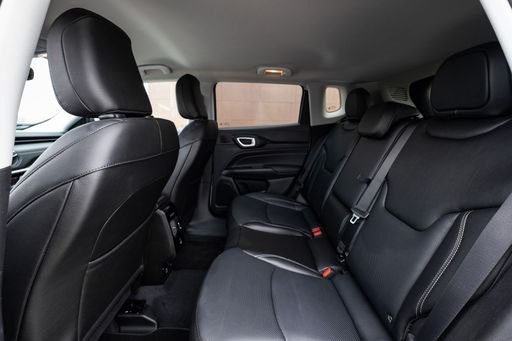
Both vehicles offer seating for 5 people.

In terms of curb weight, VW Tiguan is barely lighter – 1,599 kg compared to 1,667 kg. The difference is around 68 kg.

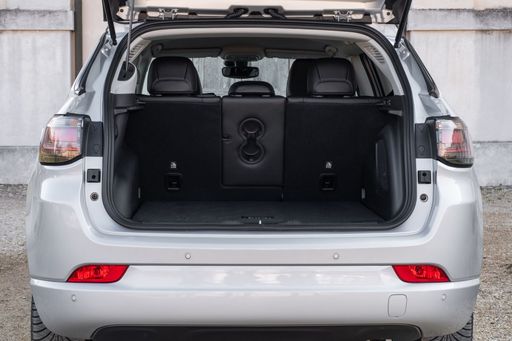
Looking at boot space, the VW Tiguan offers moderately more boot space – 652 L compared to 550 L. That’s a difference of about 102 L.

For maximum load capacity, the Jeep Compass offers very slightly more capacity – up to 1,561 L, about 75 L more than the VW Tiguan.

Who wins the race in the data check?

The Jeep Compass sits just ahead overall in the objective data comparison.
This result only shows which model scores more points on paper – not which of the two cars feels right for you.

from £34,200
Compass

Jeep Compass

  • Engine Type : Petrol MHEV, Electric, Plugin Hybrid
  • Transmission : Automatic
  • Drive Type : Front-Wheel Drive
  • Power HP : 145 - 225 HP
  • Consumption L/100km : 3 - 5.8 L/100km
  • Consumption kWh/100km : 17.5 kWh/100km
  • Electric Range : 95 - 500 km
VW Tiguan
Jeep Compass

Costs and Consumption

View detailed analysis

Engine and Performance

View detailed analysis

Dimensions and Body

View detailed analysis

VW Tiguan

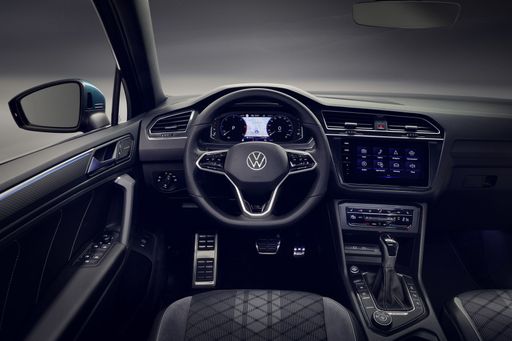
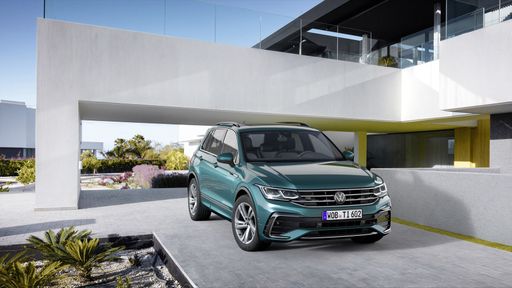
The VW Tiguan blends sensible family practicality with a dash of German polish, delivering a calm, reassuring ride and a cabin that never feels like an afterthought. For buyers who want an SUV that’s easy to live with yet still nicely dressed, the Tiguan is the grown‑up choice that keeps a cheeky wink in reserve.

details

Jeep Compass

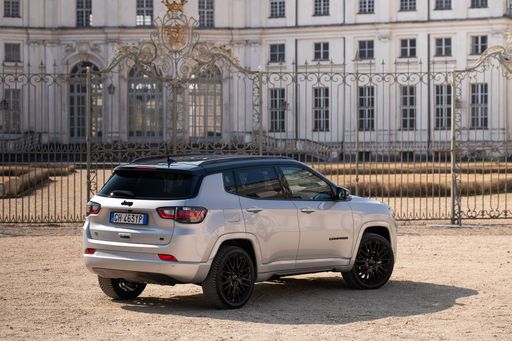
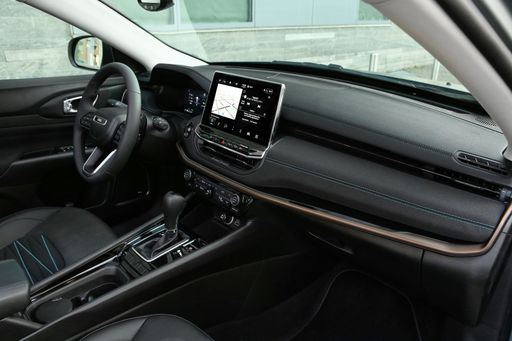
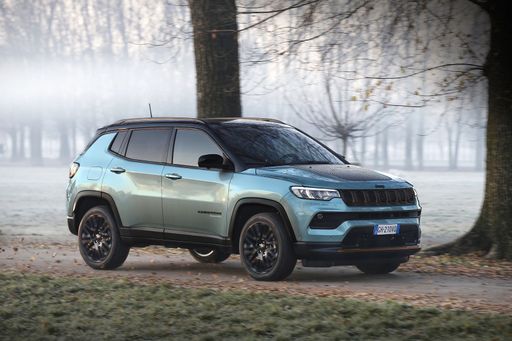
The Jeep Compass packs classic Jeep styling with a surprisingly composed demeanor, equally at home turning heads in the city or tackling a weekend dirt track. Inside it's a pragmatic, user-friendly compact SUV that prioritizes comfort and versatility — a smart pick if you want a dose of adventure without giving up everyday sense.

details
VW Tiguan
Jeep Compass

Costs and Consumption

Price
33,600 - 54,600 £
Price
34,200 - 43,200 £
Consumption L/100km
1.4 - 8.4 L/100km
Consumption L/100km
3 - 5.8 L/100km
Consumption kWh/100km
-
Consumption kWh/100km
17.5 kWh/100km
Electric Range
118 - 126 km
Electric Range
95 - 500 km
Battery Capacity
19.7 kWh
Battery Capacity
74 kWh
co2
32 - 190 g/km
co2
0 - 130 g/km
Fuel tank capacity
45 L
Fuel tank capacity
55 L

Dimensions and Body

Body Type
SUV
Body Type
SUV
Seats
5
Seats
5
Doors
5
Doors
5
Curb weight
1,599 - 1,879 kg
Curb weight
1,667 - 2,198 kg
Trunk capacity
490 - 652 L
Trunk capacity
550 L
Length
4,539 mm
Length
4,552 mm
Width
1,842 - 1,859 mm
Width
1,928 mm
Height
1,658 mm
Height
1,675 mm
Max trunk capacity
1,486 L
Max trunk capacity
1,561 L
Payload
460 - 533 kg
Payload
-

Engine and Performance

Engine Type
Petrol MHEV, Petrol, Diesel, Plugin Hybrid
Engine Type
Petrol MHEV, Electric, Plugin Hybrid
Transmission
Automatic
Transmission
Automatic
Transmission Detail
Dual-Clutch Automatic
Transmission Detail
Dual-Clutch Automatic, Reduction Gearbox
Drive Type
Front-Wheel Drive, All-Wheel Drive
Drive Type
Front-Wheel Drive
Power HP
130 - 272 HP
Power HP
145 - 225 HP
Acceleration 0-100km/h
5.9 - 10.6 s
Acceleration 0-100km/h
8 - 10.3 s
Max Speed
210 - 215 km/h
Max Speed
180 - 188 km/h
Torque
220 - 400 Nm
Torque
230 - 345 Nm
Number of Cylinders
4
Number of Cylinders
3 - 4
Power kW
96 - 200 kW
Power kW
107 - 165 kW
Engine capacity
1,498 - 1,984 cm3
Engine capacity
1,199 - 1,596 cm3

General

Model Year
2,024 - 2,026
Model Year
2,025 - 2,026
CO2 Efficiency Class
D, E, F, B, G
CO2 Efficiency Class
D, A, B
Brand
VW
Brand
Jeep
DriveDuel uses data analysis and artificial intelligence to evaluate vehicle data and create content. Content is regularly reviewed and improved. The displayed prices are estimates based on German list prices, adjusted to the respective country’s VAT. Country-specific registration taxes are not included. This information is not legally binding.