
 Deutschland
 France
 Nederland
 Great Britain
 Sverige
 Danmark
 Suomi
Suomi Italia
 Polska
 España
VS
VW Tiguan vs Maserati Grecale - Differences and prices compared
Compare performance (272 HP vs 558 HP), boot space and price (33600 £ vs 71600 £ ) at a glance. Find out which car is the better choice for you – VW Tiguan or Maserati Grecale?
Tiguan
Costs and Efficiency:
Price and efficiency are key factors when choosing a car – and this is often where the real differences emerge.
VW Tiguan has a decisively advantage in terms of price – it starts at 33600 £ , while the Maserati Grecale costs 71600 £ . That’s a price difference of around 38003 £.
Fuel consumption also shows a difference: VW Tiguan manages with 1.40 L and is therefore convincingly more efficient than the Maserati Grecale with 8.80 L. The difference is about 7.40 L per 100 km.
As for electric range, the Maserati Grecale performs convincingly better – achieving up to 501 km, about 375 km more than the VW Tiguan.
Grecale
Engine and Performance:
Power, torque and acceleration are the classic benchmarks for car enthusiasts – and here, some clear differences start to show.
When it comes to engine power, the Maserati Grecale has a significantly edge – offering 558 HP compared to 272 HP. That’s roughly 286 HP more horsepower.
In acceleration from 0 to 100 km/h, the Maserati Grecale is significantly quicker – completing the sprint in 3.80 s, while the VW Tiguan takes 5.90 s. That’s about 2.10 s faster.
In terms of top speed, the Maserati Grecale performs hardly perceptible better – reaching 220 km/h, while the VW Tiguan tops out at 215 km/h. The difference is around 5 km/h.
There’s also a difference in torque: Maserati Grecale pulls convincingly stronger with 820 Nm compared to 400 Nm. That’s about 420 Nm difference.
Tiguan
Space and Everyday Use:
Cabin size, boot volume and payload all play a role in everyday practicality. Here, comfort and flexibility make the difference.
Both vehicles offer seating for 5 people.
In curb weight, VW Tiguan is to a small extent lighter – 1599 kg compared to 1870 kg. The difference is around 271 kg.
In terms of boot space, the VW Tiguan offers a bit more room – 652 L compared to 535 L. That’s a difference of about 117 L.
When it comes to payload, Maserati Grecale noticeable takes the win – 690 kg compared to 533 kg. That’s a difference of about 157 kg.
Who wins the race in the data check?
The VW Tiguan is far ahead overall in the objective data comparison.
This result only shows which model scores more points on paper – not which of the two cars feels right for you.
VW Tiguan
Maserati Grecale
Costs and Consumption
View detailed analysis
View detailed analysis
Engine and Performance
View detailed analysis
View detailed analysis
Dimensions and Body
View detailed analysis
View detailed analysis
from about £33,600
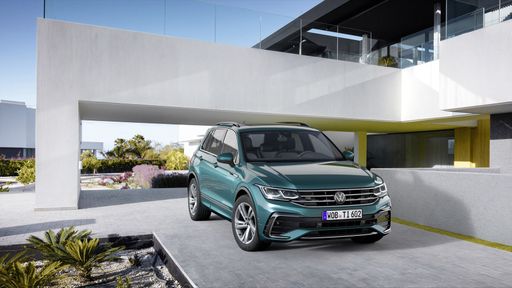
VW Tiguan
VW Tiguan
3.9 (7 Reviews)
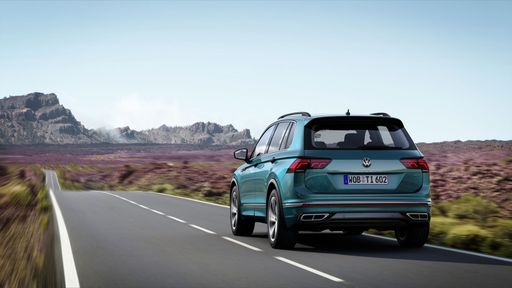
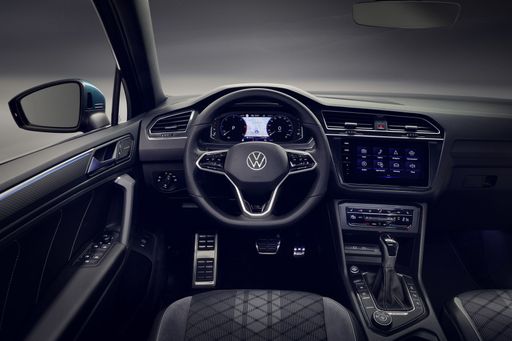
The VW Tiguan blends sensible family practicality with a dash of German polish, delivering a calm, reassuring ride and a cabin that never feels like an afterthought. For buyers who want an SUV that’s easy to live with yet still nicely dressed, the Tiguan is the grown‑up choice that keeps a cheeky wink in reserve.
details
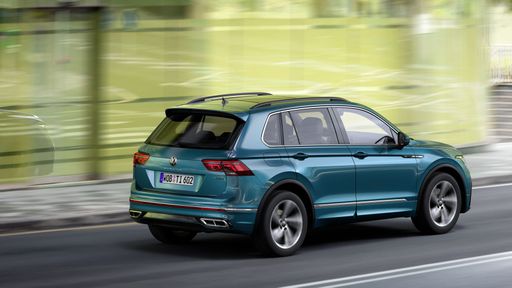
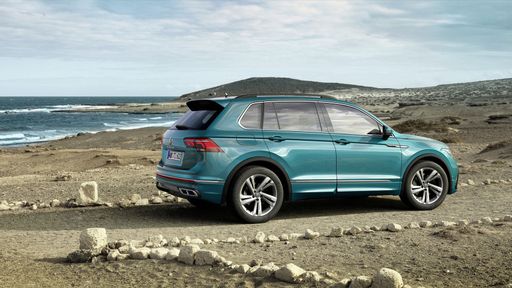
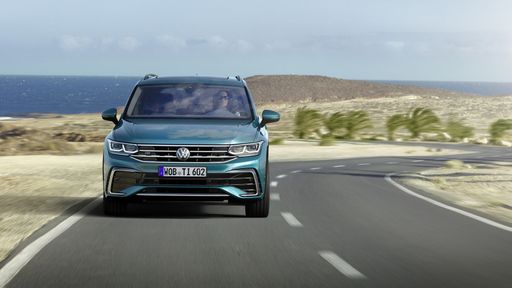
Maserati Grecale
5 (1 Reviews)
The Maserati Grecale blends Italian flair with everyday usability, delivering a lively driving character wrapped in a surprisingly polished cabin. It's a compelling choice for buyers who want exotic looks and engaging driving without the fuss of a supercar, and it even manages to feel at home on the school run as well as on a spirited backroad.
details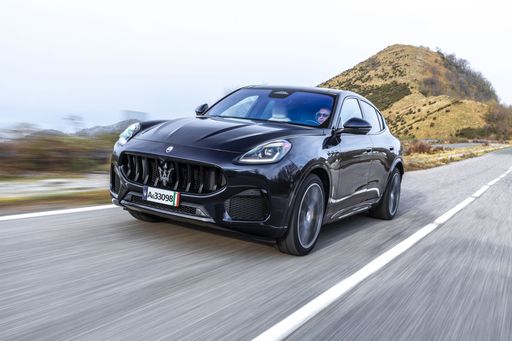


VW Tiguan
Maserati Grecale
Costs and Consumption |
|
|---|---|
|
Price
33600 - 54600 £
|
Price
71600 - 107400 £
|
|
Consumption L/100km
1.4 - 8.4 L
|
Consumption L/100km
8.8 - 11.2 L
|
|
Consumption kWh/100km
-
|
Consumption kWh/100km
23.90 kWh
|
|
Electric Range
118 - 126 km
|
Electric Range
501 km
|
|
Battery Capacity
19.70 kWh
|
Battery Capacity
98 kWh
|
|
co2
32 - 190 g/km
|
co2
0 - 254 g/km
|
|
Fuel tank capacity
45 L
|
Fuel tank capacity
-
|
Dimensions and Body |
|
|---|---|
|
Body Type
SUV
|
Body Type
SUV
|
|
Seats
5
|
Seats
5
|
|
Doors
5
|
Doors
4
|
|
Curb weight
1599 - 1879 kg
|
Curb weight
1870 - 2480 kg
|
|
Trunk capacity
490 - 652 L
|
Trunk capacity
535 L
|
|
Length
4539 mm
|
Length
4865 mm
|
|
Width
1842 - 1859 mm
|
Width
1948 - 1979 mm
|
|
Height
1658 mm
|
Height
1651 mm
|
|
Max trunk capacity
1486 L
|
Max trunk capacity
-
|
|
Payload
460 - 533 kg
|
Payload
630 - 690 kg
|
Engine and Performance |
|
|---|---|
|
Engine Type
Petrol MHEV, Petrol, Diesel, Plugin Hybrid
|
Engine Type
Electric, Petrol MHEV, Petrol
|
|
Transmission
Automatic
|
Transmission
Automatic
|
|
Transmission Detail
Dual-Clutch Automatic
|
Transmission Detail
Reduction Gearbox, Automatic Gearbox
|
|
Drive Type
Front-Wheel Drive, All-Wheel Drive
|
Drive Type
All-Wheel Drive
|
|
Power HP
130 - 272 HP
|
Power HP
301 - 558 HP
|
|
Acceleration 0-100km/h
5.9 - 10.6 s
|
Acceleration 0-100km/h
3.8 - 5.6 s
|
|
Max Speed
210 - 215 km/h
|
Max Speed
220 km/h
|
|
Torque
220 - 400 Nm
|
Torque
450 - 820 Nm
|
|
Number of Cylinders
4
|
Number of Cylinders
4 - 6
|
|
Power kW
96 - 200 kW
|
Power kW
221 - 410 kW
|
|
Engine capacity
1498 - 1984 cm3
|
Engine capacity
1995 - 3000 cm3
|
General |
|
|---|---|
|
Model Year
2024 - 2026
|
Model Year
2024 - 2026
|
|
CO2 Efficiency Class
D, E, F, B, G
|
CO2 Efficiency Class
A, G
|
|
Brand
VW
|
Brand
Maserati
|
What drivetrain options does the VW Tiguan have?
The VW Tiguan is offered with Front-Wheel Drive or All-Wheel Drive.
The prices shown are estimates based on German list prices, adjusted for local VAT. Local registration taxes (e.g. NoVA, BPM or CO2 malus) are not included. This information is not legally binding.