VS

VW Tiguan vs Skoda Kamiq comparison

Compare performance (272 HP vs 150 HP), boot space and price (33,600 £ vs 22,300 £ ) at a glance. Find out which car is the better choice for you – VW Tiguan or Skoda Kamiq?

VW Tiguan vs Skoda Kamiq: Key differences

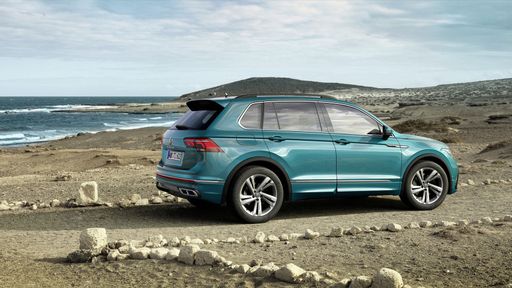
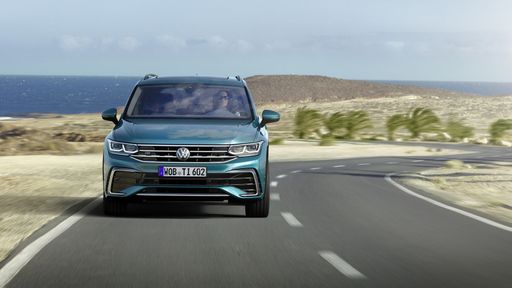
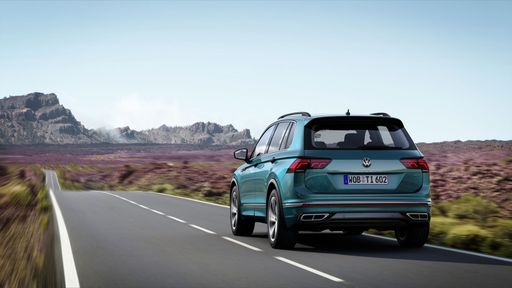
VW Tiguan

4.1 (8 Reviews)
rate
  • considerably more power
  • clearly more efficient
  • noticeably quicker 0–100 km/h
  • noticeably more trunk space

Skoda Kamiq

5 (5 Reviews)
rate
  • clearly cheaper
  • clearly lighter

All details on performance, efficiency, range and trunk space can be found in the technical comparison below – including user reviews for both models.

Tiguan

Skoda Kamiq vs VW Tiguan: An In-Depth SUV Comparison

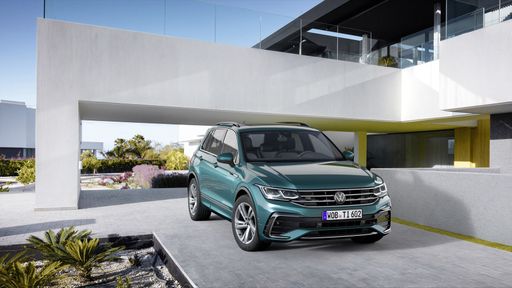
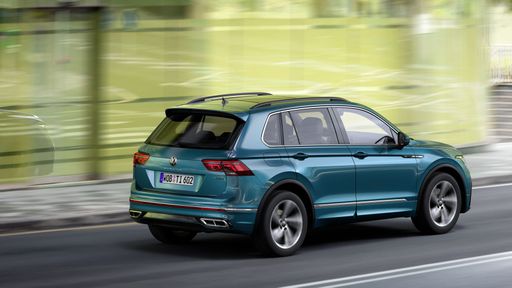
When selecting an SUV, many buyers find themselves weighing the merits of Skoda's Kamiq against VW's Tiguan. Both vehicles boast the engineering excellence you'd expect from European manufacturers, but vary significantly in specifications, technology, and design. Let's delve into what makes each of these 2024 model year SUVs unique and examine their technical attributes and innovations.
Kamiq

Power and Performance

The 2024 Skoda Kamiq provides a choice of petrol engines with power outputs ranging from 95 to 150 HP. It offers both manual and dual-clutch automatic transmissions, with front-wheel drive standard across the board. The acceleration metrics highlight a practical spectrum for urban driving, with the Kamiq capable of achieving 0-100 km/h in as quick as 8.3 seconds. With its maximum speed reaching up to 214 km/h, this compact SUV suits those who commute regularly between cityscapes and rural stretches.

In contrast, the VW Tiguan presents a broader array of engine types, including petrol MHEV, plug-in hybrid, diesel, and traditional petrol versions, ranging from 130 to 272 HP. Engineered for versatility, the Tiguan offers both front-wheel and all-wheel drive options complemented by a dual-clutch automatic transmission. Some models feature impressive acceleration from 0-100 km/h in just 5.9 seconds, demonstrating a sportier edge. Additionally, with a top speed of 242 km/h on higher-spec versions, the Tiguan is capable of exhilarating highway performance.

Tiguan

Efficiency and Environmental Impact

The Skoda Kamiq maintains a fuel consumption rate between 5.4 to 5.7 liters per 100 km, coupled with CO2 emissions rated at 121-130 g/km. Its relatively small engine capacity of 1.0 to 1.5 liters reflects a focus on efficiency, while its CO2 efficiency class is rated at D.

The VW Tiguan, particularly its plug-in hybrid variant, excels in efficiency with an electric range of 112-113 km and a low fuel consumption of 0.4-0.5 liters per 100 km when operating in hybrid mode. Standard petrol versions consume around 5.3 to 8.5 liters per 100 km. However, CO2 emissions vary significantly, with a rating range from 8 g/km for hybrids up to 175 g/km for certain petrol models, achieving an environmental classification from B to G.

Kamiq

Space and Practicality

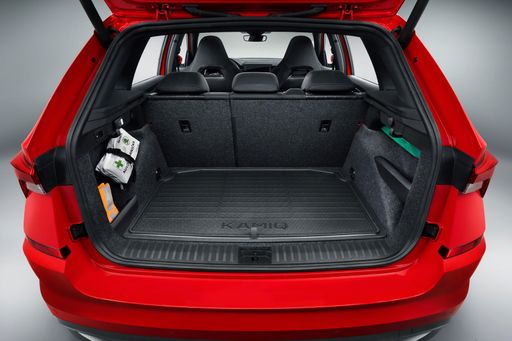
For consumers focused on practicality, the Skoda Kamiq offers a reasonable trunk capacity of 400 liters, suited for daily errands and small family getaways. Its dimensions (4,241 mm length, 1,793 mm width, 1,562 mm height) afford a compact yet comfortable ride, maintaining a curb weight range from 1,223 to 1,288 kg.

The Tiguan appeals to those who prioritize ample space, with a notably larger trunk capacity ranging from 490 to 652 liters depending on the model configuration. The larger dimensions (up to 4,539 mm in length, 1,859 mm in width, and 1,656 mm in height) provide a more capacious interior while carrying a heavier curb weight between 1,598 and 1,890 kg.

Tiguan

Innovation and Technology

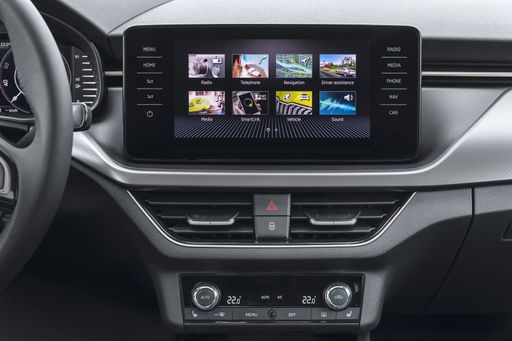
The Kamiq and Tiguan showcase cutting-edge automotive tech, aligning with 2024 model year standards. The Skoda Kamiq incorporates advanced safety features and infotainment options that support connectivity and navigation, making it a thoroughly modern choice for tech-savvy drivers.

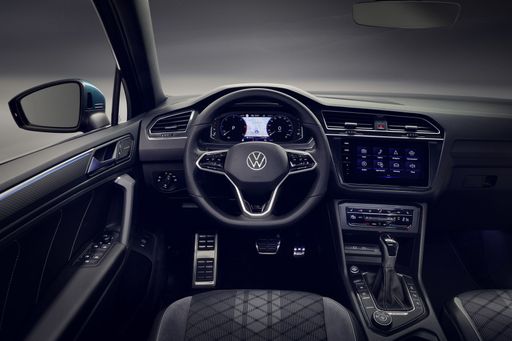
On the other hand, the VW Tiguan integrates a tech-forward cabin with up-to-date digital displays and driver-assistance systems, demonstrating its commitment to innovation. From plug-in hybrid technology to dynamic drive modes, the Tiguan offers versatility and efficiency.

Kamiq

Conclusion

Choosing between the Skoda Kamiq and VW Tiguan hinges on your priorities—be it fuel efficiency, performance, space, or tech advancements. The Kamiq presents a compelling option for those seeking a cost-effective and efficient urban cruiser, while the Tiguan caters to those desiring enhanced performance and additional space with a focus on technological prowess. Both models represent the enduring appeal and engineering expertise of their respective brands.

Here’s where it gets real: The technical differences in detail

Tiguan

Costs and Efficiency:

Price and efficiency are key factors when choosing a car – and this is often where the real differences emerge.

Skoda Kamiq is clearly cheaper – starting at 22,300 £ , while the VW Tiguan costs 33,600 £ . That’s a price difference of around 11,310 £.

Fuel consumption also shows a difference: the VW Tiguan uses 1.4 L/100km and is clearly more efficient than the Skoda Kamiq with 5.3 L/100km. The difference is about 3.9 L/100km.

Kamiq

Engine and Performance:

Power, torque and acceleration say a lot about how a car feels on the road. This is where you see which model delivers more driving dynamics.

When it comes to engine power, the VW Tiguan offers considerably more power – delivering 272 HP compared to 150 HP. That’s roughly 122 HP more horsepower.

When accelerating from 0 to 100 km/h, the VW Tiguan is noticeably quicker – completing the sprint in 5.9 s, while the Skoda Kamiq takes 8.1 s. That’s about 2.2 s quicker.

Looking at top speed, the Skoda Kamiq is very slightly faster – reaching 216 km/h, while the VW Tiguan tops out at 215 km/h. The difference is around 1 km/h.

There’s also a difference in torque: the VW Tiguan delivers noticeably more torque with 400 Nm compared to 250 Nm. That’s about 150 Nm more.

Tiguan

Space and Everyday Use:

Beyond pure performance, interior space and usability matter most in daily life. This is where you see which car is more practical and versatile.

Both vehicles offer seating for 5 people.

In terms of curb weight, Skoda Kamiq is clearly lighter – 1,231 kg compared to 1,599 kg. The difference is around 368 kg.

Looking at boot space, the VW Tiguan offers noticeably more boot space – 652 L compared to 400 L. That’s a difference of about 252 L.

For maximum load capacity, the VW Tiguan offers barely more capacity – up to 1,486 L, about 91 L more than the Skoda Kamiq.

When it comes to payload, the Skoda Kamiq carries only slightly more – 539 kg compared to 533 kg. That’s a difference of about 6 kg.

Who wins the race in the data check?

The VW Tiguan is clearly superior overall in the objective data comparison.
This result only shows which model scores more points on paper – not which of the two cars feels right for you.

from £33,600
Tiguan

VW Tiguan

  • Engine Type : Petrol MHEV, Petrol, Diesel, Plugin Hybrid
  • Transmission : Automatic
  • Drive Type : Front-Wheel Drive, All-Wheel Drive
  • Power HP : 130 - 272 HP
  • Consumption L/100km : 1.4 - 8.4 L/100km
  • Electric Range : 118 - 126 km
VW Tiguan
Skoda Kamiq

Costs and Consumption

View detailed analysis

Engine and Performance

View detailed analysis

Dimensions and Body

View detailed analysis

VW Tiguan

The VW Tiguan blends sensible family practicality with a dash of German polish, delivering a calm, reassuring ride and a cabin that never feels like an afterthought. For buyers who want an SUV that’s easy to live with yet still nicely dressed, the Tiguan is the grown‑up choice that keeps a cheeky wink in reserve.

details

Skoda Kamiq

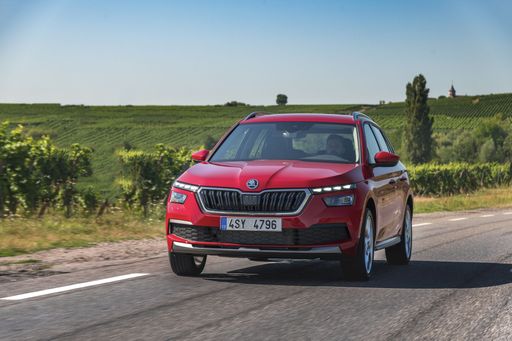
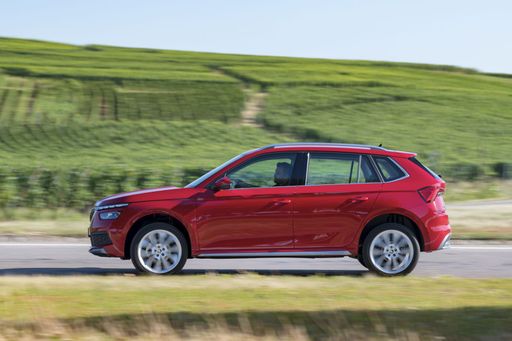
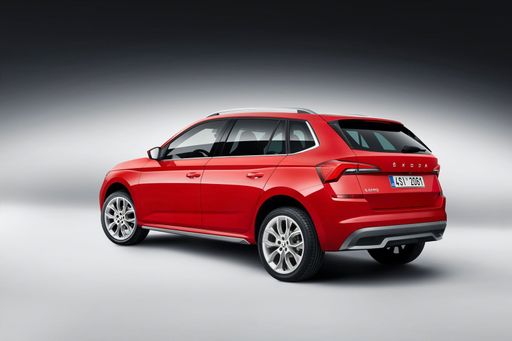
The Skoda Kamiq is a neatly packaged city crossover that pairs practical space with unshowy, thoughtful design. It’s easy to live with, economical to run and full of clever details that make daily driving feel intelligently sorted rather than flashy.

details
VW Tiguan
Skoda Kamiq

Costs and Consumption

Price
33,600 - 54,600 £
Price
22,300 - 32,700 £
Consumption L/100km
1.4 - 8.4 L/100km
Consumption L/100km
5.3 - 5.7 L/100km
Consumption kWh/100km
-
Consumption kWh/100km
-
Electric Range
118 - 126 km
Electric Range
-
Battery Capacity
19.7 kWh
Battery Capacity
-
co2
32 - 190 g/km
co2
121 - 128 g/km
Fuel tank capacity
45 L
Fuel tank capacity
50 L

Dimensions and Body

Body Type
SUV
Body Type
SUV
Seats
5
Seats
5
Doors
5
Doors
5
Curb weight
1,599 - 1,879 kg
Curb weight
1,231 - 1,340 kg
Trunk capacity
490 - 652 L
Trunk capacity
400 L
Length
4,539 mm
Length
4,241 mm
Width
1,842 - 1,859 mm
Width
1,793 mm
Height
1,658 mm
Height
1,562 mm
Max trunk capacity
1,486 L
Max trunk capacity
1,395 L
Payload
460 - 533 kg
Payload
439 - 539 kg

Engine and Performance

Engine Type
Petrol MHEV, Petrol, Diesel, Plugin Hybrid
Engine Type
Petrol
Transmission
Automatic
Transmission
Manuel, Automatic
Transmission Detail
Dual-Clutch Automatic
Transmission Detail
Manual Gearbox, Dual-Clutch Automatic
Drive Type
Front-Wheel Drive, All-Wheel Drive
Drive Type
Front-Wheel Drive
Power HP
130 - 272 HP
Power HP
95 - 150 HP
Acceleration 0-100km/h
5.9 - 10.6 s
Acceleration 0-100km/h
8.1 - 11 s
Max Speed
210 - 215 km/h
Max Speed
183 - 216 km/h
Torque
220 - 400 Nm
Torque
175 - 250 Nm
Number of Cylinders
4
Number of Cylinders
3 - 4
Power kW
96 - 200 kW
Power kW
70 - 110 kW
Engine capacity
1,498 - 1,984 cm3
Engine capacity
999 - 1,498 cm3

General

Model Year
2,024 - 2,026
Model Year
2,025
CO2 Efficiency Class
D, E, F, B, G
CO2 Efficiency Class
D
Brand
VW
Brand
Skoda
DriveDuel uses data analysis and artificial intelligence to evaluate vehicle data and create content. Content is regularly reviewed and improved. The displayed prices are estimates based on German list prices, adjusted to the respective country’s VAT. Country-specific registration taxes are not included. This information is not legally binding.