VS

VW Touareg vs Volvo XC90 comparison

Compare performance (462 HP vs 406 HP), boot space and price (64,300 £ vs 74,300 £ ) at a glance. Find out which car is the better choice for you – VW Touareg or Volvo XC90?

VW Touareg vs Volvo XC90: Key differences

VW Touareg

4.9 (4 Reviews)
rate
  • moderately cheaper
  • somewhat more power
  • only slightly quicker 0–100 km/h
  • only slightly lighter
details

Volvo XC90

5 (1 Reviews)
rate
  • considerably more efficient
  • markedly more electric range
details

All details on performance, efficiency, range and trunk space can be found in the technical comparison below – including user reviews for both models.

By Achim Sedelmaier

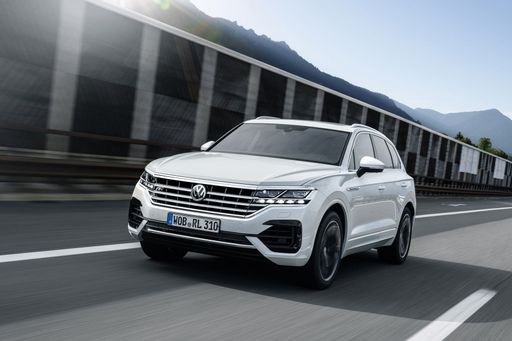
Touareg

Volvo XC90 VS VW Touareg — overview

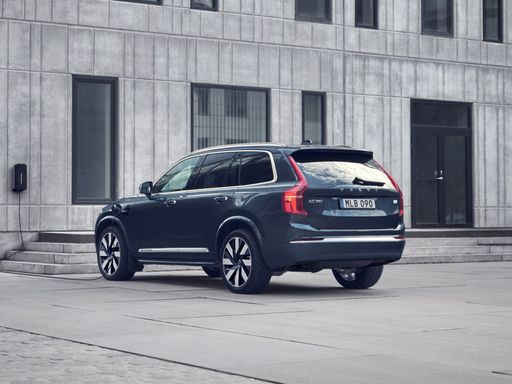
Volvo XC90 VS VW Touareg pits a serene, seven-seat Scandinavian family SUV against a quietly authoritative five-seat German long-distance specialist. The Volvo XC90 leans into roomy flexibility, safety equipment and a composed but comfort-first driving character, while the VW Touareg focuses on hush, towing ability and an immaculately controlled motorway ride. Both feel premium, but they reach that feeling by different routes: Volvo with airy materials and configurable seating, Touareg with dense sound insulation and obedient suspension. If your priority is carrying people comfortably, the XC90 has a clear bent; if your priority is hauling luggage, towing and fuss-free long miles, the Touareg will likely appeal more.
XC90

Driving character: city agility versus motorway composure

The Volvo XC90 drives like a big, polite cruiser — steering light, ride tuned for comfort and an overall temperament that soothes rather than excites. The VW Touareg, by contrast, behaves like a composed highway specialist: lower noise, firmer directional stability and the sort of planted feel that makes long runs effortless. In town the XC90’s size and tall hips can make parking feel like a chore without cameras, whereas the Touareg’s optional all‑wheel steering and more compact rear profile make manoeuvres easier despite similar exterior bulk. On twistier roads neither is a sports car, but the Touareg will feel firmer and more assured when you ask for pace, while the XC90 cushions occupants and blunts imperfections.

Touareg

Comfort and cabin feel: Scandinavian calm versus German solidity

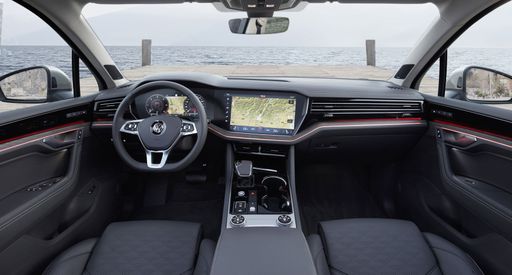
Step into the Volvo XC90 and the first impression is light, tactile surfaces and seats designed for long days; the cabin aims to cocoon with a soft, Scandinavian palette. The VW Touareg’s interior reads more solid and purpose-built, with exceptional noise suppression that turns motorway driving into a low-stress experience. Both deliver high-quality materials, but Volvo favours airy elegance and slightly softer seat tuning, while VW trades a touch of opulence for a denser, quieter cocoon. If you prize a soothing, lounge-like ambience the XC90 edges ahead; if you value hushed refinement and a fortress-like feeling at speed, the Touareg will feel more premium on the move.

XC90

Practicality and family usability: seven seats versus five with big boot

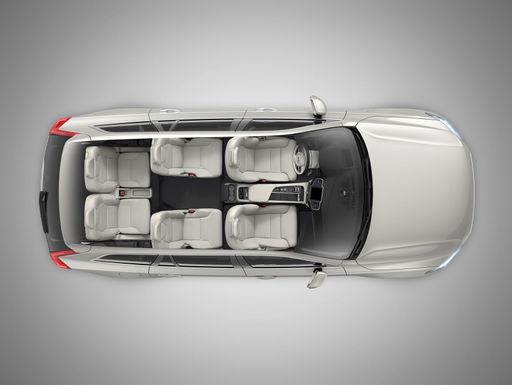
If your regular life includes more than five occupants or frequent school runs, the Volvo XC90’s standard seven-seat layout and individually adjustable middle-row seats make day-to-day life noticeably easier. The VW Touareg offers generous rear legroom and an exceptionally usable boot that swallows luggage and kit with minimal fuss, and its air suspension can even lower the rear for easier loading. The trade-off is clear: the XC90 gives you extra seats and family flexibility at the cost of a taller loading lip and larger footprint, whereas the Touareg gives a roomier, more accessible cargo area but no third row for occasional passengers. Families who often carry three child seats or need true seven-passenger capacity will prefer the XC90; those who prioritise luggage space, towing and weekend gear will find the Touareg more practical.

Touareg

Everyday tech and ergonomics: touchy screens and real-world quirks

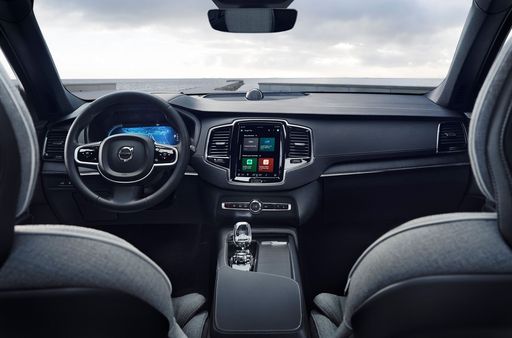
Both cars have embraced large screens and modern connectivity, but their human‑machine trade-offs differ in ways you’ll notice daily. The Volvo XC90’s Google-influenced system looks clean and integrates electrical driving modes well, yet the heavy reliance on touch controls for climate and certain functions can frustrate gloveless thumbs. The VW Touareg pairs a large cockpit display with faster responses and wireless phone mirroring, but it too suffers from touch-sensitive climate controls and a handful of capacitive steering controls that some drivers find fussy. In practice, Volvo’s visibility compromises make camera systems feel essential, while the Touareg’s better noise isolation and clearer physical ergonomics make long trips less taxing — test both screens and the awkward touch points before deciding.

XC90

Buyer fit: who should choose which before you consult the specs

Choose the Volvo XC90 if you need true seven-seat versatility, value a light, refined Scandinavian cabin and plan to use a plug-in option with a regular charging routine for short, electric commutes. Opt for the VW Touareg if your priorities are low cabin noise, big luggage capacity, high towing demands and the most comfortable motorway miles, especially if you don’t need a third row. Commuters with home charging and families who regularly haul people will lean XC90; frequent long-distance drivers, tow‑owners and those who value cargo accessibility will gravitate to the Touareg. The following technical comparison will make those trade-offs concrete on power, efficiency and towing figures so you can match paper numbers to the real-world priorities above.

Here’s where it gets real: The technical differences in detail

Touareg

Costs and Efficiency:

When it comes to price and running costs, the biggest differences usually appear. This is often where you see which car fits your budget better in the long run.

VW Touareg is moderately cheaper – starting at 64,300 £ , while the Volvo XC90 costs 74,300 £ . That’s a price difference of around 9,998 £.

Fuel consumption also shows a difference: the Volvo XC90 uses 3.4 L/100km and is considerably more efficient than the VW Touareg with 5.2 L/100km. The difference is about 1.8 L/100km.

As for electric range, the Volvo XC90 offers markedly more range – reaching up to 69 km, about 20 km more than the VW Touareg.

XC90

Engine and Performance:

Power, torque and acceleration are the classic benchmarks for car enthusiasts – and here, some clear differences start to show.

When it comes to engine power, the VW Touareg offers somewhat more power – delivering 462 HP compared to 406 HP. That’s roughly 56 HP more horsepower.

When accelerating from 0 to 100 km/h, the VW Touareg is only slightly quicker – completing the sprint in 5.1 s, while the Volvo XC90 takes 5.4 s. That’s about 0.3 s quicker.

There’s also a difference in torque: the VW Touareg delivers marginally more torque with 700 Nm compared to 669 Nm. That’s about 31 Nm more.

Touareg

Space and Everyday Use:

Beyond pure performance, interior space and usability matter most in daily life. This is where you see which car is more practical and versatile.

Seats: Volvo XC90 offers more seats – 7 vs 5.

In terms of curb weight, VW Touareg is only slightly lighter – 2,059 kg compared to 2,080 kg. The difference is around 21 kg.

When it comes to payload, the VW Touareg carries marginally more – 751 kg compared to 710 kg. That’s a difference of about 41 kg.

Who wins the race in the data check?

The Volvo XC90 holds a solid overall lead in the objective data comparison.
This result only shows which model scores more points on paper – not which of the two cars feels right for you.

from £74,300
XC90

Volvo XC90

  • Engine Type : Petrol MHEV, Plugin Hybrid
  • Transmission : Automatic
  • Drive Type : All-Wheel Drive
  • Power HP : 250 - 406 HP
  • Consumption L/100km : 3.4 - 8.3 L/100km
  • Electric Range : 69 km
VW Touareg
Volvo XC90

Costs and Consumption

View detailed analysis

Engine and Performance

View detailed analysis

Dimensions and Body

View detailed analysis

VW Touareg

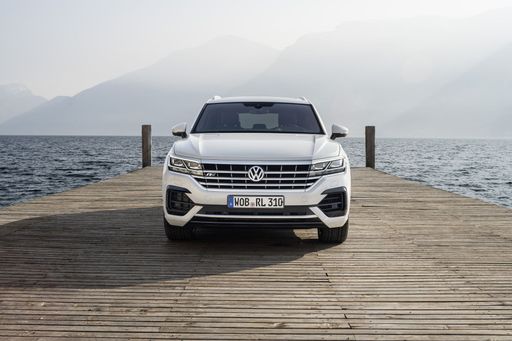
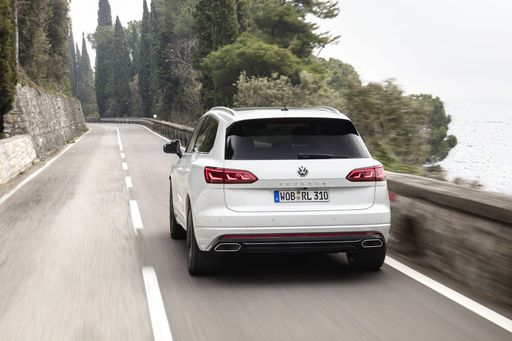
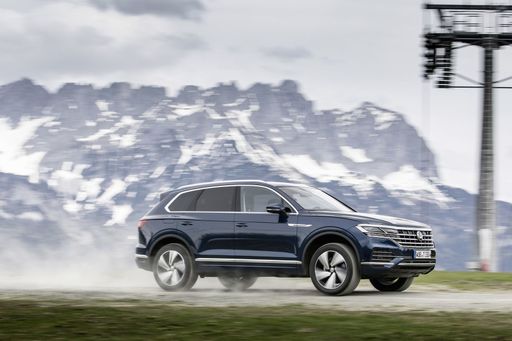
Volkswagen Touareg wraps a grown-up presence in a classy, well-appointed cabin that feels more like a premium saloon than an SUV. It glides with quiet composure, devours long journeys and tucks away clever tech that makes life easier whether you’re stuck in town or nipping off the beaten track.

details

Volvo XC90

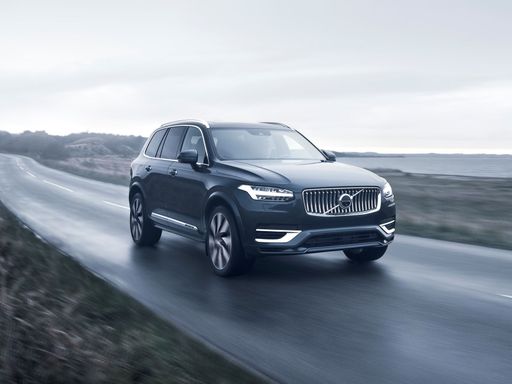
The Volvo XC90 is a serene Scandinavian SUV that mixes minimalist luxury with a composed, confidence-inspiring presence — ideal for buyers who want family practicality without sacrificing style. Inside it serves up a calm, well-crafted cabin and user-friendly tech that keeps long journeys pleasant and tantrums to a minimum, making the XC90 a smart, stylish pick for sensible drivers.

details
VW Touareg
Volvo XC90

Costs and Consumption

Price
64,300 - 88,300 £
Price
74,300 - 84,600 £
Consumption L/100km
5.2 - 10.5 L/100km
Consumption L/100km
3.4 - 8.3 L/100km
Consumption kWh/100km
-
Consumption kWh/100km
-
Electric Range
47 - 49 km
Electric Range
69 km
Battery Capacity
-
Battery Capacity
-
co2
119 - 239 g/km
co2
71 - 188 g/km
Fuel tank capacity
-
Fuel tank capacity
-

Dimensions and Body

Body Type
SUV
Body Type
SUV
Seats
5
Seats
7
Doors
-
Doors
-
Curb weight
2,059 - 2,470 kg
Curb weight
2,080 - 2,350 kg
Trunk capacity
665 - 810 L
Trunk capacity
-
Length
-
Length
-
Width
1,984 mm
Width
1,923 mm
Height
-
Height
-
Max trunk capacity
-
Max trunk capacity
-
Payload
550 - 751 kg
Payload
600 - 710 kg

Engine and Performance

Engine Type
Petrol, Plugin Hybrid, Diesel
Engine Type
Petrol MHEV, Plugin Hybrid
Transmission
Automatic
Transmission
Automatic
Transmission Detail
Automatic Gearbox
Transmission Detail
Automatic Gearbox
Drive Type
All-Wheel Drive
Drive Type
All-Wheel Drive
Power HP
231 - 462 HP
Power HP
250 - 406 HP
Acceleration 0-100km/h
5.1 - 7.7 s
Acceleration 0-100km/h
5.4 - 7.7 s
Max Speed
-
Max Speed
-
Torque
450 - 700 Nm
Torque
360 - 669 Nm
Number of Cylinders
6
Number of Cylinders
4
Power kW
170 - 340 kW
Power kW
184 - 299 kW
Engine capacity
2,967 - 2,995 cm3
Engine capacity
1,969 cm3

General

Model Year
2025
Model Year
2,025 - 2,026
CO2 Efficiency Class
G, D
CO2 Efficiency Class
G, B
Brand
VW
Brand
Volvo
DriveDuel uses data analysis and artificial intelligence to evaluate vehicle data and create content. Content is regularly reviewed and improved. The displayed prices are estimates based on German list prices, adjusted to the respective country’s VAT. Country-specific registration taxes are not included. This information is not legally binding.