VS

Alfa Romeo Junior vs Audi Q2 comparison

Compare performance (280 HP vs 300 HP), boot space and price (26,100 £ vs 24,900 £ ) at a glance. Find out which car is the better choice for you – Alfa Romeo Junior or Audi Q2?

Alfa Romeo Junior vs Audi Q2: Key differences

Alfa Romeo Junior

5 (1 Reviews)
rate
  • marginally more trunk space
details

Audi Q2

4.7 (4 Reviews)
rate
  • barely cheaper
  • marginally more power
  • noticeably quicker 0–100 km/h
  • very slightly lighter
details

All details on performance, efficiency, range and trunk space can be found in the technical comparison below – including user reviews for both models.

By Achim Sedelmaier

Junior

Introduction: A Clash of Compact SUVs

The automotive market is bustling with competition, especially in the compact SUV segment where style, performance, and practicality converge. This article pits the new Alfa Romeo Junior against the Audi Q2, examining their technical specs and innovative features. With both models targeting the younger, urban driver who values both flair and functionality, it’s time to see which SUV stands out in this competitive landscape.
Q2

Design and Dimensions: Striking Aesthetic vs. Subtle Sophistication

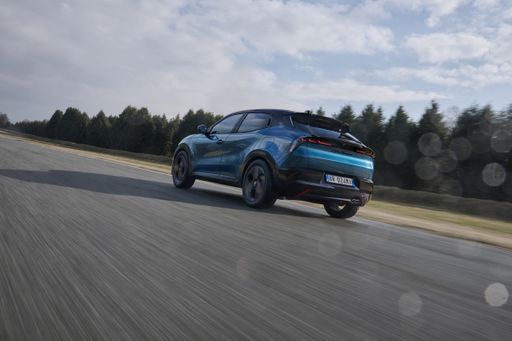
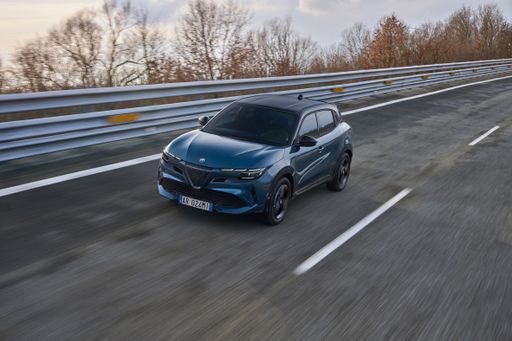
Starting with the dimensions, the Alfa Romeo Junior measures 4173 mm in length, 1781 mm in width, and 1533 mm in height, while the Audi Q2 has a slight edge at 4208 mm long, 1794 mm wide, and 1508 mm high. Both SUVs exhibit a sporty silhouette, but the Junior brings its iconic Italian flair, featuring sharp lines and a bold front fascia that commands attention.

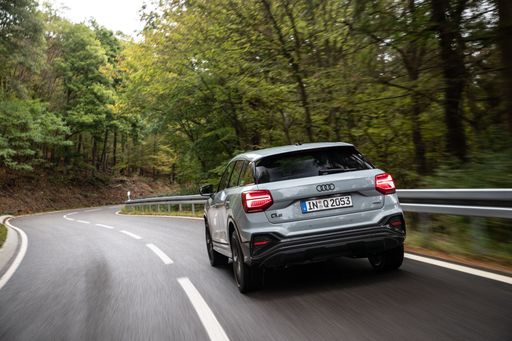
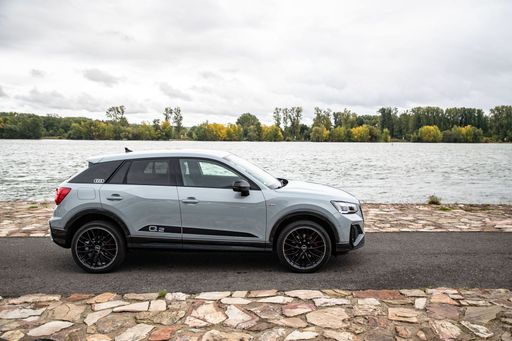
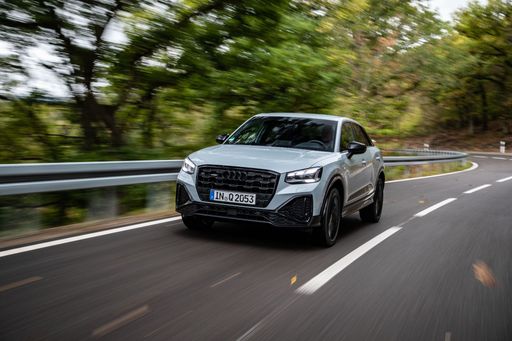
Meanwhile, the Q2 leans towards a more understated elegance, with its clean lines and minimalist design, making it adaptable to various settings. Both models offer five doors and comfortably seat five passengers, making them practical choices for daily commuting.

Junior

Powertrains: Unleashing Performance

The Alfa Romeo Junior offers a diverse lineup of engines, including electrified options that emphasize efficiency. With power outputs ranging from 136 HP to a thrilling 280 HP, its petrol and electric options cater to all driving styles. The addition of a reduction gearbox enhances the driving experience by optimizing torque delivery. On the other hand, the Q2 boasts a more traditional approach with petrol and diesel choices, ranging from 116 HP to a staggering 300 HP for those seeking pure performance.

Eco-conscious drivers will appreciate the Junior's lower consumption stats, registering an impressive 4.5 L/100km for petrol variants and an electric range of 410 km. In contrast, the Q2's consumption reaches from 4.8 L to a maximum of 8.4 L, depending on the engine variant, providing more fuel flexibility for diverse driving requirements.

Q2

Transmission and Drive Train: Smoothness and Control

Both SUVs feature advanced automatic transmission systems, with the Alfa Romeo Junior equipped with dual-clutch technology for a seamless driving experience, while the Audi Q2 provides choices between manual and automatic transmissions, accommodating various preferences. The Junior offers front-wheel drive, while the Q2 provides both front-wheel and all-wheel drive options, making it ideal for different road conditions and preferences.

Junior

Acceleration and Handling: From 0 to 100 km/h

When it comes to acceleration, the Junior outshines with its top-performing model achieving a remarkable 0-100 km/h time of just 5.9 seconds, showcasing its sporty character. The Audi Q2, on the other hand, has competitive acceleration figures across its range, with the most powerful variant clocking in at a solid 4.9 seconds, ensuring thrilling performance for driving enthusiasts.

Q2

Interior Features: Comfort Meets Technology

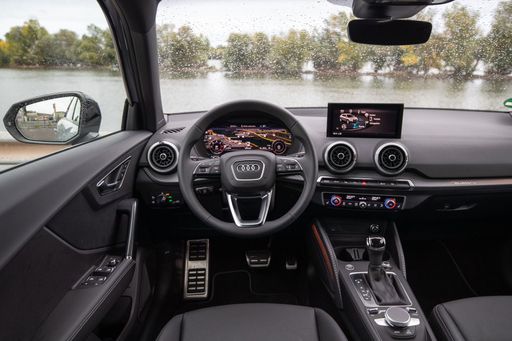
Both the Alfa Romeo Junior and Audi Q2 provide modern interiors filled with technology and comfort. The Junior boasts a driver-focused cockpit with premium materials and an intuitive infotainment system. Meanwhile, the Q2 shines with its advanced MMI touchscreen and Virtual Cockpit, ensuring a high-tech feel that many drivers will appreciate.

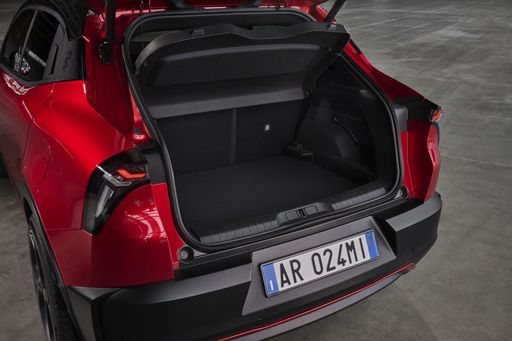
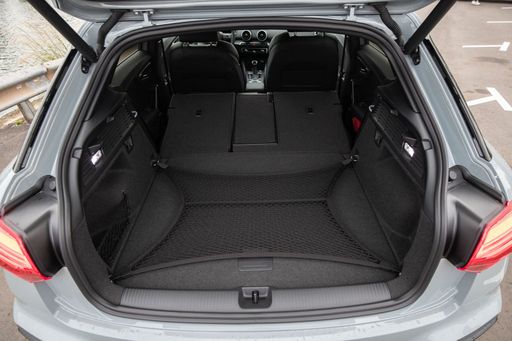
Cargo capacity is slightly better in the Junior, at 400 liters compared to the Q2’s 405 liters, offering flexibility for everyday use and road trips alike. Both models uphold a commitment to providing ample passenger space while maintaining comfort during longer journeys.

Conclusion: The Road Ahead

In the heated battle between the Alfa Romeo Junior and Audi Q2, prospective buyers are met with two compelling choices that excel in different areas. The Junior leans towards sporty performance and innovative electrification, while the Q2 offers lavish comfort and a brand reputation for reliability and technology. Ultimately, the choice will depend on whether you favor the dynamic Italian spirit of the Junior or the practical luxury of the Q2.

Here’s where it gets real: The technical differences in detail

Junior

Costs and Efficiency:

Price and efficiency are often the first things buyers look at. Here it becomes clear which model has the long-term edge – whether at the pump, the plug, or in purchase price.

Audi Q2 is barely cheaper – starting at 24,900 £ , while the Alfa Romeo Junior costs 26,100 £ . That’s a price difference of around 1,243 £.

Both cars consume an average of 4.8 L/100km – no difference here.

Q2

Engine and Performance:

Power, torque and acceleration say a lot about how a car feels on the road. This is where you see which model delivers more driving dynamics.

When it comes to engine power, the Audi Q2 offers marginally more power – delivering 300 HP compared to 280 HP. That’s roughly 20 HP more horsepower.

When accelerating from 0 to 100 km/h, the Audi Q2 is noticeably quicker – completing the sprint in 4.9 s, while the Alfa Romeo Junior takes 5.9 s. That’s about 1 s quicker.

There’s also a difference in torque: the Audi Q2 delivers moderately more torque with 400 Nm compared to 345 Nm. That’s about 55 Nm more.

Junior

Space and Everyday Use:

Whether family car or daily driver – which one offers more room, flexibility and comfort?

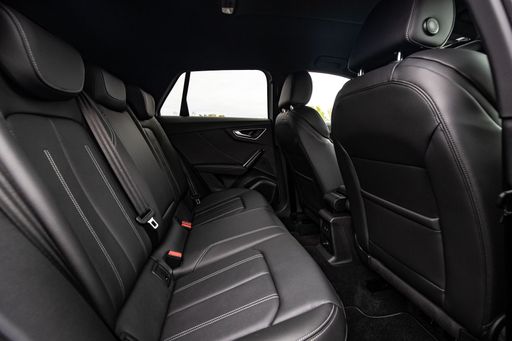
Both vehicles offer seating for 5 people.

In terms of curb weight, Audi Q2 is very slightly lighter – 1,330 kg compared to 1,380 kg. The difference is around 50 kg.

Looking at boot space, the Alfa Romeo Junior offers marginally more boot space – 415 L compared to 405 L. That’s a difference of about 10 L.

When it comes to payload, the Audi Q2 carries somewhat more – 510 kg compared to 420 kg. That’s a difference of about 90 kg.

Who wins the race in the data check?

The Audi Q2 shows a few small advantages in the objective data comparison.
This result only shows which model scores more points on paper – not which of the two cars feels right for you.

from £24,900
Q2

Audi Q2

  • Engine Type : Petrol, Diesel
  • Transmission : Manuel, Automatic
  • Drive Type : Front-Wheel Drive, All-Wheel Drive
  • Power HP : 116 - 300 HP
  • Consumption L/100km : 4.8 - 8.1 L/100km
Alfa Romeo Junior
Audi Q2

Costs and Consumption

View detailed analysis

Engine and Performance

View detailed analysis

Dimensions and Body

View detailed analysis

Alfa Romeo Junior

The Alfa Romeo Junior captures the essence of Italian design with its sleek lines and compact dimensions, making it an icon of elegance and performance. With a spirited driving experience and a charming retro aesthetic, it appeals to enthusiasts and casual drivers alike. This delightful car embodies the brand's rich heritage while remaining a fun and engaging option for those seeking a unique automotive experience.

details

Audi Q2

The Audi Q2 packs Audi’s premium attitude into a compact, cheeky package that turns city streets into a runway for tasteful design and clever practicality. It’s an easy car to live with thanks to an upscale cabin, composed manners and sprightly handling, and while it won’t satisfy someone chasing sports-car thrills, it’s a smart, stylish pick for buyers who want substance with a wink.

details
Alfa Romeo Junior
Audi Q2

Costs and Consumption

Price
26,100 - 41,600 £
Price
24,900 - 43,600 £
Consumption L/100km
4.8 - 5.4 L/100km
Consumption L/100km
4.8 - 8.1 L/100km
Consumption kWh/100km
15.1 - 17.5 kWh/100km
Consumption kWh/100km
-
Electric Range
344 - 410 km
Electric Range
-
Battery Capacity
0.4 - 51 kWh
Battery Capacity
-
co2
0 - 119 g/km
co2
127 - 183 g/km
Fuel tank capacity
44 - 45 L
Fuel tank capacity
-

Dimensions and Body

Body Type
SUV
Body Type
SUV
Seats
5
Seats
5
Doors
5
Doors
-
Curb weight
1,380 - 1,689 kg
Curb weight
1,330 - 1,610 kg
Trunk capacity
340 - 415 L
Trunk capacity
355 - 405 L
Length
4,173 mm
Length
-
Width
1,781 mm
Width
1,794 - 1,802 mm
Height
1,505 - 1,538 mm
Height
-
Max trunk capacity
1,205 - 1,280 L
Max trunk capacity
-
Payload
390 - 420 kg
Payload
450 - 510 kg

Engine and Performance

Engine Type
Electric, Petrol MHEV
Engine Type
Petrol, Diesel
Transmission
Automatic
Transmission
Manuel, Automatic
Transmission Detail
Reduction Gearbox, Dual-Clutch Automatic
Transmission Detail
Manual Gearbox, Dual-Clutch Automatic
Drive Type
Front-Wheel Drive, All-Wheel Drive
Drive Type
Front-Wheel Drive, All-Wheel Drive
Power HP
136 - 280 HP
Power HP
116 - 300 HP
Acceleration 0-100km/h
5.9 - 9.1 s
Acceleration 0-100km/h
4.9 - 10.5 s
Max Speed
150 - 206 km/h
Max Speed
-
Torque
230 - 345 Nm
Torque
200 - 400 Nm
Number of Cylinders
3
Number of Cylinders
3 - 4
Power kW
107 - 207 kW
Power kW
85 - 221 kW
Engine capacity
1,199 cm3
Engine capacity
999 - 1,984 cm3

General

Model Year
2,024 - 2,025
Model Year
2025
CO2 Efficiency Class
A, C, D
CO2 Efficiency Class
D, F, E, G
Brand
Alfa Romeo
Brand
Audi
DriveDuel uses data analysis and artificial intelligence to evaluate vehicle data and create content. Content is regularly reviewed and improved. The displayed prices are estimates based on German list prices, adjusted to the respective country’s VAT. Country-specific registration taxes are not included. This information is not legally binding.