VS

Audi A3 Sportback vs Ford Kuga comparison

Compare performance (400 HP vs 243 HP), boot space and price (27,000 £ vs 34,200 £ ) at a glance. Find out which car is the better choice for you – Audi A3 Sportback or Ford Kuga?

Audi A3 Sportback vs Ford Kuga: Key differences

Audi A3 Sportback

3.9 (1 Reviews)
rate
  • visibly cheaper
  • clearly more power
  • clearly more efficient
  • significantly more electric range
  • significantly quicker 0–100 km/h
  • slightly lighter
details

Ford Kuga

4.2 (6 Reviews)
rate
details

All details on performance, efficiency, range and trunk space can be found in the technical comparison below – including user reviews for both models.

By Achim Sedelmaier

A3 Sportback

The Battle of Efficiency and Style: Audi A3 Sportback vs. Ford Kuga

In the ever-evolving world of automotive innovation, car enthusiasts often face the challenging decision of selecting between style and practicality. The Audi A3 Sportback and Ford Kuga, two robust contenders from the hatchback and SUV classes, present a blend of both aesthetics and functionality while offering varied driving experiences.
Kuga

Design and Body Type

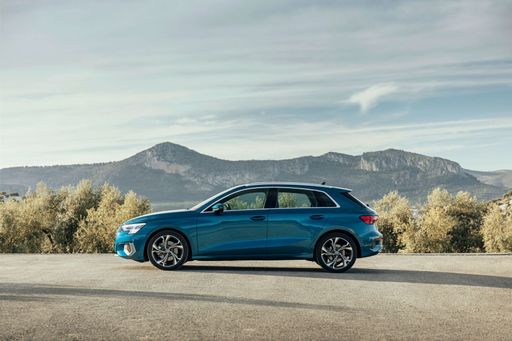
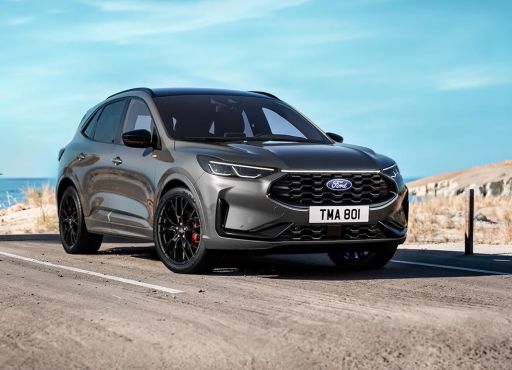
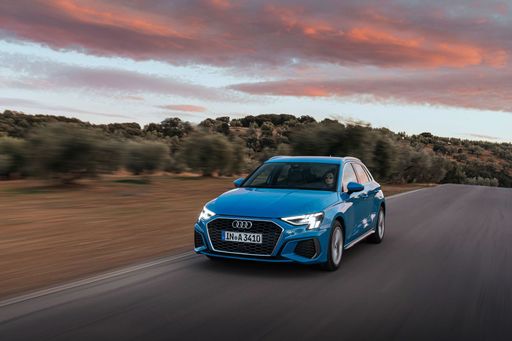
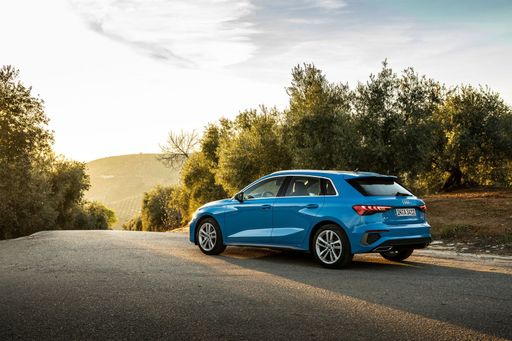
The Audi A3 Sportback exudes the classic elegance Audi is known for, with its hatchback style giving it a sleek and sporty appearance. Measuring at a length of 4353 mm, a width of 1851 mm, and a height of 1441 mm, the A3 Sportback is compact yet comfortable, ideal for urban settings. On the flip side, the Ford Kuga embodies the DNA of a modern SUV. Its dimensions (length of 4604 mm, width of 1882 mm, and height of 1675 mm) ensure a commanding road presence and provide ample cabin space.

A3 Sportback

Engine and Performance

When diving under the hood, the Audi A3 Sportback offers a range of engine types, including a 2.5L five-cylinder option delivering up to 400 HP. Its dual-clutch automatic or manual transmission options assure smooth driving regardless of the powertrain chosen. Boasting all-wheel drive possibilities, the A3 leverages its power and agility with peak torque reaching up to 500 Nm, allowing drivers to feel the thrill with an impressive acceleration of 3.8 seconds from 0 to 100 km/h.

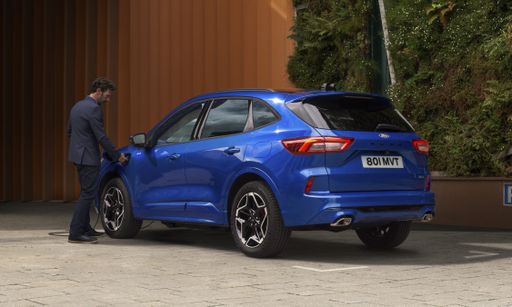
Ford Kuga doesn't fall short in its offerings, with options for petrol, full hybrid, and plug-in hybrid engines. The available power output peaks at 243 HP. With a focus on efficiency, the Kuga's hybrid engine stands out with its electric range of 69 km and an eco-friendly CO2 release of 20 g/km. Its automatic CVT transmission further enhances the vehicle's driving smoothness, making it a versatile choice for diverse driving conditions.

Kuga

Fuel Efficiency and Environmental Impact

Both models emphasize fuel efficiency, though through different means. The A3 Sportback can achieve a consumption rate as low as 4.8 liters per 100 km, with its plugin hybrid model boasting an exceptional electric consumption of 0.3 liters per 100 km. The Ford Kuga offers competitive efficiency with its hybrid models averaging 5.3 liters per 100 km on fuel consumption. Additionally, Kuga's plug-in hybrid impressively reduces the consumption to merely 0.9 liters per 100 km.

Environmentally conscious drivers will appreciate both models' CO2 efficiency ratings, with the A3 Sportback offering a range between class B and D, while the Kuga offers efficiency classes from B to E.

A3 Sportback

Comfort and Space

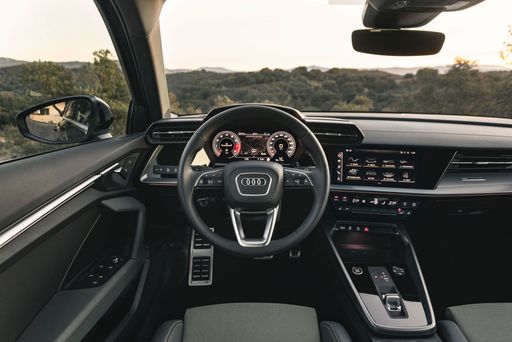
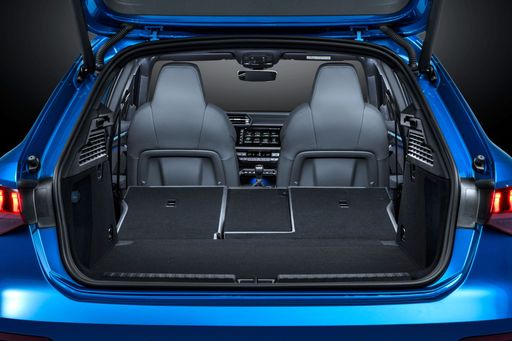
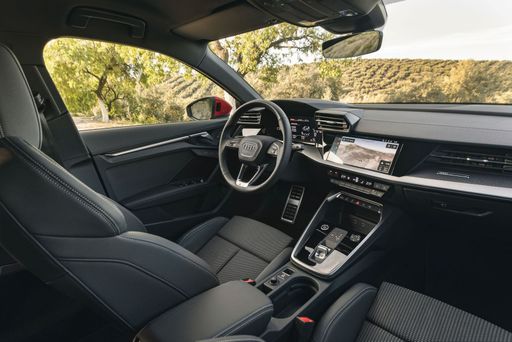
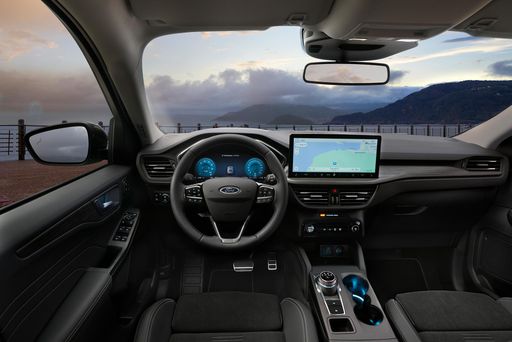
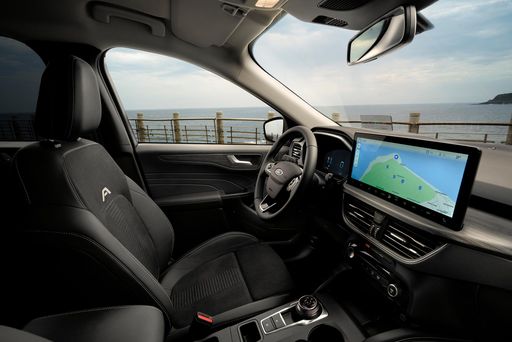
Audi A3 Sportback and Ford Kuga both prioritize passenger comfort with seating for five and a focus on superior interior finishes. The Audi A3 provides trunk capacity options ranging from 280 to 380 liters, promising sufficient space for daily commuting or leisure travel.

The Ford Kuga, being an SUV, slightly edges out on space with its larger trunk capacity of 412 liters, making it a favorite for those requiring additional room for storage.

Kuga

Conclusion

The decision between the Audi A3 Sportback and Ford Kuga ultimately boils down to personal preference and lifestyle needs. The A3 Sportback is perfect for those who crave a stylish yet efficient ride in a compact size, whereas the Kuga serves those who seek a spacious, versatile driving experience with an eye on eco-friendliness. Both vehicles, marked by their distinctive German and American engineering prowess, encapsulate innovation, efficiency, and driving pleasure in their unique manner.

Here’s where it gets real: The technical differences in detail

A3 Sportback

Costs and Efficiency:

Price and efficiency are key factors when choosing a car – and this is often where the real differences emerge.

Audi A3 Sportback is visibly cheaper – starting at 27,000 £ , while the Ford Kuga costs 34,200 £ . That’s a price difference of around 7,242 £.

Fuel consumption also shows a difference: the Audi A3 Sportback uses 1.1 L/100km and is clearly more efficient than the Ford Kuga with 2.8 L/100km. The difference is about 1.7 L/100km.

As for electric range, the Audi A3 Sportback offers significantly more range – reaching up to 141 km, about 73 km more than the Ford Kuga.

Kuga

Engine and Performance:

Power, torque and acceleration say a lot about how a car feels on the road. This is where you see which model delivers more driving dynamics.

When it comes to engine power, the Audi A3 Sportback offers clearly more power – delivering 400 HP compared to 243 HP. That’s roughly 157 HP more horsepower.

When accelerating from 0 to 100 km/h, the Audi A3 Sportback is significantly quicker – completing the sprint in 3.8 s, while the Ford Kuga takes 7.3 s. That’s about 3.5 s quicker.

There’s also a difference in torque: the Audi A3 Sportback delivers substantially more torque with 500 Nm compared to 240 Nm. That’s about 260 Nm more.

A3 Sportback

Space and Everyday Use:

Cabin size, boot volume and payload all play a role in everyday practicality. Here, comfort and flexibility make the difference.

Both vehicles offer seating for 5 people.

In terms of curb weight, Audi A3 Sportback is slightly lighter – 1,360 kg compared to 1,526 kg. The difference is around 166 kg.

When it comes to payload, the Ford Kuga carries moderately more – 550 kg compared to 480 kg. That’s a difference of about 70 kg.

Who wins the race in the data check?

The Audi A3 Sportback is far ahead overall in the objective data comparison.
This result only shows which model scores more points on paper – not which of the two cars feels right for you.

from £27,000
A3 Sportback

Audi A3 Sportback

  • Engine Type : Petrol, Petrol MHEV, Diesel, Plugin Hybrid
  • Transmission : Manuel, Automatic
  • Drive Type : Front-Wheel Drive, All-Wheel Drive
  • Power HP : 116 - 400 HP
  • Consumption L/100km : 1.1 - 9.3 L/100km
  • Electric Range : 134 - 141 km
Audi A3 Sportback
Ford Kuga

Costs and Consumption

View detailed analysis

Engine and Performance

View detailed analysis

Dimensions and Body

View detailed analysis

Audi A3 Sportback

The Audi A3 Sportback wraps premium materials and crisp German design into a practical hatchback package that makes daily driving feel smart rather than showy. It’s nimble in the city, composed on longer trips, and carries just enough swagger to satisfy buyers who want quality without shouting about it.

details

Ford Kuga

The Ford Kuga is a practical and comfortable compact SUV that balances everyday usability with a composed ride and adaptable interior. It offers sensible tech and safety features, making it a solid choice for families or anyone seeking a versatile, easy-to-live-with crossover.

details
Audi A3 Sportback
Ford Kuga

Costs and Consumption

Price
27,000 - 92,900 £
Price
34,200 - 46,300 £
Consumption L/100km
1.1 - 9.3 L/100km
Consumption L/100km
2.8 - 6.8 L/100km
Consumption kWh/100km
-
Consumption kWh/100km
-
Electric Range
134 - 141 km
Electric Range
68 km
Battery Capacity
-
Battery Capacity
-
co2
25 - 211 g/km
co2
55 - 154 g/km
Fuel tank capacity
-
Fuel tank capacity
-

Dimensions and Body

Body Type
Hatchback
Body Type
SUV
Seats
5
Seats
5
Doors
-
Doors
-
Curb weight
1,360 - 1,685 kg
Curb weight
1,526 - 1,859 kg
Trunk capacity
280 - 380 L
Trunk capacity
-
Length
-
Length
-
Width
1,816 - 1,851 mm
Width
1,882 mm
Height
-
Height
-
Max trunk capacity
-
Max trunk capacity
-
Payload
410 - 480 kg
Payload
541 - 550 kg

Engine and Performance

Engine Type
Petrol, Petrol MHEV, Diesel, Plugin Hybrid
Engine Type
Petrol, Full Hybrid, Plugin Hybrid
Transmission
Manuel, Automatic
Transmission
Manuel, Automatic
Transmission Detail
Manual Gearbox, Dual-Clutch Automatic
Transmission Detail
Manual Gearbox, CVT, Automatic Gearbox
Drive Type
Front-Wheel Drive, All-Wheel Drive
Drive Type
Front-Wheel Drive, All-Wheel Drive
Power HP
116 - 400 HP
Power HP
150 - 243 HP
Acceleration 0-100km/h
3.8 - 10.1 s
Acceleration 0-100km/h
7.3 - 9.9 s
Max Speed
-
Max Speed
-
Torque
220 - 500 Nm
Torque
240 Nm
Number of Cylinders
4 - 5
Number of Cylinders
3 - 4
Power kW
85 - 294 kW
Power kW
111 - 178 kW
Engine capacity
1,498 - 2,480 cm3
Engine capacity
1,496 - 2,488 cm3

General

Model Year
2,025 - 2,026
Model Year
2025
CO2 Efficiency Class
D, F, E, G, B
CO2 Efficiency Class
E, D, B
Brand
Audi
Brand
Ford
DriveDuel uses data analysis and artificial intelligence to evaluate vehicle data and create content. Content is regularly reviewed and improved. The displayed prices are estimates based on German list prices, adjusted to the respective country’s VAT. Country-specific registration taxes are not included. This information is not legally binding.