VS

Audi Q3 vs Volvo XC60 comparison

Compare performance (272 HP vs 455 HP), boot space and price (38,200 £ vs 49,200 £ ) at a glance. Find out which car is the better choice for you – Audi Q3 or Volvo XC60?

Audi Q3 vs Volvo XC60: Key differences

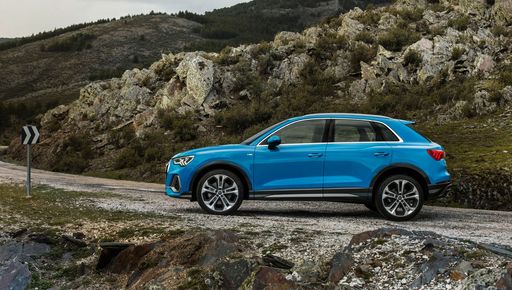
Audi Q3

5 (1 Reviews)
rate
  • noticeably cheaper
  • considerably more efficient
  • visibly more electric range
  • somewhat lighter
  • very slightly more trunk space
details

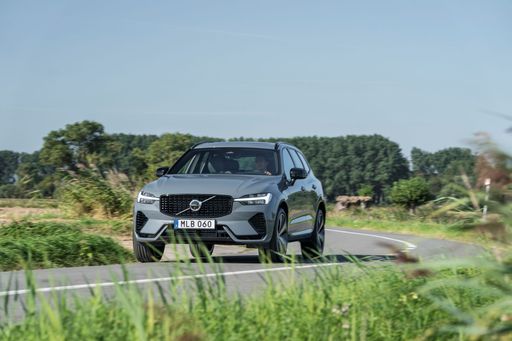
Volvo XC60

4.7 (7 Reviews)
rate
  • significantly more power
  • somewhat quicker 0–100 km/h
details

All details on performance, efficiency, range and trunk space can be found in the technical comparison below – including user reviews for both models.

By Achim Sedelmaier

Q3

The Battle of Compact Luxury SUVs: Audi Q3 vs. Volvo XC60

In today’s automotive market, compact luxury SUVs are coveted for their perfect balance of style, comfort, and performance. Two prominent contenders in this category are the Audi Q3 and the Volvo XC60. Both models, updated for 2024, bring their own blend of technology and innovation to the table. Let’s delve into the specifics to find out which one better suits your driving preferences.
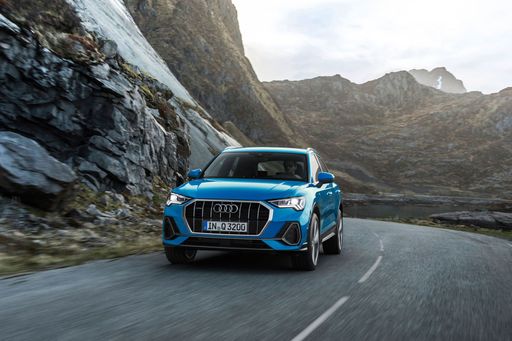
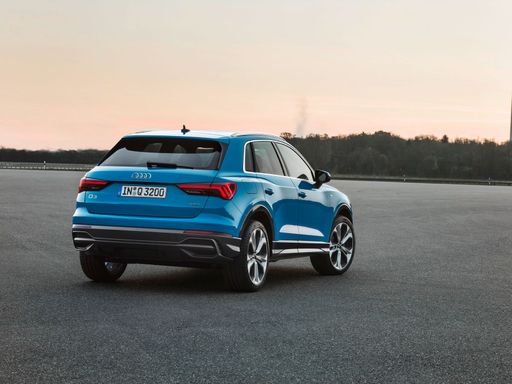
XC60

Performance and Engine Options

The Audi Q3 comes with a versatile range of engine options, including both petrol and diesel variants. Buyers can choose from power outputs ranging from 150 to 245 HP, with torque spanning 250 to 370 Nm. The Q3 can accelerate from 0-100 km/h in 5.8 to 9.5 seconds, depending on the engine configuration. Its maximum speed peaks at 237 km/h. With a transmission choice between a manual gearbox and a dual-clutch automatic, drivers have the option of a more personalized driving experience.

On the other hand, the Volvo XC60 provides a contemporary edge with its petrol mild hybrid and plug-in hybrid options. The power range is slightly higher, stretching from 250 to 455 HP, and torque ranges from 350 to 709 Nm. Impressively, the XC60 can sprint from 0-100 km/h in just 4.9 seconds. It features an all-wheel-drive system paired exclusively with an automatic gearbox, ensuring a smooth ride, whether you’re dealing with city commutes or country roads.

Q3

Fuel Efficiency and Environmental Impact

When it comes to fuel consumption, the Audi Q3 varies from 5.5 to 8.5 L/100 km, reflecting the diversity of its powertrain options. CO2 emissions range between 143 and 193 g/km, which falls within the E to G efficiency classes.

In contrast, the Volvo XC60 offers a significant advantage with its Plug-In Hybrid variant, boasting a consumption rate of just 0.9 L/100 km combined with an electric range of up to 80 km. CO2 emissions are notably low, at 22 g/km for the plug-in model, falling in the B efficiency class, making it an eco-conscious choice.

XC60

Interior Comfort and Space

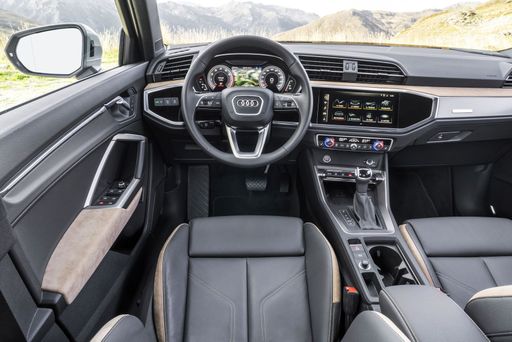
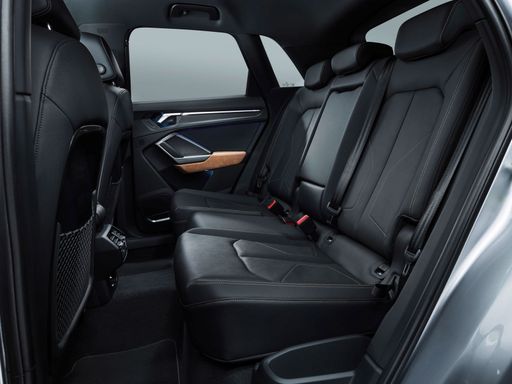
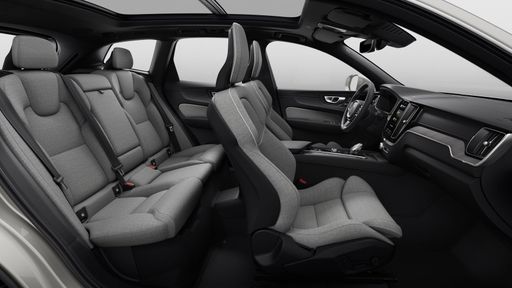
Both SUVs provide spacious interiors with seating for five and host a plethora of luxury features. The Audi Q3 offers a trunk capacity of 530 liters, accommodating 475 to 495 kg of payload, depending on the configuration. It maintains a sleek profile with a length of roughly 4,500 mm, width of 1,843 mm, and height of 1,567 mm.

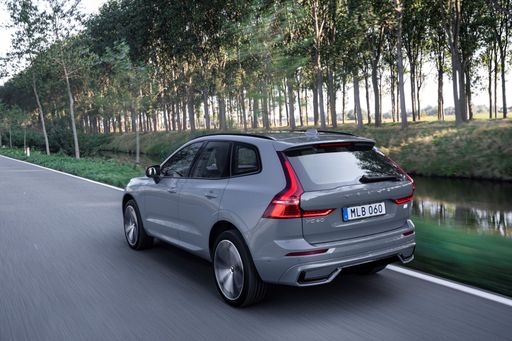
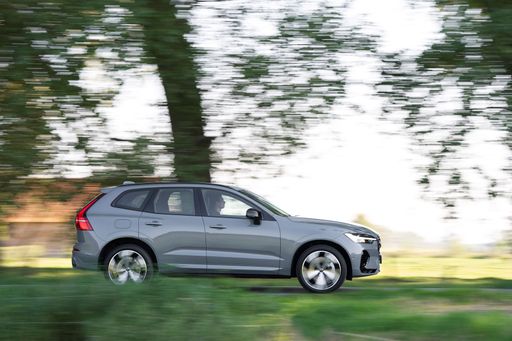
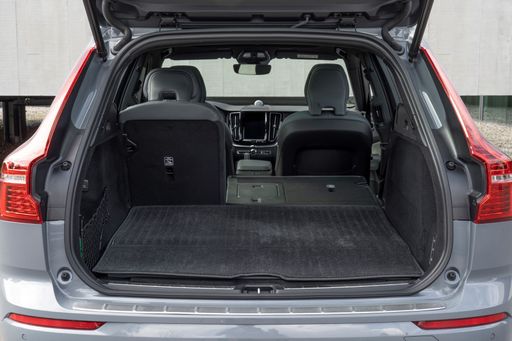
The Volvo XC60, meanwhile, offers a slightly smaller trunk capacity of 468 to 483 liters but compensates with a larger payload capacity of 510 to 550 kg. Its dimensions extend to a length of 4,688 mm, a width of 1,902 mm, and a height of 1,658 mm, demonstrating a more robust presence on the road.

Q3

Technological Innovations

The 2024 Audi Q3 integrates the latest in infotainment and driver assistance systems, featuring a sophisticated Virtual Cockpit and an array of safety features including lane assist and adaptive cruise control.

Volvo, known for its safety innovations, packs the XC60 with state-of-the-art tech, including a user-friendly touchscreen interface and advanced safety systems such as pilot assist and collision avoidance technology.

XC60

Conclusion

Choosing between the Audi Q3 and the Volvo XC60 boils down to personal preferences and priorities. The Audi Q3 stands out with a broader range of powertrain choices, offering a combination of traditional driving feel and modern efficiency. Conversely, the Volvo XC60 sets itself apart with superior fuel efficiency, particularly in its plug-in hybrid variant, along with advanced safety features.

Both vehicles deliver on luxury and performance, ensuring that prospective buyers will enjoy their ride regardless of the choice. As always, a test drive of both models is recommended to truly experience their unique qualities firsthand.

Here’s where it gets real: The technical differences in detail

Q3

Costs and Efficiency:

Price and efficiency are often the first things buyers look at. Here it becomes clear which model has the long-term edge – whether at the pump, the plug, or in purchase price.

Audi Q3 is noticeably cheaper – starting at 38,200 £ , while the Volvo XC60 costs 49,200 £ . That’s a price difference of around 10,963 £.

Fuel consumption also shows a difference: the Audi Q3 uses 1.7 L/100km and is considerably more efficient than the Volvo XC60 with 2.8 L/100km. The difference is about 1.1 L/100km.

As for electric range, the Audi Q3 offers visibly more range – reaching up to 119 km, about 37 km more than the Volvo XC60.

XC60

Engine and Performance:

Power, torque and acceleration say a lot about how a car feels on the road. This is where you see which model delivers more driving dynamics.

When it comes to engine power, the Volvo XC60 offers significantly more power – delivering 455 HP compared to 272 HP. That’s roughly 183 HP more horsepower.

When accelerating from 0 to 100 km/h, the Volvo XC60 is somewhat quicker – completing the sprint in 4.9 s, while the Audi Q3 takes 5.7 s. That’s about 0.8 s quicker.

There’s also a difference in torque: the Volvo XC60 delivers clearly more torque with 709 Nm compared to 400 Nm. That’s about 309 Nm more.

Q3

Space and Everyday Use:

Cabin size, boot volume and payload all play a role in everyday practicality. Here, comfort and flexibility make the difference.

Both vehicles offer seating for 5 people.

In terms of curb weight, Audi Q3 is somewhat lighter – 1,635 kg compared to 1,900 kg. The difference is around 265 kg.

Looking at boot space, the Audi Q3 offers very slightly more boot space – 488 L compared to 483 L. That’s a difference of about 5 L.

When it comes to payload, the Volvo XC60 carries very slightly more – 550 kg compared to 535 kg. That’s a difference of about 15 kg.

Who wins the race in the data check?

The Audi Q3 stands well ahead of its rival in the objective data comparison.
This result only shows which model scores more points on paper – not which of the two cars feels right for you.

from £38,200
Q3

Audi Q3

  • Engine Type : Petrol MHEV, Petrol, Plugin Hybrid, Diesel
  • Transmission : Automatic
  • Drive Type : Front-Wheel Drive, All-Wheel Drive
  • Power HP : 150 - 272 HP
  • Consumption L/100km : 1.7 - 8.6 L/100km
  • Electric Range : 118 - 119 km
Audi Q3
Volvo XC60

Costs and Consumption

View detailed analysis

Engine and Performance

View detailed analysis

Dimensions and Body

View detailed analysis

Audi Q3

The Audi Q3 feels like a grown-up compact SUV with premium polish and city-friendly agility, the sort of car that makes weekend escapes and daily commutes equally satisfying. Inside, you get quality materials and smart packaging that keep things practical without skimping on style, so it’s an easy pick for buyers who want luxury without the drama.

details

Volvo XC60

The Volvo XC60 blends Scandinavian calm with confident presence, offering a cabin that feels plush without shouting for attention. It’s a smart pick for buyers after a composed ride, clever practicality and thoughtful safety touches — it even makes running the family shuttle feel almost serene, which is a small miracle.

details
Audi Q3
Volvo XC60

Costs and Consumption

Price
38,200 - 52,900 £
Price
49,200 - 75,100 £
Consumption L/100km
1.7 - 8.6 L/100km
Consumption L/100km
2.8 - 7.5 L/100km
Consumption kWh/100km
-
Consumption kWh/100km
-
Electric Range
118 - 119 km
Electric Range
74 - 82 km
Battery Capacity
-
Battery Capacity
-
co2
39 - 195 g/km
co2
64 - 169 g/km
Fuel tank capacity
-
Fuel tank capacity
71 L

Dimensions and Body

Body Type
SUV
Body Type
SUV
Seats
5
Seats
5
Doors
-
Doors
5
Curb weight
1,635 - 1,900 kg
Curb weight
1,900 - 2,150 kg
Trunk capacity
375 - 488 L
Trunk capacity
468 - 483 L
Length
-
Length
4,708 mm
Width
1,859 mm
Width
1,902 mm
Height
-
Height
1,655 mm
Max trunk capacity
-
Max trunk capacity
1,543 L
Payload
505 - 535 kg
Payload
510 - 550 kg

Engine and Performance

Engine Type
Petrol MHEV, Petrol, Plugin Hybrid, Diesel
Engine Type
Petrol MHEV, Plugin Hybrid
Transmission
Automatic
Transmission
Automatic
Transmission Detail
Dual-Clutch Automatic
Transmission Detail
Automatic Gearbox
Drive Type
Front-Wheel Drive, All-Wheel Drive
Drive Type
All-Wheel Drive
Power HP
150 - 272 HP
Power HP
250 - 455 HP
Acceleration 0-100km/h
5.7 - 9.2 s
Acceleration 0-100km/h
4.9 - 6.9 s
Max Speed
-
Max Speed
180 km/h
Torque
250 - 400 Nm
Torque
350 - 709 Nm
Number of Cylinders
4
Number of Cylinders
4
Power kW
110 - 200 kW
Power kW
184 - 335 kW
Engine capacity
1,498 - 1,984 cm3
Engine capacity
1,969 cm3

General

Model Year
2025
Model Year
2025
CO2 Efficiency Class
E, G, B
CO2 Efficiency Class
F, B
Brand
Audi
Brand
Volvo
DriveDuel uses data analysis and artificial intelligence to evaluate vehicle data and create content. Content is regularly reviewed and improved. The displayed prices are estimates based on German list prices, adjusted to the respective country’s VAT. Country-specific registration taxes are not included. This information is not legally binding.