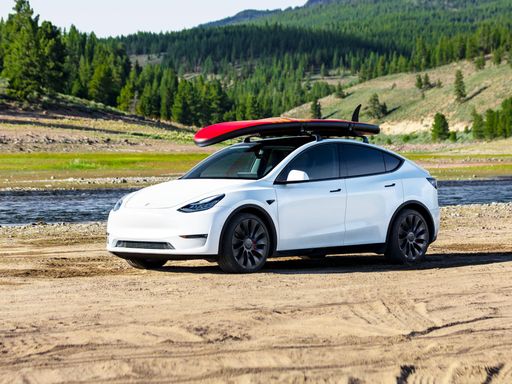
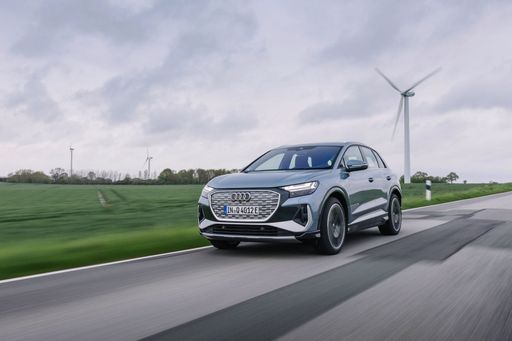
Price and efficiency are often the first things buyers look at. Here it becomes clear which model has the long-term edge – whether at the pump, the plug, or in purchase price.
Tesla Model Y has a to a small extent advantage in terms of price – it starts at 34300 £, while the Audi Q4 e-tron costs 39600 £. That’s a price difference of around 5280 £.
In terms of energy consumption, the advantage goes to the Tesla Model Y: with 13.10 kWh per 100 km, it’s clearly perceptible more efficient than the Audi Q4 e-tron with 15.90 kWh. That’s a difference of about 2.80 kWh.
As for range, the Tesla Model Y performs slightly better – achieving up to 622 km, about 68 km more than the Audi Q4 e-tron.
Power, torque and acceleration say a lot about how a car feels on the road. This is where you see which model delivers more driving dynamics.
When it comes to engine power, the Tesla Model Y has a decisively edge – offering 627 HP compared to 340 HP. That’s roughly 287 HP more horsepower.
In acceleration from 0 to 100 km/h, the Tesla Model Y is decisively quicker – completing the sprint in 3.50 s, while the Audi Q4 e-tron takes 5.40 s. That’s about 1.90 s faster.
In terms of top speed, the Tesla Model Y performs clearly perceptible better – reaching 250 km/h, while the Audi Q4 e-tron tops out at 180 km/h. The difference is around 70 km/h.
There’s also a difference in torque: Audi Q4 e-tron pulls clearly perceptible stronger with 679 Nm compared to 493 Nm. That’s about 186 Nm difference.
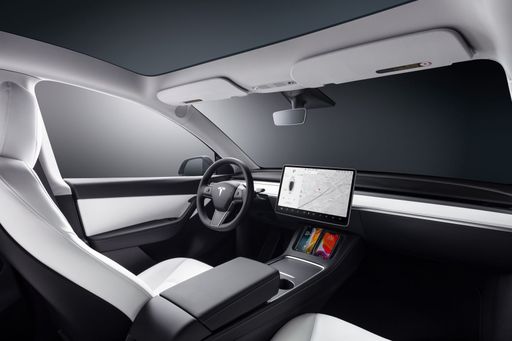
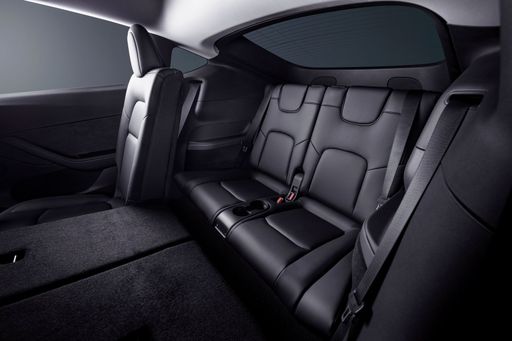
Beyond pure performance, interior space and usability matter most in daily life. This is where you see which car is more practical and versatile.
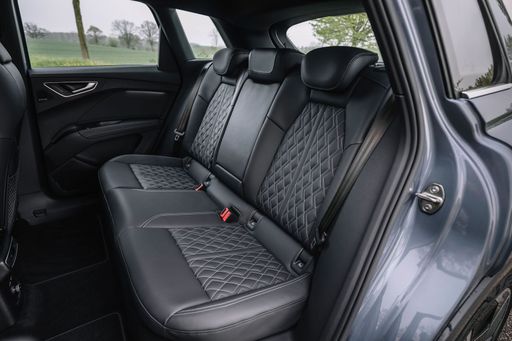
Seats: offers more seating capacity – vs .
In curb weight, Tesla Model Y is slight lighter – 1976 kg compared to 2035 kg. The difference is around 59 kg.
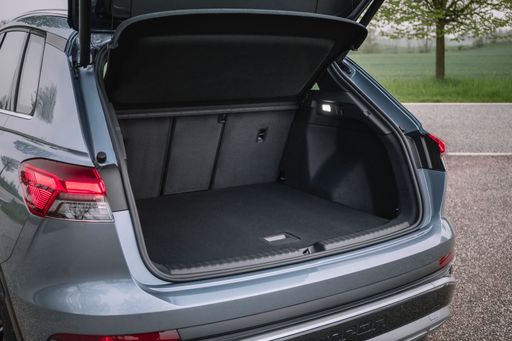
In terms of boot space, the Tesla Model Y offers clearly perceptible more room – 822 L compared to 535 L. That’s a difference of about 287 L.
In maximum load capacity, the Tesla Model Y performs evident better – up to 2138 L, which is about 648 L more than the Audi Q4 e-tron.
When it comes to payload, Audi Q4 e-tron barely noticeable takes the win – 515 kg compared to 472 kg. That’s a difference of about 43 kg.
Overall, the Tesla Model Y shows itself to be wins the duel decisively and secures the title of DriveDuel Champion.
It convinces with the more balanced overall package and proves to be the more versatile choice for everyday use.
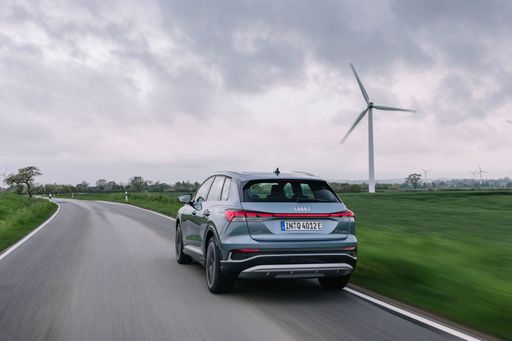
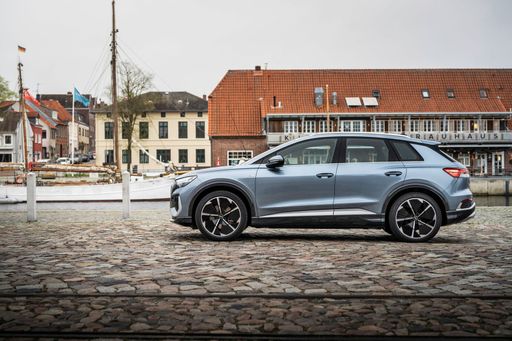
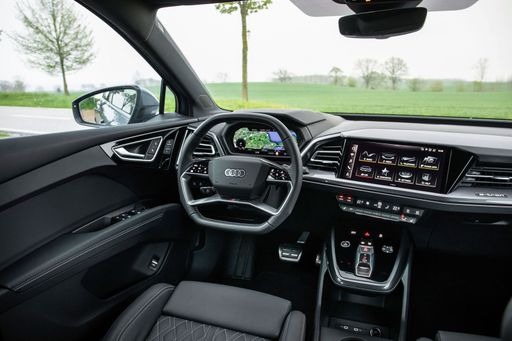
The Audi Q4 e-tron brings Audi polish into the electric crossover scene, pairing a sleek exterior with a refined, airy interior that makes everyday driving feel distinctly premium. It’s an easy-to-live-with EV that balances comfort and real-world usability with intuitive tech, making it a smart choice for buyers who want electric mobility without giving up Audi character — and yes, it still looks good in the driveway.
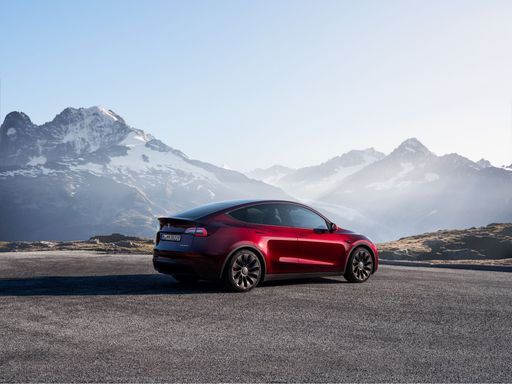
detailsThe Tesla Model Y blends SUV practicality with sports-car poke, wrapping a roomy, minimalist cabin and handy hatch into a slick, aerodynamic package that feels more Silicon Valley gadget than garage ornament. It’s an ideal pick for buyers who want effortless electric driving, regular software improvements and access to Tesla’s convenient charging network, though style-conscious shoppers should know it’s more about tech and efficiency than classic luxury.
details|
|
|
|
|
|
Costs and Consumption |
|
|---|---|
|
Price
39600 - 58800 £
|
Price
34300 - 53100 £
|
|
Consumption L/100km
-
|
Consumption L/100km
-
|
|
Consumption kWh/100km
15.9 - 17.4 kWh
|
Consumption kWh/100km
13.1 - 16.2 kWh
|
|
Electric Range
406 - 554 km
|
Electric Range
534 - 622 km
|
|
Battery Capacity
59 - 77 kWh
|
Battery Capacity
64.5 - 85 kWh
|
|
co2
0 g/km
|
co2
0 g/km
|
|
Fuel tank capacity
-
|
Fuel tank capacity
-
|
Dimensions and Body |
|
|---|---|
|
Body Type
SUV
|
Body Type
SUV
|
|
Seats
5
|
Seats
5
|
|
Doors
5
|
Doors
5
|
|
Curb weight
2035 - 2235 kg
|
Curb weight
1976 - 2108 kg
|
|
Trunk capacity
520 - 535 L
|
Trunk capacity
822 L
|
|
Length
4588 mm
|
Length
4790 - 4797 mm
|
|
Width
1865 mm
|
Width
1921 mm
|
|
Height
1614 - 1632 mm
|
Height
1611 - 1624 mm
|
|
Max trunk capacity
1460 - 1490 L
|
Max trunk capacity
2022 - 2138 L
|
|
Payload
505 - 515 kg
|
Payload
440 - 472 kg
|
Engine and Performance |
|
|---|---|
|
Engine Type
Electric
|
Engine Type
Electric
|
|
Transmission
Automatic
|
Transmission
Automatic
|
|
Transmission Detail
Reduction Gearbox
|
Transmission Detail
Reduction Gearbox
|
|
Drive Type
Rear-Wheel Drive, All-Wheel Drive
|
Drive Type
All-Wheel Drive, Rear-Wheel Drive
|
|
Power HP
204 - 340 HP
|
Power HP
299 - 627 HP
|
|
Acceleration 0-100km/h
5.4 - 8.1 s
|
Acceleration 0-100km/h
3.5 - 7.2 s
|
|
Max Speed
160 - 180 km/h
|
Max Speed
201 - 250 km/h
|
|
Torque
310 - 679 Nm
|
Torque
420 - 493 Nm
|
|
Number of Cylinders
-
|
Number of Cylinders
-
|
|
Power kW
150 - 250 kW
|
Power kW
220 - 461 kW
|
|
Engine capacity
-
|
Engine capacity
-
|
General |
|
|---|---|
|
Model Year
2023 - 2025
|
Model Year
2025
|
|
CO2 Efficiency Class
A
|
CO2 Efficiency Class
A
|
|
Brand
Audi
|
Brand
Tesla
|
The Audi Q4 e-tron is offered with Rear-Wheel Drive or All-Wheel Drive.
The prices and data displayed are estimates based on German list prices and may vary by country. This information is not legally binding.