@ Audi AG
@ Volkswagen AG / VW Media
VS

Audi Q4 e-tron vs VW Tayron – Which one offers the better deal?

Two cars, one duel: Audi Q4 e-tron meets VW Tayron.
Which one wins in performance, efficiency and value for money? Find out now!

Audi Q4 e-tron

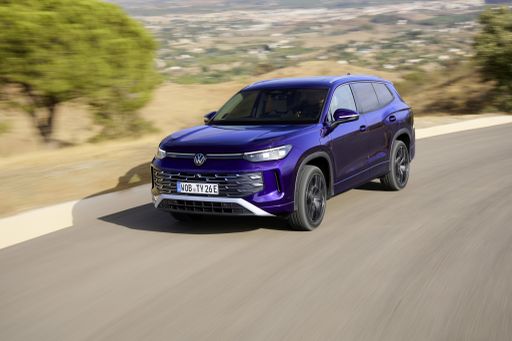
VW Tayron

Q4 e-tron @ Audi AG

The automotive market continues to evolve, particularly in the realm of electric and hybrid vehicles. In this ongoing shift, the Audi Q4 e-tron and the VW Tayron emerge as two compelling options within the SUV segment. Offering distinct features, innovative technologies, and varying performance metrics, these vehicles cater to different consumer needs. Let's delve deeper into their technical prowess and innovative aspects.
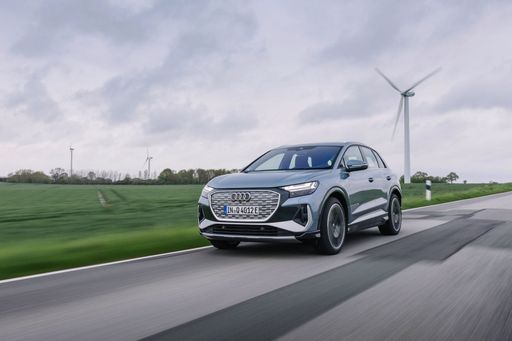
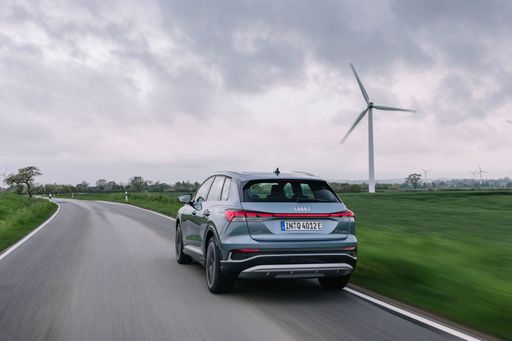
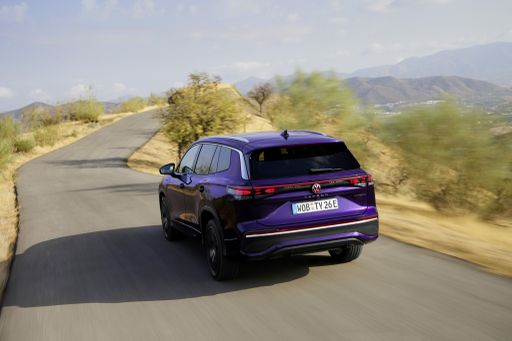
Tayron @ Volkswagen AG / VW Media

Design and Dimensions

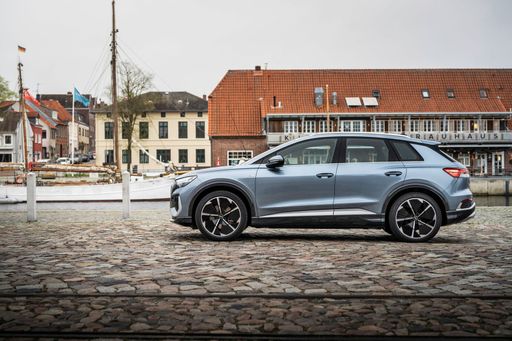
Both the Audi Q4 e-tron and the VW Tayron are designed with modern aesthetics in mind. The Q4 e-tron measures 4588 mm in length, 1865 mm in width, and stands 1632 mm tall. With a sleek and dynamic silhouette, it reflects Audi’s signature styling cues and premium feel. Meanwhile, the VW Tayron is slightly larger, stretching 4792 mm in length, 1866 mm in width, and standing at 1668 mm in height. Both vehicles accommodate five passengers comfortably.

Q4 e-tron @ Audi AG

Powertrain Options

The Q4 e-tron is fully electric, offering multiple variants with power outputs ranging from 170 HP to an exhilarating 340 HP. It features both rear-wheel drive and all-wheel drive options, with impressive acceleration capabilities of 0-100 km/h in as little as 5.4 seconds. In contrast, the VW Tayron provides a variety of powertrain options including petrol, diesel, mild-hybrid, and plug-in hybrid variants, with power outputs spanning from 150 HP up to 272 HP and acceleration times ranging from 6.1 to 9.7 seconds. While the Q4 e-tron champions zero emissions, the Tayron offers versatility in fuel types for those who prefer traditional combustion engines.

Tayron @ Volkswagen AG / VW Media

Battery and Range

When it comes to battery capacity, the Audi Q4 e-tron excels with choices of 52 kWh and 77 kWh options, granting it an electric range of up to 554 km. Its energy efficiency is profound, with consumption rated around 15.9 - 17.4 kWh/100 km, making it a smart choice for eco-conscious drivers. On the other hand, the VW Tayron incorporates a smaller 19.7 kWh battery for its hybrid versions, allowing for an electric range of about 126 km, alongside traditional petrol and diesel options that exhibit average fuel consumption of 5.4 to 7.8 L/100 km. Though the Tayron may not provide the same range in electric mode as the Q4 e-tron, it brings the convenience of multiple fuel sources.

Q4 e-tron @ Audi AG

Interior Tech Features

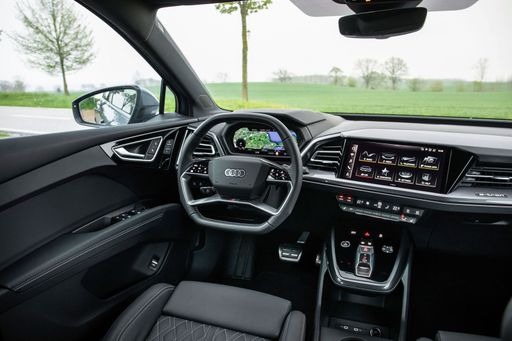
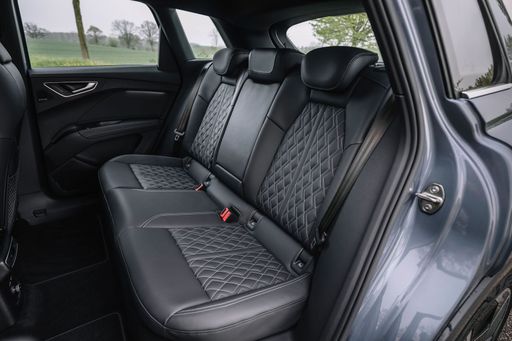
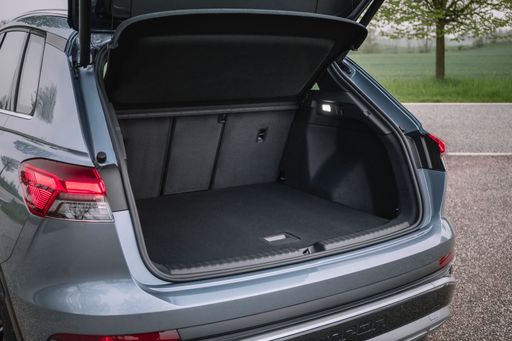
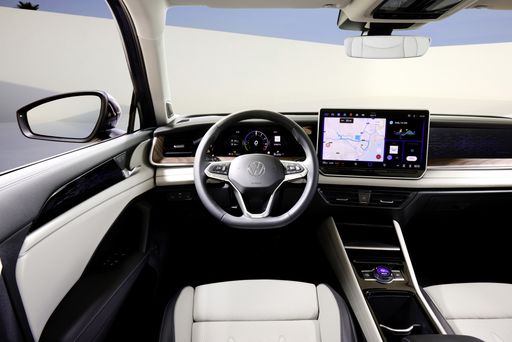
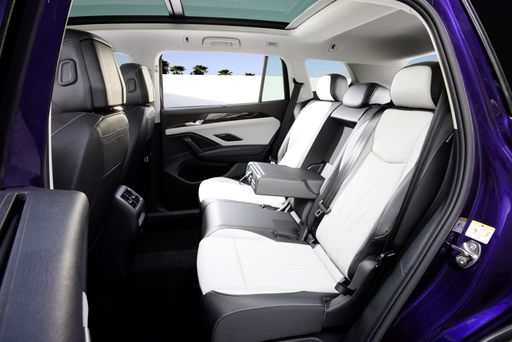
Inside the Audi Q4 e-tron, premium materials blend with cutting-edge technology. It offers a digital cockpit with high-resolution displays, intuitive MMI infotainment, and an array of driver-assistance systems that enhance safety and comfort. The cabin provides a spacious experience with ample trunk space of up to 535 liters, appealing to families and adventure-seekers alike. In comparison, the VW Tayron offers a robust interior equipped with VW's latest infotainment system, voice control, and a comfortable space with up to 885 liters of trunk capacity. Both vehicles provide ample technology, yet the Q4 e-tron leans towards a more luxurious presentation.

Tayron @ Volkswagen AG / VW Media

Driving Dynamics

As for driving experience, the Audi Q4 e-tron promises a smooth and quiet ride, characteristic of an electric vehicle with an emphasis on dynamic handling, especially in its all-wheel drive configurations. Similarly, the VW Tayron delivers a composed driving experience with sportier versions providing sharper handling, particularly with its all-wheel drive variants. Both cars focus on comfort, making them suitable for both city commutes and longer journeys.

Q4 e-tron @ Audi AG

Conclusion: Which SUV is Right for You?

Choosing between the Audi Q4 e-tron and the VW Tayron comes down to individual preferences and driving needs. For those prioritizing a fully electric vehicle with advanced tech and impressive range, the Q4 e-tron is certainly a strong contender. Conversely, if versatility and multiple fuel options are critical, alongside robust performance in various configurations, then the VW Tayron would be the most appealing choice. Ultimately, both SUVs reflect their respective brands' commitment to innovation and excellence, making either a great addition to the modern automotive landscape.

Here’s where it gets real: The technical differences in detail

Tayron @ Volkswagen AG / VW Media

Costs and Efficiency:

Price and efficiency are key factors when choosing a car – and this is often where the real differences emerge.

Audi Q4 e-tron has a barely noticeable advantage in terms of price – it starts at 39600 £, while the VW Tayron costs 39600 £. That’s a price difference of around 55 £.

As for range, the Audi Q4 e-tron performs significantly better – achieving up to 554 km, about 431 km more than the VW Tayron.

Q4 e-tron @ Audi AG

Engine and Performance:

Under the bonnet, it becomes clear which model is tuned for sportiness and which one takes the lead when you hit the accelerator.

When it comes to engine power, the Audi Q4 e-tron has a a bit edge – offering 340 HP compared to 272 HP. That’s roughly 68 HP more horsepower.

In acceleration from 0 to 100 km/h, the Audi Q4 e-tron is slightly quicker – completing the sprint in 5.40 s, while the VW Tayron takes 6.10 s. That’s about 0.70 s faster.

In terms of top speed, the VW Tayron performs noticeable better – reaching 240 km/h, while the Audi Q4 e-tron tops out at 180 km/h. The difference is around 60 km/h.

There’s also a difference in torque: Audi Q4 e-tron pulls significantly stronger with 679 Nm compared to 400 Nm. That’s about 279 Nm difference.

Space and Everyday Use:

Cabin size, boot volume and payload all play a role in everyday practicality. Here, comfort and flexibility make the difference.

Both vehicles offer seating for 5 people.

In curb weight, VW Tayron is distinct lighter – 1682 kg compared to 2035 kg. The difference is around 353 kg.

In terms of boot space, the VW Tayron offers clearly perceptible more room – 885 L compared to 535 L. That’s a difference of about 350 L.

In maximum load capacity, the VW Tayron performs clearly perceptible better – up to 2090 L, which is about 600 L more than the Audi Q4 e-tron.

When it comes to payload, VW Tayron slight takes the win – 566 kg compared to 515 kg. That’s a difference of about 51 kg.

Who wins the race?

The Audi Q4 e-tron proves to be wins the duel decisively and therefore becomes our DriveDuel Champion!
Audi Q4 e-tron is the better all-rounder in this comparison.

Audi Q4 e-tron
VW Tayron

Costs and Consumption

View detailed analysis

Engine and Performance

View detailed analysis

Dimensions and Body

View detailed analysis
from about £39,600
Q4 e-tron @ Audi AG

Audi Q4 e-tron

  • Engine Type : Electric
  • Transmission : Automatic
  • Drive Type : Rear-Wheel Drive, All-Wheel Drive
  • Power HP : 204 - 340 HP
  • Consumption kWh/100km : 15.9 - 17.4 kWh
  • Electric Range : 406 - 554 km

Audi Q4 e-tron

The Audi Q4 e-tron brings Audi polish into the electric crossover scene, pairing a sleek exterior with a refined, airy interior that makes everyday driving feel distinctly premium. It’s an easy-to-live-with EV that balances comfort and real-world usability with intuitive tech, making it a smart choice for buyers who want electric mobility without giving up Audi character — and yes, it still looks good in the driveway.

details

VW Tayron

The VW Tayron is Volkswagen's roomy, no-nonsense SUV that pairs clean, familiar styling with a practical cabin built for families and everyday use. It rides comfortably, packs sensible tech and creature comforts, and feels like the sensible sweater of SUVs for buyers who prefer steady value over headline-grabbing drama.

details
Audi Q4 e-tron
VW Tayron
Q4 e-tron @ Audi AG
Tayron @ Volkswagen AG / VW Media

Costs and Consumption

Price
39600 - 58800 £
Price
39600 - 53300 £
Consumption L/100km
-
Consumption L/100km
1.5 - 8.5 L
Consumption kWh/100km
15.9 - 17.4 kWh
Consumption kWh/100km
-
Electric Range
406 - 554 km
Electric Range
116 - 123 km
Battery Capacity
59 - 77 kWh
Battery Capacity
19.70 kWh
co2
0 g/km
co2
33 - 192 g/km
Fuel tank capacity
-
Fuel tank capacity
45 - 58 L

Dimensions and Body

Body Type
SUV
Body Type
SUV
Seats
5
Seats
5
Doors
5
Doors
5
Curb weight
2035 - 2235 kg
Curb weight
1682 - 1948 kg
Trunk capacity
520 - 535 L
Trunk capacity
705 - 885 L
Length
4588 mm
Length
4792 mm
Width
1865 mm
Width
1853 - 1866 mm
Height
1614 - 1632 mm
Height
1666 - 1668 mm
Max trunk capacity
1460 - 1490 L
Max trunk capacity
1915 - 2090 L
Payload
505 - 515 kg
Payload
489 - 566 kg

Engine and Performance

Engine Type
Electric
Engine Type
Petrol MHEV, Diesel, Petrol, Plugin Hybrid
Transmission
Automatic
Transmission
Automatic
Transmission Detail
Reduction Gearbox
Transmission Detail
Dual-Clutch Automatic
Drive Type
Rear-Wheel Drive, All-Wheel Drive
Drive Type
Front-Wheel Drive, All-Wheel Drive
Power HP
204 - 340 HP
Power HP
150 - 272 HP
Acceleration 0-100km/h
5.4 - 8.1 s
Acceleration 0-100km/h
6.1 - 9.7 s
Max Speed
160 - 180 km/h
Max Speed
204 - 240 km/h
Torque
310 - 679 Nm
Torque
250 - 400 Nm
Number of Cylinders
-
Number of Cylinders
4
Power kW
150 - 250 kW
Power kW
110 - 200 kW
Engine capacity
-
Engine capacity
1498 - 1984 cm3

General

Model Year
2023 - 2025
Model Year
2025
CO2 Efficiency Class
A
CO2 Efficiency Class
E, F, G, B
Brand
Audi
Brand
VW
What drive types are available for the Audi Q4 e-tron?

The Audi Q4 e-tron is offered with Rear-Wheel Drive or All-Wheel Drive.

The prices and data displayed are estimates based on German list prices and may vary by country. This information is not legally binding.

do not click