VS

Audi Q6 e-tron vs Porsche Macan comparison

Compare performance (490 HP vs 571 HP), boot space and price (54,400 £ vs 89,300 £ ) at a glance. Find out which car is the better choice for you – Audi Q6 e-tron or Porsche Macan?

Audi Q6 e-tron vs Porsche Macan: Key differences

Audi Q6 e-tron

4.6 (4 Reviews)
rate
  • significantly cheaper
  • clearly more efficient
  • slightly more electric range
  • moderately lighter
  • only slightly more trunk space
details

Porsche Macan

  • somewhat more power
  • moderately quicker 0–100 km/h
details

All details on performance, efficiency, range and trunk space can be found in the technical comparison below – including user reviews for both models.

By Achim Sedelmaier

Q6 e-tron

Introduction: A Clash of Luxury SUVs

In the world of electric luxury SUVs, the competition is heating up between two of the most illustrious names in the automotive industry: Audi and Porsche. The Audi Q6 e-tron and the Porsche Macan are both designed to deliver performance, comfort, and cutting-edge technology. This article will delve into a comprehensive comparison of these two models, highlighting their technical specifications, innovations, and what sets them apart in the electric vehicle landscape.
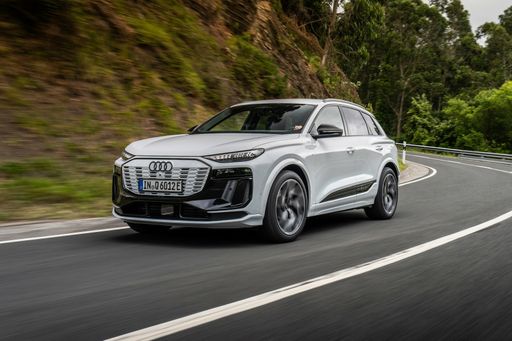
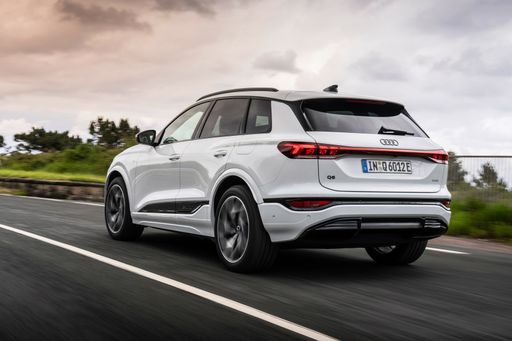
Macan

Powertrain and Performance

When it comes to performance, both the Audi Q6 e-tron and the Porsche Macan offer impressive numbers that cater to driving enthusiasts.

The Audi Q6 e-tron is available with multiple power outputs ranging from 292 HP to a whopping 515 HP. It features both rear-wheel drive and all-wheel drive configurations, allowing drivers to choose based on their preferences. The 0-100 km/h acceleration times vary from 7 seconds for the base model to as quick as 4.3 seconds for the high-performance variant, making it a capable contender in the performance arena.

On the other hand, the Porsche Macan steps up the game with its power outputs ranging from 360 HP to 639 HP. It too offers both rear-wheel and all-wheel drive options and outshines the Q6 e-tron in acceleration, with times starting at 5.7 seconds for the base model and reaching an astonishing 3.3 seconds for the top-spec version. This makes the Macan a more exhilarating option for those who prioritize speed.

Q6 e-tron

Battery and Efficiency

Both models are equipped with advanced battery technologies that help them achieve impressive electric ranges.

The Audi Q6 e-tron boasts a battery capacity of 75.8 kWh and goes up to 94.9 kWh. Depending on the configuration, its electric range can stretch from 482 km to 656 km. The energy consumption ranges from 15.6 kWh/100km to 18.9 kWh/100km, ensuring that efficiency is a key focus for the brand.

In comparison, the Porsche Macan offers a slightly larger battery capacity of 96 kWh. Its electric range is exceptional, reaching up to 644 km. With a consumption rating from 17 kWh/100km to 18.8 kWh/100km, the Macan champions long-distance travels without sacrificing efficiency.

Macan

Design and Interior Quality

Both Audi and Porsche are renowned for their meticulously crafted interiors and sleek designs.

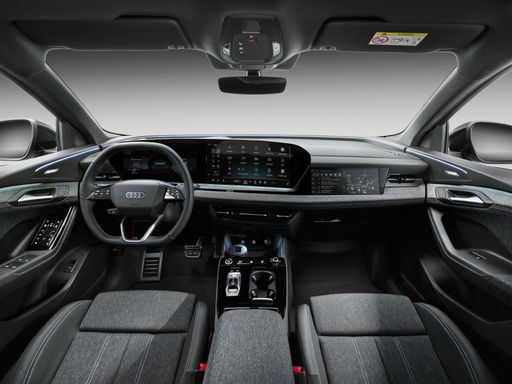
The Audi Q6 e-tron exhibits a sophisticated and modern aesthetic, featuring clean lines and a spacious cabin designed for five passengers. The trunk capacity varies between 499 liters and 526 liters, providing ample space for luggage and everyday belongings. The interior quality is impeccable, with premium materials and cutting-edge technology harmoniously integrated.

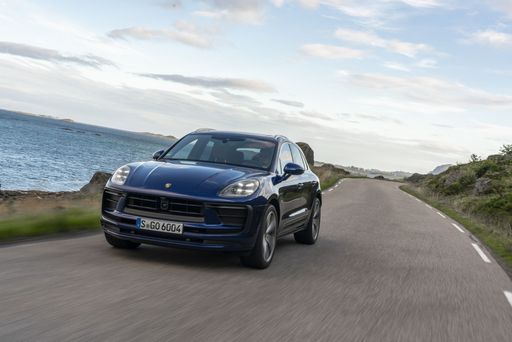
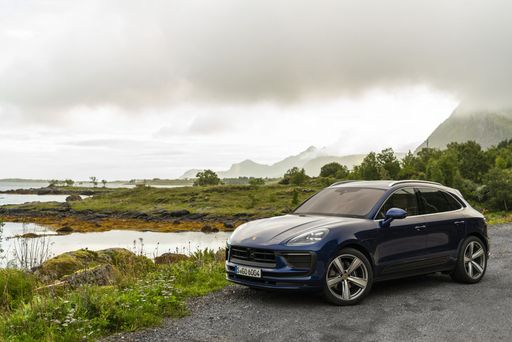
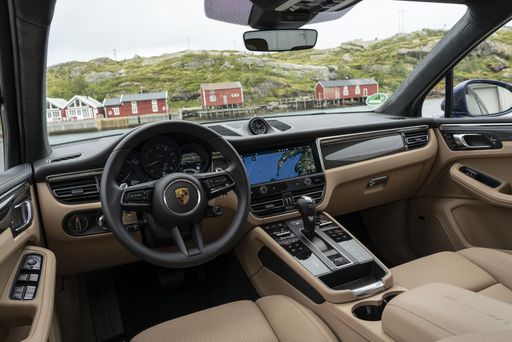
On the flip side, the Porsche Macan retains the brand's sporty DNA, showcasing a more aggressive profile. It also seats five and offers a trunk capacity of 480 to 540 liters, depending on the variant. Inside, Macan enthusiasts will find a driver-focused cockpit featuring high-end materials and a slew of technological innovations, making it a thrill to be behind the wheel.

Q6 e-tron

Innovations and Technology

Both Audi and Porsche have infused their latest models with an array of technological advancements.

The Audi Q6 e-tron is equipped with an advanced infotainment system that includes a large touchscreen interface, voice control, and seamless smartphone connectivity. Enhanced driver assistance features, such as adaptive cruise control and lane-keeping assist, are also available to ensure a secure driving experience.

Meanwhile, the Porsche Macan excels in delivering a performance-oriented technological experience. Its infotainment system is user-friendly and features high-resolution graphics, offering connectivity and a range of apps. Porsche's active safety technologies, like adaptive cruise control and a comprehensive suite of driver aides, enhance the driving experience while ensuring safety on the road.

Macan

Conclusion: Which SUV Comes Out on Top?

In the ever-evolving landscape of electric luxury SUVs, the Audi Q6 e-tron and the Porsche Macan both represent compelling choices for discerning buyers. The Q6 e-tron excels in efficiency and range, making it a superb option for long-distance travelers, while the Macan caters to performance and driving enthusiasts with its quicker acceleration and dynamic driving experience.

Ultimately, the choice between the Audi Q6 e-tron and the Porsche Macan will boil down to personal preference—whether you prioritize range and advanced technology or sports performance and driving thrill. Either way, both models stand as remarkable achievements in the automotive world, marking a new era of electrified luxury SUVs.

Here’s where it gets real: The technical differences in detail

Q6 e-tron

Costs and Efficiency:

Price and efficiency are key factors when choosing a car – and this is often where the real differences emerge.

Audi Q6 e-tron is significantly cheaper – starting at 54,400 £ , while the Porsche Macan costs 89,300 £ . That’s a price difference of around 34,886 £.

In terms of energy consumption, the Audi Q6 e-tron is clearly more efficient: consuming 15.4 kWh/100km compared to 18.5 kWh/100km for the Porsche Macan. That’s a difference of about 3.1 kWh/100km.

As for electric range, the Audi Q6 e-tron offers slightly more range – reaching up to 668 km, about 83 km more than the Porsche Macan.

Macan

Engine and Performance:

Power, torque and acceleration are the classic benchmarks for car enthusiasts – and here, some clear differences start to show.

When it comes to engine power, the Porsche Macan offers somewhat more power – delivering 571 HP compared to 490 HP. That’s roughly 81 HP more horsepower.

When accelerating from 0 to 100 km/h, the Porsche Macan is moderately quicker – completing the sprint in 3.8 s, while the Audi Q6 e-tron takes 4.4 s. That’s about 0.6 s quicker.

There’s also a difference in torque: the Porsche Macan delivers somewhat more torque with 955 Nm compared to 855 Nm. That’s about 100 Nm more.

Q6 e-tron

Space and Everyday Use:

Beyond pure performance, interior space and usability matter most in daily life. This is where you see which car is more practical and versatile.

Both vehicles offer seating for 5 people.

In terms of curb weight, Audi Q6 e-tron is moderately lighter – 2,200 kg compared to 2,470 kg. The difference is around 270 kg.

Looking at boot space, the Audi Q6 e-tron offers only slightly more boot space – 526 L compared to 476 L. That’s a difference of about 50 L.

When it comes to payload, the Audi Q6 e-tron carries slightly more – 540 kg compared to 470 kg. That’s a difference of about 70 kg.

Who wins the race in the data check?

The Audi Q6 e-tron is clearly superior overall in the objective data comparison.
This result only shows which model scores more points on paper – not which of the two cars feels right for you.

from £54,400
Q6 e-tron

Audi Q6 e-tron

  • Engine Type : Electric
  • Transmission : Automatic
  • Drive Type : Rear-Wheel Drive, All-Wheel Drive
  • Power HP : 252 - 490 HP
  • Consumption kWh/100km : 15.4 - 18.4 kWh/100km
  • Electric Range : 535 - 668 km
Audi Q6 e-tron
Porsche Macan

Costs and Consumption

View detailed analysis

Engine and Performance

View detailed analysis

Dimensions and Body

View detailed analysis

Audi Q6 e-tron

The Audi Q6 e-tron combines Audi's premium design and refined interior with a modern electric drivetrain that delivers effortless, quiet acceleration. It feels spacious and tech-forward, making it a comfortable and confident choice for buyers who want an upscale electric SUV for daily driving and longer trips.

details

Porsche Macan

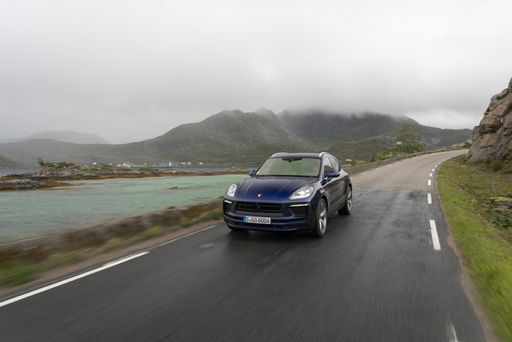
The Porsche Macan feels like a compact sports car dressed in SUV clothes, delivering razor-sharp handling and a cabin that somehow mixes luxury with everyday practicality. For buyers who crave driving thrills without sacrificing usability, the Macan is a rare breed that makes running errands feel like a weekend blast and manages to look smugly good in the process.

details
Audi Q6 e-tron
Porsche Macan

Costs and Consumption

Price
54,400 - 82,500 £
Price
89,300 £
Consumption L/100km
-
Consumption L/100km
-
Consumption kWh/100km
15.4 - 18.4 kWh/100km
Consumption kWh/100km
18.5 kWh/100km
Electric Range
535 - 668 km
Electric Range
585 km
Battery Capacity
-
Battery Capacity
-
co2
0 g/km
co2
0 g/km
Fuel tank capacity
-
Fuel tank capacity
-

Dimensions and Body

Body Type
SUV
Body Type
SUV
Seats
5
Seats
5
Doors
-
Doors
-
Curb weight
2,200 - 2,425 kg
Curb weight
2,470 kg
Trunk capacity
499 - 526 L
Trunk capacity
476 L
Length
-
Length
-
Width
1,939 - 1,965 mm
Width
1,952 mm
Height
-
Height
-
Max trunk capacity
-
Max trunk capacity
-
Payload
540 kg
Payload
470 kg

Engine and Performance

Engine Type
Electric
Engine Type
Electric
Transmission
Automatic
Transmission
Automatic
Transmission Detail
Reduction Gearbox
Transmission Detail
Reduction Gearbox
Drive Type
Rear-Wheel Drive, All-Wheel Drive
Drive Type
All-Wheel Drive
Power HP
252 - 490 HP
Power HP
571 HP
Acceleration 0-100km/h
4.4 - 7.6 s
Acceleration 0-100km/h
3.8 s
Max Speed
-
Max Speed
-
Torque
450 - 855 Nm
Torque
955 Nm
Number of Cylinders
-
Number of Cylinders
-
Power kW
185 - 360 kW
Power kW
420 kW
Engine capacity
-
Engine capacity
-

General

Model Year
2,024 - 2,025
Model Year
2025
CO2 Efficiency Class
A
CO2 Efficiency Class
A
Brand
Audi
Brand
Porsche
DriveDuel uses data analysis and artificial intelligence to evaluate vehicle data and create content. Content is regularly reviewed and improved. The displayed prices are estimates based on German list prices, adjusted to the respective country’s VAT. Country-specific registration taxes are not included. This information is not legally binding.