@ BMW Group Press
@ Ford Motor Company / Ford Media Center
VS

BMW 2 Series Active Tourer vs Ford Kuga – Which model is better for everyday use?

Both models have their strengths – but which one suits you more?
Compare performance, efficiency, price and space directly: BMW 2 Series Active Tourer or Ford Kuga?

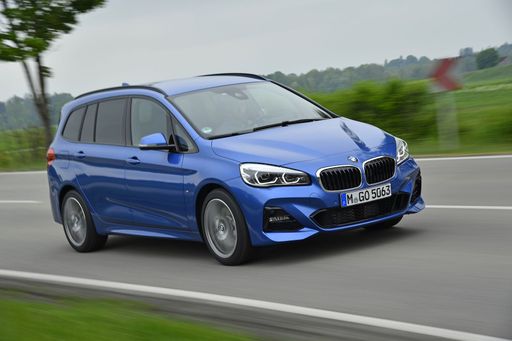
2 Series Active Tourer @ BMW Group Press

BMW 2er Active Tourer vs Ford Kuga: A Comprehensive Comparison

The automotive market is brimming with options for families and individuals seeking versatile vehicles that blend performance with practicality. Two notable contenders in the MPV and SUV categories are the BMW 2er Active Tourer and the Ford Kuga. While both vehicles offer spacious interiors and advanced technologies, they cater to different preferences. This article explores their technical aspects, performance, and innovative features to help you make an informed choice.
Kuga @ Ford Motor Company / Ford Media Center

Design and Dimensions

The BMW 2er Active Tourer, designed primarily as a Multi-Purpose Vehicle (MPV), measures 4,386 mm in length, 1,824 mm in width, and 1,576 mm in height. Its compact design makes it ideal for urban navigation while still providing ample interior space for passengers and cargo. The trunk capacity ranges from 406 to 470 liters, depending on the configuration.

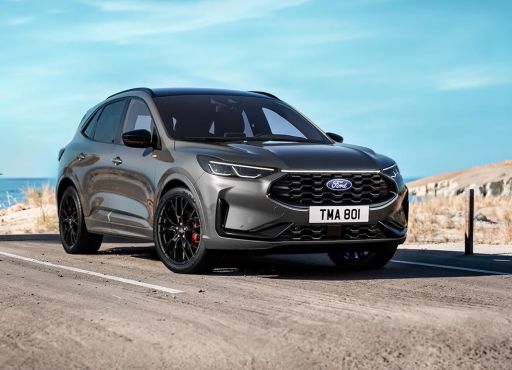
In contrast, the Ford Kuga stands as a more traditional SUV. Available in lengths between 4,604 mm and 4,645 mm, and a width of 1,882 mm, it provides a commanding road presence. The Kuga's trunk capacity is slightly smaller at 412 liters but benefits from flexible seating arrangements, making it versatile for various storage needs.

2 Series Active Tourer @ BMW Group Press

Engine Options and Performance

When it comes to under-the-hood options, the BMW 2er Active Tourer offers a broader range of engines. Available in petrol, diesel, and hybrid configurations, power outputs vary from 122 HP to a staggering 326 HP, accommodating a diverse audience from eco-conscious drivers to those seeking thrill and speed. The Active Tourer's power delivery is smooth, with acceleration from 0-100 km/h in as quick as 5.5 seconds for the top variant.

The Ford Kuga, on the other hand, features petrol and hybrid engines, with power outputs peaking at 243 HP. Acceleration times for the Kuga range from 7.3 to 9.5 seconds, which is respectable, but does not match the range of dynamics offered by the BMW. For drivers who prioritize efficiency, the Kuga's engines provide competitive fuel consumption, with the full hybrid variant achieving an impressive 5.3 L/100 km.

Kuga @ Ford Motor Company / Ford Media Center

Hybrid Innovations

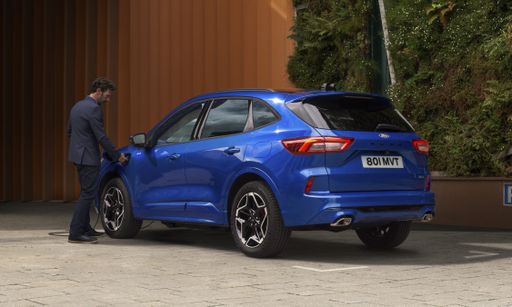
Both models embrace hybrid technology, catering to environmentally-conscious consumers. The 2er Active Tourer boasts plug-in hybrid options with an impressive electric range of up to 88 km and a battery capacity of 14.2 kWh. This allows for short daily commutes to be tackled solely on electric power, reducing emissions significantly.

Meanwhile, the Ford Kuga offers a traditional hybrid and plug-in hybrid variant, but with a lower electric range of 69 km and a battery pack of 14.4 kWh. This suggests that while the Kuga's hybrids can support shorter journeys electrically, the BMW has the upper hand in offering a more extensive electric-only range, emphasizing its advanced hybrid technologies.

2 Series Active Tourer @ BMW Group Press

Technology and Safety Features

Neither brand compromises on technology and safety. The 2er Active Tourer is equipped with a cutting-edge infotainment system, featuring a large display, smartphone integration via Apple CarPlay and Android Auto, and a suite of advanced driver assistance systems. Safety ratings reflect BMW's commitment to building secure vehicles, with features such as forward collision warning and adaptive cruise control.

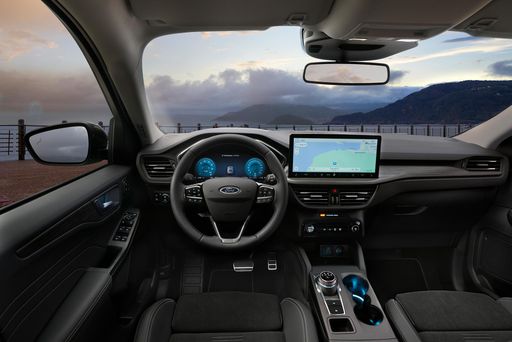
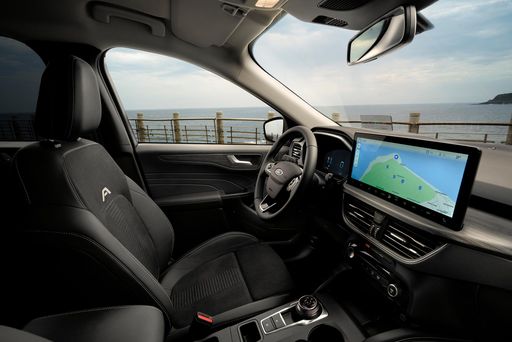
Similarly, the Ford Kuga is loaded with technology, offering a user-friendly touchscreen interface, similar smartphone connectivity, and several driver support features. The Kuga's safety performance is also commendable, with numerous awards for its safety protocols—ensuring peace of mind for families.

Kuga @ Ford Motor Company / Ford Media Center

Driving Experience

The driving experience in the BMW 2er Active Tourer leans towards sporty. With different driving modes and a responsive chassis, it delivers a dynamic ride that enthusiasts will appreciate. Additionally, the option for all-wheel drive enhances stability and traction, particularly in adverse weather conditions.

The Ford Kuga, while not as performance-oriented, provides a comfortable and smooth drive. Its higher seating position offers good visibility, making it a practical choice for daily driving and family excursions. Front-wheel and all-wheel drive options also give drivers the benefit of versatility, though the driving feel may not be as enthusiastic as that of the BMW.

2 Series Active Tourer @ BMW Group Press

Conclusion: Which One Wins?

Choosing between the BMW 2er Active Tourer and the Ford Kuga ultimately comes down to individual preferences and needs. If you are looking for a family-oriented vehicle that does not compromise on performance and technology, the 2er Active Tourer stands out as an excellent option with its impressive range of engines and advanced hybrid capabilities.

However, if you prefer a spacious and practical SUV with solid performance and a feature-rich cabin, the Ford Kuga is a formidable competitor, offering great flexibility. Both vehicles have their unique advantages, making them worthy considerations in today’s competitive market.

Here’s where it gets real: The technical differences in detail

Costs and Efficiency:

Looking at overall running costs, both models reveal some interesting differences in everyday economy.

BMW 2 Series Active Tourer has a somewhat advantage in terms of price – it starts at 31000 £, while the Ford Kuga costs 34200 £. That’s a price difference of around 3214 £.

Fuel consumption also shows a difference: Ford Kuga manages with 2.80 L and is therefore slight more efficient than the BMW 2 Series Active Tourer with 2.90 L. The difference is about 0.10 L per 100 km.

As for range, the BMW 2 Series Active Tourer performs somewhat better – achieving up to 82 km, about 14 km more than the Ford Kuga.

Engine and Performance:

Under the bonnet, it becomes clear which model is tuned for sportiness and which one takes the lead when you hit the accelerator.

When it comes to engine power, the BMW 2 Series Active Tourer has a evident edge – offering 326 HP compared to 243 HP. That’s roughly 83 HP more horsepower.

In acceleration from 0 to 100 km/h, the BMW 2 Series Active Tourer is noticeable quicker – completing the sprint in 5.50 s, while the Ford Kuga takes 7.30 s. That’s about 1.80 s faster.

In terms of top speed, the BMW 2 Series Active Tourer performs to a small extent better – reaching 238 km/h, while the Ford Kuga tops out at 200 km/h. The difference is around 38 km/h.

There’s also a difference in torque: BMW 2 Series Active Tourer pulls clearly stronger with 477 Nm compared to 240 Nm. That’s about 237 Nm difference.

Space and Everyday Use:

Whether family car or daily driver – which one offers more room, flexibility and comfort?

Both vehicles offer seating for 5 people.

In curb weight, Ford Kuga is minimal lighter – 1526 kg compared to 1545 kg. The difference is around 19 kg.

In terms of boot space, the BMW 2 Series Active Tourer offers somewhat more room – 470 L compared to 412 L. That’s a difference of about 58 L.

In maximum load capacity, the Ford Kuga performs hardly perceptible better – up to 1534 L, which is about 79 L more than the BMW 2 Series Active Tourer.

When it comes to payload, Ford Kuga hardly perceptible takes the win – 550 kg compared to 505 kg. That’s a difference of about 45 kg.

Who wins the race?

The BMW 2 Series Active Tourer proves to be dominates this comparison and therefore becomes our DriveDuel Champion!
BMW 2 Series Active Tourer is the better all-rounder in this comparison.

from about £31,000
2 Series Active Tourer @ BMW Group Press

BMW 2 Series Active Tourer

  • Engine Type : Petrol, Petrol MHEV, Diesel, Diesel MHEV, Plugin Hybrid
  • Transmission : Automatic
  • Drive Type : Front-Wheel Drive, All-Wheel Drive
  • Power HP : 122 - 326 HP
  • Consumption L/100km : 2.9 - 6.2 L
  • Electric Range : 82 km

BMW 2 Series Active Tourer

The BMW 2 Series Active Tourer offers a blend of versatility and modern design, making it an ideal choice for drivers seeking practicality without compromising on style. Its spacious interior and advanced technology features ensure a comfortable and connected driving experience. With a focus on efficiency and performance, this vehicle stands out as a refined option in the compact MPV segment.

details

Ford Kuga

3.5 (2)
rate

The Kuga is Ford’s adaptable family SUV that blends usable space with a surprisingly lively driving character, making daily commutes and weekend escapes equally enjoyable. With smart interior packaging, an easy-to-use infotainment setup and composed road manners, it’s a sensible choice for buyers who want a bit of fun without the fuss.

details
BMW 2 Series Active Tourer
Ford Kuga
2 Series Active Tourer @ BMW Group Press
Kuga @ Ford Motor Company / Ford Media Center

Costs and Consumption

Price
31000 - 48000 £
Price
34200 - 46300 £
Consumption L/100km
2.9 - 6.2 L
Consumption L/100km
2.8 - 6.8 L
Consumption kWh/100km
-
Consumption kWh/100km
-
Electric Range
82 km
Electric Range
68 km
Battery Capacity
14.20 kWh
Battery Capacity
1.1 - 14.4 kWh
co2
65 - 140 g/km
co2
55 - 154 g/km
Fuel tank capacity
45 - 54 L
Fuel tank capacity
42 - 54 L

Dimensions and Body

Body Type
MPV
Body Type
SUV
Seats
5
Seats
5
Doors
5
Doors
5
Curb weight
1545 - 1920 kg
Curb weight
1526 - 1859 kg
Trunk capacity
406 - 470 L
Trunk capacity
412 L
Length
4386 mm
Length
4604 - 4645 mm
Width
1824 mm
Width
1882 mm
Height
1576 mm
Height
1673 - 1681 mm
Max trunk capacity
1370 - 1455 L
Max trunk capacity
1534 L
Payload
465 - 505 kg
Payload
541 - 550 kg

Engine and Performance

Engine Type
Petrol, Petrol MHEV, Diesel, Diesel MHEV, Plugin Hybrid
Engine Type
Petrol, Full Hybrid, Plugin Hybrid
Transmission
Automatic
Transmission
Manuel, Automatic
Transmission Detail
Dual-Clutch Automatic
Transmission Detail
Manual Gearbox, CVT, Automatic Gearbox
Drive Type
Front-Wheel Drive, All-Wheel Drive
Drive Type
Front-Wheel Drive, All-Wheel Drive
Power HP
122 - 326 HP
Power HP
150 - 243 HP
Acceleration 0-100km/h
5.5 - 10.3 s
Acceleration 0-100km/h
7.3 - 9.9 s
Max Speed
195 - 238 km/h
Max Speed
195 - 200 km/h
Torque
230 - 477 Nm
Torque
240 Nm
Number of Cylinders
3 - 4
Number of Cylinders
3 - 4
Power kW
90 - 240 kW
Power kW
111 - 178 kW
Engine capacity
1499 - 1998 cm3
Engine capacity
1496 - 2488 cm3

General

Model Year
2024 - 2025
Model Year
2025
CO2 Efficiency Class
E, D, B
CO2 Efficiency Class
E, D, B
Brand
BMW
Brand
Ford
What drive types are available for the BMW 2 Series Active Tourer?

Available configurations include Front-Wheel Drive or All-Wheel Drive.

The prices and data displayed are estimates based on German list prices and may vary by country. This information is not legally binding.