VS

BMW 5 Series Saloon vs BMW i5 Touring comparison

Compare performance (727 HP vs 601 HP), boot space and price (50,800 £ vs 61,900 £ ) at a glance. Find out which car is the better choice for you – BMW 5 Series Saloon or BMW i5 Touring?

BMW 5 Series Saloon vs BMW i5 Touring: Key differences

BMW 5 Series Saloon

  • visibly cheaper
  • moderately more power
  • a bit quicker 0–100 km/h
  • markedly lighter

BMW i5 Touring

  • clearly more electric range
  • marginally more trunk space
5 Series Saloon

Revving Up the Future: BMW 5er Limousine vs. BMW i5 Touring

In the ever-evolving landscape of automotive technology and design, BMW continues to push boundaries, offering drivers a choice between tradition and innovation. Today, we delve into the differences between the classic allure of the BMW 5er Limousine and the cutting-edge sophistication of the BMW i5 Touring. These vehicles, though sharing the iconic BMW badge, cater to distinctly different needs and preferences. Let’s take a closer look at what sets these two apart in the realms of performance, efficiency, design, and innovation.
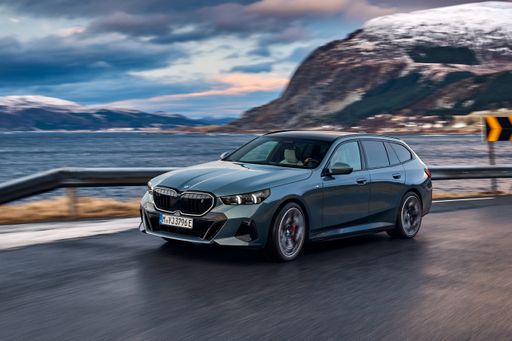
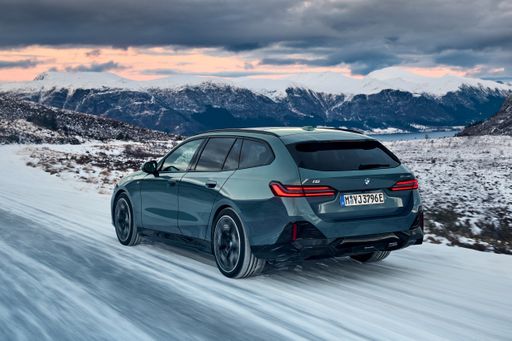
i5 Touring

Performance and Power

The BMW 5er Limousine caters to enthusiasts who revel in the powerful hum of traditional engines. Available in various engine configurations including Diesel MHEV, Petrol MHEV, and Plugin Hybrid, the 5er Limousine offers a broad spectrum of power outputs ranging from 197 HP to a staggering 727 HP. This traditional powerhouse can achieve 0-100 km/h acceleration in as fast as 3.5 seconds and can reach a top speed of 250 km/h.

Contrastingly, the BMW i5 Touring propels us into the future with its all-electric drivetrain. Offering a robust 601 HP and the distinct advantage of instant torque, peaking at 820 Nm, the i5 Touring accelerates from 0-100 km/h in just 3.9 seconds. Despite its electric heart, it comfortably matches the spirited performance often attributed solely to combustion engines.

5 Series Saloon

Efficiency and Range

The BMW 5er Limousine has made strides in efficiency with its hybrid options. The plugin hybrid variant offers an electric range between 68 to 103 kilometers, suitable for daily commuting without emissions. Fuel consumption varies from as low as 0.6 L/100 km in hybrid mode to 5.9 L/100 km for the combustion counterparts.

On the other hand, the BMW i5 Touring stands as a beacon of sustainability with an impressive electric range of up to 560 km on a single charge. Consuming between 16.5 and 18.5 kWh/100 km, this electric wagon promotes a zero-emission drive, making it a leader in eco-friendly everyday commuting.

i5 Touring

Design and Comfort

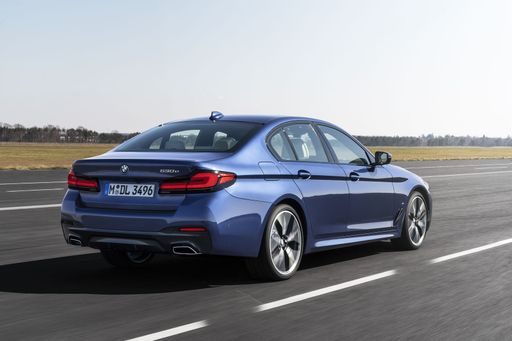
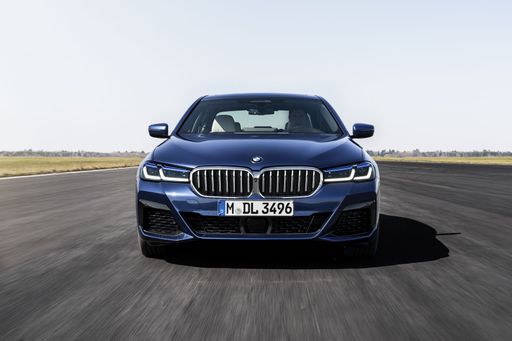
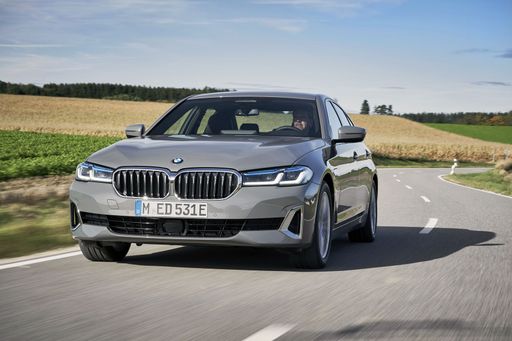
Both models exhibit the quintessential BMW luxury, but their execution reveals different focuses. The BMW 5er Limousine offers the classic four-door sedan shape with a spacious trunk capacity of up to 520 liters and can comfortably seat five. Its design exudes elegance and business-class confidence.

The i5 Touring, as a wagon, emphasizes versatility and space, boasting a larger trunk capacity of 570 liters without compromising on seating comfort for five. With its aerodynamic silhouette tailored for minimal drag, the i5 Touring stands out as a practical yet stylish choice for family-oriented buyers.

5 Series Saloon

Technical Innovations

BMW’s commitment to innovation is evident in both models. The 5er Limousine incorporates cutting-edge hybrid technologies alongside traditional mechanical excellence, ensuring drivers experience dynamic efficiency.

The i5 Touring takes innovation further with its electric platform. The vehicle sports an all-wheel-drive or rear-wheel-drive options and features cutting-edge battery technologies, reducing charging times while maximizing energy retention and range.

Final Verdict

In the duel between tradition and modernity, both the BMW 5er Limousine and the BMW i5 Touring exemplify excellence in their respective categories. Enthusiasts seeking the familiarity of combustion engines coupled with new-age hybrid efficiency will be drawn to the 5er Limousine. Meanwhile, those embracing the vanguard of electric mobility will find an ideal companion in the i5 Touring. Whatever your preference, BMW ensures you drive forward with style, power, and innovation.

Here’s where it gets real: The technical differences in detail

5 Series Saloon

Costs and Efficiency:

Looking at overall running costs, both models reveal some interesting differences in everyday economy.

BMW 5 Series Saloon is visibly cheaper – starting at 50,800 £ , while the BMW i5 Touring costs 61,900 £ . That’s a price difference of around 11,057 £.

As for electric range, the BMW i5 Touring offers clearly more range – reaching up to 602 km, about 497 km more than the BMW 5 Series Saloon.

i5 Touring

Engine and Performance:

Power, torque and acceleration are the classic benchmarks for car enthusiasts – and here, some clear differences start to show.

When it comes to engine power, the BMW 5 Series Saloon offers moderately more power – delivering 727 HP compared to 601 HP. That’s roughly 126 HP more horsepower.

When accelerating from 0 to 100 km/h, the BMW 5 Series Saloon is a bit quicker – completing the sprint in 3.5 s, while the BMW i5 Touring takes 3.9 s. That’s about 0.4 s quicker.

Looking at top speed, the BMW 5 Series Saloon is barely faster – reaching 250 km/h, while the BMW i5 Touring tops out at 230 km/h. The difference is around 20 km/h.

There’s also a difference in torque: the BMW 5 Series Saloon delivers somewhat more torque with 1,000 Nm compared to 820 Nm. That’s about 180 Nm more.

5 Series Saloon

Space and Everyday Use:

Beyond pure performance, interior space and usability matter most in daily life. This is where you see which car is more practical and versatile.

Both vehicles offer seating for 5 people.

In terms of curb weight, BMW 5 Series Saloon is markedly lighter – 1,800 kg compared to 2,255 kg. The difference is around 455 kg.

Looking at boot space, the BMW i5 Touring offers marginally more boot space – 570 L compared to 520 L. That’s a difference of about 50 L.

When it comes to payload, the BMW 5 Series Saloon carries marginally more – 600 kg compared to 560 kg. That’s a difference of about 40 kg.

Who wins the race in the data check?

The BMW i5 Touring holds a decisive overall lead in the objective data comparison.
This result only shows which model scores more points on paper – not which of the two cars feels right for you.

from £61,900
i5 Touring

BMW i5 Touring

  • Engine Type : Electric
  • Transmission : Automatic
  • Drive Type : All-Wheel Drive, Rear-Wheel Drive
  • Power HP : 340 - 601 HP
  • Consumption kWh/100km : 15.4 - 17.7 kWh/100km
  • Electric Range : 522 - 602 km
BMW 5 Series Saloon
BMW i5 Touring

Costs and Consumption

View detailed analysis

Engine and Performance

View detailed analysis

Dimensions and Body

View detailed analysis

BMW 5 Series Saloon

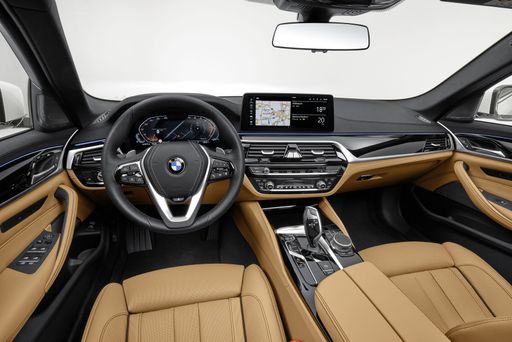
The BMW 5 Series Saloon blends executive poise with a driver's instinct, delivering a supple, refined cabin and a chassis that prefers composed authority over bravado. For buyers who want a grown-up commuter that still enjoys a twisty road, it’s the kind of car that keeps your colleagues impressed and your weekend grin intact.

details

BMW i5 Touring

The BMW i5 Touring marries the everyday usefulness of a roomy estate with the hushed, premium feel of a modern electric BMW. It’s an appealing choice for buyers who want confident, relaxed driving and executive poise without sacrificing weekend practicality — and it even makes loading skis feel slightly glamorous.

details
BMW 5 Series Saloon
BMW i5 Touring

Costs and Consumption

Price
50,800 - 124,500 £
Price
61,900 - 87,000 £
Consumption L/100km
2.1 - 5.8 L/100km
Consumption L/100km
-
Consumption kWh/100km
-
Consumption kWh/100km
15.4 - 17.7 kWh/100km
Electric Range
67 - 105 km
Electric Range
522 - 602 km
Battery Capacity
19 - 19.4 kWh
Battery Capacity
81.2 kWh
co2
48 - 152 g/km
co2
0 g/km
Fuel tank capacity
60 L
Fuel tank capacity
-

Dimensions and Body

Body Type
Sedan
Body Type
Estate
Seats
5
Seats
5
Doors
4
Doors
4
Curb weight
1,800 - 2,515 kg
Curb weight
2,255 - 2,425 kg
Trunk capacity
466 - 520 L
Trunk capacity
570 L
Length
5,060 mm
Length
5,060 mm
Width
1,900 - 1,970 mm
Width
1,900 mm
Height
1,515 mm
Height
1,505 - 1,515 mm
Max trunk capacity
-
Max trunk capacity
1,700 L
Payload
425 - 600 kg
Payload
535 - 560 kg

Engine and Performance

Engine Type
Diesel MHEV, Petrol MHEV, Plugin Hybrid
Engine Type
Electric
Transmission
Automatic
Transmission
Automatic
Transmission Detail
Automatic Gearbox
Transmission Detail
Reduction Gearbox
Drive Type
Rear-Wheel Drive, All-Wheel Drive
Drive Type
All-Wheel Drive, Rear-Wheel Drive
Power HP
197 - 727 HP
Power HP
340 - 601 HP
Acceleration 0-100km/h
3.5 - 7.5 s
Acceleration 0-100km/h
3.9 - 6.1 s
Max Speed
225 - 250 km/h
Max Speed
193 - 230 km/h
Torque
330 - 1,000 Nm
Torque
430 - 820 Nm
Number of Cylinders
4 - 8
Number of Cylinders
-
Power kW
145 - 535 kW
Power kW
250 - 442 kW
Engine capacity
1,995 - 4,395 cm3
Engine capacity
-

General

Model Year
2,023 - 2,026
Model Year
2,024
CO2 Efficiency Class
D, E, B, C
CO2 Efficiency Class
A
Brand
BMW
Brand
BMW
DriveDuel uses data analysis and artificial intelligence to evaluate vehicle data and create content. Content is regularly reviewed and improved. The displayed prices are estimates based on German list prices, adjusted to the respective country’s VAT. Country-specific registration taxes are not included. This information is not legally binding.