VS

BMW 5 Series Saloon vs BMW X3 comparison

Compare performance (727 HP vs 398 HP), boot space and price (50,800 £ vs 51,300 £ ) at a glance. Find out which car is the better choice for you – BMW 5 Series Saloon or BMW X3?

BMW 5 Series Saloon vs BMW X3: Key differences

BMW 5 Series Saloon

  • very slightly cheaper
  • clearly more power
  • noticeably more efficient
  • slightly more electric range
  • clearly quicker 0–100 km/h
  • only slightly lighter

BMW X3

4.6 (1 Reviews)
rate
  • marginally more trunk space
5 Series Saloon

The BMW 5er Limousine and BMW X3: A Closer Look at the Dynamic Duo

In the world of luxury automobiles, BMW has long been a brand synonymous with excellence, innovation, and driving pleasure. Today, we're putting two of their outstanding models head-to-head: the BMW 5er Limousine and the BMW X3. Both models embody the quintessential qualities of the BMW brand but cater to different lifestyles and preferences. Let's delve into their technical aspects and innovations to see how they match up.
X3

Design and Dimensions

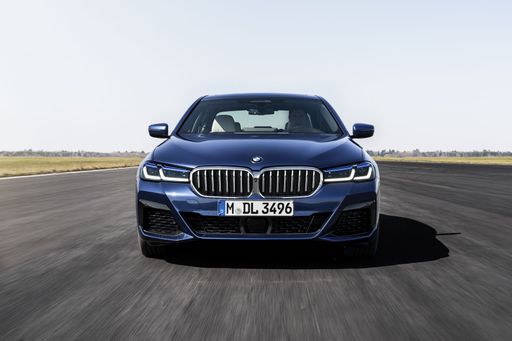
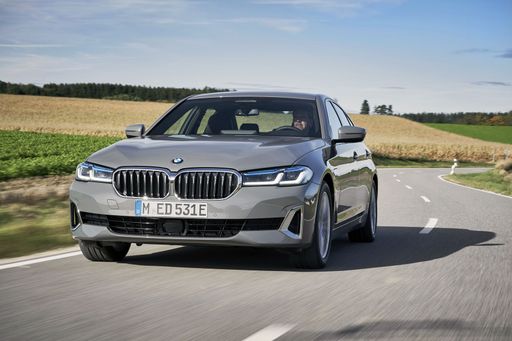
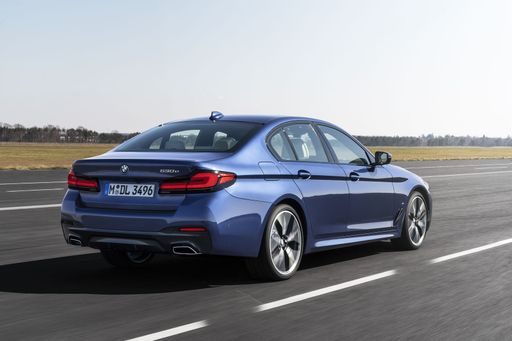
The BMW 5er Limousine, commonly known as the 5 Series Sedan, offers a sleek, sophisticated look with dimensions of 5060mm to 5096mm in length, 1900mm to 1970mm in width, and 1510mm to 1515mm in height. It has a more streamlined, classic sedan design suitable for city dwellers and professionals seeking elegance.

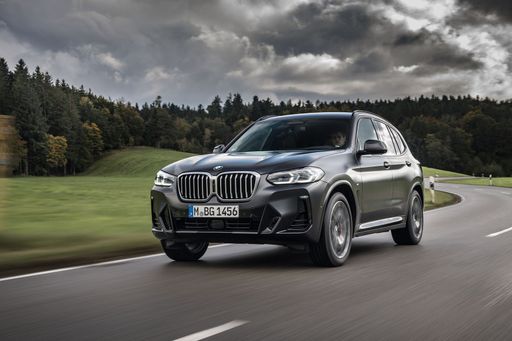
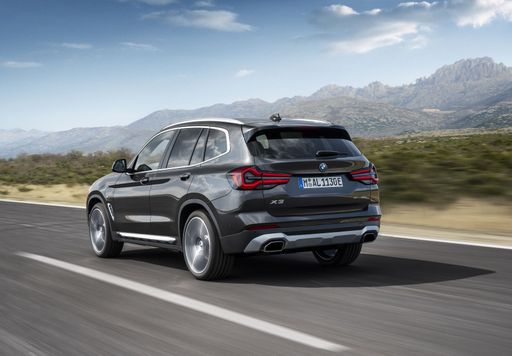
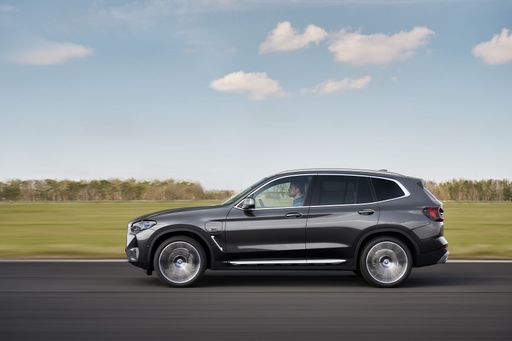
On the other hand, the BMW X3 is an athletic, robust SUV with a more rugged appearance. Its dimensions are slightly smaller in length, ranging from 4708mm to 4755mm, but it stands taller, between 1660mm to 1676mm, providing extra ground clearance ideal for adventurous roads.

5 Series Saloon

Engine and Performance

The BMW 5er Limousine delivers various engine options, including Diesel MHEV, Petrol MHEV, and a Plug-in Hybrid. Power outputs range from 197 HP to a staggering 727 HP. Coupled with an automatic gearbox and available in both rear-wheel and all-wheel drive, it offers a versatile driving experience. The limousine's acceleration can impressively reach 0-100 km/h in just 3.5 seconds with the most powerful engine.

The BMW X3 also offers Diesel and Petrol MHEV options, along with a Plug-in Hybrid variant. Its power ranges from 184 HP to 510 HP, showcasing similarly robust performance with a focus on efficiency. The acceleration varies from 3.8 to 8.4 seconds for 0-100 km/h, catering to both the speed enthusiast and the everyday driver.

X3

Fuel Efficiency and Range

Fuel consumption is a critical consideration for modern car buyers, and both models strive to offer efficiency and performance. The 5er Limousine's fuel consumption ranges from 5.2 to 5.9 L/100km, while the Plug-in Hybrid variant impressively reduces consumption to between 0.6 and 1.7 L/100km, with an electric range extending up to 103 km. Its battery capacity ranges up to 19 kWh, supporting its hybrid capabilities.

The X3, while being slightly less efficient in gasoline terms (with consumption ranging between 6 and 10.8 L/100 km), excels with its hybrid models, offering an electric range of up to 90 km. Its battery packs, such as the 19.7 kWh, ensure that drivers can lean more on electric power for shorter trips, contributing to a more eco-friendly drive.

5 Series Saloon

Interior Space and Comfort

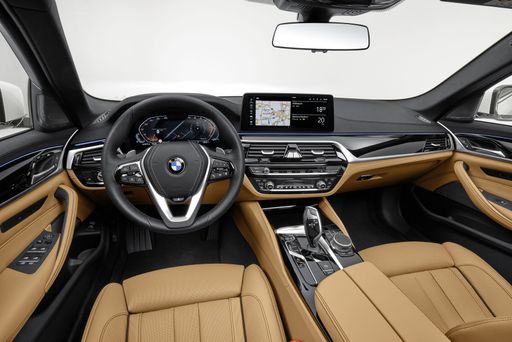
Inside the 5er Limousine, you're met with superior comfort and spaciousness, boasting a trunk capacity of 466L to 520L, making it perfect for long trips or carrying large luggage. The luxurious interior materials and advanced infotainment systems cater to those who enjoy a refined and comfortable driving experience.

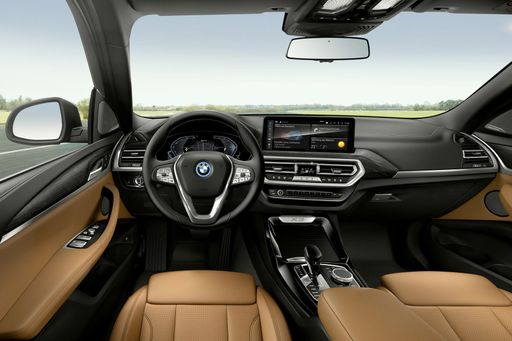
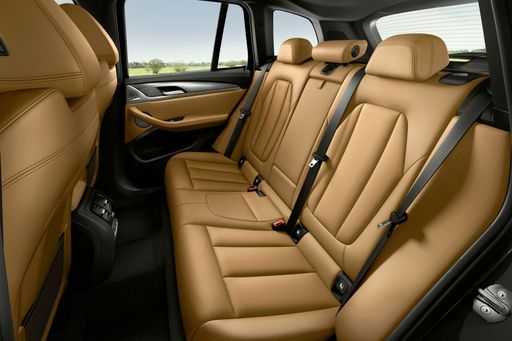
The BMW X3 emphasizes versatility and practicality, offering a trunk capacity of 450L to 570L, slightly more than its sedan counterpart, thus prioritizing convenience while on the go. Its seating position is higher, providing excellent visibility, a desirable feature for SUV enthusiasts.

X3

Conclusion

Choosing between the BMW 5er Limousine and the BMW X3 largely depends on one's lifestyle and driving preferences. If you seek a blend of sportiness, luxury, and urban sophistication, the 5er Limousine stands out as an impeccable choice. However, if versatility, driving height, and a more rugged demeanor are what you crave, the X3 delivers an exemplary driving experience.

Regardless of your choice, both models epitomize BMW's dedication to crafting cars that are not only a joy to drive but also exemplify the pinnacle of automotive technology.

Here’s where it gets real: The technical differences in detail

5 Series Saloon

Costs and Efficiency:

When it comes to price and running costs, the biggest differences usually appear. This is often where you see which car fits your budget better in the long run.

BMW 5 Series Saloon is very slightly cheaper – starting at 50,800 £ , while the BMW X3 costs 51,300 £ . That’s a price difference of around 429 £.

Fuel consumption also shows a difference: the BMW 5 Series Saloon uses 2.1 L/100km and is noticeably more efficient than the BMW X3 with 2.8 L/100km. The difference is about 0.7 L/100km.

As for electric range, the BMW 5 Series Saloon offers slightly more range – reaching up to 105 km, about 17 km more than the BMW X3.

X3

Engine and Performance:

Power, torque and acceleration are the classic benchmarks for car enthusiasts – and here, some clear differences start to show.

When it comes to engine power, the BMW 5 Series Saloon offers clearly more power – delivering 727 HP compared to 398 HP. That’s roughly 329 HP more horsepower.

When accelerating from 0 to 100 km/h, the BMW 5 Series Saloon is clearly quicker – completing the sprint in 3.5 s, while the BMW X3 takes 4.6 s. That’s about 1.1 s quicker.

There’s no difference in top speed – both reach 250 km/h.

There’s also a difference in torque: the BMW 5 Series Saloon delivers markedly more torque with 1,000 Nm compared to 670 Nm. That’s about 330 Nm more.

5 Series Saloon

Space and Everyday Use:

Beyond pure performance, interior space and usability matter most in daily life. This is where you see which car is more practical and versatile.

Both vehicles offer seating for 5 people.

In terms of curb weight, BMW 5 Series Saloon is only slightly lighter – 1,800 kg compared to 1,930 kg. The difference is around 130 kg.

Looking at boot space, the BMW X3 offers marginally more boot space – 570 L compared to 520 L. That’s a difference of about 50 L.

When it comes to payload, the BMW 5 Series Saloon carries barely more – 600 kg compared to 570 kg. That’s a difference of about 30 kg.

Who wins the race in the data check?

The BMW 5 Series Saloon is far ahead overall in the objective data comparison.
This result only shows which model scores more points on paper – not which of the two cars feels right for you.

from £50,800
5 Series Saloon

BMW 5 Series Saloon

  • Engine Type : Diesel MHEV, Petrol MHEV, Plugin Hybrid
  • Transmission : Automatic
  • Drive Type : Rear-Wheel Drive, All-Wheel Drive
  • Power HP : 197 - 727 HP
  • Consumption L/100km : 2.1 - 5.8 L/100km
  • Electric Range : 67 - 105 km
BMW 5 Series Saloon
BMW X3

Costs and Consumption

View detailed analysis

Engine and Performance

View detailed analysis

Dimensions and Body

View detailed analysis

BMW 5 Series Saloon

The BMW 5 Series Saloon blends executive poise with a driver's instinct, delivering a supple, refined cabin and a chassis that prefers composed authority over bravado. For buyers who want a grown-up commuter that still enjoys a twisty road, it’s the kind of car that keeps your colleagues impressed and your weekend grin intact.

details

BMW X3

The BMW X3 mixes Bavarian poise with everyday practicality, delivering a composed ride and a cabin that feels both premium and lived-in. It’s the sort of SUV that lets you enjoy sporty handling without sacrificing family-friendly space, so you get fun and sense in one neat package.

details
BMW 5 Series Saloon
BMW X3

Costs and Consumption

Price
50,800 - 124,500 £
Price
51,300 - 72,400 £
Consumption L/100km
2.1 - 5.8 L/100km
Consumption L/100km
2.8 - 7.7 L/100km
Consumption kWh/100km
-
Consumption kWh/100km
-
Electric Range
67 - 105 km
Electric Range
88 km
Battery Capacity
19 - 19.4 kWh
Battery Capacity
-
co2
48 - 152 g/km
co2
64 - 175 g/km
Fuel tank capacity
60 L
Fuel tank capacity
60 - 65 L

Dimensions and Body

Body Type
Sedan
Body Type
SUV
Seats
5
Seats
5
Doors
4
Doors
5
Curb weight
1,800 - 2,515 kg
Curb weight
1,930 - 2,140 kg
Trunk capacity
466 - 520 L
Trunk capacity
460 - 570 L
Length
5,060 mm
Length
4,755 mm
Width
1,900 - 1,970 mm
Width
1,920 mm
Height
1,515 mm
Height
1,660 mm
Max trunk capacity
-
Max trunk capacity
1,700 L
Payload
425 - 600 kg
Payload
570 kg

Engine and Performance

Engine Type
Diesel MHEV, Petrol MHEV, Plugin Hybrid
Engine Type
Petrol MHEV, Diesel MHEV, Plugin Hybrid
Transmission
Automatic
Transmission
Automatic
Transmission Detail
Automatic Gearbox
Transmission Detail
Automatic Gearbox
Drive Type
Rear-Wheel Drive, All-Wheel Drive
Drive Type
All-Wheel Drive
Power HP
197 - 727 HP
Power HP
197 - 398 HP
Acceleration 0-100km/h
3.5 - 7.5 s
Acceleration 0-100km/h
4.6 - 7.8 s
Max Speed
225 - 250 km/h
Max Speed
215 - 250 km/h
Torque
330 - 1,000 Nm
Torque
330 - 670 Nm
Number of Cylinders
4 - 8
Number of Cylinders
4 - 6
Power kW
145 - 535 kW
Power kW
145 - 293 kW
Engine capacity
1,995 - 4,395 cm3
Engine capacity
1,995 - 2,998 cm3

General

Model Year
2,023 - 2,026
Model Year
2,024 - 2,025
CO2 Efficiency Class
D, E, B, C
CO2 Efficiency Class
F, E, B
Brand
BMW
Brand
BMW
DriveDuel uses data analysis and artificial intelligence to evaluate vehicle data and create content. Content is regularly reviewed and improved. The displayed prices are estimates based on German list prices, adjusted to the respective country’s VAT. Country-specific registration taxes are not included. This information is not legally binding.