@ BMW Group Press
@ XPeng Motors
VS

BMW i4 vs XPeng P7 – Which car suits you better?

Everyday use, family trips or long-distance drives – here’s where the differences show.
Discover whether BMW i4 or XPeng P7 fits your lifestyle better.

i4 @ BMW Group Press

As the automotive industry shifts towards electric mobility, premium electric sedans are becoming the centerpiece of innovation and performance. In this article, we’ll explore a comprehensive comparison between the BMW i4 and the XPeng P7, two remarkable electric vehicles (EVs) that exemplify the future of driving. We will analyze their technical specifications, performance metrics, and innovative features to help potential buyers make an informed choice.
P7 @ XPeng Motors

Design and Body Style

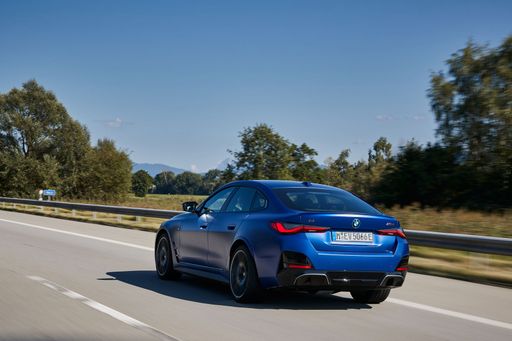
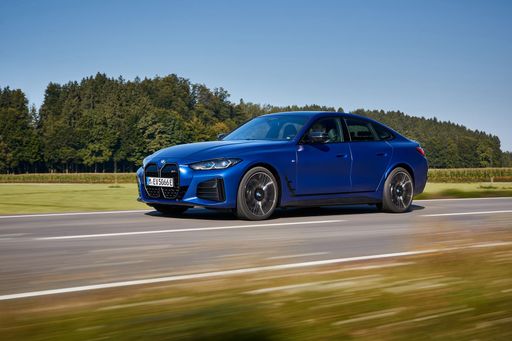
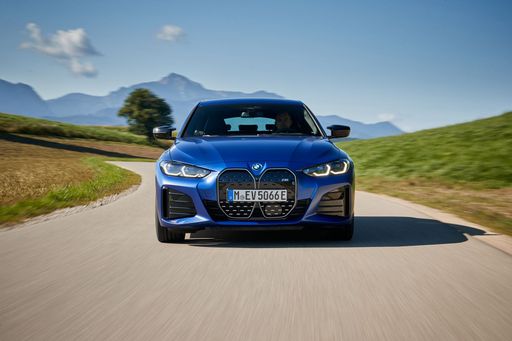
The BMW i4 embraces a hatchback body style that combines sporty elegance with practicality. Its sleek lines and bold front grille provide a nod to traditional BMW aesthetics while emphasizing its electric identity.

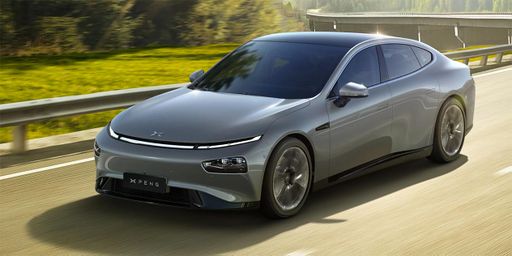
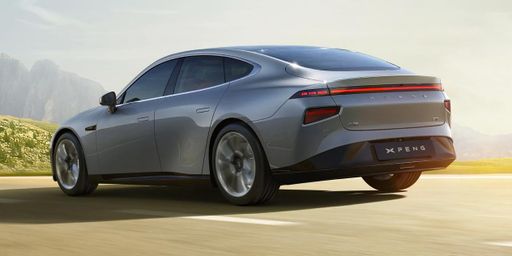
In contrast, the XPeng P7 leans towards a modern sedan design, presenting a fluid silhouette that emphasizes aerodynamics and efficiency. Both vehicles feature five doors and spacious interiors, catering to a growing family demographic or those who simply appreciate roominess.

i4 @ BMW Group Press

Performance Powerhouses

Performance is where these two models start to differentiate themselves significantly. The BMW i4 offers various power options, ranging from 286 HP to an impressive 544 HP in its high-performance variant. This allows for acceleration from 0-100 km/h in as little as 3.9 seconds.

The XPeng P7, while slightly less powerful at its peak output of 473 HP, still offers a spirited driving experience, claiming a 0-100 km/h time of 4.1 seconds in its dual-motor configuration. The torque figures favor the XPeng P7, peaking at an impressive 757 Nm versus the i4's maximum of 795 Nm in its most potent variant.

P7 @ XPeng Motors

Battery and Range

Battery capacity is a crucial factor for EV enthusiasts, and both the i4 and P7 come equipped with substantial batteries. The BMW i4 offers two variants with battery capacities of 67.1 kWh and 81.3 kWh, enabling ranges of up to 582 km depending on the specific model.

The XPeng P7 edges out slightly with a standard battery size of 82.7 kWh, providing an impressive maximum range of 576 km. Both vehicles are efficient, with consumption figures reflected in kWh/100 km rating of 15.6 to 18 for the BMW and 16.8 to 19.2 for the XPeng.

i4 @ BMW Group Press

Technological Innovations

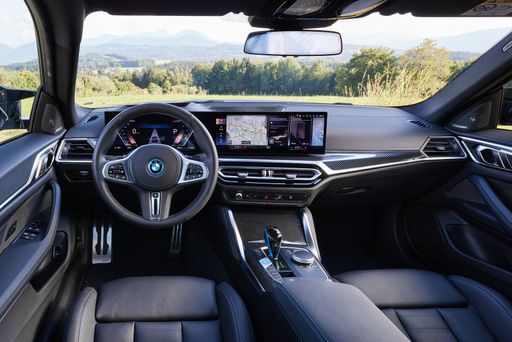
BMW has integrated its latest iDrive 8 OS into the i4, featuring an expansive display and advanced connectivity options. The i4 also touts features including Level 2 assistance technologies that take advantage of the dual-setup sensors and camera system for improved safety and performance.

On the other hand, the XPeng P7 introduces advanced autonomous driving capabilities with its XPILOT system. This feature enhances the driving experience through high-definition mapping and AI-supported navigation, enabling semi-autonomous driving in various conditions, making it a contender in the tech-savvy EV market.

P7 @ XPeng Motors

Interior Comfort and Amenities

Inside the BMW i4, luxury and technology meet in a prominent blend of high-quality materials and cutting-edge design. With ample seating for five, an intuitive infotainment system, and customizable ambient lighting, the i4 maintains the BMW identity while offering a modern twist to its straightforward driving dynamics.

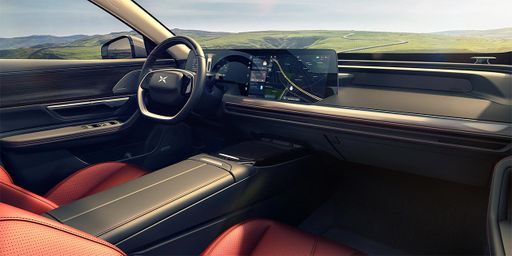
The XPeng P7 prioritizes tech-savvy features, boasting a large central touchscreen that handles most controls with ease. It also provides a spacious cabin with ample legroom and a high level of comfort, making it an excellent choice for long drives or daily commutes.

i4 @ BMW Group Press

Conclusion: Which EV Reigns Supreme?

The BMW i4 and XPeng P7 both present compelling cases in the premium electric sedan segment, each with unique strengths. The i4 excels in performance, traditional luxury, and the emotional appeal of the BMW brand, while the P7 offers technological advancements and superior range.

Ultimately, the choice between the two may come down to personal preference—whether one favors established luxury or embracing the future of technology. Regardless, both the BMW i4 and XPeng P7 are exemplary representations of the rapid evolution within the electric vehicle sector, paving the way for a sustainable and exhilarating driving future.

Here’s where it gets real: The technical differences in detail

Costs and Efficiency:

Price and efficiency are often the first things buyers look at. Here it becomes clear which model has the long-term edge – whether at the pump, the plug, or in purchase price.

XPeng P7 has a to a small extent advantage in terms of price – it starts at 42500 £, while the BMW i4 costs 49400 £. That’s a price difference of around 6857 £.

In terms of energy consumption, the advantage goes to the BMW i4: with 14.70 kWh per 100 km, it’s slightly more efficient than the XPeng P7 with 16.80 kWh. That’s a difference of about 2.10 kWh.

As for range, the BMW i4 performs minimal better – achieving up to 613 km, about 37 km more than the XPeng P7.

Engine and Performance:

Power, torque and acceleration are the classic benchmarks for car enthusiasts – and here, some clear differences start to show.

When it comes to engine power, the BMW i4 has a distinct edge – offering 601 HP compared to 473 HP. That’s roughly 128 HP more horsepower.

In acceleration from 0 to 100 km/h, the BMW i4 is to a small extent quicker – completing the sprint in 3.70 s, while the XPeng P7 takes 4.10 s. That’s about 0.40 s faster.

In terms of top speed, the BMW i4 performs somewhat better – reaching 225 km/h, while the XPeng P7 tops out at 200 km/h. The difference is around 25 km/h.

There’s also a difference in torque: BMW i4 pulls minimal stronger with 795 Nm compared to 757 Nm. That’s about 38 Nm difference.

Space and Everyday Use:

Whether family car or daily driver – which one offers more room, flexibility and comfort?

Both vehicles offer seating for 5 people.

In curb weight, XPeng P7 is slight lighter – 2020 kg compared to 2070 kg. The difference is around 50 kg.

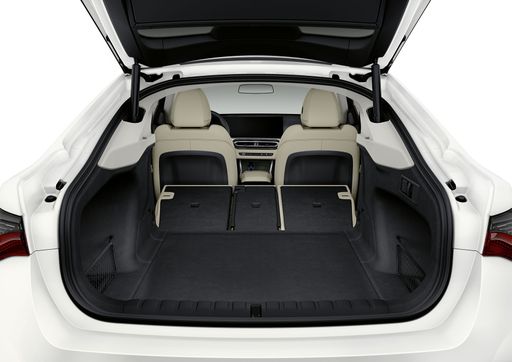
In terms of boot space, the BMW i4 offers minimal more room – 470 L compared to 440 L. That’s a difference of about 30 L.

When it comes to payload, BMW i4 to a small extent takes the win – 480 kg compared to 430 kg. That’s a difference of about 50 kg.

Who comes out on top?

Overall, the BMW i4 shows itself to be leaves the rival little chance and secures the title of DriveDuel Champion.
It convinces with the more balanced overall package and proves to be the more versatile choice for everyday use.

from about £49,400
i4 @ BMW Group Press

BMW i4

  • Engine Type : Electric
  • Transmission : Automatic
  • Drive Type : Rear-Wheel Drive, All-Wheel Drive
  • Power HP : 286 - 601 HP
  • Consumption kWh/100km : 14.7 - 16.7 kWh
  • Electric Range : 514 - 613 km

BMW i4

5 (1)
rate

The BMW i4 arrives with the poise of a classic Gran Coupé, marrying BMW's playful handling with a sleek, modern interior that makes switching to electric feel like an upgrade rather than a compromise. For buyers who want a practical daily driver that still enjoys a spirited back-road run, the i4 quietly delivers smiles and a surprising dose of driver engagement.

details

XPeng P7

The XPeng P7 is a sleek and stylish electric saloon that embodies the future of automotive innovation. With its modern design and advanced technology, it offers an impressive driving experience, combining luxury with sustainability. The interior is thoughtfully designed to provide comfort and convenience, making it a strong contender in the competitive market of electric vehicles.

details
BMW i4
XPeng P7
i4 @ BMW Group Press
P7 @ XPeng Motors

Costs and Consumption

Price
49400 - 62500 £
Price
42500 - 50200 £
Consumption L/100km
-
Consumption L/100km
-
Consumption kWh/100km
14.7 - 16.7 kWh
Consumption kWh/100km
16.8 - 19.2 kWh
Electric Range
514 - 613 km
Electric Range
505 - 576 km
Battery Capacity
67.1 - 81.3 kWh
Battery Capacity
82.70 kWh
co2
0 g/km
co2
0 g/km
Fuel tank capacity
-
Fuel tank capacity
-

Dimensions and Body

Body Type
Hatchback
Body Type
Sedan
Seats
5
Seats
5
Doors
5
Doors
5
Curb weight
2070 - 2285 kg
Curb weight
2020 - 2140 kg
Trunk capacity
470 L
Trunk capacity
440 L
Length
4783 mm
Length
4888 mm
Width
1852 mm
Width
1896 mm
Height
1448 mm
Height
1450 mm
Max trunk capacity
1290 L
Max trunk capacity
-
Payload
445 - 480 kg
Payload
430 kg

Engine and Performance

Engine Type
Electric
Engine Type
Electric
Transmission
Automatic
Transmission
Automatic
Transmission Detail
Reduction Gearbox
Transmission Detail
Reduction Gearbox
Drive Type
Rear-Wheel Drive, All-Wheel Drive
Drive Type
Rear-Wheel Drive, All-Wheel Drive
Power HP
286 - 601 HP
Power HP
276 - 473 HP
Acceleration 0-100km/h
3.7 - 6 s
Acceleration 0-100km/h
4.1 - 6.7 s
Max Speed
190 - 225 km/h
Max Speed
200 km/h
Torque
400 - 795 Nm
Torque
440 - 757 Nm
Number of Cylinders
-
Number of Cylinders
-
Power kW
210 - 442 kW
Power kW
203 - 348 kW
Engine capacity
-
Engine capacity
-

General

Model Year
2025
Model Year
2024
CO2 Efficiency Class
A
CO2 Efficiency Class
A
Brand
BMW
Brand
XPeng
What drivetrain options does the BMW i4 have?

The BMW i4 is available as Rear-Wheel Drive or All-Wheel Drive.

The prices and data displayed are estimates based on German list prices and may vary by country. This information is not legally binding.