VS

BMW i5 Touring vs Tesla Model Y comparison

Compare performance (601 HP vs 460 HP), boot space and price (61,900 £ vs 34,300 £ ) at a glance. Find out which car is the better choice for you – BMW i5 Touring or Tesla Model Y?

BMW i5 Touring vs Tesla Model Y: Key differences

BMW i5 Touring

  • visibly more power

Tesla Model Y

4.5 (4 Reviews)
rate
  • significantly cheaper
  • noticeably more efficient
  • marginally more electric range
  • somewhat quicker 0–100 km/h
  • moderately lighter
  • markedly more trunk space

All details on performance, efficiency, range and trunk space can be found in the technical comparison below – including user reviews for both models.

i5 Touring

When it comes to electric vehicles, the BMW i5 Touring and Tesla Model Y stand out as two remarkable contenders in the market. With their unique features, performance attributes, and commitment to sustainability, these vehicles cater to distinct preferences. In this comparison, we'll delve deeper into their technical specifications, innovations, and practical implications for potential buyers.
Model Y

Design and Body Type

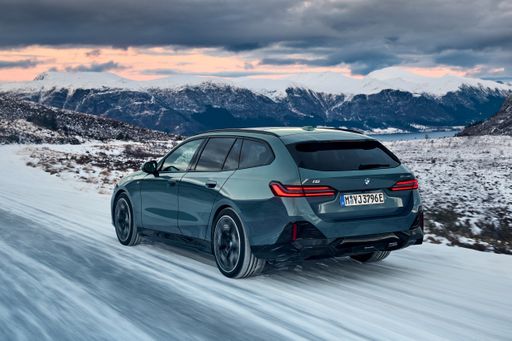
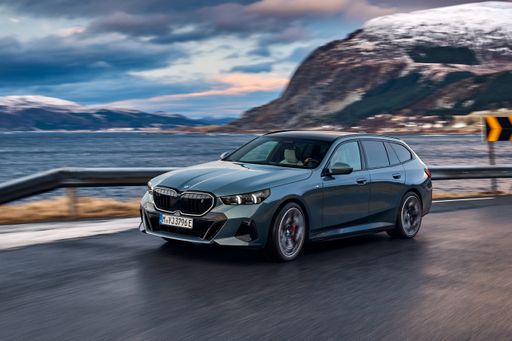
The BMW i5 Touring is a stylish wagon designed to combine practicality with performance. Its sleek silhouette is complemented by a spacious interior, making it a great choice for families or those needing extra cargo space. The Touring model boasts a trunk capacity of 570 liters, providing ample room for luggage or groceries.

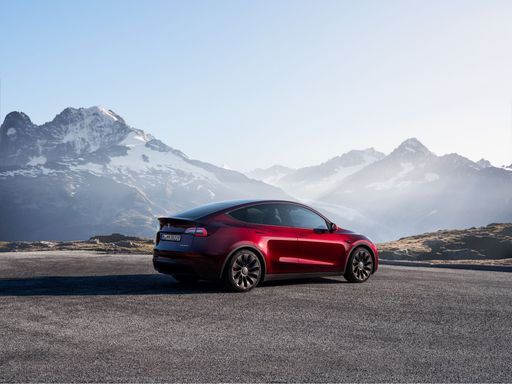
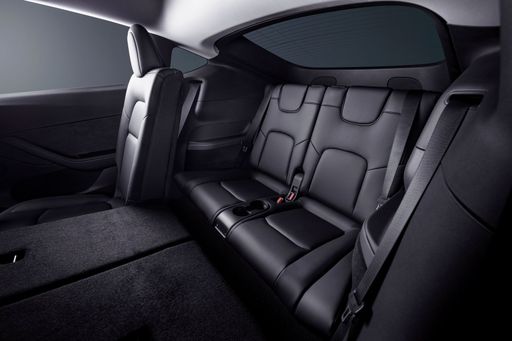
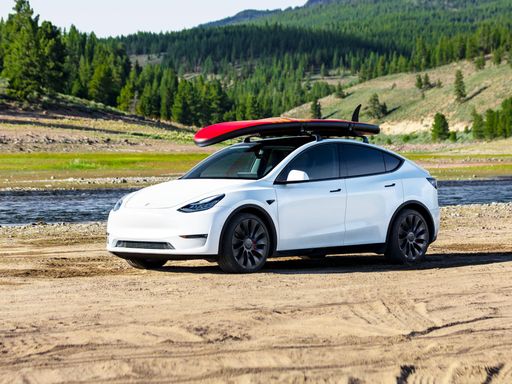
On the other hand, the Tesla Model Y is an SUV that emphasizes versatility and space. With a trunk capacity of up to 854 liters, depending on the configuration, the Model Y can accommodate more cargo and offers an optional third row of seating, increasing its passenger capacity to seven. This makes it a practical choice for larger families.

i5 Touring

Powertrain Performance

The BMW i5 Touring comes with two power options: a 340 HP version and a high-performance 601 HP variant. It features an electric engine that powers either all-wheel drive or rear-wheel drive options, with 0-100 km/h acceleration times of 3.9 seconds for the powerful version and 6.1 seconds for the standard.

In comparison, the Tesla Model Y offers a more varied range of power levels, delivering between 299 HP in the base model and up to an impressive 534 HP in the performance version. Acceleration times are equally compelling, with the quickest version achieving 0-100 km/h in just 3.7 seconds. Tesla’s drive capabilities include rear-wheel drive for standard models and all-wheel drive for higher specifications.

Model Y

Range and Efficiency

Range anxiety is a common concern among electric vehicle owners. The BMW i5 Touring provides a solid electric range of up to 500 km, with optimal consumption figures hovering around 18.5 kWh/100 km. While it's competitive, the Tesla Model Y edges ahead with a potential range of 600 km for its long-range versions, and a consumption rate as low as 14.9 kWh/100 km. This emphasis on efficiency gives the Model Y a notable advantage for long-distance travel.

Batteries and Charging

The battery capacity for the BMW i5 Touring stands at 81.2 kWh, which supports its mid-range performance and efficiency figures. Tesla’s Model Y, depending on the variant, comes with battery capacities ranging from 62 kWh to 79 kWh, allowing for varied performance outcomes across its models. Tesla vehicles also support faster charging capabilities through their extensive Supercharger network, ensuring convenience on long journeys.

Interior and Technology

Inside the BMW i5 Touring, plush materials and a driver-centric dashboard await. The focus on technology is evident, with advanced infotainment systems and driver assistance features that enhance the overall driving experience. The cabin is sleek and modern, offering comfort to both the driver and passengers.

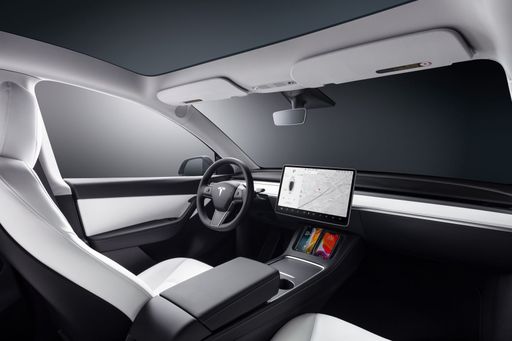
The Tesla Model Y, known for its minimalist interior design, features a central touchscreen that consolidates most vehicle controls. The user interface is renowned for its functionality and ease of use, appealing particularly to tech-savvy consumers. Additionally, Tesla's over-the-air software updates ensure that the vehicle continuously improves over time.

Conclusion

Both the BMW i5 Touring and Tesla Model Y offer compelling packages that cater to different consumer needs. The BMW excels in luxury, comfort, and traditional automotive craftsmanship, while the Tesla leads in range, efficiency, and technology-driven features. Ultimately, choosing between them does not just come down to performance but also personal preferences regarding design, interior style, and brand philosophy.

As the electric vehicle market continues to evolve, these two models exemplify the diverse range of options available to eco-conscious drivers, each bringing its own flavor to the table.

Here’s where it gets real: The technical differences in detail

i5 Touring

Costs and Efficiency:

Looking at overall running costs, both models reveal some interesting differences in everyday economy.

Tesla Model Y is significantly cheaper – starting at 34,300 £ , while the BMW i5 Touring costs 61,900 £ . That’s a price difference of around 27,608 £.

In terms of energy consumption, the Tesla Model Y is noticeably more efficient: consuming 12.7 kWh/100km compared to 15.4 kWh/100km for the BMW i5 Touring. That’s a difference of about 2.7 kWh/100km.

As for electric range, the Tesla Model Y offers marginally more range – reaching up to 657 km, about 55 km more than the BMW i5 Touring.

Model Y

Engine and Performance:

Under the bonnet, it becomes clear which model is tuned for sportiness and which one takes the lead when you hit the accelerator.

When it comes to engine power, the BMW i5 Touring offers visibly more power – delivering 601 HP compared to 460 HP. That’s roughly 141 HP more horsepower.

When accelerating from 0 to 100 km/h, the Tesla Model Y is somewhat quicker – completing the sprint in 3.5 s, while the BMW i5 Touring takes 3.9 s. That’s about 0.4 s quicker.

Looking at top speed, the BMW i5 Touring is somewhat faster – reaching 230 km/h, while the Tesla Model Y tops out at 201 km/h. The difference is around 29 km/h.

There’s also a difference in torque: the BMW i5 Touring delivers a bit more torque with 820 Nm compared to 660 Nm. That’s about 160 Nm more.

i5 Touring

Space and Everyday Use:

Whether family car or daily driver – which one offers more room, flexibility and comfort?

Seats: Tesla Model Y offers more seats – 7 vs 5.

In terms of curb weight, Tesla Model Y is moderately lighter – 1,953 kg compared to 2,255 kg. The difference is around 302 kg.

Looking at boot space, the Tesla Model Y offers markedly more boot space – 822 L compared to 570 L. That’s a difference of about 252 L.

For maximum load capacity, the Tesla Model Y offers noticeably more capacity – up to 2,138 L, about 438 L more than the BMW i5 Touring.

When it comes to payload, the BMW i5 Touring carries slightly more – 560 kg compared to 472 kg. That’s a difference of about 88 kg.

Who wins the race in the data check?

The Tesla Model Y holds a decisive overall lead in the objective data comparison.
This result only shows which model scores more points on paper – not which of the two cars feels right for you.

from £34,300
Model Y

Tesla Model Y

  • Engine Type : Electric
  • Transmission : Automatic
  • Drive Type : All-Wheel Drive, Rear-Wheel Drive
  • Power HP : 299 - 460 HP
  • Consumption kWh/100km : 12.7 - 16.2 kWh/100km
  • Electric Range : 534 - 657 km
BMW i5 Touring
Tesla Model Y

Costs and Consumption

View detailed analysis

Engine and Performance

View detailed analysis

Dimensions and Body

View detailed analysis

BMW i5 Touring

The BMW i5 Touring marries the everyday usefulness of a roomy estate with the hushed, premium feel of a modern electric BMW. It’s an appealing choice for buyers who want confident, relaxed driving and executive poise without sacrificing weekend practicality — and it even makes loading skis feel slightly glamorous.

details

Tesla Model Y

The Tesla Model Y blends SUV practicality with sports-car poke, wrapping a roomy, minimalist cabin and handy hatch into a slick, aerodynamic package that feels more Silicon Valley gadget than garage ornament. It’s an ideal pick for buyers who want effortless electric driving, regular software improvements and access to Tesla’s convenient charging network, though style-conscious shoppers should know it’s more about tech and efficiency than classic luxury.

details
BMW i5 Touring
Tesla Model Y

Costs and Consumption

Price
61,900 - 87,000 £
Price
34,300 - 53,100 £
Consumption L/100km
-
Consumption L/100km
-
Consumption kWh/100km
15.4 - 17.7 kWh/100km
Consumption kWh/100km
12.7 - 16.2 kWh/100km
Electric Range
522 - 602 km
Electric Range
534 - 657 km
Battery Capacity
81.2 kWh
Battery Capacity
64.5 - 83 kWh
co2
0 g/km
co2
0 g/km
Fuel tank capacity
-
Fuel tank capacity
-

Dimensions and Body

Body Type
Estate
Body Type
SUV
Seats
5
Seats
5 - 7
Doors
4
Doors
5
Curb weight
2,255 - 2,425 kg
Curb weight
1,953 - 2,108 kg
Trunk capacity
570 L
Trunk capacity
822 L
Length
5,060 mm
Length
4,790 - 4,797 mm
Width
1,900 mm
Width
1,920 - 1,921 mm
Height
1,505 - 1,515 mm
Height
1,621 - 1,624 mm
Max trunk capacity
1,700 L
Max trunk capacity
2,118 - 2,138 L
Payload
535 - 560 kg
Payload
435 - 472 kg

Engine and Performance

Engine Type
Electric
Engine Type
Electric
Transmission
Automatic
Transmission
Automatic
Transmission Detail
Reduction Gearbox
Transmission Detail
Reduction Gearbox
Drive Type
All-Wheel Drive, Rear-Wheel Drive
Drive Type
All-Wheel Drive, Rear-Wheel Drive
Power HP
340 - 601 HP
Power HP
299 - 460 HP
Acceleration 0-100km/h
3.9 - 6.1 s
Acceleration 0-100km/h
3.5 - 7.2 s
Max Speed
193 - 230 km/h
Max Speed
201 km/h
Torque
430 - 820 Nm
Torque
420 - 660 Nm
Number of Cylinders
-
Number of Cylinders
-
Power kW
250 - 442 kW
Power kW
220 - 338 kW
Engine capacity
-
Engine capacity
-

General

Model Year
2,024
Model Year
2,025 - 2,026
CO2 Efficiency Class
A
CO2 Efficiency Class
A
Brand
BMW
Brand
Tesla
DriveDuel uses data analysis and artificial intelligence to evaluate vehicle data and create content. Content is regularly reviewed and improved. The displayed prices are estimates based on German list prices, adjusted to the respective country’s VAT. Country-specific registration taxes are not included. This information is not legally binding.