VS

BMW iX vs BMW i5 Touring comparison

Compare performance (659 HP vs 601 HP), boot space and price (71,600 £ vs 61,900 £ ) at a glance. Find out which car is the better choice for you – BMW iX or BMW i5 Touring?

BMW iX vs BMW i5 Touring: Key differences

BMW iX

3.9 (1 Reviews)
rate
  • marginally more power
  • somewhat more electric range
  • only slightly quicker 0–100 km/h

BMW i5 Touring

  • a bit cheaper
  • somewhat more efficient
  • slightly lighter
  • moderately more trunk space

All details on performance, efficiency, range and trunk space can be found in the technical comparison below – including user reviews for both models.

iX

The automotive landscape is witnessing a seismic shift towards electrification, and BMW is at the forefront with its innovative electric offerings: the BMW i5 Touring and the BMW iX. Both vehicles embody BMW's commitment to performance, sustainability, and cutting-edge technology. This comparison delves into the technical aspects and innovations of both models to help you decide which electric vehicle best suits your lifestyle.
i5 Touring

Design and Body Type

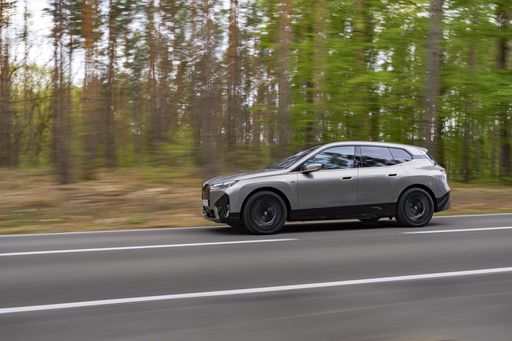
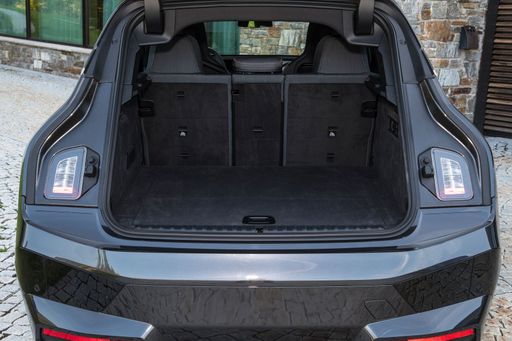
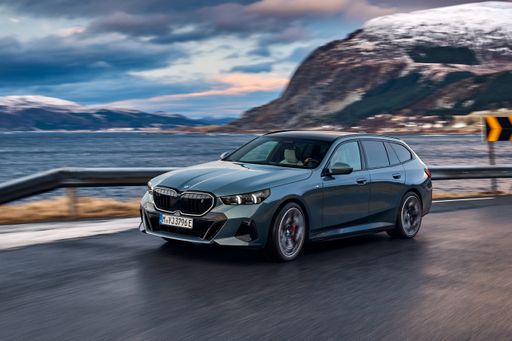
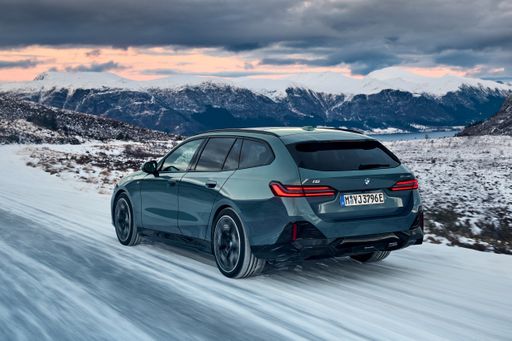
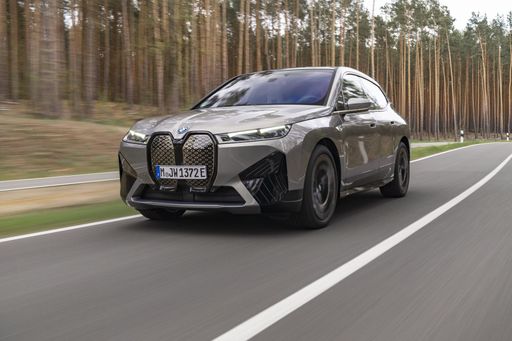
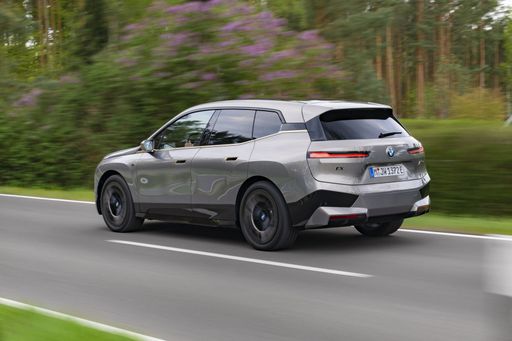
The BMW i5 Touring is a wagon, blending the practicality of an estate with the sportiness that BMW is renowned for. It measures 5060 mm in length, 1900 mm in width, and stands at a height of 1505 mm, providing ample space for passengers and cargo alike, with a trunk capacity of 570 liters. In contrast, the BMW iX is an SUV that prioritizes a commanding presence on the road. It is slightly shorter at 4953 mm but wider at 1967 mm and taller at 1695 mm, boasting a trunk capacity of 500 liters. Both vehicles are designed with sleek lines and aerodynamics that enhance their performance.

iX

Powertrains and Performance

Under the hood, the i5 Touring offers three variants: the entry-level model with 340 HP, a mid-tier option pushing 442 HP, and a high-performance version with a staggering 601 HP. Its impressive torque ranges from 430 Nm to 820 Nm, coupled with a consumption of 16.5 to 18.5 kWh/100 km. With an electric range of up to 560 km, it accelerates from 0 to 100 km/h in as little as 3.9 seconds, achieving a maximum speed of 230 km/h.

On the other hand, the BMW iX also offers multiple performance figures, with power outputs ranging from 326 HP to 619 HP and torque peaking at an impressive 1015 Nm in its top variant. Consumption rates hover around 19.9 to 22 kWh/100 km, and it delivers an electric range between 426 km and 619 km. The iX accelerates from 0 to 100 km/h in as little as 3.8 seconds, reaching speeds of up to 250 km/h.

i5 Touring

Battery and Charging Technology

The i5 Touring is equipped with an 81.2 kWh battery capacity, while the iX offers a larger 108.8 kWh battery in its top variant. This difference in capacity contributes to the iX's superior range; however, the i5 Touring's efficiency allows it to perform admirably with a smaller battery. Both models support rapid charging, allowing for quick top-ups during long trips, enhancing their practicality for everyday use as well as for adventures.

iX

Interior and Technology

Inside, both the i5 Touring and iX offer a blend of luxury and technology. The i5 Touring features BMW's latest iDrive system, integrating advanced infotainment technologies, intuitive controls, and premium materials throughout. Passengers are treated to a spacious cabin with seating for five, ensuring comfort regardless of the distance.

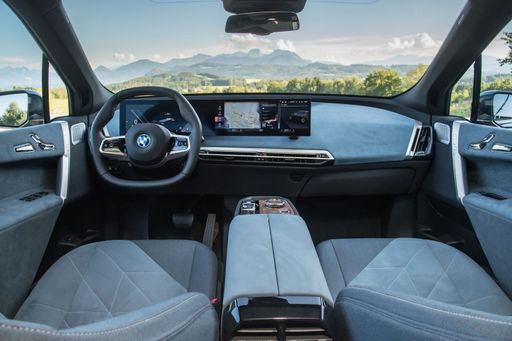
The iX, in comparison, takes this a step further with its futuristic interior design, incorporating sustainable materials while maintaining a luxurious feel. Its curved display seamlessly integrates the driver's digital cockpit with infotainment, making it easy to access navigation, media, and vehicle settings.

Conclusion: Which One is Right for You?

Choosing between the BMW i5 Touring and the BMW iX ultimately depends on your lifestyle needs. The i5 Touring is ideal for those who prioritize practicality in a stylish package, while the iX is perfect for buyers seeking an advanced, high-performance electric SUV. Regardless of your choice, both models exemplify BMW’s commitment to innovation, combining luxury with sustainable driving.

With the i5 Touring and iX, BMW continues to push the boundaries of electric mobility, offering exceptional vehicles that promise thrilling performance and cutting-edge technology in a green package.

Here’s where it gets real: The technical differences in detail

iX

Costs and Efficiency:

When it comes to price and running costs, the biggest differences usually appear. This is often where you see which car fits your budget better in the long run.

BMW i5 Touring is a bit cheaper – starting at 61,900 £ , while the BMW iX costs 71,600 £ . That’s a price difference of around 9,686 £.

In terms of energy consumption, the BMW i5 Touring is somewhat more efficient: consuming 15.4 kWh/100km compared to 17.8 kWh/100km for the BMW iX. That’s a difference of about 2.4 kWh/100km.

As for electric range, the BMW iX offers somewhat more range – reaching up to 701 km, about 99 km more than the BMW i5 Touring.

i5 Touring

Engine and Performance:

Power, torque and acceleration are the classic benchmarks for car enthusiasts – and here, some clear differences start to show.

When it comes to engine power, the BMW iX offers marginally more power – delivering 659 HP compared to 601 HP. That’s roughly 58 HP more horsepower.

When accelerating from 0 to 100 km/h, the BMW iX is only slightly quicker – completing the sprint in 3.8 s, while the BMW i5 Touring takes 3.9 s. That’s about 0.1 s quicker.

There’s also a difference in torque: the BMW iX delivers moderately more torque with 1,015 Nm compared to 820 Nm. That’s about 195 Nm more.

iX

Space and Everyday Use:

Cabin size, boot volume and payload all play a role in everyday practicality. Here, comfort and flexibility make the difference.

Both vehicles offer seating for 5 people.

In terms of curb weight, BMW i5 Touring is slightly lighter – 2,255 kg compared to 2,525 kg. The difference is around 270 kg.

Looking at boot space, the BMW i5 Touring offers moderately more boot space – 570 L compared to 500 L. That’s a difference of about 70 L.

When it comes to payload, the BMW iX carries only slightly more – 575 kg compared to 560 kg. That’s a difference of about 15 kg.

Who wins the race in the data check?

The BMW iX is barely ahead in the objective data comparison.
This result only shows which model scores more points on paper – not which of the two cars feels right for you.

from £71,600
iX

BMW iX

  • Engine Type : Electric
  • Transmission : Automatic
  • Drive Type : All-Wheel Drive
  • Power HP : 408 - 659 HP
  • Consumption kWh/100km : 17.8 - 20.6 kWh/100km
  • Electric Range : 600 - 701 km
BMW iX
BMW i5 Touring

Costs and Consumption

View detailed analysis

Engine and Performance

View detailed analysis

Dimensions and Body

View detailed analysis

BMW iX

The BMW iX arrives like a tech-rich luxury SUV that refuses to shout, offering a serene yet authoritative road presence that suits both city commutes and long-distance cruising. Inside, its minimalist cabin wraps high-quality materials and clever interfaces around a driver-focused layout, making it feel more like a forward-thinking lounge than just another electric appliance — and yes, it still delivers the dynamic driving character you'd expect from a BMW.

details

BMW i5 Touring

The BMW i5 Touring marries the everyday usefulness of a roomy estate with the hushed, premium feel of a modern electric BMW. It’s an appealing choice for buyers who want confident, relaxed driving and executive poise without sacrificing weekend practicality — and it even makes loading skis feel slightly glamorous.

details
BMW iX
BMW i5 Touring

Costs and Consumption

Price
71,600 - 108,400 £
Price
61,900 - 87,000 £
Consumption L/100km
-
Consumption L/100km
-
Consumption kWh/100km
17.8 - 20.6 kWh/100km
Consumption kWh/100km
15.4 - 17.7 kWh/100km
Electric Range
600 - 701 km
Electric Range
522 - 602 km
Battery Capacity
-
Battery Capacity
81.2 kWh
co2
0 g/km
co2
0 g/km
Fuel tank capacity
-
Fuel tank capacity
-

Dimensions and Body

Body Type
SUV
Body Type
Estate
Seats
5
Seats
5
Doors
-
Doors
4
Curb weight
2,525 - 2,655 kg
Curb weight
2,255 - 2,425 kg
Trunk capacity
500 L
Trunk capacity
570 L
Length
-
Length
5,060 mm
Width
1,970 mm
Width
1,900 mm
Height
-
Height
1,505 - 1,515 mm
Max trunk capacity
-
Max trunk capacity
1,700 L
Payload
505 - 575 kg
Payload
535 - 560 kg

Engine and Performance

Engine Type
Electric
Engine Type
Electric
Transmission
Automatic
Transmission
Automatic
Transmission Detail
Reduction Gearbox
Transmission Detail
Reduction Gearbox
Drive Type
All-Wheel Drive
Drive Type
All-Wheel Drive, Rear-Wheel Drive
Power HP
408 - 659 HP
Power HP
340 - 601 HP
Acceleration 0-100km/h
3.8 - 5.1 s
Acceleration 0-100km/h
3.9 - 6.1 s
Max Speed
-
Max Speed
193 - 230 km/h
Torque
700 - 1,015 Nm
Torque
430 - 820 Nm
Number of Cylinders
-
Number of Cylinders
-
Power kW
300 - 485 kW
Power kW
250 - 442 kW
Engine capacity
-
Engine capacity
-

General

Model Year
2,025
Model Year
2,024
CO2 Efficiency Class
A
CO2 Efficiency Class
A
Brand
BMW
Brand
BMW
DriveDuel uses data analysis and artificial intelligence to evaluate vehicle data and create content. Content is regularly reviewed and improved. The displayed prices are estimates based on German list prices, adjusted to the respective country’s VAT. Country-specific registration taxes are not included. This information is not legally binding.