
 Deutschland
 France
 Nederland
 Great Britain
 Sverige
 Norge
Norge Danmark
 Suomi
Suomi Italia
 Polska
 España
VS
BMW iX vs Jaguar E-Pace - Differences and prices compared
iX
@ BMW Group Press
Costs and Efficiency:
Price and efficiency are key factors when choosing a car – and this is often where the real differences emerge.
Jaguar E-Pace has a decisively advantage in terms of price – it starts at 32400 £, while the BMW iX costs 71600 £. That’s a price difference of around 39171 £.
As for range, the BMW iX performs clearly better – achieving up to 701 km, about 632 km more than the Jaguar E-Pace.
E-Pace
@ Jaguar Land Rover Media
Engine and Performance:
Under the bonnet, it becomes clear which model is tuned for sportiness and which one takes the lead when you hit the accelerator.
When it comes to engine power, the BMW iX has a decisively edge – offering 659 HP compared to 269 HP. That’s roughly 390 HP more horsepower.
In acceleration from 0 to 100 km/h, the BMW iX is clearly quicker – completing the sprint in 3.80 s, while the Jaguar E-Pace takes 7.30 s. That’s about 3.50 s faster.
In terms of top speed, the BMW iX performs somewhat better – reaching 250 km/h, while the Jaguar E-Pace tops out at 211 km/h. The difference is around 39 km/h.
There’s also a difference in torque: BMW iX pulls significantly stronger with 1015 Nm compared to 540 Nm. That’s about 475 Nm difference.
iX
@ BMW Group Press
Space and Everyday Use:
Beyond pure performance, interior space and usability matter most in daily life. This is where you see which car is more practical and versatile.
Seats: offers more seating capacity – vs .
In curb weight, Jaguar E-Pace is convincingly lighter – 1783 kg compared to 2525 kg. The difference is around 742 kg.
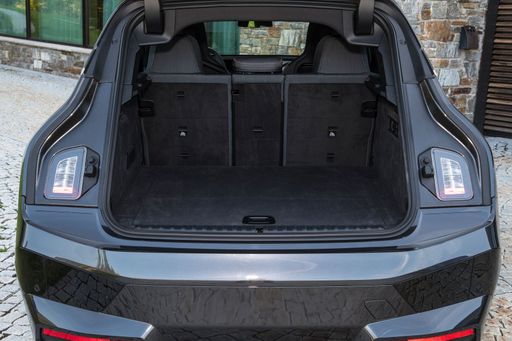
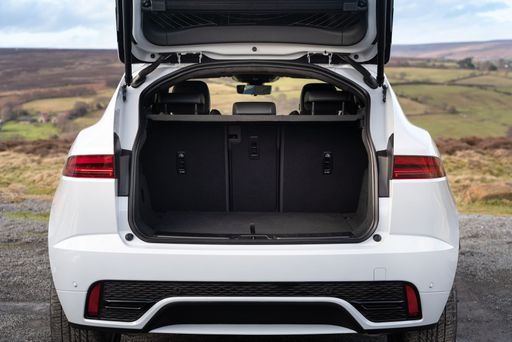
In terms of boot space, the BMW iX offers barely noticeable more room – 500 L compared to 494 L. That’s a difference of about 6 L.
In maximum load capacity, the BMW iX performs distinct better – up to 1750 L, which is about 580 L more than the Jaguar E-Pace.
When it comes to payload, BMW iX barely noticeable takes the win – 575 kg compared to 554 kg. That’s a difference of about 21 kg.
Who wins the race?
The BMW iX proves to be is largely superior and therefore becomes our DriveDuel Champion!
BMW iX is the better all-rounder in this comparison.
from about £71,600
 @ BMW Group Press
BMW iX
BMW iX
Jaguar E-Pace
Costs and Consumption
View detailed analysis
View detailed analysis
Engine and Performance
View detailed analysis
View detailed analysis
Dimensions and Body
View detailed analysis
View detailed analysis
BMW iX
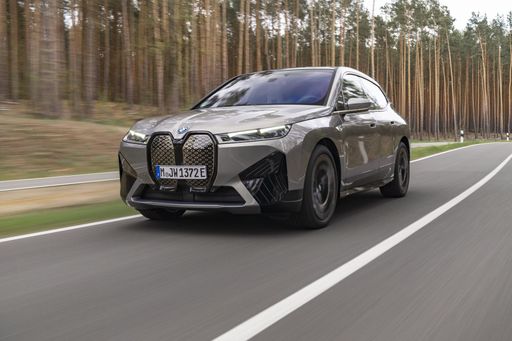
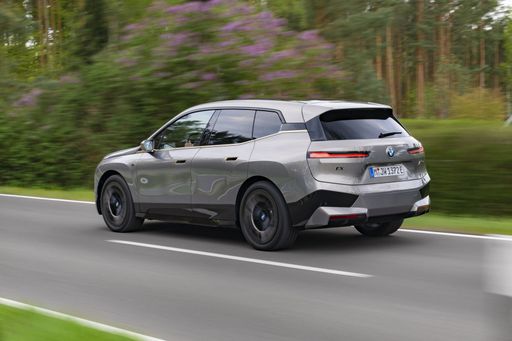
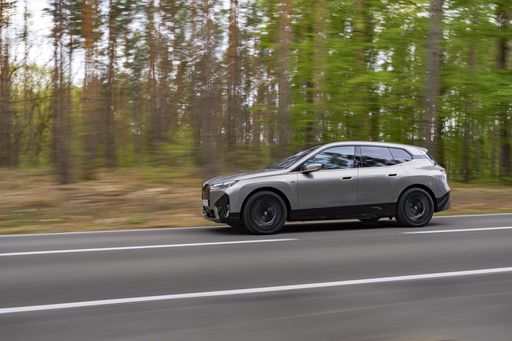
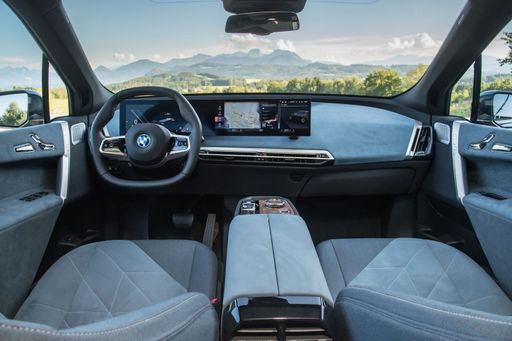
The BMW iX arrives like a tech-rich luxury SUV that refuses to shout, offering a serene yet authoritative road presence that suits both city commutes and long-distance cruising. Inside, its minimalist cabin wraps high-quality materials and clever interfaces around a driver-focused layout, making it feel more like a forward-thinking lounge than just another electric appliance — and yes, it still delivers the dynamic driving character you'd expect from a BMW.
details
@ BMW Group Press
 @ BMW Group Press
 @ BMW Group Press
 @ BMW Group Press
 @ BMW Group Press
Jaguar E-Pace
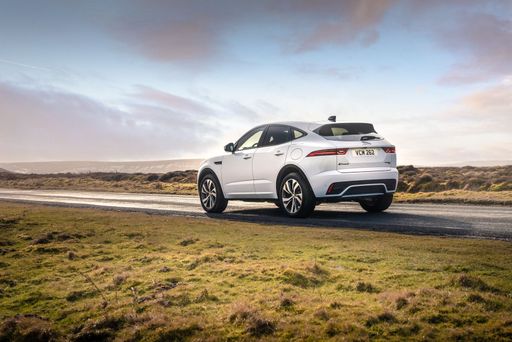
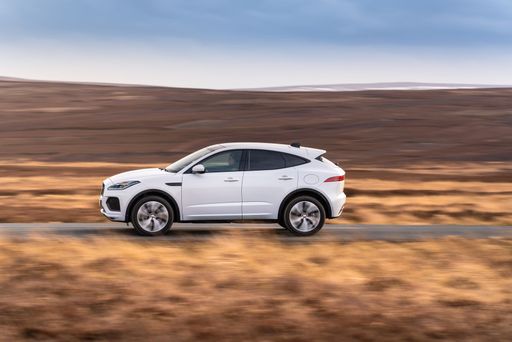
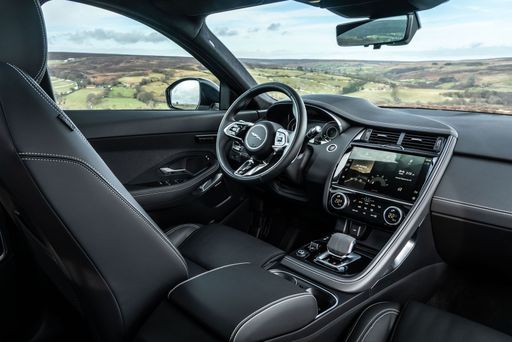
The Jaguar E-Pace brings compact SUV practicality together with taut, sporty design and unmistakable British charm, helping it stand out in a crowded class. Inside, the cabin feels premium and the driving manners are engaging enough to keep a grin on your face, making it a tempting choice for buyers who want Jaguar style without the bulk.
details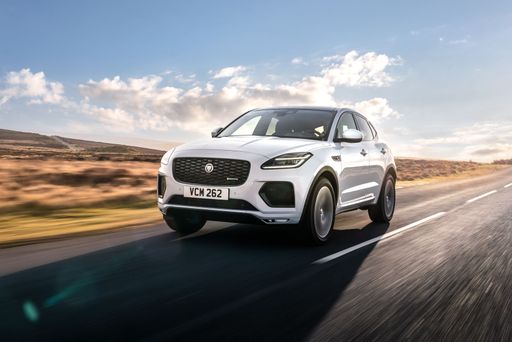 @ Jaguar Land Rover Media
 @ Jaguar Land Rover Media
 @ Jaguar Land Rover Media
 @ Jaguar Land Rover Media
 @ Jaguar Land Rover Media
BMW iX
Jaguar E-Pace
|
@ BMW Group Press
|
@ Jaguar Land Rover Media
|
|
|
|
Costs and Consumption |
|
|---|---|
|
Price
71600 - 107100 £
|
Price
32400 - 56100 £
|
|
Consumption L/100km
-
|
Consumption L/100km
1.4 - 8.2 L
|
|
Consumption kWh/100km
17.8 - 20.6 kWh
|
Consumption kWh/100km
-
|
|
Electric Range
600 - 701 km
|
Electric Range
69 km
|
|
Battery Capacity
96 - 109.6 kWh
|
Battery Capacity
11.50 kWh
|
|
co2
0 g/km
|
co2
33 - 185 g/km
|
|
Fuel tank capacity
-
|
Fuel tank capacity
56 - 67 L
|
Dimensions and Body |
|
|---|---|
|
Body Type
SUV
|
Body Type
SUV
|
|
Seats
5
|
Seats
5
|
|
Doors
5
|
Doors
5
|
|
Curb weight
2525 - 2655 kg
|
Curb weight
1783 - 2173 kg
|
|
Trunk capacity
500 L
|
Trunk capacity
494 L
|
|
Length
4965 mm
|
Length
4395 mm
|
|
Width
1970 mm
|
Width
1984 mm
|
|
Height
1688 - 1695 mm
|
Height
1648 mm
|
|
Max trunk capacity
1750 L
|
Max trunk capacity
1170 L
|
|
Payload
505 - 575 kg
|
Payload
497 - 554 kg
|
Engine and Performance |
|
|---|---|
|
Engine Type
Electric
|
Engine Type
Plugin Hybrid, Diesel MHEV, Petrol MHEV
|
|
Transmission
Automatic
|
Transmission
Automatic
|
|
Transmission Detail
Reduction Gearbox
|
Transmission Detail
Automatic Gearbox
|
|
Drive Type
All-Wheel Drive
|
Drive Type
All-Wheel Drive, Front-Wheel Drive
|
|
Power HP
408 - 659 HP
|
Power HP
160 - 269 HP
|
|
Acceleration 0-100km/h
3.8 - 5.1 s
|
Acceleration 0-100km/h
7.3 - 10.5 s
|
|
Max Speed
200 - 250 km/h
|
Max Speed
190 - 211 km/h
|
|
Torque
700 - 1015 Nm
|
Torque
260 - 540 Nm
|
|
Number of Cylinders
-
|
Number of Cylinders
3 - 4
|
|
Power kW
300 - 485 kW
|
Power kW
118 - 198 kW
|
|
Engine capacity
-
|
Engine capacity
1498 - 1998 cm3
|
General |
|
|---|---|
|
Model Year
2025
|
Model Year
2024
|
|
CO2 Efficiency Class
A
|
CO2 Efficiency Class
B, G
|
|
Brand
BMW
|
Brand
Jaguar
|
Is the BMW iX offered with different drivetrains?
The BMW iX is offered with All-Wheel Drive.
The prices and data displayed are estimates based on German list prices and may vary by country. This information is not legally binding.