VS

BMW X1 vs BMW 1 Series comparison

Compare performance (326 HP vs 300 HP), boot space and price (38,200 £ vs 28,800 £ ) at a glance. Find out which car is the better choice for you – BMW X1 or BMW 1 Series?

BMW X1 vs BMW 1 Series: Key differences

BMW X1

4.2 (6 Reviews)
rate
  • very slightly more power
  • substantially more efficient
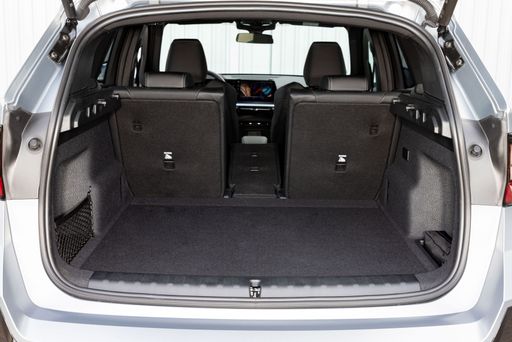
  • noticeably more trunk space

BMW 1 Series

5 (1 Reviews)
rate
  • markedly cheaper
  • a bit quicker 0–100 km/h
  • only slightly lighter

All details on performance, efficiency, range and trunk space can be found in the technical comparison below – including user reviews for both models.

X1

When considering a new vehicle, two of the popular options in BMW's lineup are the 1er Reihe (1 Series) and the X1. Each caters to distinct market segments and driving preferences, but both are emblematic of BMW's engineering prowess and commitment to innovation. In this comparison, we will explore the technical aspects, driving experiences, and innovations that set these two models apart.

1 Series

Design and Body Type

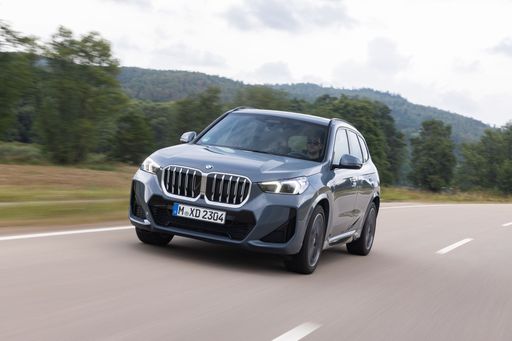
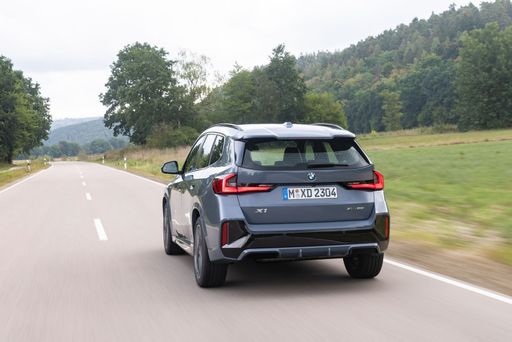
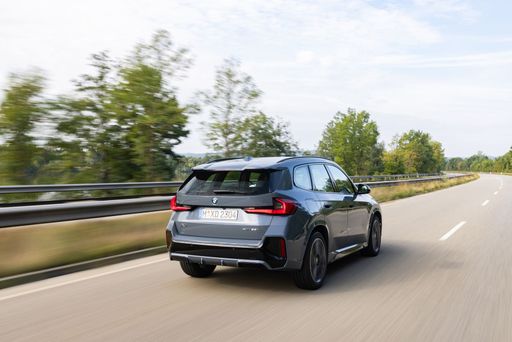
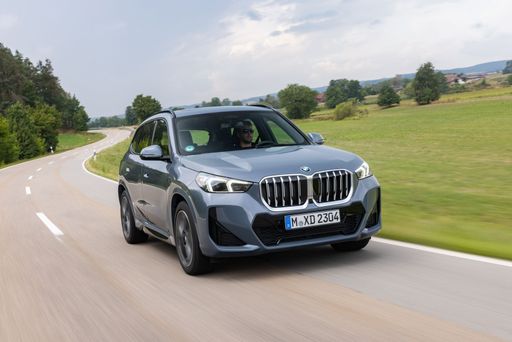
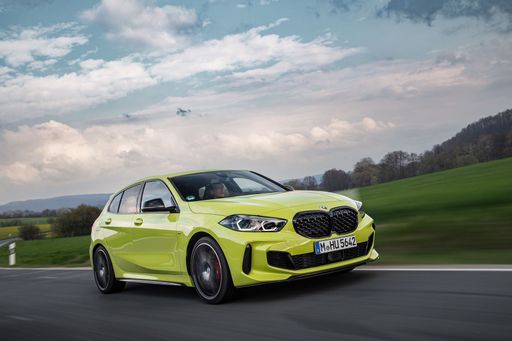
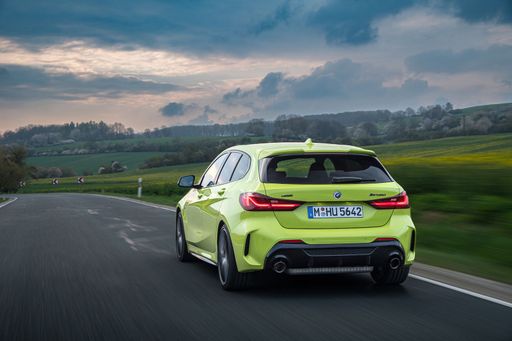
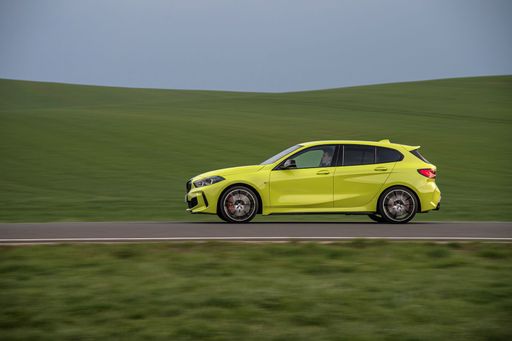
The BMW 1er Reihe is a compact hatchback that exudes sportiness and agility, perfect for urban environments. With its sleek lines and compact dimensions, it offers easy maneuverability without compromising on style. In contrast, the X1 is an SUV that combines practicality with a rugged aesthetic, catering to those who prefer a higher driving position and increased cargo capacity.

X1

Engine Options and Performance

The 1er Reihe offers a diverse range of engine options, including both petrol and diesel variants, with outputs ranging from 122 HP to a robust 300 HP in the top-tier model. Its acceleration is impressive, with some variants capable of reaching 0-100 km/h in as little as 4.9 seconds, making it a spirited choice for driving enthusiasts.

On the other hand, the BMW X1 showcases a broader engine repertoire, from a frugal 136 HP to a powerful 326 HP option. The hybrid model offers an electric range of up to 83 km, resulting in a commendable balance of performance and efficiency. The X1's acceleration times also impress, with top models clocking in at just 5.4 seconds from 0-100 km/h.

1 Series

Transmission and Drive Type

Both models come equipped with dual-clutch automatic transmissions, ensuring smooth gear changes and enhancing the driving experience. The drive type options include front-wheel drive and all-wheel drive, allowing drivers to choose based on their performance preferences and typical driving conditions. The X1, with its higher ground clearance, may offer more versatility in off-road situations compared to the more sport-focused 1er Reihe.

X1

Fuel Efficiency and Consumption

Efficiency is a critical consideration for most buyers today. The 1er Reihe boasts impressive fuel consumption figures, with some models achieving as low as 4.3 L/100km. This efficiency is complemented by a CO2 emission rating as favorable as 112 g/km.

The X1, while slightly less economical in its standard ECUs, still presents solid numbers, with the hybrid variant delivering outstanding emissions of only 17 g/km. Its fuel tank capacity of 54 liters allows for extended journeys without frequent stops at the pump.

1 Series

Interior Space and Comfort

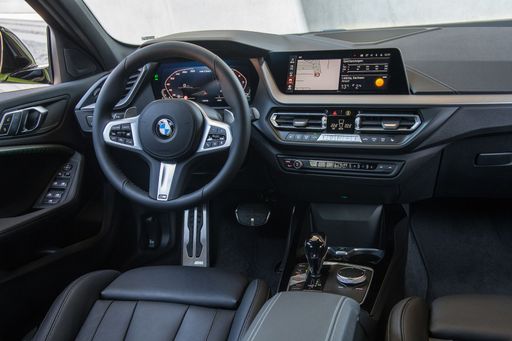
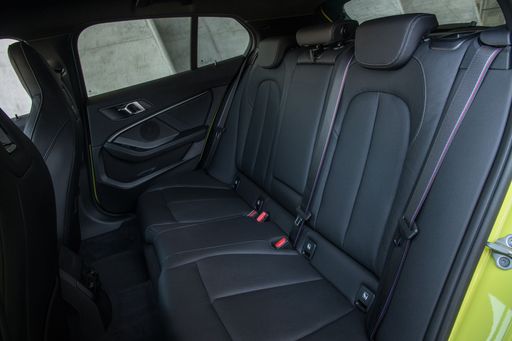
Inside, the 1er Reihe maintains its compact design with a spacious cabin that comfortably accommodates five passengers. The trunk capacity offers 380 to 300 liters depending on the variant, making it suitable for daily tasks and weekend getaways.

Conversely, the X1 excels in versatility with a trunk capacity ranging from 490 to 540 liters, perfect for families and outdoor enthusiasts. Both vehicles boast high-quality materials and BMW's hallmark attention to detail, ensuring a luxurious driving experience for all occupants.

X1

Technological Innovations

As with all modern BMWs, both the 1er Reihe and X1 are equipped with cutting-edge technology. Features such as BMW's iDrive system, driver assistance systems, and available augmented reality navigation distinguish these vehicles in the tech landscape. The X1's higher-end models also offer advanced infotainment systems, wireless charging options, and an expansive digital cockpit.

1 Series

Conclusion: Which One to Choose?

Choosing between the BMW 1er Reihe and the BMW X1 ultimately comes down to individual needs and preferences. If agility and a sportier experience are priorities, the 1er Reihe makes a compelling case. However, for those seeking practicality, additional cargo space, and versatility without sacrificing luxury, the X1 could be the ideal match.

Both models represent BMW's commitment to performance, luxury, and innovation, ensuring that whichever choice you make, you'll be driving a vehicle that embodies the joy of driving.

Here’s where it gets real: The technical differences in detail

X1

Costs and Efficiency:

Price and efficiency are often the first things buyers look at. Here it becomes clear which model has the long-term edge – whether at the pump, the plug, or in purchase price.

BMW 1 Series is markedly cheaper – starting at 28,800 £ , while the BMW X1 costs 38,200 £ . That’s a price difference of around 9,428 £.

Fuel consumption also shows a difference: the BMW X1 uses 2.5 L/100km and is substantially more efficient than the BMW 1 Series with 4.3 L/100km. The difference is about 1.8 L/100km.

1 Series

Engine and Performance:

Under the bonnet, it becomes clear which model is tuned for sportiness and which one takes the lead when you hit the accelerator.

When it comes to engine power, the BMW X1 offers very slightly more power – delivering 326 HP compared to 300 HP. That’s roughly 26 HP more horsepower.

When accelerating from 0 to 100 km/h, the BMW 1 Series is a bit quicker – completing the sprint in 4.9 s, while the BMW X1 takes 5.4 s. That’s about 0.5 s quicker.

Looking at top speed, the BMW 1 Series is barely faster – reaching 250 km/h, while the BMW X1 tops out at 233 km/h. The difference is around 17 km/h.

There’s also a difference in torque: the BMW X1 delivers moderately more torque with 477 Nm compared to 400 Nm. That’s about 77 Nm more.

X1

Space and Everyday Use:

Cabin size, boot volume and payload all play a role in everyday practicality. Here, comfort and flexibility make the difference.

Both vehicles offer seating for 5 people.

In terms of curb weight, BMW 1 Series is only slightly lighter – 1,465 kg compared to 1,575 kg. The difference is around 110 kg.

Looking at boot space, the BMW X1 offers noticeably more boot space – 540 L compared to 380 L. That’s a difference of about 160 L.

For maximum load capacity, the BMW X1 offers clearly more capacity – up to 1,545 L, about 345 L more than the BMW 1 Series.

When it comes to payload, the BMW 1 Series carries very slightly more – 510 kg compared to 500 kg. That’s a difference of about 10 kg.

Who wins the race in the data check?

The BMW X1 holds a decisive overall lead in the objective data comparison.
This result only shows which model scores more points on paper – not which of the two cars feels right for you.

from £38,200
X1

BMW X1

  • Engine Type : Diesel MHEV, Petrol MHEV, Petrol, Diesel, Plugin Hybrid
  • Transmission : Automatic
  • Drive Type : Front-Wheel Drive, All-Wheel Drive
  • Power HP : 136 - 326 HP
  • Consumption L/100km : 2.5 - 7.7 L/100km
  • Electric Range : 81 km
BMW X1
BMW 1 Series

Costs and Consumption

View detailed analysis

Engine and Performance

View detailed analysis

Dimensions and Body

View detailed analysis

BMW X1

The BMW X1 brings a premium feel to compact crossover life, wrapping practical space and agile handling into a tidy, upscale package. It’s ideal for buyers who want BMW driving dynamics without the bulk, offering everyday comfort and a few clever tricks to keep the commute interesting.

details

BMW 1 Series

The BMW 1 Series is a compact premium hatchback that injects a proper sense of driving fun into everyday life, with sharp handling and a cabin that punches above its class. It’s a great pick for buyers who want sporty manners without losing practicality, and yes, you’ll still get that unmistakable BMW grin behind the wheel.

details
BMW X1
BMW 1 Series

Costs and Consumption

Price
38,200 - 55,500 £
Price
28,800 - 51,100 £
Consumption L/100km
2.5 - 7.7 L/100km
Consumption L/100km
4.3 - 7.6 L/100km
Consumption kWh/100km
-
Consumption kWh/100km
-
Electric Range
81 km
Electric Range
-
Battery Capacity
14.2 kWh
Battery Capacity
-
co2
57 - 175 g/km
co2
112 - 173 g/km
Fuel tank capacity
47 - 54 L
Fuel tank capacity
49 L

Dimensions and Body

Body Type
SUV
Body Type
Hatchback
Seats
5
Seats
5
Doors
5
Doors
5
Curb weight
1,575 - 1,935 kg
Curb weight
1,465 - 1,625 kg
Trunk capacity
490 - 540 L
Trunk capacity
300 - 380 L
Length
4,500 mm
Length
4,361 mm
Width
1,845 mm
Width
1,800 mm
Height
1,630 - 1,642 mm
Height
1,459 mm
Max trunk capacity
1,495 - 1,545 L
Max trunk capacity
1,135 - 1,200 L
Payload
490 - 500 kg
Payload
475 - 510 kg

Engine and Performance

Engine Type
Diesel MHEV, Petrol MHEV, Petrol, Diesel, Plugin Hybrid
Engine Type
Diesel, Petrol MHEV, Diesel MHEV, Petrol
Transmission
Automatic
Transmission
Automatic
Transmission Detail
Dual-Clutch Automatic
Transmission Detail
Dual-Clutch Automatic
Drive Type
Front-Wheel Drive, All-Wheel Drive
Drive Type
Front-Wheel Drive, All-Wheel Drive
Power HP
136 - 326 HP
Power HP
122 - 300 HP
Acceleration 0-100km/h
5.4 - 9.2 s
Acceleration 0-100km/h
4.9 - 9.8 s
Max Speed
190 - 233 km/h
Max Speed
210 - 250 km/h
Torque
230 - 477 Nm
Torque
230 - 400 Nm
Number of Cylinders
3 - 4
Number of Cylinders
3 - 4
Power kW
100 - 240 kW
Power kW
90 - 221 kW
Engine capacity
1,499 - 1,998 cm3
Engine capacity
1,499 - 1,998 cm3

General

Model Year
2,024 - 2,025
Model Year
2,024
CO2 Efficiency Class
D, E, F, B
CO2 Efficiency Class
D, C, F
Brand
BMW
Brand
BMW
DriveDuel uses data analysis and artificial intelligence to evaluate vehicle data and create content. Content is regularly reviewed and improved. The displayed prices are estimates based on German list prices, adjusted to the respective country’s VAT. Country-specific registration taxes are not included. This information is not legally binding.