VS

BMW X1 vs BMW 3 Series Touring comparison

Compare performance (326 HP vs 530 HP), boot space and price (38,200 £ vs 41,100 £ ) at a glance. Find out which car is the better choice for you – BMW X1 or BMW 3 Series Touring?

BMW X1 vs BMW 3 Series Touring: Key differences

BMW X1

4.2 (6 Reviews)
rate
  • barely cheaper
  • marginally lighter
  • very slightly more trunk space

BMW 3 Series Touring

4.3 (1 Reviews)
rate
  • noticeably more power
  • slightly more electric range
  • significantly quicker 0–100 km/h

All details on performance, efficiency, range and trunk space can be found in the technical comparison below – including user reviews for both models.

X1

The automotive landscape is constantly evolving, with brands like BMW pushing the envelope in terms of technology, style, and performance. Two standout models from BMW’s lineup are the 3er Touring and the X1. Both vehicles cater to different segments of the market but share a common thread of sophistication and innovation. This article will dive into a comprehensive comparison of these two impressive vehicles.
3 Series Touring

Body Styles and Dimensions

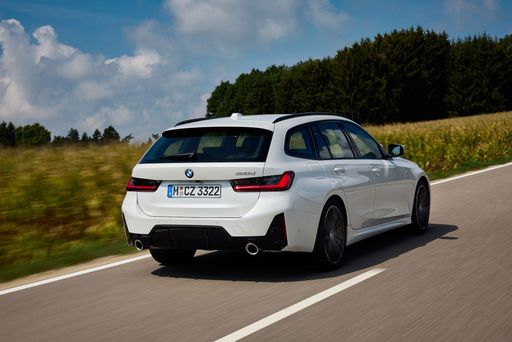
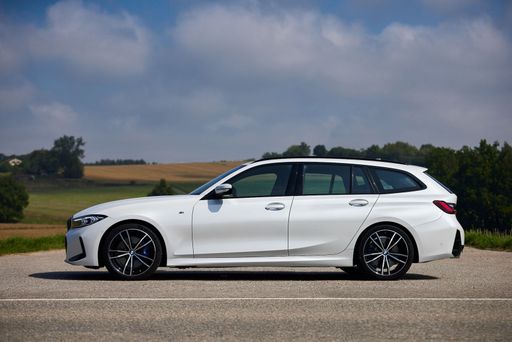
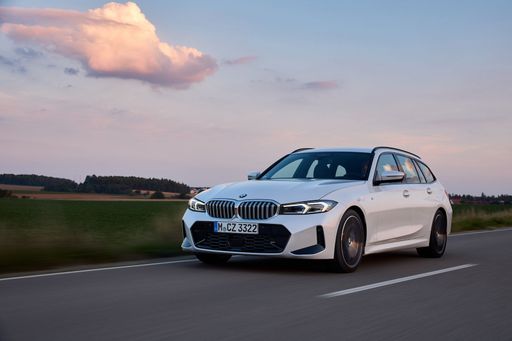
The BMW 3er Touring is a sleek wagon that combines sportiness with practical space, measuring approximately 4,713 mm in length and 1,827 mm in width. Its height stands at about 1,440 mm, providing a low and aggressive stance that enhances aerodynamics.

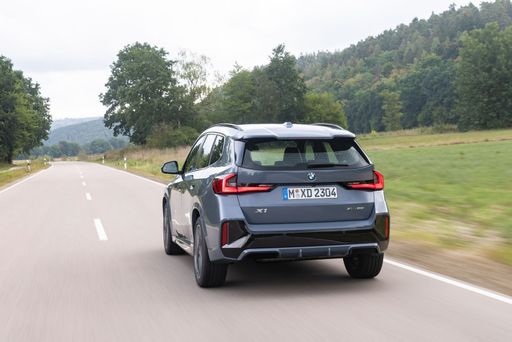
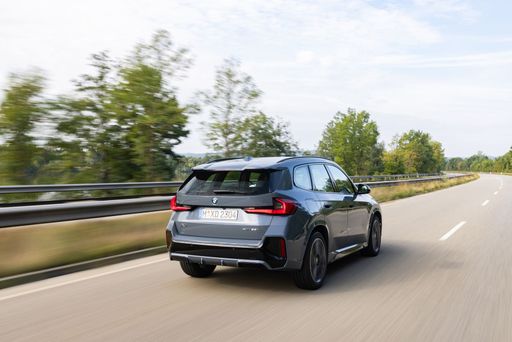
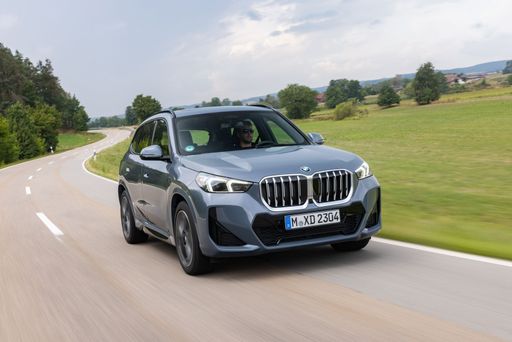
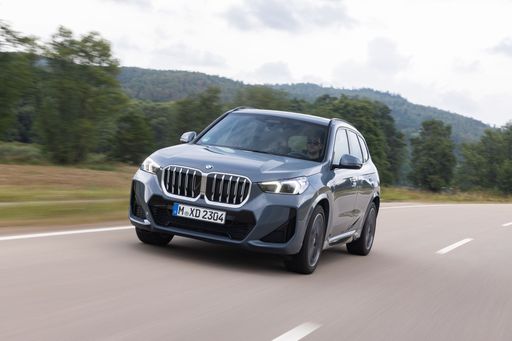
On the other hand, the BMW X1 is an SUV that offers a higher ride height and rugged aesthetics. With a length of approximately 4,500 mm and a width of 1,845 mm, the X1 is slightly shorter but wider than the 3er Touring. Its taller profile, reaching up to 1,642 mm, provides a commanding view of the road and ample interior space for occupants and cargo.

X1

Engine Options and Powertrains

When it comes to engine choices, both the 3er Touring and X1 offer a range of options that cater to both performance enthusiasts and economy-minded drivers. The 3er Touring features a variety of powertrains including diesel, petrol, and hybrid options with power outputs ranging from 150 HP to a staggering 374 HP in the M Performance variant.

The X1 also provides an impressive lineup, with power outputs ranging from 136 HP to 326 HP. Its engine lineup includes both traditional petrol and diesel variants along with MHEV and plug-in hybrid options, ensuring a diverse array of choices for buyers.

3 Series Touring

Fuel Efficiency and Environmental Considerations

Fuel efficiency is pivotal in today’s automotive climate, and both models perform admirably. The 3er Touring boasts a combined consumption of between 5.1 to 10.4 L/100 km, depending on the engine variant. Notably, the plug-in hybrid version achieves an astounding 0.9 L/100 km, showcasing its electric capabilities with a range of up to 96 km.

Similarly, the X1 impresses with its engine lineup, yielding figures as low as 4.6 L/100 km in its most economical forms. The plug-in hybrid variant offers an electric range of approximately 83 km, emphasizing its commitment to sustainability.

X1

Technology and Interior Features

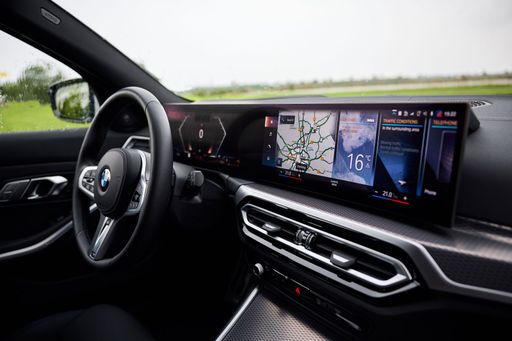
In terms of technology, BMW has outfitted both models with their latest advancements. The 3er Touring features the BMW iDrive system, displaying all vital information on a high-resolution screen. The array of connectivity options includes Apple CarPlay and Android Auto integration, ensuring seamless connectivity for all occupants.

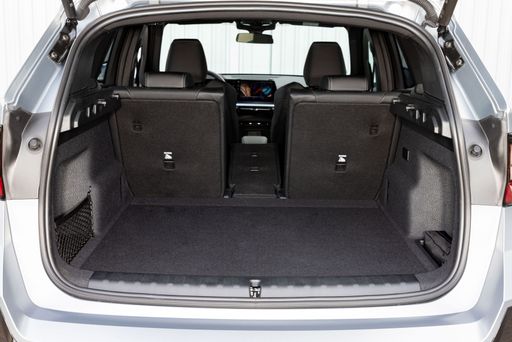
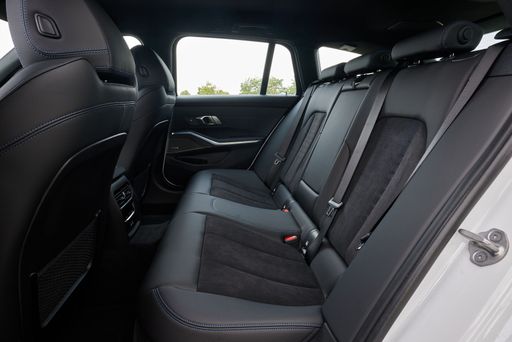
The X1's interior aligns with this standard, boasting a modern design that prioritizes comfort and convenience. It also offers ample cargo space, with a trunk capacity of up to 540 liters, compared to the 3er Touring's 500 liters. This aspect makes the X1 more suited for family outings and adventures.

3 Series Touring

Driving Dynamics and Performance

The driving dynamics of the 3er Touring are sport-oriented, with rear-wheel and all-wheel drive options making it a favorite for driving enthusiasts. Its various powertrains allow for rapid acceleration, with the M variant achieving 0-100 km/h in just 3.6 seconds.

While the X1 is not as performance-focused, it compensates with a more versatile driving experience suitable for urban environments and light off-road excursions. The all-wheel drive variant enhances stability and traction, making it capable in various weather conditions.

X1

Conclusion: Which One is Right for You?

Choosing between the BMW 3er Touring and BMW X1 ultimately depends on your needs and lifestyle. The 3er Touring combines practicality with sporty performance, making it ideal for those who want a dynamic driving experience without sacrificing space.

Conversely, the X1 offers a higher driving position, more cargo capacity, and a rugged appeal, making it a suitable choice for families and adventure seekers. Both models exemplify BMW’s commitment to quality, performance, and innovation, making either choice a compelling one in today’s automotive market.

Here’s where it gets real: The technical differences in detail

X1

Costs and Efficiency:

When it comes to price and running costs, the biggest differences usually appear. This is often where you see which car fits your budget better in the long run.

BMW X1 is barely cheaper – starting at 38,200 £ , while the BMW 3 Series Touring costs 41,100 £ . That’s a price difference of around 2,829 £.

Both cars consume an average of 2.5 L/100km – no difference here.

As for electric range, the BMW 3 Series Touring offers slightly more range – reaching up to 97 km, about 16 km more than the BMW X1.

3 Series Touring

Engine and Performance:

Power, torque and acceleration are the classic benchmarks for car enthusiasts – and here, some clear differences start to show.

When it comes to engine power, the BMW 3 Series Touring offers noticeably more power – delivering 530 HP compared to 326 HP. That’s roughly 204 HP more horsepower.

When accelerating from 0 to 100 km/h, the BMW 3 Series Touring is significantly quicker – completing the sprint in 3.6 s, while the BMW X1 takes 5.4 s. That’s about 1.8 s quicker.

Looking at top speed, the BMW 3 Series Touring is marginally faster – reaching 250 km/h, while the BMW X1 tops out at 233 km/h. The difference is around 17 km/h.

There’s also a difference in torque: the BMW 3 Series Touring delivers clearly more torque with 700 Nm compared to 477 Nm. That’s about 223 Nm more.

X1

Space and Everyday Use:

Cabin size, boot volume and payload all play a role in everyday practicality. Here, comfort and flexibility make the difference.

Both vehicles offer seating for 5 people.

In terms of curb weight, BMW X1 is marginally lighter – 1,575 kg compared to 1,650 kg. The difference is around 75 kg.

Looking at boot space, the BMW X1 offers very slightly more boot space – 540 L compared to 500 L. That’s a difference of about 40 L.

For maximum load capacity, the BMW X1 offers very slightly more capacity – up to 1,545 L, about 35 L more than the BMW 3 Series Touring.

When it comes to payload, the BMW 3 Series Touring carries marginally more – 520 kg compared to 500 kg. That’s a difference of about 20 kg.

Who wins the race in the data check?

The BMW 3 Series Touring is decisively ahead in the objective data comparison.
This result only shows which model scores more points on paper – not which of the two cars feels right for you.

from £41,100
3 Series Touring

BMW 3 Series Touring

  • Engine Type : Diesel MHEV, Petrol, Petrol MHEV, Plugin Hybrid
  • Transmission : Automatic
  • Drive Type : Rear-Wheel Drive, All-Wheel Drive
  • Power HP : 150 - 530 HP
  • Consumption L/100km : 2.5 - 10.3 L/100km
  • Electric Range : 91 - 97 km
BMW X1
BMW 3 Series Touring

Costs and Consumption

View detailed analysis

Engine and Performance

View detailed analysis

Dimensions and Body

View detailed analysis

BMW X1

The BMW X1 brings a premium feel to compact crossover life, wrapping practical space and agile handling into a tidy, upscale package. It’s ideal for buyers who want BMW driving dynamics without the bulk, offering everyday comfort and a few clever tricks to keep the commute interesting.

details

BMW 3 Series Touring

The BMW 3 Series Touring blends sporting poise with everyday practicality, wrapping sharp handling and a premium cabin into a wagon that actually makes errands feel enjoyable. It’s the kind of car that hides a family-hauler’s sense of duty beneath a driver's-car attitude — useful, classy, and just cheeky enough to make you smile on the open road.

details
BMW X1
BMW 3 Series Touring

Costs and Consumption

Price
38,200 - 55,500 £
Price
41,100 - 91,900 £
Consumption L/100km
2.5 - 7.7 L/100km
Consumption L/100km
2.5 - 10.3 L/100km
Consumption kWh/100km
-
Consumption kWh/100km
-
Electric Range
81 km
Electric Range
91 - 97 km
Battery Capacity
14.2 kWh
Battery Capacity
19.5 kWh
co2
57 - 175 g/km
co2
57 - 233 g/km
Fuel tank capacity
47 - 54 L
Fuel tank capacity
40 - 59 L

Dimensions and Body

Body Type
SUV
Body Type
Estate
Seats
5
Seats
5
Doors
5
Doors
5
Curb weight
1,575 - 1,935 kg
Curb weight
1,650 - 2,025 kg
Trunk capacity
490 - 540 L
Trunk capacity
410 - 500 L
Length
4,500 mm
Length
4,713 mm
Width
1,845 mm
Width
1,827 - 1,903 mm
Height
1,630 - 1,642 mm
Height
1,440 - 1,448 mm
Max trunk capacity
1,495 - 1,545 L
Max trunk capacity
1,420 - 1,510 L
Payload
490 - 500 kg
Payload
430 - 520 kg

Engine and Performance

Engine Type
Diesel MHEV, Petrol MHEV, Petrol, Diesel, Plugin Hybrid
Engine Type
Diesel MHEV, Petrol, Petrol MHEV, Plugin Hybrid
Transmission
Automatic
Transmission
Automatic
Transmission Detail
Dual-Clutch Automatic
Transmission Detail
Automatic Gearbox
Drive Type
Front-Wheel Drive, All-Wheel Drive
Drive Type
Rear-Wheel Drive, All-Wheel Drive
Power HP
136 - 326 HP
Power HP
150 - 530 HP
Acceleration 0-100km/h
5.4 - 9.2 s
Acceleration 0-100km/h
3.6 - 8.8 s
Max Speed
190 - 233 km/h
Max Speed
213 - 250 km/h
Torque
230 - 477 Nm
Torque
250 - 700 Nm
Number of Cylinders
3 - 4
Number of Cylinders
4 - 6
Power kW
100 - 240 kW
Power kW
110 - 390 kW
Engine capacity
1,499 - 1,998 cm3
Engine capacity
1,995 - 2,998 cm3

General

Model Year
2,024 - 2,025
Model Year
2,024 - 2,025
CO2 Efficiency Class
D, E, F, B
CO2 Efficiency Class
D, E, F, G, B
Brand
BMW
Brand
BMW
DriveDuel uses data analysis and artificial intelligence to evaluate vehicle data and create content. Content is regularly reviewed and improved. The displayed prices are estimates based on German list prices, adjusted to the respective country’s VAT. Country-specific registration taxes are not included. This information is not legally binding.