@ BMW Group Press
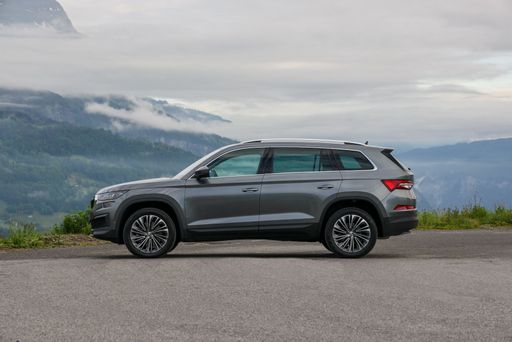
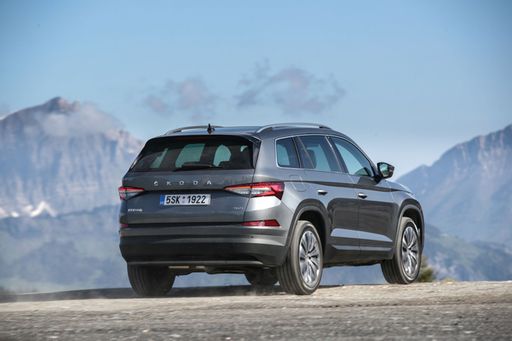
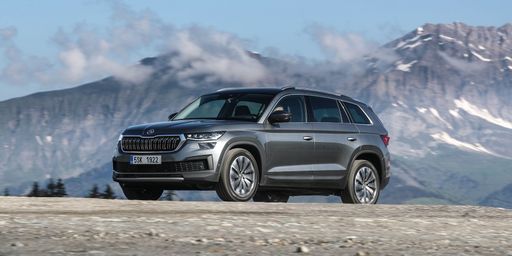
@ Škoda Auto a.s. / Škoda Storyboard
VS

BMW X1 vs Skoda Kodiaq – Which car suits you better?

Everyday use, family trips or long-distance drives – here’s where the differences show.
Discover whether BMW X1 or Skoda Kodiaq fits your lifestyle better.

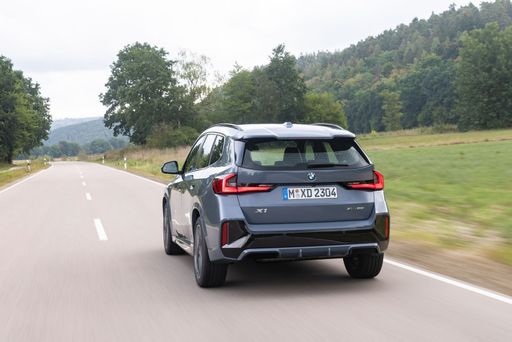
X1 @ BMW Group Press

BMW X1 vs Skoda Kodiaq: Clash of the Compact SUVs

In the bustling world of compact SUVs, the BMW X1 and the Skoda Kodiaq have emerged as strong contenders. Both vehicles are designed to offer the perfect blend of performance, comfort, and innovation. But how do they stack up against each other? Let's delve into the technical aspects and innovations that distinguish these two models.
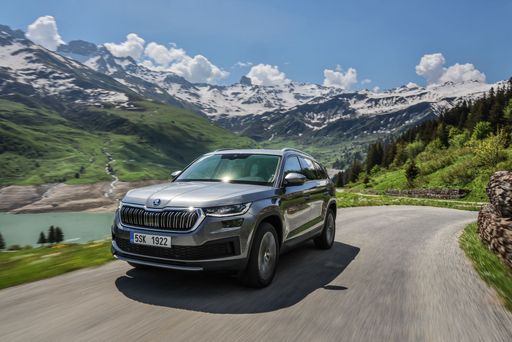
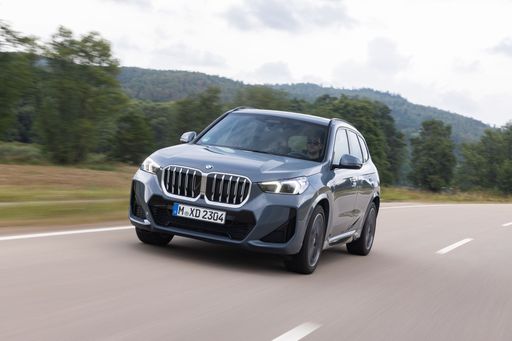
Kodiaq @ Škoda Auto a.s. / Škoda Storyboard

Power and Performance

The BMW X1 comes with a variety of engine options, including diesel, petrol, and hybrid powertrains. It boasts an impressive power range from 136 HP to 326 HP, making it a versatile choice for both city drives and highway commutes. The top speed reaches up to 250 km/h, and acceleration from 0 to 100 km/h ranges from 5.4 to 9.2 seconds. This model is available in both front-wheel drive and all-wheel drive configurations.

On the other hand, the Skoda Kodiaq also provides a compelling array of engine choices, spanning from conventional petrol and diesel engines to plug-in hybrids. The Kodiaq's power ranges from 150 HP to 265 HP with maximum speeds up to 231 km/h. Acceleration figures are competitive, ranging from 6.3 to 9.7 seconds. Similar to the X1, it offers both front-wheel and all-wheel drive options.

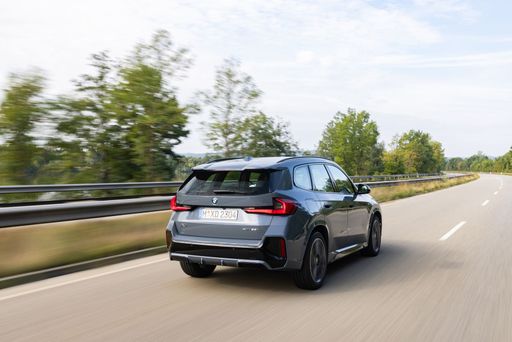
X1 @ BMW Group Press

Technical Innovations

When it comes to technical innovations, the BMW X1 shines with a well-rounded offering of modern technology. The dual-clutch automatic transmission promises smooth gear transitions, while the plug-in hybrid variant boasts an electric range of up to 83 km, thanks to a 14.2 kWh battery capacity.

The Skoda Kodiaq aims to impress with its own set of innovations. It offers a larger electric range of up to 123 km, benefiting from a more substantial 19.7 kWh battery. The dual-clutch automatic transmission also features prominently in the Kodiaq lineup, ensuring an effortless driving experience.

Kodiaq @ Škoda Auto a.s. / Škoda Storyboard

Design and Dimensions

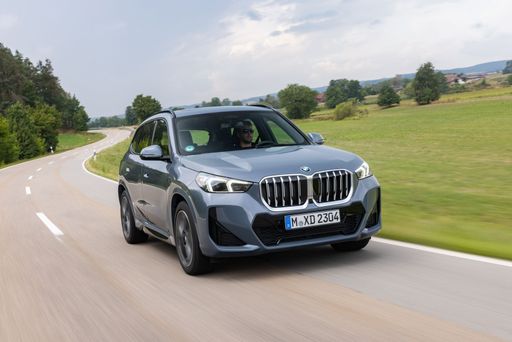
Both SUVs make a bold statement on the road. The BMW X1, with its dimensions of approximately 4500 mm in length and 1845 mm in width, presents a sporty and compact profile. It stands at a height range of 1622 mm to 1642 mm, offering agility and ease of parking in urban settings.

In contrast, the Skoda Kodiaq is slightly more extensive, with a length of around 4761 mm and a width of 1864 mm. Its height ranges from 1663 mm to 1683 mm, providing a more commanding presence on the road and a spacious interior environment.

X1 @ BMW Group Press

Interior and Cargo Space

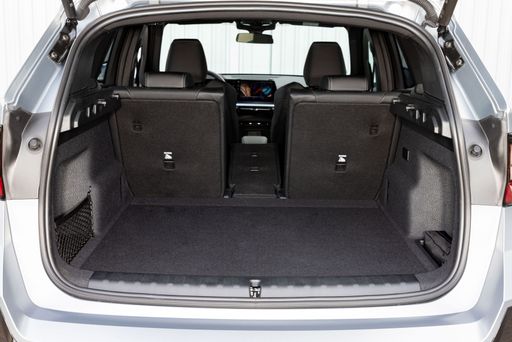
Both models provide comfortable seating for up to five passengers. The BMW X1 offers a trunk capacity between 490 L and 540 L, making it suitable for daily errands and weekend getaways. Its premium interior materials and advanced technology options cater to a luxurious experience.

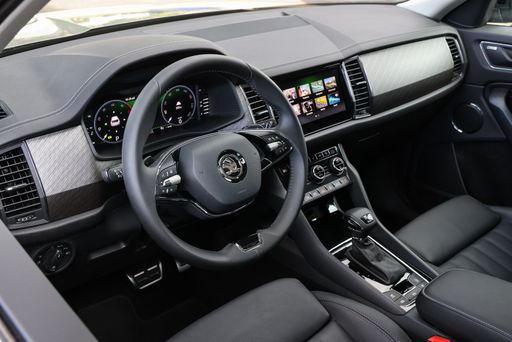
Meanwhile, the Skoda Kodiaq stands out with its expansive trunk capacity of up to 910 L, ideal for families and long-haul travelers needing additional storage space. The interior of the Kodiaq is designed with practicality and comfort in mind, balancing quality materials with user-friendly features.

Kodiaq @ Škoda Auto a.s. / Škoda Storyboard

Environmental Impact

Considering environmental efficiency, the BMW X1's CO2 emissions range from 17 to 175 g/km, with various engine and hybrid configurations offering flexibility in reducing environmental impact. The Skoda Kodiaq, with CO2 emissions ranging from 9 to 186 g/km, offers competitive efficiency, particularly with its plug-in hybrid variant.

X1 @ BMW Group Press

Conclusion

In conclusion, both the BMW X1 and Skoda Kodiaq offer compelling packages, each with distinct strengths. The BMW X1 is ideal for those seeking performance versatility and cutting-edge tech, while the Skoda Kodiaq appeals to those needing more space and an extended electric range. Ultimately, the choice between these two rivals depends on personal preferences and specific needs, whether it's performance, space, or environmental considerations.

Here’s where it gets real: The technical differences in detail

Kodiaq @ Škoda Auto a.s. / Škoda Storyboard

Costs and Efficiency:

Price and efficiency are key factors when choosing a car – and this is often where the real differences emerge.

Skoda Kodiaq has a barely noticeable advantage in terms of price – it starts at 36800 £, while the BMW X1 costs 38200 £. That’s a price difference of around 1380 £.

Fuel consumption also shows a difference: Skoda Kodiaq manages with 0.40 L and is therefore significantly more efficient than the BMW X1 with 2.50 L. The difference is about 2.10 L per 100 km.

As for range, the Skoda Kodiaq performs clearly perceptible better – achieving up to 123 km, about 42 km more than the BMW X1.

X1 @ BMW Group Press

Engine and Performance:

Power, torque and acceleration say a lot about how a car feels on the road. This is where you see which model delivers more driving dynamics.

When it comes to engine power, the BMW X1 has a slightly edge – offering 326 HP compared to 265 HP. That’s roughly 61 HP more horsepower.

In acceleration from 0 to 100 km/h, the BMW X1 is a bit quicker – completing the sprint in 5.40 s, while the Skoda Kodiaq takes 6.30 s. That’s about 0.90 s faster.

In terms of top speed, the BMW X1 performs hardly perceptible better – reaching 250 km/h, while the Skoda Kodiaq tops out at 231 km/h. The difference is around 19 km/h.

There’s also a difference in torque: BMW X1 pulls somewhat stronger with 477 Nm compared to 400 Nm. That’s about 77 Nm difference.

Kodiaq @ Škoda Auto a.s. / Škoda Storyboard

Space and Everyday Use:

Cabin size, boot volume and payload all play a role in everyday practicality. Here, comfort and flexibility make the difference.

Both vehicles offer seating for 5 people.

In curb weight, BMW X1 is slight lighter – 1575 kg compared to 1684 kg. The difference is around 109 kg.

In terms of boot space, the Skoda Kodiaq offers significantly more room – 910 L compared to 540 L. That’s a difference of about 370 L.

In maximum load capacity, the Skoda Kodiaq performs clearly perceptible better – up to 2105 L, which is about 505 L more than the BMW X1.

When it comes to payload, Skoda Kodiaq a bit takes the win – 563 kg compared to 500 kg. That’s a difference of about 63 kg.

Who comes out on top?

Overall, the Skoda Kodiaq shows itself to be outperforms in nearly all aspects and secures the title of DriveDuel Champion.
It convinces with the more balanced overall package and proves to be the more versatile choice for everyday use.

from about £36,800
Kodiaq @ Škoda Auto a.s. / Škoda Storyboard

Skoda Kodiaq

  • Engine Type : Plugin Hybrid, Petrol, Petrol MHEV, Diesel
  • Transmission : Automatic
  • Drive Type : Front-Wheel Drive, All-Wheel Drive
  • Power HP : 150 - 265 HP
  • Consumption L/100km : 0.4 - 8.2 L
  • Electric Range : 113 - 123 km

BMW X1

3.7 (3)
rate

The BMW X1 brings a premium feel to compact crossover life, wrapping practical space and agile handling into a tidy, upscale package. It’s ideal for buyers who want BMW driving dynamics without the bulk, offering everyday comfort and a few clever tricks to keep the commute interesting.

details

Skoda Kodiaq

5 (1)
rate

The Skoda Kodiaq blends sensible practicality with surprising style, so families and weekend adventurers get roomy comfort without looking like a moving van. It feels calm and composed on the road, packs clever storage and user-friendly tech, and manages to deliver a near-premium vibe without the pretension.

details
BMW X1
Skoda Kodiaq
X1 @ BMW Group Press
Kodiaq @ Škoda Auto a.s. / Škoda Storyboard

Costs and Consumption

Price
38200 - 55500 £
Price
36800 - 49600 £
Consumption L/100km
2.5 - 7.7 L
Consumption L/100km
0.4 - 8.2 L
Consumption kWh/100km
-
Consumption kWh/100km
-
Electric Range
81 km
Electric Range
113 - 123 km
Battery Capacity
14.20 kWh
Battery Capacity
19.70 kWh
co2
57 - 175 g/km
co2
9 - 186 g/km
Fuel tank capacity
47 - 54 L
Fuel tank capacity
45 - 58 L

Dimensions and Body

Body Type
SUV
Body Type
SUV
Seats
5
Seats
5
Doors
5
Doors
5
Curb weight
1575 - 1935 kg
Curb weight
1684 - 1970 kg
Trunk capacity
490 - 540 L
Trunk capacity
745 - 910 L
Length
4500 - 4505 mm
Length
4758 - 4761 mm
Width
1845 mm
Width
1864 mm
Height
1622 - 1642 mm
Height
1663 - 1683 mm
Max trunk capacity
1495 - 1600 L
Max trunk capacity
1945 - 2105 L
Payload
490 - 500 kg
Payload
460 - 563 kg

Engine and Performance

Engine Type
Diesel MHEV, Petrol MHEV, Petrol, Diesel, Plugin Hybrid
Engine Type
Plugin Hybrid, Petrol, Petrol MHEV, Diesel
Transmission
Automatic
Transmission
Automatic
Transmission Detail
Dual-Clutch Automatic
Transmission Detail
Dual-Clutch Automatic
Drive Type
Front-Wheel Drive, All-Wheel Drive
Drive Type
Front-Wheel Drive, All-Wheel Drive
Power HP
136 - 326 HP
Power HP
150 - 265 HP
Acceleration 0-100km/h
5.4 - 9.2 s
Acceleration 0-100km/h
6.3 - 9.7 s
Max Speed
190 - 250 km/h
Max Speed
205 - 231 km/h
Torque
230 - 477 Nm
Torque
250 - 400 Nm
Number of Cylinders
3 - 4
Number of Cylinders
4
Power kW
100 - 240 kW
Power kW
110 - 195 kW
Engine capacity
1499 - 1998 cm3
Engine capacity
1498 - 1984 cm3

General

Model Year
2024 - 2025
Model Year
2024 - 2025
CO2 Efficiency Class
D, E, F, B
CO2 Efficiency Class
B, F, G, E
Brand
BMW
Brand
Skoda
Is the BMW X1 offered with different drivetrains?

The BMW X1 is offered with Front-Wheel Drive or All-Wheel Drive.

The prices and data displayed are estimates based on German list prices and may vary by country. This information is not legally binding.