VS

BYD Atto 3 vs Lynk & Co 02 comparison

Compare performance (449 HP vs 272 HP), boot space and price (33,400 £ vs 30,900 £ ) at a glance. Find out which car is the better choice for you – BYD Atto 3 or Lynk & Co 02?

BYD Atto 3 vs Lynk & Co 02: Key differences

BYD Atto 3

4.7 (3 Reviews)
rate
  • clearly more power
  • marginally more efficient
  • moderately more electric range
  • considerably quicker 0–100 km/h
  • only slightly lighter
  • marginally more trunk space

Lynk & Co 02

4.8 (2 Reviews)
rate
  • only slightly cheaper

All details on performance, efficiency, range and trunk space can be found in the technical comparison below – including user reviews for both models.

By Achim Sedelmaier

Atto 3

BYD Atto 3 vs. Lynk & Co 02: Electric SUVs in the Spotlight

In the ever-evolving world of electric vehicles, the demand for innovative and efficient SUVs is burgeoning. Two formidable players in this domain are the BYD Atto 3 and the Lynk & Co 02. Both of these vehicles offer a glimpse into the future of sustainable driving with their cutting-edge technology and impressive capabilities. While they share some similarities, each has unique features that set them apart. This article delves into the details of these electric powerhouses to guide prospective drivers.
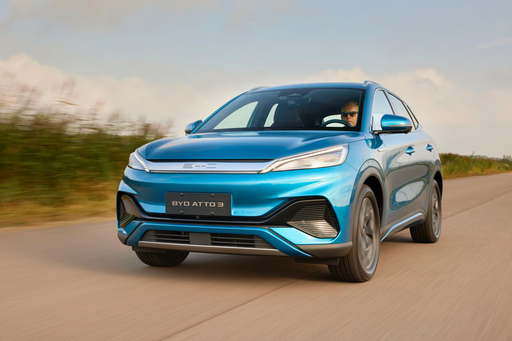
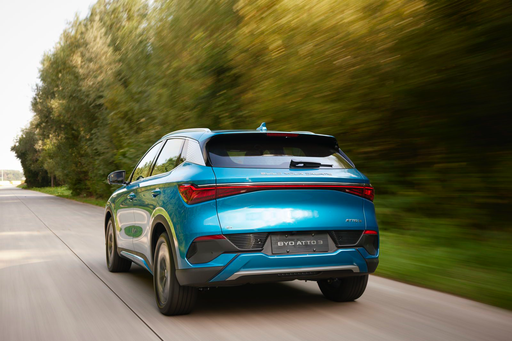
02

Sleek Designs and Dimensions

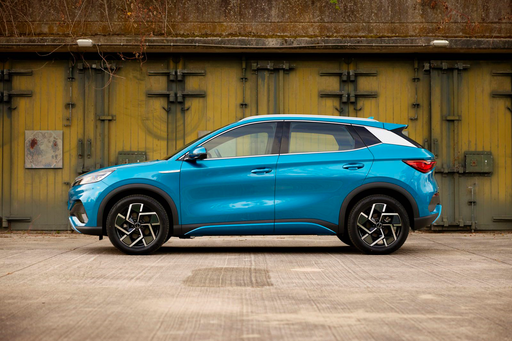
The BYD Atto 3 and the Lynk & Co 02 both belong to the SUV category. With the Atto 3 measuring 4455 mm in length, 1875 mm in width, and 1615 mm in height, it presents a robust and commanding presence on the road. The Lynk & Co 02 is marginally longer at 4460 mm, though slightly narrower and lower, at 1845 mm wide and 1573 mm tall. Both vehicles comfortably accommodate five passengers and offer a trunk capacity of 440 liters, ensuring ample space for storage.

Atto 3

Power and Performance

The heart of any electric vehicle lies in its engine and drivetrain capabilities. The BYD Atto 3 features a front-wheel-drive system powered by an electric motor that delivers 204 HP (150 kW) and 310 Nm of torque. It accelerates from 0-100 km/h in a respectable 7.3 seconds, with a maximum speed of 160 km/h.

On the other hand, the Lynk & Co 02 boasts a rear-wheel-drive setup, generating a more substantial 272 HP (200 kW) and 343 Nm of torque. It surpasses the Atto 3 in acceleration, reaching 0-100 km/h in just 5.5 seconds and achieving a top speed of 180 km/h. The difference in drive configuration may appeal to various driving preferences, offering a choice between the more traditional front-wheel-drive and the dynamic rear-wheel-drive experience.

Range and Efficiency

Electric range is a critical consideration for prospective EV owners. The BYD Atto 3 offers an electric range of 420 km and has a consumption rate of 16 kWh/100 km, making it an efficient option for daily commutes and long journeys alike.

The Lynk & Co 02 edges ahead slightly in terms of range, offering between 435 km and 445 km, depending on the model variant, with consumption figures ranging from 17.1 to 17.6 kWh/100 km. This slight advantage may attract those looking for extra assurance on longer trips.

Weight and Payload

Weight and payload are crucial factors influencing an SUV's overall performance and utility. The Atto 3 has a curb weight of 1825 kg and can carry a payload of 335 kg. Conversely, the Lynk & Co 02 is slightly lighter, weighing in at 1820 kg, yet it impresses with a higher payload capacity of 450 kg, providing additional utility for activities that require more load.

Conclusion: Choosing Your Electric Companion

Both the BYD Atto 3 and Lynk & Co 02 represent excellent options in the electric SUV market, each bringing something distinct to the table. The Atto 3 provides a well-rounded package with its efficiency and front-wheel-drive system, ideal for those seeking balance and reliability.

The Lynk & Co 02 stands out with its superior power, rear-wheel drive, and slightly better range, catering to drivers who prioritize performance and agility. Making a choice between these two comes down to individual preferences and lifestyle needs, but either way, you'll be investing in a future-forward, environmentally conscious vehicle that represents the vanguard of automotive technology.

Here’s where it gets real: The technical differences in detail

Atto 3

Costs and Efficiency:

Price and efficiency are often the first things buyers look at. Here it becomes clear which model has the long-term edge – whether at the pump, the plug, or in purchase price.

Lynk & Co 02 is only slightly cheaper – starting at 30,900 £ , while the BYD Atto 3 costs 33,400 £ . That’s a price difference of around 2,568 £.

In terms of energy consumption, the BYD Atto 3 is marginally more efficient: consuming 16 kWh/100km compared to 17.1 kWh/100km for the Lynk & Co 02. That’s a difference of about 1.1 kWh/100km.

As for electric range, the BYD Atto 3 offers moderately more range – reaching up to 510 km, about 65 km more than the Lynk & Co 02.

02

Engine and Performance:

Power, torque and acceleration are the classic benchmarks for car enthusiasts – and here, some clear differences start to show.

When it comes to engine power, the BYD Atto 3 offers clearly more power – delivering 449 HP compared to 272 HP. That’s roughly 177 HP more horsepower.

When accelerating from 0 to 100 km/h, the BYD Atto 3 is considerably quicker – completing the sprint in 3.9 s, while the Lynk & Co 02 takes 5.5 s. That’s about 1.6 s quicker.

Looking at top speed, the Lynk & Co 02 is somewhat faster – reaching 180 km/h, while the BYD Atto 3 tops out at 160 km/h. The difference is around 20 km/h.

There’s also a difference in torque: the BYD Atto 3 delivers considerably more torque with 560 Nm compared to 323 Nm. That’s about 237 Nm more.

Atto 3

Space and Everyday Use:

Cabin size, boot volume and payload all play a role in everyday practicality. Here, comfort and flexibility make the difference.

Both vehicles offer seating for 5 people.

In terms of curb weight, BYD Atto 3 is only slightly lighter – 1,825 kg compared to 1,895 kg. The difference is around 70 kg.

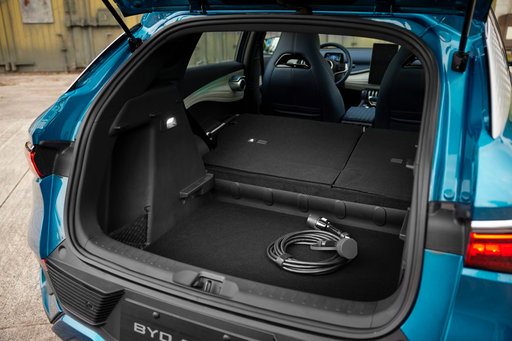
Looking at boot space, the BYD Atto 3 offers marginally more boot space – 440 L compared to 410 L. That’s a difference of about 30 L.

For maximum load capacity, the Lynk & Co 02 offers very slightly more capacity – up to 1,349 L, about 11 L more than the BYD Atto 3.

When it comes to payload, the Lynk & Co 02 carries slightly more – 375 kg compared to 335 kg. That’s a difference of about 40 kg.

Who wins the race in the data check?

The BYD Atto 3 is far ahead overall in the objective data comparison.
This result only shows which model scores more points on paper – not which of the two cars feels right for you.

from £33,400
Atto 3

BYD Atto 3

  • Engine Type : Electric
  • Transmission : Automatic
  • Drive Type : Front-Wheel Drive, Rear-Wheel Drive, All-Wheel Drive
  • Power HP : 204 - 449 HP
  • Consumption kWh/100km : 16 kWh/100km
  • Electric Range : 420 - 510 km
BYD Atto 3
Lynk & Co 02

Costs and Consumption

View detailed analysis

Engine and Performance

View detailed analysis

Dimensions and Body

View detailed analysis

BYD Atto 3

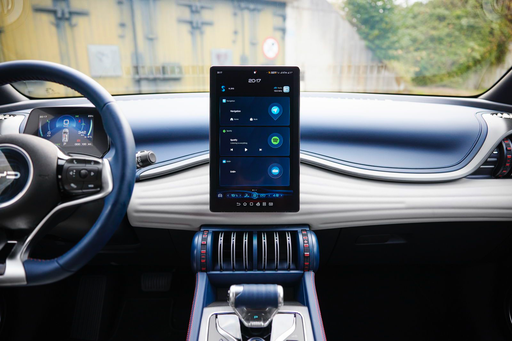
The BYD Atto 3 mixes quirky crossover styling with a cleverly packaged interior that feels more premium than its price suggests. Easy to drive, surprisingly practical and loaded with user-friendly tech, it's a strong choice for buyers who want an EV that's fun without being fussy.

details

Lynk & Co 02

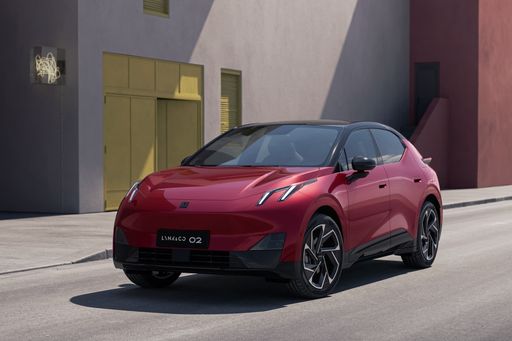
The Lynk & Co 02 wears its attitude like a leather jacket—bold styling and a youthful cabin that punches above its class, appealing to buyers who want personality as well as practicality. It's a genuinely engaging compact with everyday usability, offering enough flair and refinement to stand out in a crowded market without trying too hard.

details
BYD Atto 3
Lynk & Co 02

Costs and Consumption

Price
33,400 - 43,700 £
Price
30,900 - 34,300 £
Consumption L/100km
-
Consumption L/100km
-
Consumption kWh/100km
16 kWh/100km
Consumption kWh/100km
17.1 - 17.6 kWh/100km
Electric Range
420 - 510 km
Electric Range
435 - 445 km
Battery Capacity
-
Battery Capacity
-
co2
0 g/km
co2
0 g/km
Fuel tank capacity
-
Fuel tank capacity
-

Dimensions and Body

Body Type
SUV
Body Type
SUV
Seats
5
Seats
5
Doors
5
Doors
5
Curb weight
1,825 kg
Curb weight
1,895 kg
Trunk capacity
440 L
Trunk capacity
410 L
Length
4,455 mm
Length
4,460 mm
Width
1,875 mm
Width
1,845 mm
Height
1,615 mm
Height
1,573 mm
Max trunk capacity
1,338 L
Max trunk capacity
1,349 L
Payload
335 kg
Payload
375 kg

Engine and Performance

Engine Type
Electric
Engine Type
Electric
Transmission
Automatic
Transmission
Automatic
Transmission Detail
Reduction Gearbox
Transmission Detail
Reduction Gearbox
Drive Type
Front-Wheel Drive, Rear-Wheel Drive, All-Wheel Drive
Drive Type
Rear-Wheel Drive
Power HP
204 - 449 HP
Power HP
272 HP
Acceleration 0-100km/h
3.9 - 7.3 s
Acceleration 0-100km/h
5.5 s
Max Speed
160 km/h
Max Speed
180 km/h
Torque
310 - 560 Nm
Torque
323 Nm
Number of Cylinders
-
Number of Cylinders
-
Power kW
150 - 330 kW
Power kW
200 kW
Engine capacity
-
Engine capacity
-

General

Model Year
2,023 - 2,026
Model Year
2,024
CO2 Efficiency Class
A
CO2 Efficiency Class
A
Brand
BYD
Brand
Lynk & Co
DriveDuel uses data analysis and artificial intelligence to evaluate vehicle data and create content. Content is regularly reviewed and improved. The displayed prices are estimates based on German list prices, adjusted to the respective country’s VAT. Country-specific registration taxes are not included. This information is not legally binding.