VS

BYD Seal U vs Omoda 5 comparison

Compare performance (324 HP vs 224 HP), boot space and price (34,300 £ vs 24,800 £ ) at a glance. Find out which car is the better choice for you – BYD Seal U or Omoda 5?

BYD Seal U vs Omoda 5: Key differences

BYD Seal U

4.1 (8 Reviews)
rate
  • visibly more power
  • visibly more efficient
  • slightly more electric range
  • clearly quicker 0–100 km/h
  • visibly more trunk space
details

Omoda 5

4.9 (5 Reviews)
rate
  • noticeably cheaper
  • somewhat lighter
details

All details on performance, efficiency, range and trunk space can be found in the technical comparison below – including user reviews for both models.

By Achim Sedelmaier

Seal U

Head-to-head overview: BYD Seal U VS Omoda 5

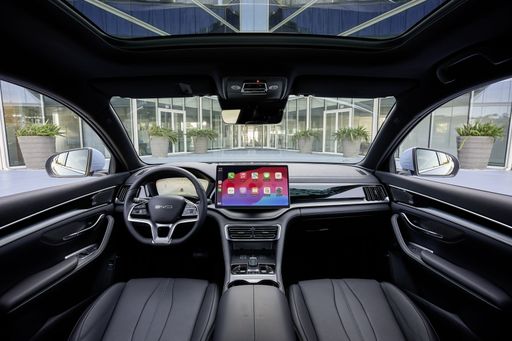
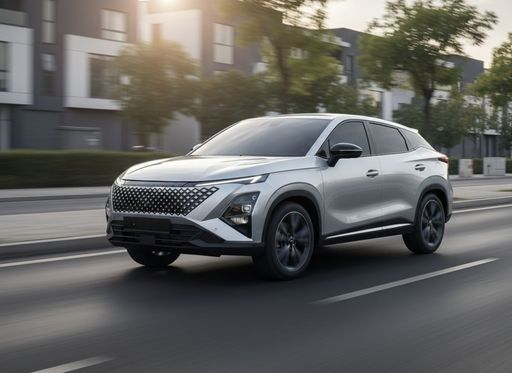
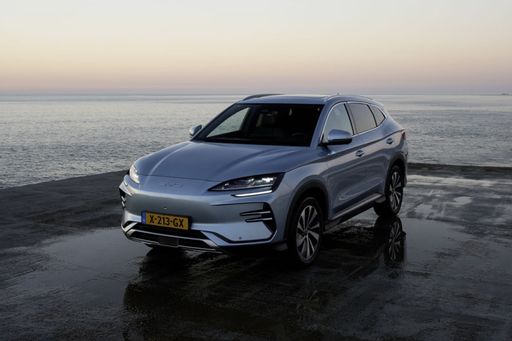
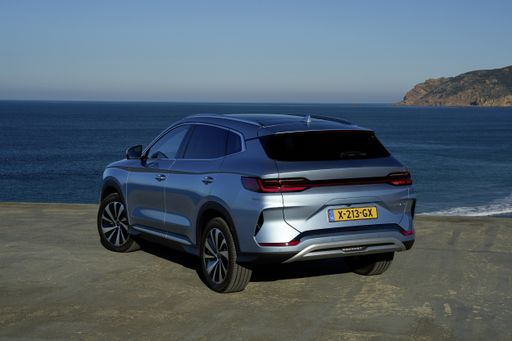
BYD Seal U VS Omoda 5 sets two different approaches to the compact-SUV space against each other: the BYD Seal U plays the comfort-and-equipment card, while the Omoda 5 emphasises bargain-packed spec and a long warranty. The Seal U feels like a deliberately calm, well-appointed family car that soothes motorway miles, whereas the Omoda 5 is scrappier in execution but attractive on price and features. Both deliver five seats and modern safety hardware, yet they use that common baseline very differently in cabin space and perceived quality. Read on to see which trade-offs matter most for your everyday use and travel patterns.
5

Character and driving feel

The BYD Seal U is tuned toward a relaxed, composed character — the steering is light and the ride is prioritised for comfort, giving the impression of a grown-up cruiser on fast roads. The Omoda 5 aims to impress with showroom spec but its steering and body control feel vaguer, so cornering confidence and driver engagement are weaker. If you value effortless motorway merging and brisk overtakes, the Seal U’s stronger propulsion and composed demeanor make it easier to hustle when needed. If you prioritise low purchase cost and don’t mind a less precise drive, the Omoda 5 will feel acceptable in most daily situations.

Seal U

Comfort and long‑distance behavior

On long trips the BYD Seal U clearly leans toward serenity: a quiet cabin, supportive seats with useful climate features and a suspension that soaks motorway miles with minimal fatigue. The Omoda 5 can be comfortable on steady highways — especially in its hybrid form which calms engine noise — but it betrays itself on rougher sections where the body can feel bouncy and more tiring over hours. Passengers will notice the Seal U’s flatter rear floor and generally more forgiving seats, while taller occupants in the Omoda 5 are more likely to feel cramped after several hours. Put simply, the Seal U makes long-distance travel feel like less work; the Omoda 5 asks you to accept compromises for its lower entry price.

Practicality, cabin feel and usability

The BYD Seal U presents a more mature cabin: materials and trim give a higher‑quality impression, and its rear packaging and flexible layout tend to be friendlier to families carrying passengers and luggage. The Omoda 5 wins on headline spec — lots of tech and convenience kit — yet that kit sits in a tighter interior with a smaller, flatter boot and a less forgiving rear bench. Both cars suffer from menu-heavy infotainment, but the Seal U’s screen and camera clarity feel more purposefully integrated, whereas the Omoda 5’s menus and frequent assistant prompts become a daily annoyance faster. If you load kids, pushchairs or bulky gear regularly, the BYD’s practicality edge will be tangible; if your priority is gadgetry and low purchase cost, the Omoda 5 still delivers the goods up front.

City friendliness and everyday usability

In town the Omoda 5’s more compact footprint and sharp showroom appeal make it feel nimble to park, and its baseline equipment helps with visibility despite a narrow rear-window view. The Seal U counters with a softer driving posture, easy steering and extensive camera aids that mask its larger size, making low-speed manoeuvres less stressful in routine parking situations. However, the Omoda 5’s petrol transmission can feel jerky in stop‑start traffic unless you opt for the smoother hybrid option, while the Seal U’s relaxed power delivery produces fewer surprises at low speeds. For daily urban chores the Omoda 5 is cheaper to buy and easier to tuck into tight spaces; the Seal U trades some of that agility for calmer, less fussy operation behind the wheel.

Who should choose which — buyer fit and the trade-offs ahead

Choose the BYD Seal U if you want a quietly comfortable family SUV with a more polished cabin, better rear packaging for passengers, and a driving experience built for long distances and low fatigue. Opt for the Omoda 5 if purchase price, long warranty and maximum on-paper equipment are your priorities and you can live with a tighter rear seat, smaller boot and a less precise driving feel. Both cope with everyday life, but the trade is clear: refinement and space versus bargain spec and warranty security. The technical comparison below will unpack range, consumption, boot practicality, acceleration and charging/weight trade-offs so you can match those real-world traits to your priorities.

Here’s where it gets real: The technical differences in detail

Seal U

Costs and Efficiency:

When it comes to price and running costs, the biggest differences usually appear. This is often where you see which car fits your budget better in the long run.

Omoda 5 is noticeably cheaper – starting at 24,800 £ , while the BYD Seal U costs 34,300 £ . That’s a price difference of around 9,506 £.

In terms of energy consumption, the BYD Seal U is visibly more efficient: consuming 12.1 kWh/100km compared to 15.9 kWh/100km for the Omoda 5. That’s a difference of about 3.8 kWh/100km.

As for electric range, the BYD Seal U offers slightly more range – reaching up to 500 km, about 70 km more than the Omoda 5.

5

Engine and Performance:

Power, torque and acceleration say a lot about how a car feels on the road. This is where you see which model delivers more driving dynamics.

When it comes to engine power, the BYD Seal U offers visibly more power – delivering 324 HP compared to 224 HP. That’s roughly 100 HP more horsepower.

When accelerating from 0 to 100 km/h, the BYD Seal U is clearly quicker – completing the sprint in 5.9 s, while the Omoda 5 takes 7.6 s. That’s about 1.7 s quicker.

There’s also a difference in torque: the BYD Seal U delivers visibly more torque with 550 Nm compared to 340 Nm. That’s about 210 Nm more.

Seal U

Space and Everyday Use:

Whether family car or daily driver – which one offers more room, flexibility and comfort?

Both vehicles offer seating for 5 people.

In terms of curb weight, Omoda 5 is somewhat lighter – 1,621 kg compared to 1,940 kg. The difference is around 319 kg.

Looking at boot space, the BYD Seal U offers visibly more boot space – 552 L compared to 350 L. That’s a difference of about 202 L.

When it comes to payload, the Omoda 5 carries visibly more – 536 kg compared to 410 kg. That’s a difference of about 126 kg.

Who wins the race in the data check?

The BYD Seal U is decisively ahead in the objective data comparison.
This result only shows which model scores more points on paper – not which of the two cars feels right for you.

from £34,300
Seal U

BYD Seal U

  • Engine Type Electric, Plugin Hybrid
  • Transmission Automatic
  • Drive Type Front-Wheel Drive, All-Wheel Drive
  • Power HP 218 - 324 HP
  • Consumption kWh/100km 12.1 - 20.5 kWh/100km
  • Electric Range 70 - 500 km
BYD Seal U
Omoda 5

Costs and Consumption

View detailed analysis

Engine and Performance

View detailed analysis

Dimensions and Body

View detailed analysis

BYD Seal U

The BYD Seal U is a sleek electric fastback that blends sporty styling with a roomy, tech-focused interior, making it an appealing choice for buyers who want electric performance without sacrificing comfort. It delivers a smooth, composed ride and intuitive features, positioning it as a practical yet modern option in the EV market.

details

Omoda 5

The Omoda 5 is a stylish compact crossover that catches the eye with a bold, contemporary look and a tech-forward cabin. It offers a comfortable ride and a surprisingly spacious interior, making it a practical yet distinctive choice for buyers who want modern features and solid value.

details
BYD Seal U
Omoda 5

Costs and Consumption

Price
34,300 - 39,800 £
Price
24,800 - 31,600 £
Consumption L/100km
-
Consumption L/100km
5.3 L/100km
Consumption kWh/100km
12.1 - 20.5 kWh/100km
Consumption kWh/100km
15.9 kWh/100km
Electric Range
70 - 500 km
Electric Range
430 km
Battery Capacity
-
Battery Capacity
-
co2
0 - 71 g/km
co2
0 - 120 g/km
Fuel tank capacity
-
Fuel tank capacity
-

Dimensions and Body

Body Type
SUV
Body Type
SUV
Seats
5
Seats
5
Doors
-
Doors
-
Curb weight
1,940 - 2,147 kg
Curb weight
1,621 - 1,710 kg
Trunk capacity
425 - 552 L
Trunk capacity
300 - 350 L
Length
-
Length
-
Width
1,890 mm
Width
1,824 - 1,830 mm
Height
-
Height
-
Max trunk capacity
-
Max trunk capacity
-
Payload
410 kg
Payload
431 - 536 kg

Engine and Performance

Engine Type
Electric, Plugin Hybrid
Engine Type
Electric, Full Hybrid
Transmission
Automatic
Transmission
Automatic
Transmission Detail
Reduction Gearbox, Automatic Gearbox
Transmission Detail
Reduction Gearbox, Automatic Gearbox
Drive Type
Front-Wheel Drive, All-Wheel Drive
Drive Type
Front-Wheel Drive
Power HP
218 - 324 HP
Power HP
204 - 224 HP
Acceleration 0-100km/h
5.9 - 9.6 s
Acceleration 0-100km/h
7.6 - 7.9 s
Max Speed
-
Max Speed
-
Torque
300 - 550 Nm
Torque
295 - 340 Nm
Number of Cylinders
4
Number of Cylinders
4
Power kW
160 - 238 kW
Power kW
150 - 165 kW
Engine capacity
1,497 - 1,498 cm3
Engine capacity
1,499 cm3

General

Model Year
2,024 - 2,026
Model Year
2026
CO2 Efficiency Class
A, B
CO2 Efficiency Class
A, D
Brand
BYD
Brand
Omoda
DriveDuel uses data analysis and artificial intelligence to evaluate vehicle data and create content. Content is regularly reviewed and improved. The displayed prices are estimates based on German list prices, adjusted to the respective country’s VAT. Country-specific registration taxes are not included. This information is not legally binding.