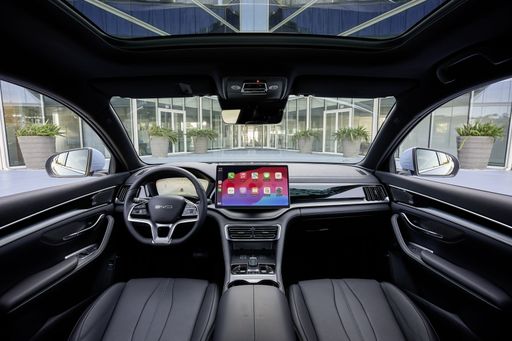
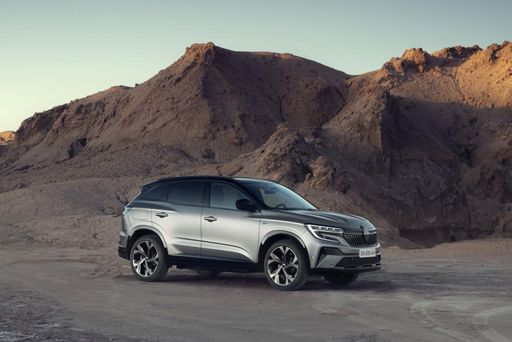
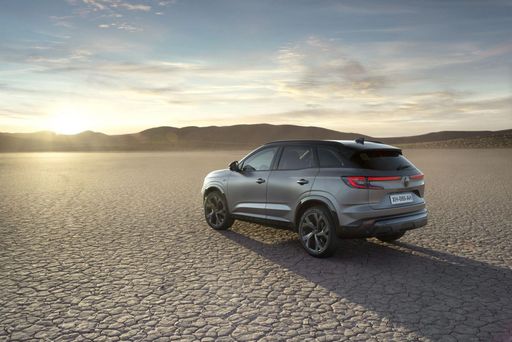
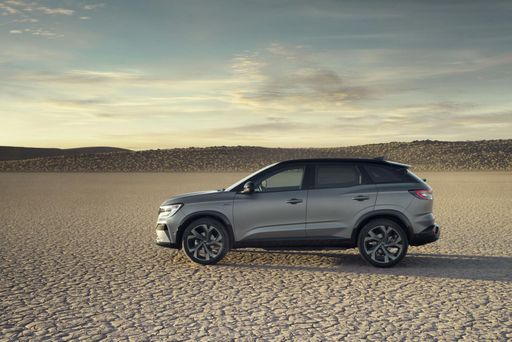
VS

BYD Seal U vs Renault Austral comparison

Compare performance (324 HP vs 148 HP), boot space and price (34,300 £ vs 29,900 £ ) at a glance. Find out which car is the better choice for you – BYD Seal U or Renault Austral?

BYD Seal U vs Renault Austral: Key differences

BYD Seal U

4.1 (7 Reviews)
rate
  • substantially more power
  • significantly quicker 0–100 km/h
details

Renault Austral

4.9 (5 Reviews)
rate
  • moderately cheaper
  • markedly lighter
details

All details on performance, efficiency, range and trunk space can be found in the technical comparison below – including user reviews for both models.

By Achim Sedelmaier

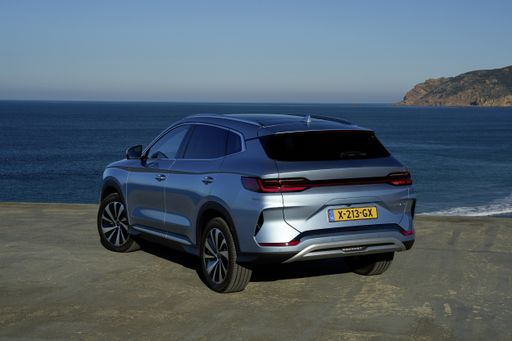
Seal U

BYD Seal U vs Renault Austral: A New Era of SUVs

As the automotive industry continues to innovate, the SUV market has been blessed with two exciting contenders for the 2024 model year: the BYD Seal U and the Renault Austral. Both vehicles present unique takes on modern SUV versatility, combining performance, efficiency, and cutting-edge technology. But how do they stack up against each other? Let's delve into the technical aspects and innovations of these two exciting models.
Austral

Power and Performance

The BYD Seal U empowers drivers with a choice between plug-in hybrid and fully electric drivetrains. The vehicle boasts impressive power outputs of 218 to 324 HP, complemented by torque ranging from 300 to an exhilarating 550 Nm. This translates to a dynamic driving experience, with acceleration from 0 to 100 km/h in as little as 5.9 seconds, and a top speed reaching between 170 to 180 km/h, depending on the variant.

On the other hand, the Renault Austral offers a mix of petrol mild hybrid and full hybrid engines, producing between 158 to 200 HP. With a maximum torque of 270 Nm, it achieves a 0 to 100 km/h acceleration in as quick as 8.4 seconds, reaching a top speed of 174 km/h. While it may not match the sheer power of the Seal U, the Austral delivers a balanced performance suited for urban and highway driving.

Seal U

Efficiency and Eco-Friendliness

Efficiency is a hallmark of the BYD Seal U. The model boasts an electric range of up to 500 km on its electric version, with minimal CO2 emissions depending on the powertrain selection. The plug-in hybrid variant offers fuel consumption as low as 0.9 to 1.2 L/100 km combined with electric consumption between 19.9 to 20.5 kWh/100 km.

The Renault Austral focuses on petrol efficiency, with impressive consumption rates of 4.7 to 6.1 L/100 km depending on the engine variant. While its CO2 emissions are higher than those of the Seal U, its hybrid technology offers a marked improvement over traditional combustion engines, classifying it comfortably within the C to E CO2 efficiency spectrum.

Austral

Space and Dimensions

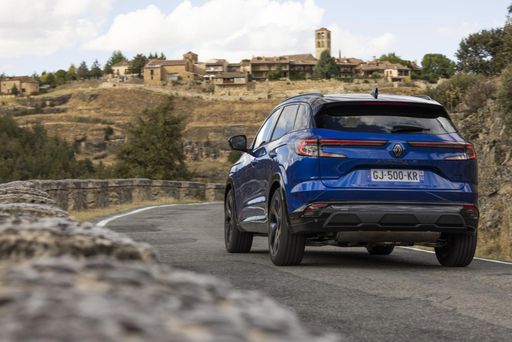
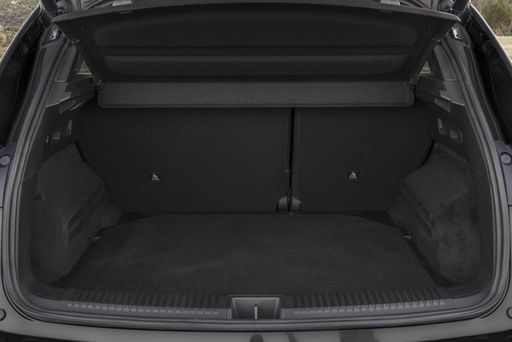
Both SUVs cater to family-friendly versatility with five doors and ample seating for five passengers. The BYD Seal U stands tall in size, measuring up to 4785 mm in length, 1890 mm in width, and approximately 1670 mm in height. It boasts a spacious trunk capacity ranging from 425 to 552 liters, accommodating a wide range of cargo needs.

In comparison, the Renault Austral measures 4510 mm in length, 1825 mm in width, and 1618 mm in height, positioning it slightly more compact while offering a trunk capacity of 430 to 500 liters, maintaining practicality without sacrificing space.

Seal U

Technical Innovations

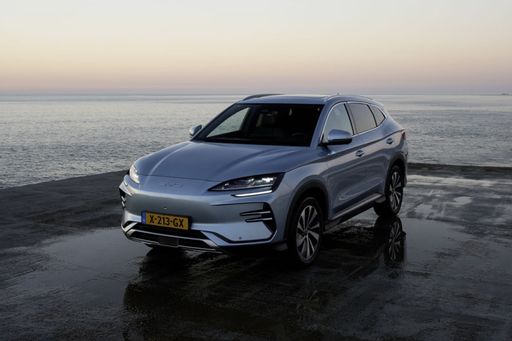
The BYD Seal U epitomizes innovative technology, particularly with its electric and hybrid drivetrains, allowing it to bridge the gap between traditional fuel and future mobility. Its flexible transmission options, including both CVT and reduction gearbox, cater to diverse driving preferences.

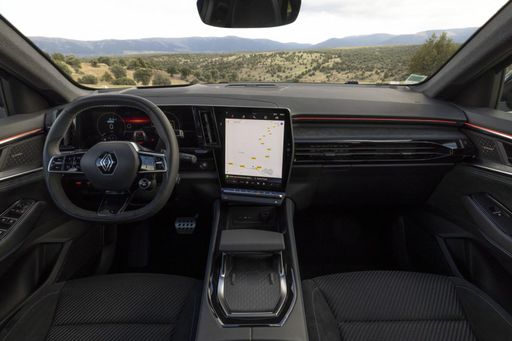
The Renault Austral also impresses with its advanced automatic transmission and intelligent fuel management in its hybrid systems, emphasizing a smooth and efficient driving experience. Its commitment to refined mechanics and user-friendly technology places it commendably in the hybrid SUV segment.

Austral

Conclusion

Ultimately, the choice between the BYD Seal U and Renault Austral boils down to individual preferences and priorities. The Seal U shines with its powerful performance and extensive electric capabilities, making it ideal for those prioritizing sustainability and cutting-edge tech. Meanwhile, the Austral offers a well-rounded driving experience with its hybrid options and economic fuel consumption, appealing to those seeking balance and efficiency in a stylish package. Both vehicles invite a new era of SUV innovations, setting benchmarks for future models to follow.

Here’s where it gets real: The technical differences in detail

Seal U

Costs and Efficiency:

When it comes to price and running costs, the biggest differences usually appear. This is often where you see which car fits your budget better in the long run.

Renault Austral is moderately cheaper – starting at 29,900 £ , while the BYD Seal U costs 34,300 £ . That’s a price difference of around 4,363 £.

Austral

Engine and Performance:

Power, torque and acceleration say a lot about how a car feels on the road. This is where you see which model delivers more driving dynamics.

When it comes to engine power, the BYD Seal U offers substantially more power – delivering 324 HP compared to 148 HP. That’s roughly 176 HP more horsepower.

When accelerating from 0 to 100 km/h, the BYD Seal U is significantly quicker – completing the sprint in 5.9 s, while the Renault Austral takes 9.9 s. That’s about 4 s quicker.

There’s also a difference in torque: the BYD Seal U delivers considerably more torque with 550 Nm compared to 270 Nm. That’s about 280 Nm more.

Seal U

Space and Everyday Use:

Cabin size, boot volume and payload all play a role in everyday practicality. Here, comfort and flexibility make the difference.

Both vehicles offer seating for 5 people.

In terms of curb weight, Renault Austral is markedly lighter – 1,548 kg compared to 1,940 kg. The difference is around 392 kg.

When it comes to payload, the Renault Austral carries marginally more – 455 kg compared to 410 kg. That’s a difference of about 45 kg.

Who wins the race in the data check?

The BYD Seal U stands well ahead of its rival in the objective data comparison.
This result only shows which model scores more points on paper – not which of the two cars feels right for you.

from £34,300
Seal U

BYD Seal U

  • Engine Type : Electric, Plugin Hybrid
  • Transmission : Automatic
  • Drive Type : Front-Wheel Drive, All-Wheel Drive
  • Power HP : 218 - 324 HP
  • Consumption kWh/100km : 12.1 - 20.5 kWh/100km
  • Electric Range : 70 - 500 km
BYD Seal U
Renault Austral

Costs and Consumption

View detailed analysis

Engine and Performance

View detailed analysis

Dimensions and Body

View detailed analysis

BYD Seal U

The BYD Seal U is a sleek electric fastback that blends sporty styling with a roomy, tech-focused interior, making it an appealing choice for buyers who want electric performance without sacrificing comfort. It delivers a smooth, composed ride and intuitive features, positioning it as a practical yet modern option in the EV market.

details

Renault Austral

The Renault Austral is a stylish, well-built crossover that blends a comfortable ride with a spacious, modern cabin. It combines everyday-friendly refinement and contemporary technology with a focus on safety and practicality, making it a sensible choice for drivers who want an all-round family car.

details
BYD Seal U
Renault Austral

Costs and Consumption

Price
34,300 - 39,800 £
Price
29,900 - 34,100 £
Consumption L/100km
-
Consumption L/100km
6.4 L/100km
Consumption kWh/100km
12.1 - 20.5 kWh/100km
Consumption kWh/100km
-
Electric Range
70 - 500 km
Electric Range
-
Battery Capacity
-
Battery Capacity
-
co2
0 - 71 g/km
co2
145 g/km
Fuel tank capacity
-
Fuel tank capacity
-

Dimensions and Body

Body Type
SUV
Body Type
SUV
Seats
5
Seats
5
Doors
-
Doors
-
Curb weight
1,940 - 2,147 kg
Curb weight
1,548 kg
Trunk capacity
425 - 552 L
Trunk capacity
-
Length
-
Length
-
Width
1,890 mm
Width
1,825 mm
Height
-
Height
-
Max trunk capacity
-
Max trunk capacity
-
Payload
410 kg
Payload
455 kg

Engine and Performance

Engine Type
Electric, Plugin Hybrid
Engine Type
Petrol MHEV
Transmission
Automatic
Transmission
Automatic
Transmission Detail
Reduction Gearbox, Automatic Gearbox
Transmission Detail
CVT
Drive Type
Front-Wheel Drive, All-Wheel Drive
Drive Type
Front-Wheel Drive
Power HP
218 - 324 HP
Power HP
148 HP
Acceleration 0-100km/h
5.9 - 9.6 s
Acceleration 0-100km/h
9.9 s
Max Speed
-
Max Speed
-
Torque
300 - 550 Nm
Torque
270 Nm
Number of Cylinders
4
Number of Cylinders
4
Power kW
160 - 238 kW
Power kW
109 kW
Engine capacity
1,497 - 1,498 cm3
Engine capacity
1,332 cm3

General

Model Year
2,024 - 2,026
Model Year
2025
CO2 Efficiency Class
A, B
CO2 Efficiency Class
E
Brand
BYD
Brand
Renault
DriveDuel uses data analysis and artificial intelligence to evaluate vehicle data and create content. Content is regularly reviewed and improved. The displayed prices are estimates based on German list prices, adjusted to the respective country’s VAT. Country-specific registration taxes are not included. This information is not legally binding.