VS

BYD Seal vs Skoda Elroq comparison

Compare performance (530 HP vs 340 HP), boot space and price (40,300 £ vs 37,900 £ ) at a glance. Find out which car is the better choice for you – BYD Seal or Skoda Elroq?

BYD Seal vs Skoda Elroq: Key differences

BYD Seal

  • noticeably more power
  • substantially quicker 0–100 km/h
  • a bit lighter

Skoda Elroq

4.5 (4 Reviews)
rate
  • very slightly cheaper
  • marginally more efficient
  • only slightly more electric range
  • a bit more trunk space

All details on performance, efficiency, range and trunk space can be found in the technical comparison below – including user reviews for both models.

Seal

BYD Seal VS Skoda Elroq: Electric Innovators in Different Arenas

The electric vehicle market is thriving with exciting options, and two notable contenders are the BYD Seal and the Skoda Elroq. While these vehicles are from distinct categories, with the BYD Seal being a sleek sedan and the Skoda Elroq an SUV, they both showcase impressive technological advancements and eco-friendly credentials. Let's dive into the technical aspects and innovations of these cutting-edge models.
Elroq

Power and Performance: A Closer Look

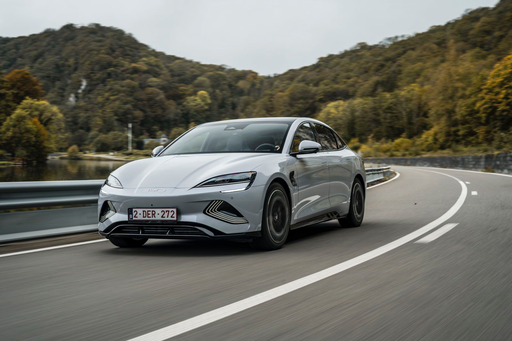
The BYD Seal is designed for those who crave speed and performance in a sedan. With a power output ranging from 313 HP to a thrilling 530 HP, the Seal offers remarkable acceleration, sprinting from 0 to 100 km/h in just 5.9 seconds and, in its high-performance variant, an exhilarating 3.8 seconds. The torque ranges from 360 Nm to a staggering 670 Nm, providing a responsive and dynamic driving experience. The dual drive option allows for a choice between rear-wheel drive and all-wheel drive, catering to different driving preferences.

On the other hand, the Skoda Elroq caters to SUV enthusiasts seeking a balance between practicality and power. Its power output spans from a modest 170 HP to a robust 286 HP, depending on the variant chosen. Accelerating from 0 to 100 km/h in 9 seconds at its base level, it can achieve a commendable 6.6 seconds in its highest configuration, thanks to its torque capabilities of up to 545 Nm. The Elroq focuses on providing a comfortable rear-wheel-drive experience coupled with the versatility typical of SUVs.

Seal

Range and Efficiency: Driving Further

Both vehicles champion electric efficiency, but the Seal takes a slight lead in terms of range. Depending on the chosen variant, the Seal can travel between 520 km and an impressive 570 km on a single charge, highlighting its strength as a long-distance electric sedan. Its consumption ranges from 16.6 to 18.2 kWh/100km, making it an efficient choice for daily commuting and long road trips alike.

The Elroq offers a range between 375 km and a generous 580 km, depending on the model and battery capacity, which can go up to 77 kWh. With a consumption between 15.2 and 16.4 kWh/100km, the Elroq stands as a competent and efficient option among electric SUVs, ready to tackle both urban and off-the-beaten-path adventures.

Elroq

Design and Dimension: Space Meets Style

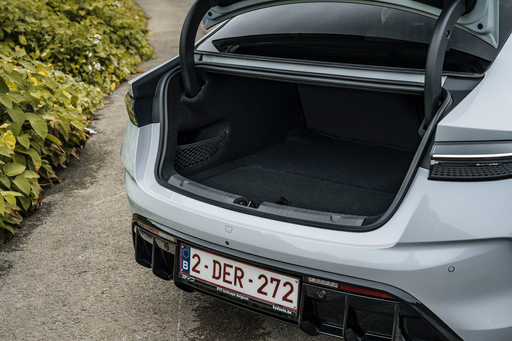
In terms of dimensions, the BYD Seal, with its sedan profile, stretches to 4800 mm in length, 1875 mm in width, and 1460 mm in height. It provides a trunk capacity of 400 liters, suitable for urban needs while maintaining a sleek aesthetic appeal.

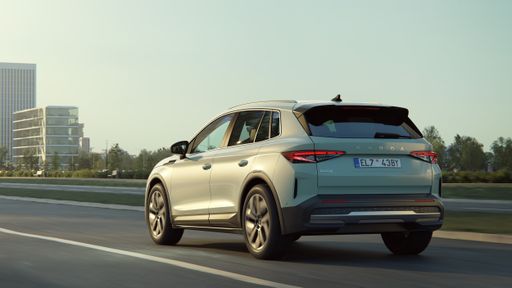
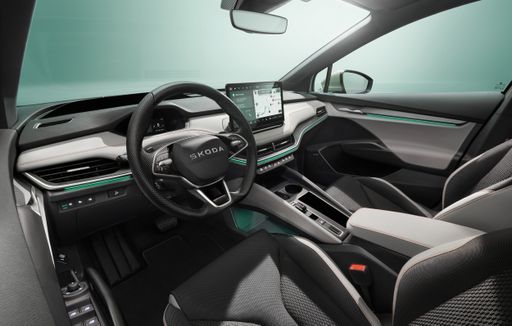
The Skoda Elroq, designed as a family-friendly SUV, is slightly more compact and taller, measuring 4488 mm in length, 1884 mm in width, and 1625 mm in height. It surpasses the Seal in trunk space with a capacity of 470 liters, perfect for more extensive storage requirements, making it ideal for family outings and adventures.

Seal

Conclusion: Tailored for Different Drivers

Ultimately, choosing between the BYD Seal and the Skoda Elroq boils down to personal preference and lifestyle needs. The BYD Seal impresses with its performance prowess and top-end speed, perfect for tech-savvy drivers prioritizing sleek design and acceleration. Meanwhile, the Skoda Elroq offers versatility and practicality, ideal for those who need the spaciousness and durability of an SUV, without compromising on electric efficiency and range.

Both vehicles are compelling examples of how electric cars are reshaping our driving experience, making the choice a gratifying challenge for any prospective electric vehicle owner.

Video - Skoda Elroq

Video Thumbnail

Here’s where it gets real: The technical differences in detail

Seal

Costs and Efficiency:

Looking at overall running costs, both models reveal some interesting differences in everyday economy.

Skoda Elroq is very slightly cheaper – starting at 37,900 £ , while the BYD Seal costs 40,300 £ . That’s a price difference of around 2,409 £.

In terms of energy consumption, the Skoda Elroq is marginally more efficient: consuming 15.2 kWh/100km compared to 15.4 kWh/100km for the BYD Seal. That’s a difference of about 0.2 kWh/100km.

As for electric range, the Skoda Elroq offers only slightly more range – reaching up to 573 km, about 3 km more than the BYD Seal.

Elroq

Engine and Performance:

Under the bonnet, it becomes clear which model is tuned for sportiness and which one takes the lead when you hit the accelerator.

When it comes to engine power, the BYD Seal offers noticeably more power – delivering 530 HP compared to 340 HP. That’s roughly 190 HP more horsepower.

When accelerating from 0 to 100 km/h, the BYD Seal is substantially quicker – completing the sprint in 3.8 s, while the Skoda Elroq takes 5.4 s. That’s about 1.6 s quicker.

There’s no difference in top speed – both reach 180 km/h.

There’s also a difference in torque: the Skoda Elroq delivers barely more torque with 679 Nm compared to 670 Nm. That’s about 9 Nm more.

Seal

Space and Everyday Use:

Whether family car or daily driver – which one offers more room, flexibility and comfort?

Both vehicles offer seating for 5 people.

In terms of curb weight, BYD Seal is a bit lighter – 1,907 kg compared to 2,133 kg. The difference is around 226 kg.

Looking at boot space, the Skoda Elroq offers a bit more boot space – 470 L compared to 400 L. That’s a difference of about 70 L.

When it comes to payload, the Skoda Elroq carries marginally more – 517 kg compared to 473 kg. That’s a difference of about 44 kg.

Who wins the race in the data check?

The BYD Seal stands well ahead of its rival in the objective data comparison.
This result only shows which model scores more points on paper – not which of the two cars feels right for you.

from £40,300
Seal

BYD Seal

  • Engine Type : Electric
  • Transmission : Automatic
  • Drive Type : Rear-Wheel Drive, All-Wheel Drive
  • Power HP : 231 - 530 HP
  • Consumption kWh/100km : 15.4 - 18.2 kWh/100km
  • Electric Range : 460 - 570 km
BYD Seal
Skoda Elroq

Costs and Consumption

View detailed analysis

Engine and Performance

View detailed analysis

Dimensions and Body

View detailed analysis

BYD Seal

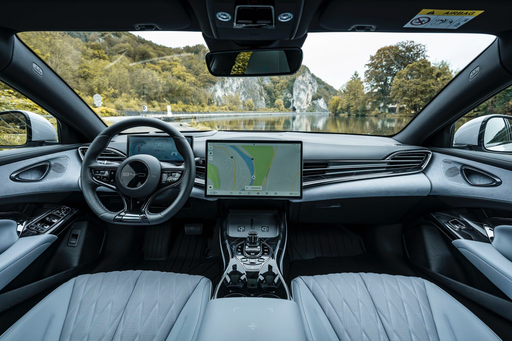
The BYD Seal is a sleek electric fastback that punches above its class with sporty looks and a surprisingly premium cabin, offering a very modern alternative for buyers who want style and substance without the badge snobbery. On the road it feels composed and eager, packed with tech and everyday practicality—ideal for shoppers after eco-friendly performance with a cheeky wink.

details

Skoda Elroq

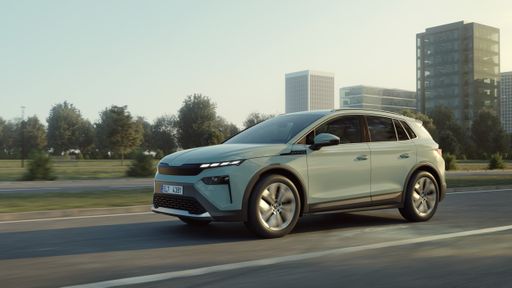
The Skoda Elroq is a cleverly packaged family SUV that mixes roomy practicality with sharp, modern looks, making it an easy pick for buyers who prefer common sense over flash. On the road it's composed and user-friendly, with thoughtful interior details that turn everyday driving into something pleasantly efficient — a sensible companion with a wink.

details
BYD Seal
Skoda Elroq

Costs and Consumption

Price
40,300 - 45,400 £
Price
37,900 - 45,500 £
Consumption L/100km
-
Consumption L/100km
-
Consumption kWh/100km
15.4 - 18.2 kWh/100km
Consumption kWh/100km
15.2 - 16.5 kWh/100km
Electric Range
460 - 570 km
Electric Range
529 - 573 km
Battery Capacity
-
Battery Capacity
77 - 79 kWh
co2
0 g/km
co2
0 g/km
Fuel tank capacity
-
Fuel tank capacity
-

Dimensions and Body

Body Type
Sedan
Body Type
SUV
Seats
5
Seats
5
Doors
4
Doors
5
Curb weight
1,907 - 2,185 kg
Curb weight
2,133 - 2,268 kg
Trunk capacity
400 L
Trunk capacity
470 L
Length
4,800 mm
Length
4,488 mm
Width
1,875 mm
Width
1,884 mm
Height
1,460 mm
Height
1,608 - 1,625 mm
Max trunk capacity
-
Max trunk capacity
1,580 L
Payload
446 - 473 kg
Payload
470 - 517 kg

Engine and Performance

Engine Type
Electric
Engine Type
Electric
Transmission
Automatic
Transmission
Automatic
Transmission Detail
Reduction Gearbox
Transmission Detail
Reduction Gearbox
Drive Type
Rear-Wheel Drive, All-Wheel Drive
Drive Type
Rear-Wheel Drive, All-Wheel Drive
Power HP
231 - 530 HP
Power HP
286 - 340 HP
Acceleration 0-100km/h
3.8 - 7.5 s
Acceleration 0-100km/h
5.4 - 6.6 s
Max Speed
180 km/h
Max Speed
180 km/h
Torque
360 - 670 Nm
Torque
545 - 679 Nm
Number of Cylinders
-
Number of Cylinders
-
Power kW
170 - 390 kW
Power kW
210 - 250 kW
Engine capacity
-
Engine capacity
-

General

Model Year
2,023 - 2,025
Model Year
2,025
CO2 Efficiency Class
A
CO2 Efficiency Class
A
Brand
BYD
Brand
Skoda
DriveDuel uses data analysis and artificial intelligence to evaluate vehicle data and create content. Content is regularly reviewed and improved. The displayed prices are estimates based on German list prices, adjusted to the respective country’s VAT. Country-specific registration taxes are not included. This information is not legally binding.